Traditional Yemeni Qishr: a Spiced Coffee Beverage With Ancient Roots
You’re sipping qishr the way Yemeni farmers have for generations-made from dried coffee husks, not beans, simmered with ginger, cinnamon, and sometimes cardamom. It’s lighter and less bitter than coffee, with a subtle caffeine kick. All you need is a pot, water, and a strainer. No grinder or press required. Serve it warm, sweetened with honey, in small cups. You’ll find out how simple changes can elevate this ancient drink.
Notable Insights
- Yemeni Qishr is a traditional spiced beverage made from dried coffee husks, utilizing a byproduct of coffee processing.
- It features warming spices like cinnamon, cloves, cardamom, and ginger for a balanced, aromatic flavor profile.
- Prepared by simmering husks and spices in water, then strained and sweetened with honey or sugar.
- Less caffeinated and less bitter than coffee, offering a bright, tea-like drink with deep cultural roots.
- Historically served in gatherings and religious occasions, symbolizing hospitality and resourcefulness in Yemeni culture.
What Is Yemeni Qishr: and How Is It Different From Coffee?
What exactly is Yemeni qishr, and why might you reach for it instead of coffee? It’s a spiced tea made from coffee husks, not beans-boiled with ginger, cinnamon, and often cardamom. You’d choose it for its lighter caffeine hit and bright, tangy flavor profile, less bitter than coffee. It steeps fast, no special gear needed-just a pot and strainer. While coffee requires grinders and brewers, qishr simplifies the process. Its cultural significance runs deep in Yemeni homes, served during gatherings and religious occasions, symbolizing warmth and tradition. Unlike coffee, which emphasizes roast and origin, qishr highlights spice balance and clarity of infusion. You can adjust spices to taste, making it flexible. It’s eco-conscious, using husks that’d otherwise go to waste. For everyday sipping with warmth and heritage, qishr offers a practical, flavorful alternative.
Where Did Yemeni Qishr Come From?
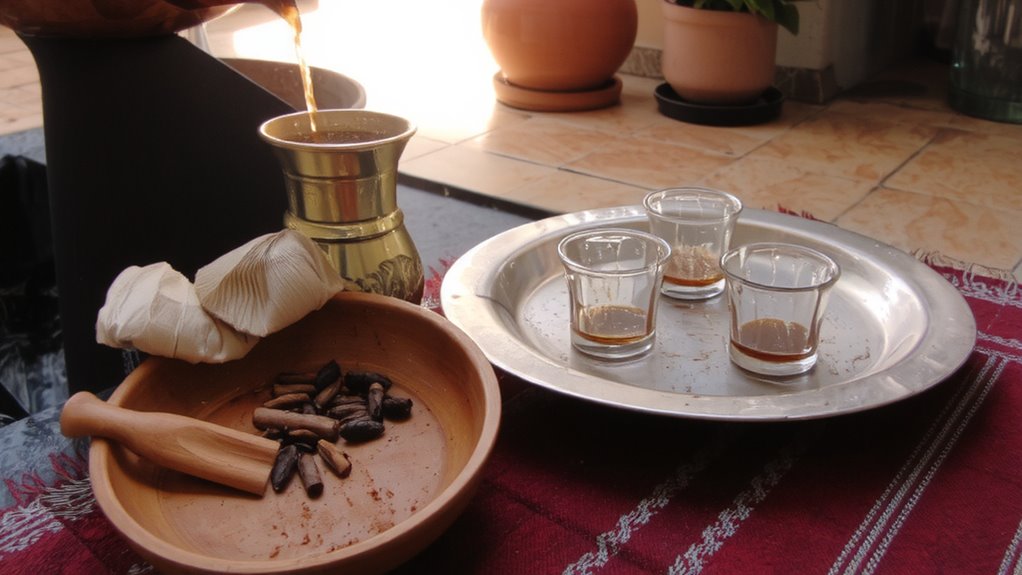
Yemen’s long-standing coffee tradition holds the roots of qishr, born not in labs or modern cafes but in the everyday resourcefulness of farming households. You’re tracing an origins exploration that begins with Yemeni farmers using what was on hand-coffee husks-after beans were processed. This wasn’t waste; it was value stretched thin and wisely used. The historical significance of qishr lies in its role as both a daily drink and a symbol of hospitality, passed down through generations. You’ll find it mentioned in old trade records and household accounts, showing how deeply it’s embedded in Yemeni culture. Unlike roasted coffee, qishr offered a lighter, spiced alternative suited to local tastes and available ingredients. Its creation reflects practicality: making something sustaining from byproducts. When you study Yemeni beverage practices, qishr stands out as a reflection of innovation shaped by necessity, environment, and tradition-all key factors in understanding its continued presence today.
What’s in Traditional Yemeni Qishr?
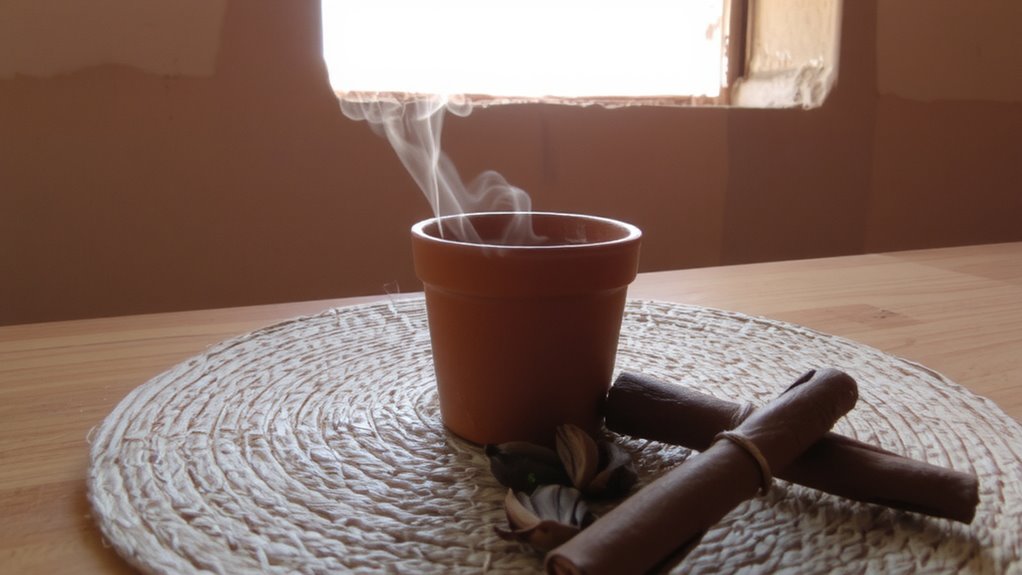
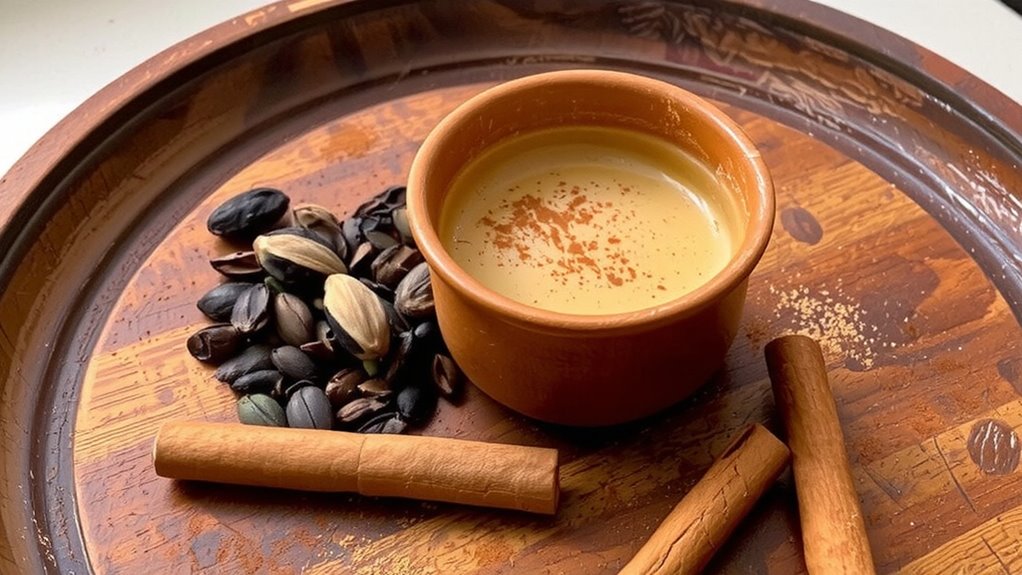
The foundation of traditional Yemeni qishr starts with dried coffee husks-the outer layer of the coffee cherry removed during processing-giving the drink its light body and subtle tea-like color. You’ll simmer these husks in water to extract gentle, fruity notes without the heavy punch of brewed coffee beans. What sets qishr apart is the spice blend, typically mixed in during boiling. A classic version includes cinnamon, cloves, and cardamom for balance. But it’s the ginger warmth that really defines the experience-fresh or dried, it adds a sharp, clean heat that lingers pleasantly. Some versions add black pepper or nutmeg, but ginger remains key. These spices aren’t just for flavor; they aid digestion and complement the husks’ mild sweetness. You don’t need special gear-just a small pot and fine strainer. Keep spice ratios adjustable to taste, as potency varies.
How to Brew Authentic Yemeni Qishr at Home
While you might be tempted to reach for ground coffee, brewing authentic Yemeni qishr starts with using dried coffee husks, which are lighter and less bitter than beans but still require proper extraction. Begin by rinsing ½ cup of husks under cool water to remove dust. Add them to 4 cups of water in a saucepan along with 1–2 teaspoons of ground ginger and a cinnamon stick for spice infusion. Bring to a gentle boil, then reduce heat and simmer for 15–20 minutes until the liquid turns amber. Strain through a fine mesh sieve or cheesecloth. For ideal flavor, stir in honey or sugar to taste while warm. Use an electric kettle for precise temperature control if desired. Traditional serving technique involves pouring into small, handleless cups called finjān, often shared among guests. Serve warm, not scalding, to preserve aroma.
Why Is Qishr a Symbol of Hospitality in Yemen?
You’ve just brewed a batch of qishr using coffee husks, ginger, and cinnamon, following the traditional method for a balanced, aromatic drink. This simple act ties into qishr’s deep cultural significance in Yemen, where offering it signals warmth and welcome. Unlike coffee, qishr is less caffeinated and easier to prepare, making it ideal for frequent serving. It plays a key role in social rituals, from morning gatherings to evening visits, reinforcing community bonds. Serving qishr to guests isn’t just custom-it’s expected in many homes, reflecting respect and generosity. The shared cup fosters conversation and connection, often passed hand-to-hand in groups. Hosts use brass or clay pots to serve, preserving tradition and heat. In Yemen, refusing qishr can seem impolite, underlining its role in daily hospitality. Its enduring presence affirms identity, linking past practices to present moments, with little need for modern tools or changes.
Creative Variations: Modern Q Ways to Enjoy Yemeni Qishr
Since traditional qishr relies on simmered coffee husks, ginger, and cinnamon, modern takes can easily adapt to different tastes and settings without losing its essence. You can enhance your brew with a cinnamon twist by adding a fresh stick during simmering for brighter notes. For a richer aroma, try a cardamom infusion-lightly crush a few pods before adding them to the pot. Some prefer straining the liquid through a fine mesh sieve to remove fine husk particles, ensuring a smoother mouthfeel. Using a small saucepan gives you better temperature control than a kettle. Add honey or date syrup after straining if sweetness is desired. For gatherings, serve warm in heat-resistant glasses with cinnamon sticks as stirrers-functional and visually clean. These small upgrades maintain authenticity while fitting modern preferences and practical setups.
On a final note
You’ve now got the basics to make authentic Yemeni qishr at home. Use fresh dried ginger, true cinnamon, and high-quality coffee for best results. A simple pot or ibrik works fine-no special gear needed. Simmer gently to extract flavor without bitterness. Qishr’s warmth and spice make it ideal for sharing, fitting its role in Yemeni hospitality. Try it plain first, then adjust spices to taste.