How Water Temperature Interacts With Coarse Grind in Cowboy Coffee Preparation
You need water between 195°F and 205°F when using coarse grounds for cowboy coffee-this range pulls flavor without burning the coffee. Too hot, and you get bitter, harsh results; too cool, and the coffee tastes weak or sour. Coarse grinds extract slower, so proper heat matters even more. Skip the rolling boil-let water rest 15–30 seconds after boiling or reheat if needed. Use a thermometer or watch for small bubbles at the pot’s edge. Get it right, and your brew will be clean and balanced. There’s more to optimizing the process once you have the basics down.
Notable Insights
- Water temperature between 195°F and 205°F optimally extracts flavor from coarse grounds without causing bitterness.
- Coarse grounds require higher heat to ensure full extraction due to their lower surface area.
- Boiling water above 205°F can scald coarse grounds, leading to harsh, overextracted flavors.
- Underheated water below 195°F results in weak, sour coffee because extraction is insufficient.
- Letting boiled water rest 15–30 seconds achieves ideal temperature for balanced coarse grind extraction.
How Hot Should Water Be for Cowboy Coffee?
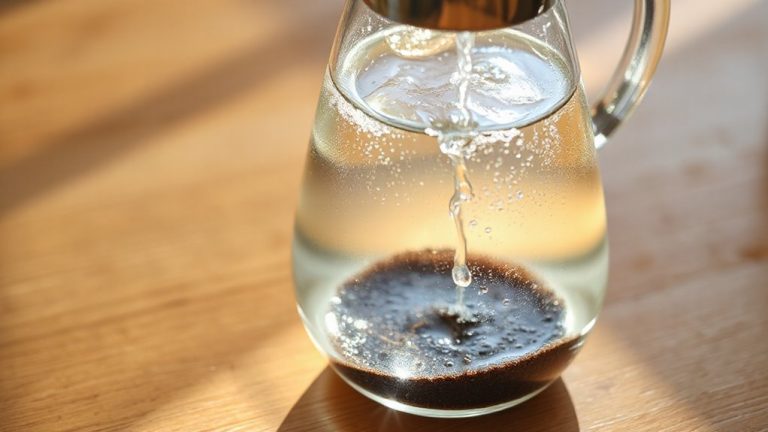
Why risk scalding your coffee before it even brews? You want your water hot, but not boiling-aim for 195°F to 205°F. At this range, extraction is balanced, giving you flavor without bitterness. Boiling water can overextract, especially with the long steep typical in cowboy coffee, leading to a harsh cup. Historical methods often used a rolling boil over a fire, but that was out of necessity, not precision. Today, you can do better. Regional variations show how technique adapts: cowboys on the trail used what they had, while modern campers might use a thermometer-equipped kettle. If you’re heating over a flame, pull the water just before it boils-when you see steam rising steadily and small bubbles form. It’s a small step that makes a real difference. Keep it practical, keep it consistent.
Why Coarse Grinds Need the Right Heat
When using coarse grinds for cowboy coffee, getting the water temperature right becomes even more critical because the larger particle size slows extraction. Without enough heat, you’ll struggle with poor extraction efficiency, leaving your brew weak and underdeveloped. Consistent grind consistency guarantees even extraction, but only if paired with proper temperature. Too cool, and the water can’t penetrate the grounds effectively; too hot, and you risk bitterness despite the coarse texture.
| Water Temp | Extraction Efficiency | Flavor Result |
|---|---|---|
| Too Low | Poor | Weak, sour |
| Just Right | High | Balanced, rich |
| Too High | Over-extracted | Bitter, harsh |
| Variable | Inconsistent | Unpredictable |
Match your heat to the grind, and you’ll maximize flavor without needing fancy gear.
Aim for 195–205°F With Coarse Grounds
You’ve got your coarse grind sorted, but without the right water temperature, that effort won’t mean much. Aim for 195–205°F-the sweet spot for extracting flavor without bitterness. At this range, water chemistry plays a subtle but real role: balanced minerals improve extraction, especially with filtered water. Too cold, and your coffee tastes weak; too hot, and it scorches the grounds. With coarse grounds, even grind consistency guarantees water flows evenly, pulling flavor uniformly. That’s key when steeping cowboy-style, where contact time matters. A reliable kettle with a thermometer helps maintain precision, better than guessing with a rolling boil. Go hotter than 205°F, and you risk harsh notes; stay cooler than 195°F, and acids dominate. Stick to this range, match it with stable grind consistency, and your cowboy coffee hits the mark-clean, bold, and balanced-every time.
How to Tell When Water’s Too Hot (And Fix It)
What does it look like when your water’s gone too far past 205°F? You’ll see aggressive water steaming and rapid bubbles forming-big, rolling ones, not the gentle simmer you want. That’s boiling, not brewing temperature, and it’ll burn your coarse grounds, bringing out bitter, off flavors. At high elevations, water boils below 212°F, so don’t rely on boiling as a cue. Instead, lift the pot off the heat just before bubbles form too vigorously. Let it sit 15–30 seconds; the temp will drop into the ideal 195–205°F range. You can also use a thermometer for accuracy. If you’re heating over a campfire, remove the pot when steam rises steadily and small bubbles barely form at the edges. That’s your sweet spot. Waiting briefly gives you control without gear, but a durable instant-read thermometer like the ThermoPro TP03 makes it foolproof.
What to Do If Water Isn’t Hot Enough
If your water isn’t hot enough-say, below 195°F-it won’t extract the coffee’s full flavor, leaving your cup flat or sour. Don’t toss it-fix it fast. Water reheating is your first move: return the pot to heat and watch for tiny bubbles, just under boiling. If you’re stuck without a thermometer, timing helps-about 2–3 minutes off-roil should do. Then, consider grind adjustment. A finer grind increases surface area, boosting extraction even at slightly lower temps. But don’t go too fine, or silt slips into your mug. Use a slightly finer version of coarse, like breadcrumbs. Here’s what you risk without action:
| Problem | Effect | Emotion |
|---|---|---|
| Weak taste | Underwhelming brew | Frustration |
| Sourness | Unbalanced acidity | Disappointment |
| Cloudiness | Poor settling | Annoyance |
| Long brew time | Delayed coffee | Impatience |
| Overcompensation | Bitterness | Regret |
Act early-adjust and reheat.
Brew Like a Pro Over Any Campfire
How do you make coffee that’s rich, clean, and reliably good no matter the fire’s size or the wind’s bite? Start with stable campfire techniques-use a tripod or grill grate to control pot height and avoid boiling over. Heat water just off the boil, around 195–205°F, especially when using a coarse grind; this prevents bitterness and guarantees even extraction. Pour slowly to saturate all grounds, then stir once. Let it steep 4 minutes before plunging or decanting. Traditional brewing traditions favor metal percolators or direct-boil methods, but they often over-extract. A French press or sock filter gives better clarity. Always use fresh, coarsely ground beans and filtered water if possible. With consistent heat control and timing, you’ll brew like a pro-even on a gusty ridge or a smoldering fire. It’s not magic, just method. For those who prefer portable solutions, consider a compact French press designed for outdoor use.
On a final note
You’ll get the best cowboy coffee using water between 195–205°F with coarse grounds-hot enough to extract flavor, not so hot it pulls bitterness. If water’s boiling, let it sit 30 seconds. Too cool? Reheat briefly. A reliable camp kettle with a temp gauge helps. Avoid fine grinds; they’ll slip through and make sludge. Coarse beans and proper heat mean clean, rich coffee over any fire.