French Press Coffee for Beginners: A Foolproof Step-by-Step Guide
Use coarsely ground coffee-about the size of sea salt-and a 1:15 ratio, like 30 grams of coffee to 450 grams of water. Heat water to just below boiling (195–205°F), pour over the grounds, and stir. Steep for exactly four minutes, then press gently and pour. Choose a burr grinder for consistent results and medium to dark roast beans from Ethiopia or Colombia for bold, rich flavor. Keep your press clean and time each brew-small tweaks make a big difference in your cup.
Notable Insights
- Use coarsely ground coffee, similar to sea salt, to prevent sludge and over-extraction.
- Heat water to 195–205°F-just below boiling-to avoid burning the coffee and creating bitterness.
- Follow a 1:15 coffee-to-water ratio, weighing both for accuracy and consistent results.
- Steep the coffee for exactly four minutes before pressing to ensure balanced extraction.
- Use fresh, medium to dark roast beans, ideally within 2–4 weeks of roast date for best flavor.
Brew French Press Coffee Step by Step
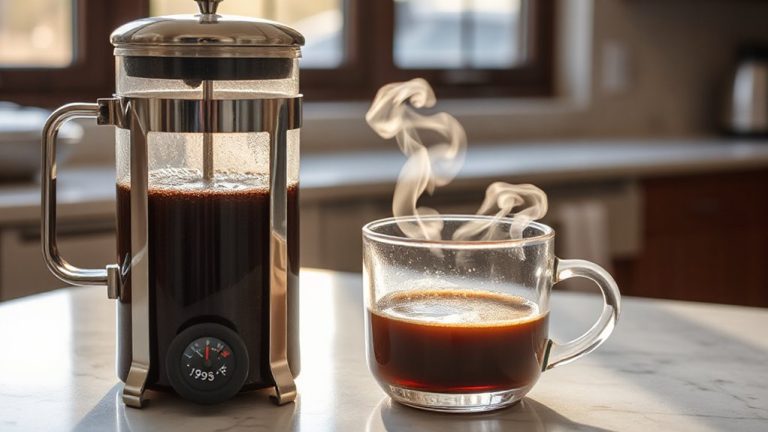
While you can brew coffee many ways, making it in a French press gives you more control over strength and flavor without needing fancy equipment. First, understand the French press history: invented in the 1920s and refined by French and Italian designers, its simple design uses a piston and metal filter. You’ll boil water, then let it cool slightly-this brewing temperature control is key. Aim for 195–205°F, just below boiling, to avoid scalding the grounds. Add coarsely ground beans, pour the hot water evenly, and stir. Place the lid on with the piston up and let it steep four minutes. Then press down slowly-don’t force it. Pour immediately to prevent over-extraction. Using a thermometer helps maintain consistent brewing temperature control. The French press delivers rich, full-bodied coffee, cheaper and more durable than most electric brewers, ideal for home or travel. For the best results, use a coarse French press grind to prevent sediment and ensure smooth extraction.
Use the Right Coarse Grind for Best Flavor
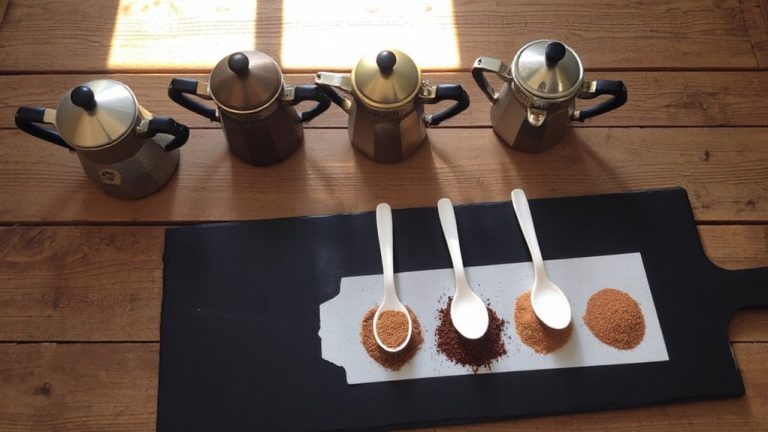
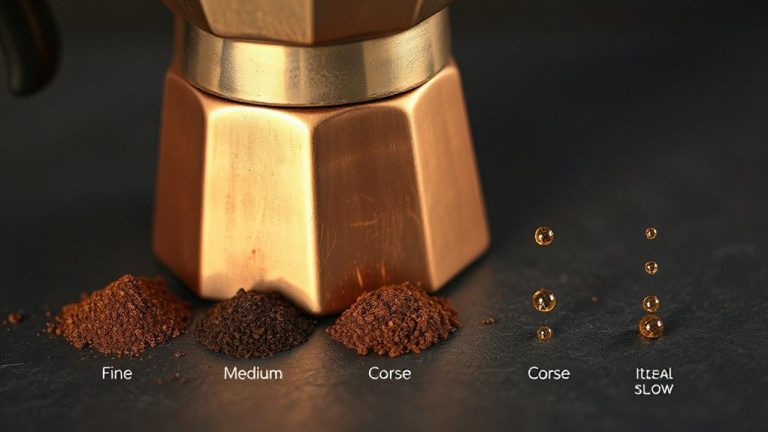
The grind size makes or breaks your French press coffee-too fine and you’ll get sludge, too coarse and it’ll taste weak. For best flavor, use a consistent coarse grind, similar to sea salt. This allows proper extraction time-typically four minutes-without over-extracting bitter compounds. A burr grinder gives you more control than a blade grinder, helping maintain uniformity. If the grind is too fine, particles slip through the mesh press, creating grit in your cup. Too coarse, and water passes through too quickly, shortening extraction time and yielding a flat, underdeveloped taste. Pre-ground coffee often isn’t coarse enough, so grinding fresh at home works better. Brands like Baratza offer affordable grinders ideal for French press. Always match your grind size to the recommended brewing time to balance strength and clarity in every cup. A reliable option for achieving this consistency is a Best Mill Grinders model designed specifically for coarse brewing methods.
Get the Coffee-to-Water Ratio Right
If you want your French press coffee to taste balanced-not too weak or overpowering-nailing the coffee-to-water ratio is key. Use a 1:15 ratio-1 gram of coffee for every 15 grams of water-for best results. This typically means about 30 grams (roughly 4 tablespoons) of coffee for 450 grams (about 15 ounces) of water. Weighing both ingredients guarantees consistency. Freshly ground beans, used within two weeks of roasting, boost coffee freshness and flavor clarity. Always check your water temperature-just off the boil, around 195°F to 205°F, is ideal. Water that’s too hot burns the grounds; too cool yields weak extraction. The right ratio, paired with proper water temperature and fresh beans, gives a clean, rich cup without guesswork. Avoid volume measures like cups for precision-use a scale. It’s the most practical upgrade for better coffee. For optimal brewing performance, consider selecting one of the top-rated Best French Press Picks in 2024.
Pick Beans That Shine in a French Press
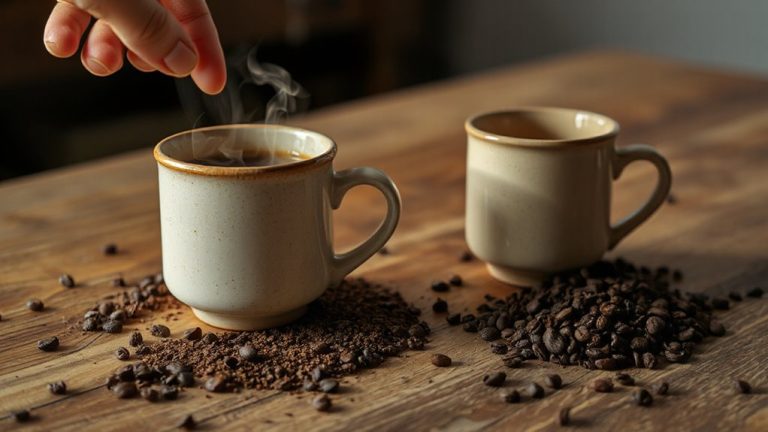
You’ll get the best results from your French press when you choose beans that bring flavor clarity and body-two things this brewing method highlights well. Focus on origin selection: single-origin beans from regions like Ethiopia, Colombia, or Guatemala often deliver distinct, clean notes that stand out without filtering. These beans let you taste the unique characteristics of the terroir. When considering roast profile, medium to dark roasts work best. They offer balanced sweetness and rich mouthfeel without overwhelming bitterness. Light roasts can lack body, while overly dark roasts may mute flavor clarity. Look for beans labeled as “full-bodied” or “chocolatey” - they tend to shine in French press brews. Always use freshly roasted beans, ideally within 2–4 weeks of roast date, to guarantee peak flavor. Freshness matters as much as choice. Avoid pre-ground; grind whole beans just before brewing for maximum impact.
Stop Your French Press Coffee From Tasting Bitter
Freshly ground, high-quality beans set the stage, but even the best beans can result in a bitter cup if the brewing process goes off track. The key culprits? Water temperature and steeping time. Water that’s too hot burns the coffee, pulling out harsh flavors. Aim for about 200°F (just under boiling). Steeping too long does the same-letting grounds over-extract and turn bitter. Stick to 4 minutes for balanced flavor.
| Factor | Better Choice |
|---|---|
| Water temperature | 195–205°F |
| Steeping time | 4 minutes |
| Grind size | Coarse, even |
| Press speed | Smooth, steady |
Pour slowly, use a timer, and preheat your press. These small steps make a real difference. If your coffee still tastes bitter, shorten the steep or check your grind-finer particles extract faster. Dial it in, and you’ll pull clean, full-bodied coffee every time.
On a final note
Now you’ve got the basics to brew solid French press coffee. Use coarse grounds, the right ratio-start with 1:15-and full immersion for about four minutes. Choose beans with balanced profiles; avoid overly dark roasts that turn bitter. Stir the crust, press gently, and pour promptly. Clean your press right after. A good burr grinder helps, but even a budget one beats pre-ground. This method rewards consistency, not gadgets.