Fine-Tuning Moka Pot Brewing Techniques to Suit Various Coffee Bean Types and Preferences
Use a finer grind for dense light roasts-like Ethiopian beans-and go coarser for porous dark roasts, like Sumatran. Preheat water to 195–205°F to speed brewing and improve control. Skip tamping light roasts to avoid bitterness; it’s better suited for dark. Use filtered water for cleaner flavor. For dark roasts, stop brewing at the first sputter and cool the base quickly. You’ll find more ways to fine-tune your method with practice.
Notable Insights
- Match grind size to roast density: finer for light roasts, coarser for dark roasts to optimize extraction.
- Preheat water to 195–205°F to reduce brew time and prevent over-extraction, especially with darker roasts.
- Avoid tamping with light roasts to maintain even water flow and prevent bitterness.
- Use filtered water to enhance flavor clarity and ensure balanced extraction.
- Stop brewing when sputtering slows and cool the base to preserve flavor in dark roasts.
Match Your Grind to the Roast for Better Moka Pot Coffee
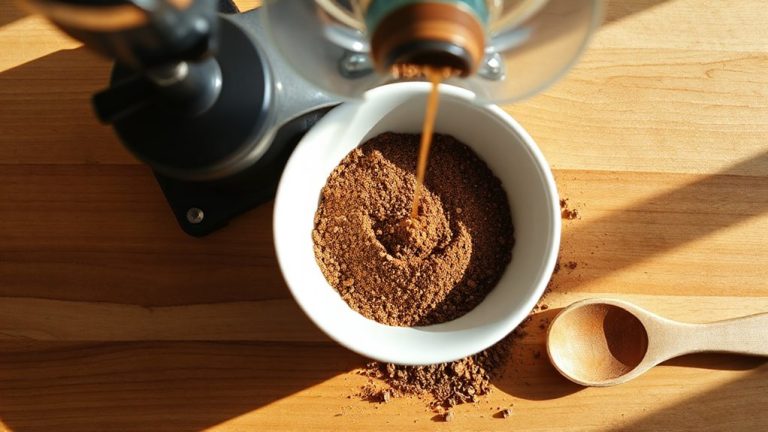
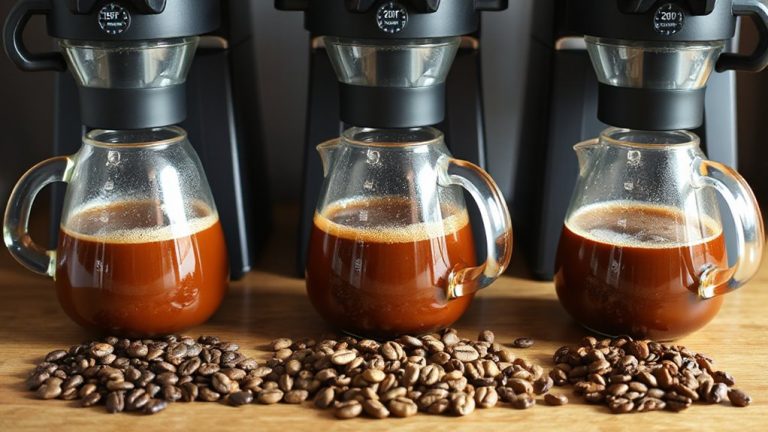
Grind size matters-especially when it comes to pulling the best flavor from your moka pot. You’ll want to match your grind consistency to the roast density of your beans for ideal results. Lighter roasts are denser, so they need a finer grind to extract well under moka pot pressure. If the grind’s too coarse, your coffee tastes weak and underdeveloped. Darker roasts are less dense and more soluble-grind them a bit coarser to avoid over-extraction and harsh bitterness. Aim for a uniform grind consistency; uneven particles lead to both sour and burnt notes. A burr grinder helps here-blade grinders often create inconsistent results. For example, Ethiopian beans (light roast) work best at a fine table salt texture, while Sumatran (dark roast) do better slightly coarser. Adjust in small steps, then taste. For peak performance, consider investing in one of the top-rated coffee grinders for Moka pot setups recommended for optimal grind control.
Preheat Water to Control Moka Pot Brew Time
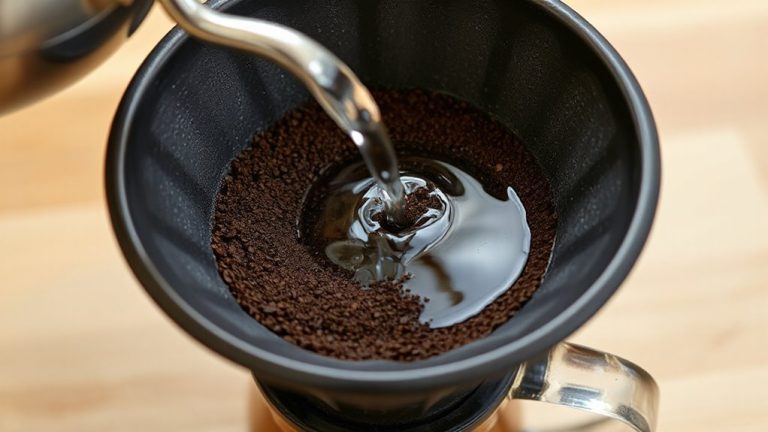
Using preheated water can cut your moka pot brew time by 30 to 50 seconds, giving you more control over extraction. When you start with hot water-just off the boil-around 195–205°F, you reduce the time your coffee sits on the heat source, limiting over-extraction risks. This is especially helpful with medium to dark roasts, which extract faster. Starting cold means your water temperature climbs slowly, prolonging contact with heat and risking bitterness. With preheated water, the brew cycle hits ideal pressure and temperature quicker, leading to a cleaner cup. Just don’t use boiling water in the chamber-it can damage aluminum pots or create steam blockages. Electric kettles with temperature control make this easy. Gas and induction stoves work fine, but lower the heat once brewing starts. Preheating isn’t essential, but it adds precision, especially if you’re tweaking variables to match beans or taste. A gooseneck kettle with temperature control can further enhance accuracy when pouring and maintaining optimal water temperature.
Skip Tamping Light Roasts in Your Moka Pot
While light roast beans need more extraction to bring out their complex flavors, tamping them in a moka pot usually does more harm than good. Tamping restricts water flow, increasing pressure too much and risking over-extraction or bitterness. For light roast, aiming for a proper extraction balance means letting water pass freely through a loose coffee bed. This helps achieve even saturation without channeling or clogging. Using a Moka pot for electric stoves ensures consistent heat distribution, which is crucial for optimal extraction with light roasts.
| Brewing Step | With Tamping | Without Tamping |
|---|---|---|
| Grind resistance | High | Moderate |
| Water flow | Restricted | Smooth |
| Extraction risk | Over-extracted | Balanced |
| Flavor outcome | Bitter, harsh | Bright, nuanced |
| Best for | Dark roasts | Light roast |
Skip tamping-it’s the smarter move for clarity and extraction balance with light roast beans.
Use Filtered Water for Cleaner Moka Pot Flavor
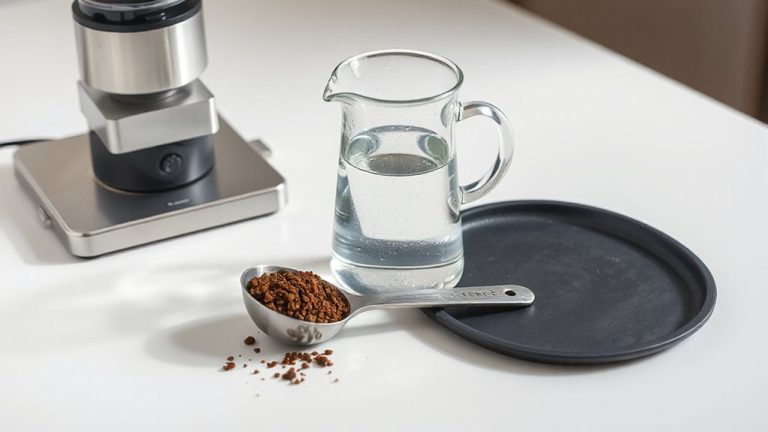
Your choice of water impacts the taste of your moka pot brew just as much as the beans you use. Tap water often contains chlorine, sediment, or excessive minerals that can alter flavor and buildup in your pot. Using filtered water improves water quality and leads to a cleaner, more accurate taste. The mineral content matters-too little, and your coffee tastes flat; too much, and it can cause bitterness or scale. A balanced filtered option, like Brita or TAPP, removes impurities while retaining enough minerals for proper extraction. Avoid distilled water, as its lack of mineral content hampers flavor development. If your tap water is very hard or soft, consider a filter pitcher or bottled spring water to guarantee consistent results. Monitoring water quality is a small step that makes a noticeable difference in every cup without requiring extra gear or effort.
Dial in Dark Roasts by Stopping the Moka Pot Early
A dark roast can easily tip from bold and rich to harsh and bitter if over-extracted in your moka pot, so it’s smart to stop the brew just before it finishes gurgling through. This simple brew interruption helps preserve depth without tipping into ashy flavors. Dark roasts extract faster due to their porous structure and lower acidity, so monitoring extraction timing is key. Once you hear the sputtering slow and the aroma turns sharp, remove the pot from heat and run the base under cool water. This halts steam pressure and stops the draw. It might take a few tries to find your ideal cutoff point, but consistent timing yields more balanced results. Some users favor a slightly shorter pull for beans like Sumatra or French roast, where intensity builds quickly. Done right, early termination improves control without extra gear.
Cool or Dilute Immediately to Balance Moka Pot Bitterness
What if the secret to smoother moka pot coffee isn’t in the brew but in the seconds right after? If your coffee tastes bitter, try rapid cooling right when brewing finishes. Pouring it into a separate vessel stops over-extraction caused by residual heat in the lower chamber. For quicker results, use ice dilution-drop a few ice cubes into your cup or carafe before pouring. This chills the coffee instantly, locking in flavor while reducing harshness. Just note: ice dilution slightly weakens strength, so brew a bit more concentrated if you prefer boldness. Glass or stainless steel servers work best for rapid cooling since they don’t retain heat like ceramic. Skipping this step may leave you with a burnt, overly intense cup, especially with dark roasts. With rapid cooling, you preserve clarity and balance without altering your grind or heat. Try it daily-it’s fast, cheap, and effective.
On a final note
You’ve got the tools to tweak your moka pot brewing for any bean. Match grind size to roast-finer for dark, slightly coarser for light. Preheat water to shorten brew time and reduce bitterness. Skip tamping light roasts to avoid clogging. Use filtered water for cleaner taste. Stop brewing just after the gurgle for dark roasts. Cool or dilute quickly if needed. These steps help you nail a balanced cup, every time.