How to Adjust Pour Over Technique for Dark Roast Beans
Use a coarser grind-like sea salt-to avoid over-extraction and harsh flavors with dark roast beans. Brew with water around 195–200°F to preserve sweetness and reduce bitterness. Pour steadily and slightly faster, especially during the main pour, to keep brew time under 3 minutes. Try a 1:15 coffee-to-water ratio for richer body. A gooseneck kettle and burr grinder help, and small tweaks can reveal cleaner, more balanced cups based on roast level.
Notable Insights
- Use a coarser grind to prevent over-extraction and reduce bitterness in dark roast beans.
- Brew with water between 195°F and 200°F to avoid harsh, ashy flavors.
- Pour faster during the main phase to limit over-extraction from highly soluble dark roasts.
- Use a stronger coffee-to-water ratio, around 1:15, to enhance body and richness.
- Adjust variables like grind, temperature, and brew time to target 2:30–3:00 minutes total.
Grind Coarser for Smoother Dark Roast Pour Over
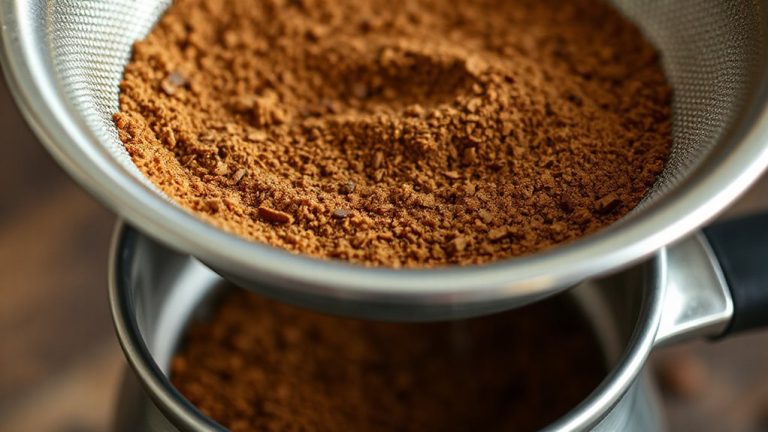
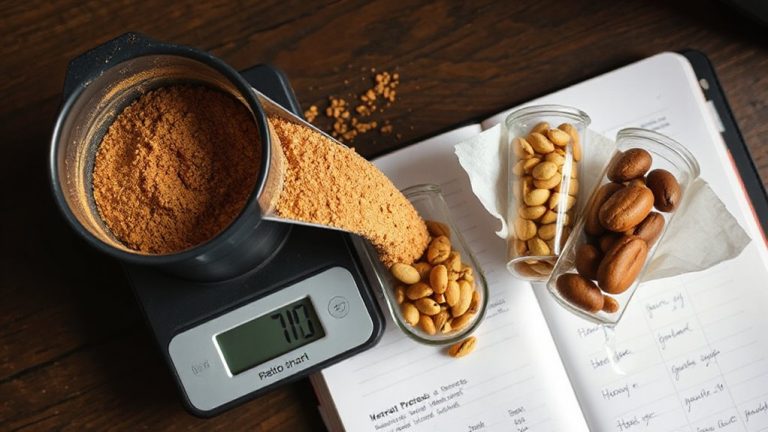
Most dark roast beans need a coarser grind to avoid over-extraction and harsh bitterness in pour over. You’ll want to adjust your grinder so the particle size is more like sea salt than powdered sugar. A consistent grind consistency matters-uneven particles lead to mixed extraction, which can make your cup taste both bitter and sour at once. Blade grinders often create irregular particle size, so a burr grinder like the Baratza Encore is a better choice for even results. If you’re using a Chemex or V60, start with a medium-coarse setting and tweak it based on taste. Too bitter? Go slightly coarser. Weak or hollow? The grind might be too coarse. Dialing in the right grind size takes a few tries, but it’s the most practical way to improve your dark roast pour over. For more precision and control, consider upgrading to one of the top-rated burr grinders recommended for pour over brewing.
Brew With Cooler Water to Reduce Bitterness
While darker roasts can handle a bit more heat, you’ll actually get a smoother, less bitter cup by brewing with slightly cooler water-around 195°F to 200°F instead of the standard 205°F. Lower water temperature slows extraction, which helps prevent the harsh, ashy flavors dark roasts can develop when over-exposed to heat. Since dark roasts are already more soluble, the reduced heat improves taste balance by minimizing bitterness without sacrificing body or sweetness. Use a gooseneck kettle with a built-in thermometer or a separate temp reader for accuracy-devices like the Brewidi Artisan or Fellow Stagg EKG make this easy. If your water’s too hot, let it cool 15–20 seconds before pouring. This small tweak doesn’t need special gear, just attention to detail. You’ll notice cleaner notes and more complexity, especially in beans with chocolate or nutty profiles. It’s a simple fix that makes a real difference in your final cup-no guesswork needed. For precise control, consider a gooseneck kettle with temperature control to streamline your pour-over process.
Pour Faster to Prevent Over-Extraction
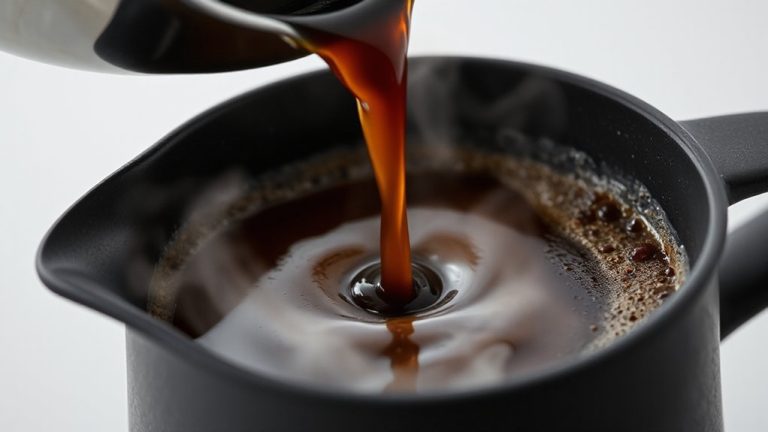
You’ve already cut down on bitterness by lowering your water temperature, and now you can fine-tune your brew even further by adjusting your pour speed. Dark roast beans extract faster, so a slower pour risks over-extraction, bringing out harsh, ashy notes. To avoid this, increase your flow rate during the main pour. A gooseneck kettle helps you control this precisely-aim for a steady, slightly quicker stream than you’d use for light roasts. Keep your bloom time short, around 30 seconds, since dark roasts release CO2 quickly. Extending it too long doesn’t help and may cool the slurry. Speeding up the overall pour reduces total brew time, which protects sweetness and body. Just don’t rush so much that you unevenly saturate the bed. Balance speed with control. With a consistent flow rate and proper bloom time, you’ll get a cleaner, smoother cup every time. For the best results, use a grind size that matches your pour-over setup, as the wrong coffee grinds can undermine even the most precise technique.
Use a Stronger Ratio for Richer Flavor
A slightly stronger coffee-to-water ratio can make a noticeable difference when brewing dark roast beans, helping you maintain intensity without tipping into bitterness. Dark roasts have lower bean density and lose moisture during roasting, so they extract more easily than light roasts. Using 1:15 instead of 1:17 (like 30g coffee to 450g water) helps preserve body and richness. Older beans, especially past peak roast age (beyond 3–4 weeks), benefit from this bump since they degrade and extract faster. A stronger ratio compensates for流失 in volatile compounds and avoids weak, flat cups. Just don’t go beyond 1:14 unless your brew tastes thin-overconcentrating can amplify harsh notes. Scale use is key here; volume measures aren’t accurate enough. Try 1:15 first, then adjust based on freshness and storage. This small change improves clarity and depth without extra gear or steps.
Fine-Tune for Your Dark Roast’s Sweet Spot
Since not all dark roasts taste the same, dialing in the right variables helps you hit the sweet spot for your specific beans. Your goal is flavor balance-rich body without excessive bitterness. Adjust based on the roast profile: lighter dark roasts (like a Full City) need different handling than full smoky French roasts. Small tweaks make big differences.
| Variable | Adjustment |
|---|---|
| Grind size | Slightly coarser to avoid over-extraction |
| Water temp | 195–200°F to manage harsh notes |
| Brew time | Aim for 2:30–3:00 minutes |
| Pour pattern | Steady and controlled to improve even saturation |
Pushing too hard can crush delicate notes, while going too easy under-extracts. Match your pour over setup-Kalita, V60, Chemex-to your roast profile. Consistent changes mean repeatable results.
On a final note
You’ll want to grind your dark roast beans coarser to avoid harsh bitterness. Use water around 195°F-cooler than usual-to protect delicate flavors. Pour faster to shorten contact time and reduce over-extraction. Try a 1:15 coffee-to-water ratio or even 1:14 for a richer body. Adjust based on taste: if it’s ashy, go coarser or cooler; if flat, tweak the ratio up.