A Guide to Selecting the Ideal Moka Pot Based on Your Desired Flavor Profile and Brewing Needs
Choose aluminum if you want bold, espresso-like coffee with quick, even heating, but go with stainless steel for durability and smoother results over time. Pick a 3-cup for one person or a 6-cup for two to avoid weak brews. Use stovetop models for control or electric for convenience. Match grind size and heat level to your pot’s size and material for best extraction-your ideal brew depends on these details.
Notable Insights
- Choose aluminum moka pots for bold, espresso-like coffee due to superior heat conductivity and even extraction.
- Opt for stainless steel if you prefer smoother, balanced flavor and long-term durability with consistent heating.
- Select a 3-cup model for strong, single servings or a 6-cup for optimal flavor balance when serving two.
- Use stovetop models for hands-on heat control or electric versions for consistent, hands-off brewing.
- Match grind size and brew timing to your pot size to avoid bitterness and achieve desired flavor intensity.
Choose Your Moka Pot: Aluminum or Stainless Steel
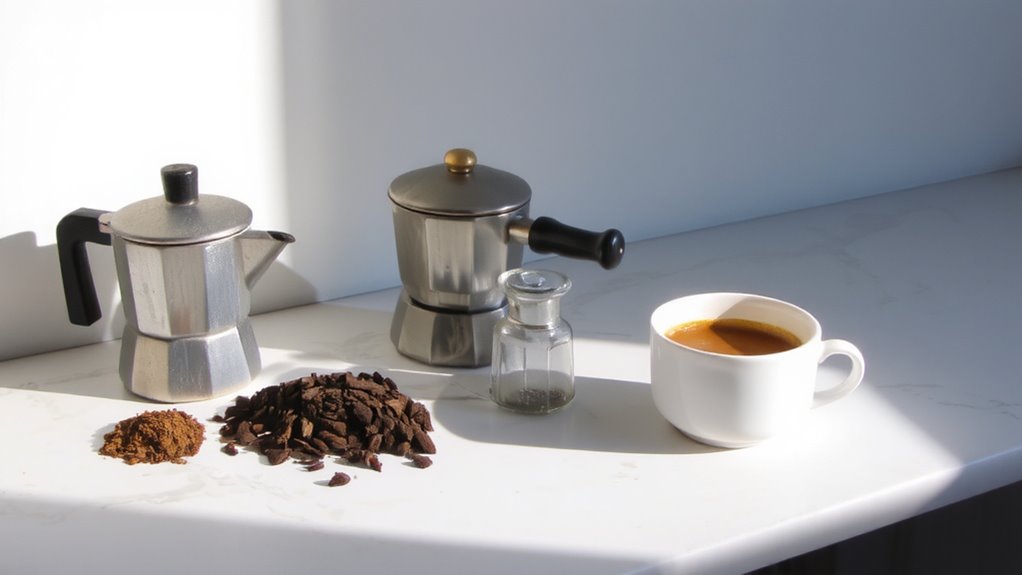
A Moka pot’s material-aluminum or stainless steel-shapes how it heats, how long it lasts, and how easy it is to maintain. Aluminum offers better heat conductivity, heating quickly and evenly, which helps extract bold flavor-Bialetti’s classic model uses this. But it’s softer, so material durability is lower; it dents and wears faster, especially on induction stoves. Stainless steel, like in Alessi’s models, lasts longer and resists scratches and corrosion-great for daily use. It’s heavier and costs more, and heat conductivity isn’t as fast, which may lead to uneven brewing if not watched. You can use stainless steel on induction, aluminum usually not. Hand wash both to preserve performance. For speed and traditional response, pick aluminum. For material durability and longevity, go stainless steel. Your stove type and care habits should guide your pick. Some espresso enthusiasts choose semi-automatic espresso machines for greater control over extraction variables like pressure and temperature.
Pick the Right Size for Your Daily Brew
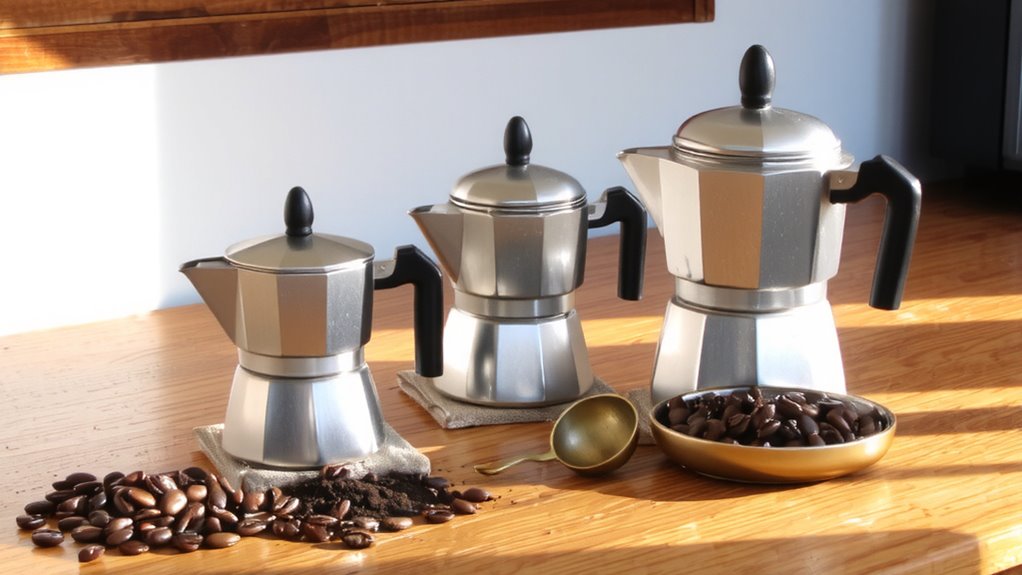
Now that you’ve weighed the pros and cons of aluminum versus stainless steel, it’s time to think about how much coffee you actually need each day. Moka pots come in sizes from 1 to 12 cups, but don’t be fooled-each “cup” is about 2.5 ounces, not 8. Your ideal brew volume depends on your routine. If you drink one morning coffee, a 3-cup model gives enough for a standard mug. For two people, a 6-cup offers better cup yield without waste. Larger pots, like 9 or 12-cup, suit families but can over-extract if not fully filled. A smaller pot brewed strong can be diluted, but a large one underfilled often produces weak coffee. Match the size to your daily habit-consistent use beats occasional overcapacity. Choosing right guarantees fresh, flavorful results each time.
Stovetop vs. Electric: Which Performs Better?
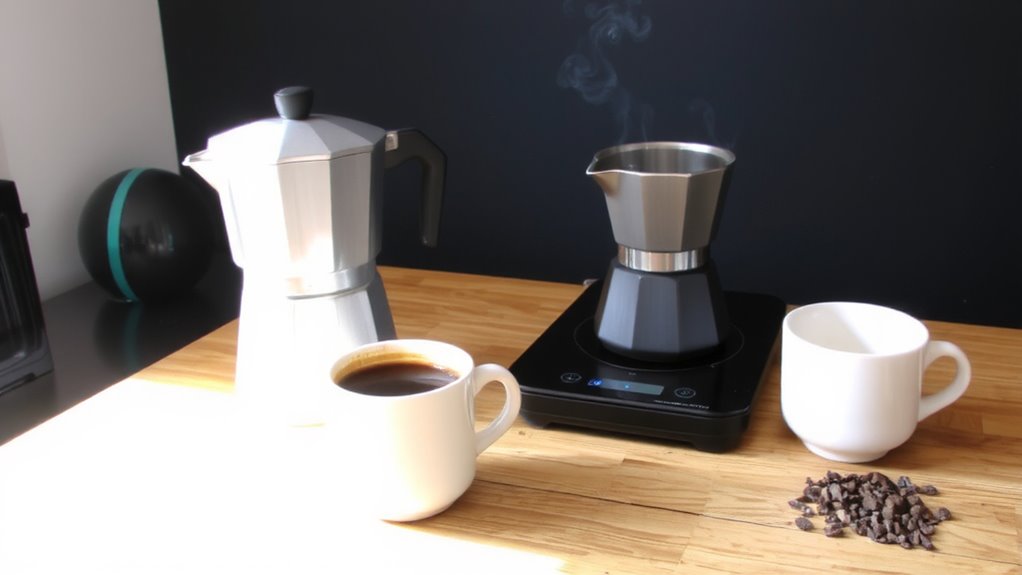
Why do some people swear by stovetop moka pots while others won’t brew without an electric model? It comes down to heat control and brew consistency. Stovetop models, like the Bialetti MoKa Express, rely on your stove, so you manage heat manually-great if you like tweaking variables. Electric moka pots, such as the Bialetti Electric, offer preset heating, delivering more consistent results with less effort. For those using electric stoves, selecting the right moka pot matters-some models are specifically optimized for even heat distribution on electric cooktops, making best moka pots for electric stoves a key consideration.
| Feature | Stovetop Moka Pot | Electric Moka Pot |
|---|---|---|
| Heat Control | Manual (your stove) | Automatic, built-in |
| Brew Consistency | Varies with skill | High, repeatable |
Electric models save time and reduce guesswork. Stovetop versions work anywhere and offer hands-on control. Your pick depends on whether you value precision or flexibility.
Control Strength: Design and Heat Tips
You’ve weighed the trade-offs between stovetop and electric models, but how you control heat and pressure during brewing makes a real difference in flavor. With stovetop pots, your stove’s heat output directly affects brew timing and heat distribution-gas offers more control, while electric coils can create hot spots. A pot with a thick aluminum or stainless steel base, like the Bialetti Moka Express, promotes even heat distribution, reducing scorching. For finer control, use a heat diffuser on high-flame stoves. Electric moka pots, such as the Bialetti Electric, automate brew timing and maintain steady heat, but limit real-time adjustments. Taller models brew slower, increasing extraction, while shorter ones heat faster, risking over-extraction. Watch the spout closely-remove the pot just as the gurgle starts to avoid bitterness. Consistent heat and precise timing mean cleaner, richer coffee with balanced body and aroma.
Electric Turkish coffee makers offer an alternative for enthusiasts seeking authentic Turkish coffee preparation with minimal effort.
Go Easy: Simple-to-Use Moka Pot Options
How easy should making coffee be? With a simple moka pot, it’s just add water, load the grounds, and heat-no guesswork. If ease of use is your priority, models like the Bialetti Moka Express or Flair Mini offer straightforward assembly and reliable performance. They require no special skills, just consistent measuring and moderate heat. These pots deliver strong brewing consistency when used the same way each time. Stick to medium grind and don’t tamp-overpacking ruins the flow. Aluminum versions heat quickly, while stainless steel ones last longer and resist scratches. Smaller sizes (1–3 cups) are easier to control on average stoves. Just watch the brew window or listen for the gurgle to know when it’s done. You won’t get espresso, but you will get rich, bold coffee with minimal effort and repeatable results. That’s what simplicity with reliability looks like.
Match Your Pot to Coffee Brewing Routine
When matching a moka pot to your daily coffee routine, size and material matter most. If you brew once a day for one person, a 3-cup aluminum model like the Bialetti Moka Express saves time and stovetop space. For families or multiple servings, a 6- or 9-cup pot suits better, though brew timing increases slightly. Stainless steel pots, like the Alessi Pulcina, last longer and resist scratches but cost more. Aluminum heats faster, affecting brew timing and requiring closer attention. Your grinder also plays a role-consistent medium-fine grind consistency guarantees even extraction and reliable results. Inconsistent grinds lead to weak or bitter coffee. Match your moka pot size to your household’s consumption to avoid waste or repeat brewing. Pre-measure water and beans to streamline morning prep. A well-matched pot becomes a seamless part of your routine-efficient, predictable, and dependable.
Find Your Ideal Moka Pot by Flavor Goal
What kind of coffee flavor are you after-bold and intense, smooth and balanced, or something closer to filter-like clarity? If you want bold, espresso-like strength, go with a traditional aluminum Moka pot and a fine grind size-this setup increases brew time slightly, extracting more oils and body. Stainless steel models, like the Bialetti Induction or Alessi, offer cleaner, more balanced results thanks to even heating. For a lighter, filter-like cup, use a medium-fine grind size and remove the pot from heat just as brewing finishes to shorten brew time. Larger pots, like 6-cup or 9-cup models, can over-extract if not monitored, leading to bitterness. Smaller pots, such as 1- to 3-cup, give more control. Match grind size and brew time closely to your flavor goal-this control makes the Moka pot versatile, but only if used deliberately.
On a final note
Pick a moka pot that fits your stove, taste, and routine. Aluminum pots like Bialetti produce bold, rich coffee but need hand washing. Stainless steel models, such as Alessi, last longer and work on induction. Size matters-choose 3-cup for one person, 6-cup for two. Stovetop offers more control; electric is simpler. Match your pot to your preferred strength and cleanup effort for consistent, satisfying results every time.