Espresso Crema Issues: Fixing Thin or Absent Crema With Fresh Beans
If your espresso has thin or no crema, start with fresh beans-use them within 2–4 weeks of roasting and grind right before brewing. Stale beans lack CO₂, which you need for good crema. Pick a medium to medium-dark roast for better solubility and density. Use a burr grinder like the Baratza Encore, aim for 200°F water, and pull shots in 25–30 seconds. Even fresh beans fail if your grind, machine, or timing are off. There’s more to fine-tuning crema than just bean freshness.
Notable Insights
- Use freshly roasted beans, ideally 2–4 weeks post-roast, to ensure optimal CO2 levels for crema formation.
- Grind beans immediately before brewing to preserve freshness and maximize extraction and crema quality.
- Aim for a medium to medium-dark roast, as it balances bean density and solubility for rich, stable crema.
- Maintain water temperature between 195–205°F, with 200°F ideal for proper extraction and crema development.
- Target a 25–30 second brew time with a consistent, fine grind size to achieve balanced extraction and thick, mottled crema.
What Crema Reveals About Your Espresso
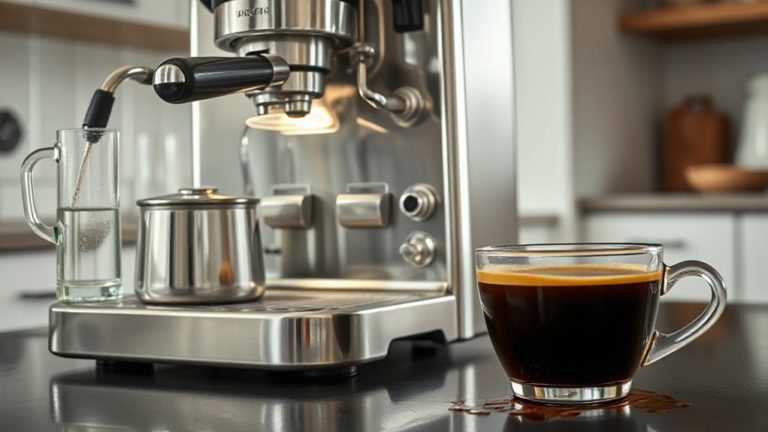
What does crema tell you about your espresso? It’s a quick visual clue to extraction quality. You’ll notice crema color ranges from golden-brown to dark amber when pulled correctly-too light or streaked, and your shot might be under-extracted; too dark, and it’s likely overdone. Crema texture should be thick and mottled, like melted butter or foam. If it’s thin, bubbly, or disappears in seconds, something’s off. While it’s not the only sign of good espresso, crema color and crema texture together help you diagnose brew issues fast. You don’t need a lab-just a clean portafilter and good lighting. Machines with consistent pressure, like the Breville BES870 or Rocket Appartamento, make it easier to achieve stable results. Watch the crema first, then adjust grind or dose. It’s not perfect, but it’s one of your most immediate tools for dialing in.
Why Fresh Beans Make All the Difference
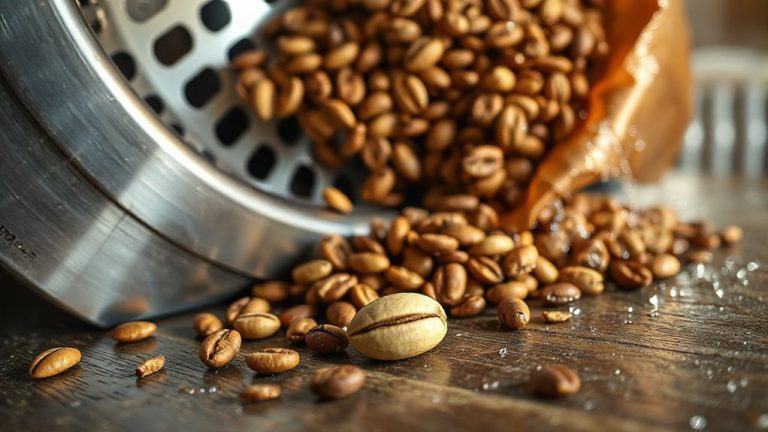
Even if you nail your grind size and tamping technique, stale beans will undermine your shot every time. Fresh beans are essential because they retain higher bean density and proper roast maturity, both critical for balanced extraction and rich crema. When beans are fresh, carbon dioxide is still actively escaping, helping form that golden, velvety layer. Stale beans lose gas quickly, so you get thin or no crema, even with perfect technique. Roast maturity affects how sugars and oils develop-underdeveloped beans lack sweetness and crema potential, while over-roasted ones lose density and complexity. Beans used within 2–4 weeks post-roast perform best in most home and semi-professional machines like the Breville Barista Express or Lelit Bianca. For consistent results, invest in smaller batches and grind just before brewing. Freshness isn’t just ideal-it’s non-negotiable. Choosing the right best espresso beans can further enhance crema quality and overall flavor.
How to Spot Stale Espresso Beans
You just spent time tweaking your grind and perfecting your tamp, but if your beans are past their prime, none of that effort matters. Stale beans won’t produce rich crema, no matter how good your machine is. One major cause is poor bean storage-exposure to air, light, heat, or moisture speeds degradation. Whole beans stay fresh longer than ground, so always grind just before brewing. Look for dull aroma, flat flavor, or a lack of oil on dark roasts; these suggest oxidation effects have set in. Coffee oxidizes within days of roasting, losing sweetness and acidity. For best results, use beans within 2–4 weeks post-roast and store them in an airtight container away from sunlight. Avoid clear canisters or warm spots like stovetops. Proper bean storage is cheap insurance against weak espresso.
Pick a Roast That Builds Great Crema
While roast level alone won’t guarantee crema, choosing the right one plays a key role in building that rich, golden layer. You’ll get the best results with medium to medium-dark roasts-they retain enough bean density to support crema formation while developing soluble compounds that enhance extraction. Light roasts often lack the balanced solubility needed, and very dark roasts lose density and burn oils, which can thin crema. Roast level affects how the coffee responds during brewing; too light or too dark throws off the balance. For consistent crema, avoid roasts that look oily or smell sharp and burnt. Opt instead for beans roasted within the past two to three weeks, with a dry surface and deep, rich color. These traits point to ideal bean density and roast development. Your machine’s pressure and grind will still matter, but starting with the right roast sets you up for success. For optimal flavor and crema, consider trying top coffee bean picks known for espresso performance.
Brewing Secrets for Fresher Crema
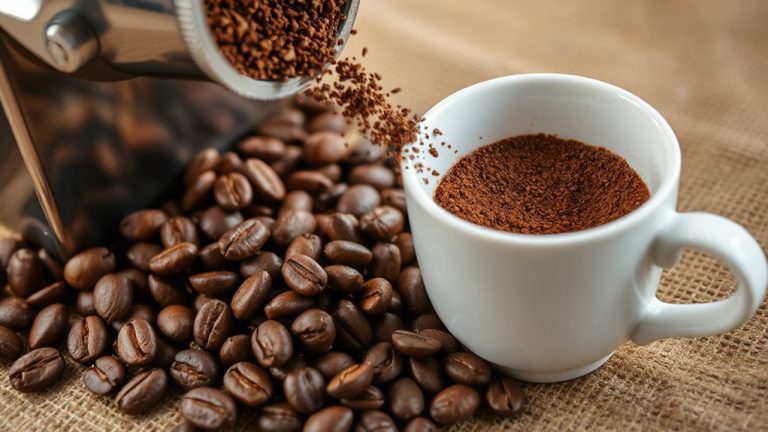
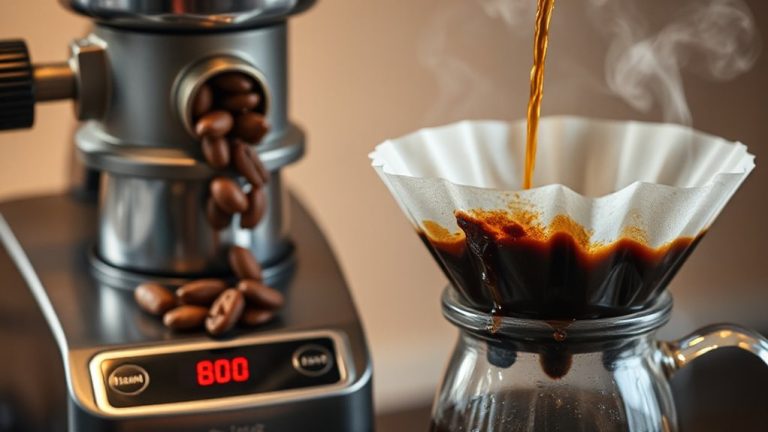
A good roast sets the stage, but how you brew determines whether that crema comes alive or falls flat. You need precise grind consistency-too coarse and you’ll under-extract, too fine and the shot chokes. A burr grinder like the Baratza Encore guarantees uniform particles, critical for even extraction. Water temperature matters just as much; aim for 195–205°F. If your machine lets you adjust it, stick to 200°F for best results. Lower temps produce weak crema, while higher ones risk bitterness. Don’t rely on default settings-older machines often run too cool. Use a digital thermometer to check. Tamp evenly, brew within 25–30 seconds, and watch for that golden, velvety layer. Fresh beans help, but without proper grind consistency and stable water temperature, even the best beans won’t deliver. Control these variables, and fresher crema will follow. For those seeking precision without the noise, a manual espresso grinder can deliver exceptional control over grind size and consistency.
Why Fresh Beans Still Fail to Crema
Even with freshly roasted beans, crema can still disappoint if other variables aren’t tightly controlled. You might assume freshness guarantees great crema, but bean density plays a key role-denser beans, like high-altitude or African varieties, often extract more evenly and produce richer crema. If your beans are unevenly dense, your grinder may struggle to create a consistent particle size, leading to poor extraction. Grind retention is another hidden culprit; if your grinder holds onto fine particles, they degrade over time and taint your next shot, weakening crema. Machines like the Compak E16 reduce retention with low-clearance burrs and anti-static tech, helping maintain freshness at the grind. Adjusting dose, tamping evenly, and calibrating grind size for your specific beans also matter. Don’t overlook water quality-soft, filtered water improves extraction. Freshness helps, but precision in setup seals the deal.
On a final note
Fresh beans are key to good crema, but timing and technique matter just as much. Wait 4–7 days post-roast for ideal gas release, then grind fine and tamp evenly. Use a quality machine like a Breville BES870 or Rocket Appartamento for consistent pressure. If crema still fails, check your grind size, dose, and water temp. Stale beans or poor extraction kills crema fast-adjust one variable at a time.