Optimizing Depulping Efficiency Without Damaging Seeds in Washed Coffee
You keep seed integrity high by choosing a depulper that matches your volume-like a Penagos 100 for small lots or a 500 for large farms. Set pressure just right: too high cracks beans, too low leaves mucilage. Adjust based on cherry ripeness and check for splits. Depulp within 8 hours of harvest at 58–62% moisture for even fermentation. Time and calibration prevent damage and boost cup quality. There’s more to fine-tuning the process effectively.
Notable Insights
- Depulp within 8 hours of harvest to prevent uncontrolled fermentation and ensure mucilage consistency.
- Calibrate depulper pressure to remove mucilage cleanly without cracking or bruising seeds.
- Match depulper size to daily volume, slightly oversizing to avoid bottlenecks and overuse.
- Inspect cherry moisture; aim for 58–62% to minimize seed damage and fermentation issues.
- Use visual and physical seed checks to detect damage early and adjust depulping settings promptly.
Why Seed Integrity Matters in Washed Coffee
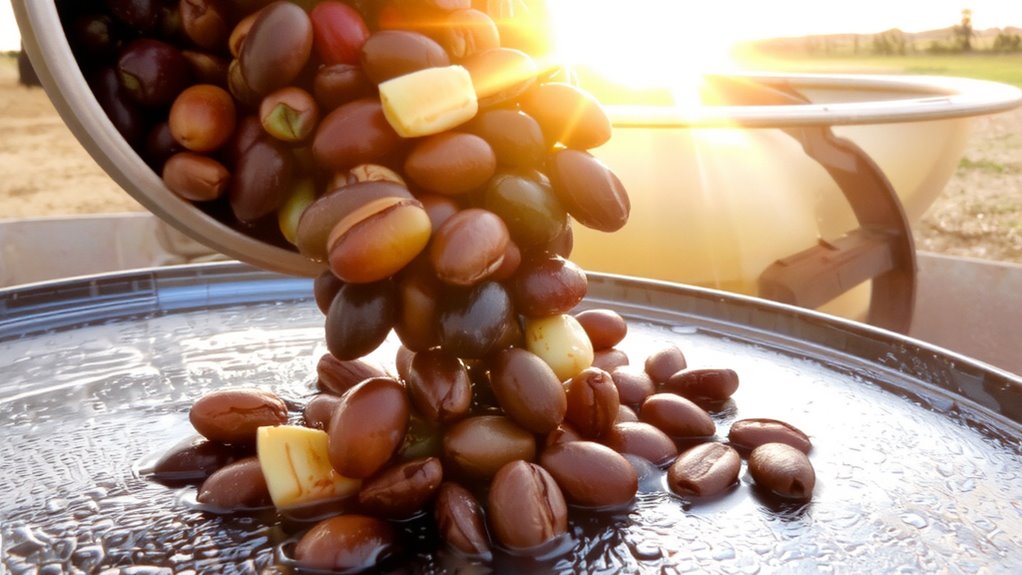
Seed damage isn’t just a minor flaw-it’s a silent killer of cup quality in washed coffee. When seeds are cracked or bruised during depulping, you risk compromising both seed germination and cup flavor. Damaged seeds absorb water unevenly during fermentation, leading to inconsistent processing and off-flavors like sourness or staleness. Even minor fissures can harbor bacteria or mold, further degrading quality. Healthy, intact seeds ferment evenly, developing cleaner, more vibrant cup profiles. If you’re aiming for high-scoring lots, protecting seed integrity isn’t optional-it’s essential. You’ll also preserve viability for farms that replant their own stock, as strong seed germination depends on unbroken embryos. Choose machines with adjustable settings and smooth rollers to reduce shear force. Avoid metal-to-metal contact points common in older or poorly maintained units. Monitoring for overloading or dull parts helps maintain consistency. Protect the seed, and you protect flavor, value, and future harvests.
Choose the Right Depulper for Your Volume
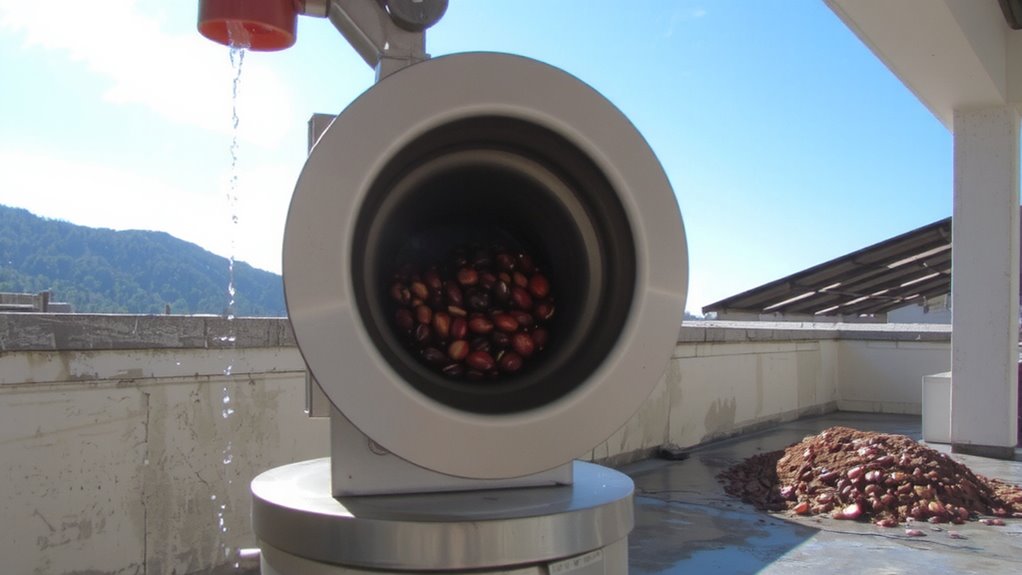
Most small farms processing under 500 kg of cherry per day find that manual or small electric depulpers like the Penagos 100 or Ecocleaner Mini work best-they’re affordable, easy to maintain, and use far less water than larger systems. If you’re handling 500–2,000 kg daily, a mid-sized disc or drum depulper such as the Penagos 300 or Ecocleaner 1500 fits better. Bigger operations over 2,000 kg need high-capacity units like the Penagos 500 or horizontal disc models. Choosing the right machine guarantees proper throughput matching, preventing bottlenecks or idle time. Oversized equipment wastes energy and complicates machine calibration, while undersized units strain under load, increasing wear and risking inconsistent performance. Match your depulper not just to current volume but expected seasonal peaks. It’s smarter to slightly oversize than to max out your machine daily. Get the scale right, and you set the stage for efficient, seed-safe processing.
Set Depulper Pressure to Avoid Seed Damage
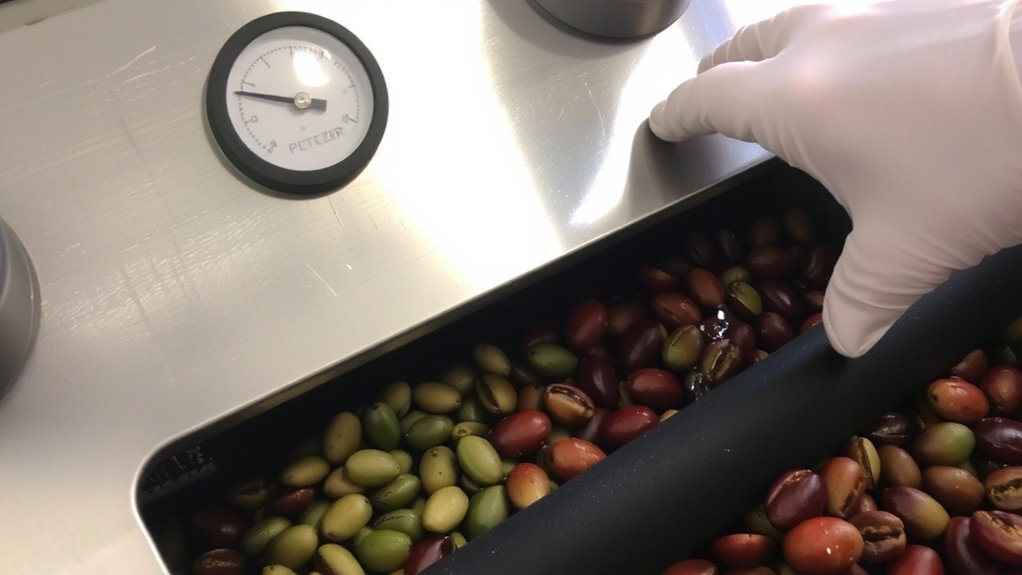
If you’re running your depulper too tight, you’ll crush beans-especially softer ones during peak harvest-so dialing in the right pressure is critical for preserving seed integrity. Proper pressure calibration guarantees the machine removes mucilage without bruising or cutting seeds. Start with the manufacturer’s settings, then adjust based on cherry ripeness and variety; tighter pressure may work for dense, ripe fruit, but softer cherries need gentler treatment. Check output frequently using seed inspection-look for splits, cuts, or crushed tips. Manual inspection every batch helps catch issues early. Machines like the Agtron or Penagos require precise gap settings, while traditional disc depulpers offer simpler adjustments. Over-pressing increases damage; under-pressing leaves too much mucilage, raising fermentation risks later. Striking the right balance improves bean quality and consistency. Regularly recheck settings as cherry conditions change throughout the day. Good pressure control is low-cost insurance against avoidable seed damage.
Depulp Within 8 Hours to Prevent Fermentation
Since coffee cherries begin fermenting soon after harvest, you’ll want to depulp them within 8 hours to avoid unwanted microbial activity that can taint the cup. The window is tight because both cherry ripeness and internal moisture accelerate enzymatic activity once picked. Overripe cherries ferment faster, so sorting them early helps maintain control. If you delay depulping, even mildly overripe fruit can start breaking down, leading to inconsistent mucilage removal and off-flavors. Enzymatic activity, while natural, becomes problematic when unmanaged-it can cause over-fermentation, resulting in dull or sour notes. Processing within 8 hours guarantees mucilage remains intact and fermentable under controlled conditions later, not degraded in the field or hold bin. Hand-cranked and motorized depulpers work best when fed fresh, evenly ripe cherries. Delaying risks seed exposure to prolonged acidity and heat, harming quality. Time it right, and you protect both integrity and flavor potential.
Check Cherry Moisture Before Processing
When you’re getting ready to depulp, don’t skip checking the moisture content of your cherries-this step can make or break your batch. Proper cherry sorting and moisture testing guarantee peak depulping without damaging seeds. Too much moisture leads to over-fermentation; too little makes depulping inefficient. Use a digital moisture meter or perform a manual squeeze test to assess readiness. Aim for cherries that are firm but slightly yielding-ideally between 58% and 62% moisture content.
| Moisture Level | Effect on Depulping |
|---|---|
| Below 55% | Hard cherries, seed damage likely |
| 58–62% | Ideal range, smooth depulping |
| Above 65% | High risk of fermentation, pulp sticks |
Moisture testing takes minutes but prevents costly mistakes. Always combine with visual cherry sorting to remove underripe or overripe fruit. For more accurate results, consider using a coffee bean moisture meter specifically designed for agricultural use.
On a final note
You’ll get the best results by matching your depulper to your volume-small farms do well with manual models like the K7, while larger operations need motorized units. Set pressure just high enough to remove pulp cleanly; too much crushes seeds. Depulp within 8 hours to avoid fermentation, and check cherries are at ideal moisture. These steps protect seed integrity, boost quality, and keep processing efficient.