How to Remove Coffee Oils From Your Espresso Machine’s Portafilter Handle
Rinse your portafilter handle under hot water right after pulling a shot to prevent oils from drying. Use a soft sponge and a drop of dish soap to scrub crevices where grime hides. For built-up oils, soak it in a Cafiza solution weekly-this dissolves residue without harming stainless steel. Avoid steel wool; it scratches surfaces and traps oils. Ultrasonic cleaning works well for deep grime. Dry thoroughly to stop water spots. If you’re skipping detergent soaks, you’re leaving rancid oils behind-your next espresso’s taste will tell the difference.
Notable Insights
- Rinse the portafilter immediately after use to prevent coffee oils from drying and sticking.
- Scrub with a soft sponge and mild dish soap to remove surface oils and residue.
- Soak the handle in a dedicated coffee equipment cleaner like Cafiza to break down stubborn oil buildup.
- Use an ultrasonic cleaner or soft-bristle brush to reach oils in crevices and textured surfaces.
- Dry thoroughly after cleaning to prevent water spots and long-term oil-related corrosion.
Clean Your Portafilter Handle in 5 Minutes
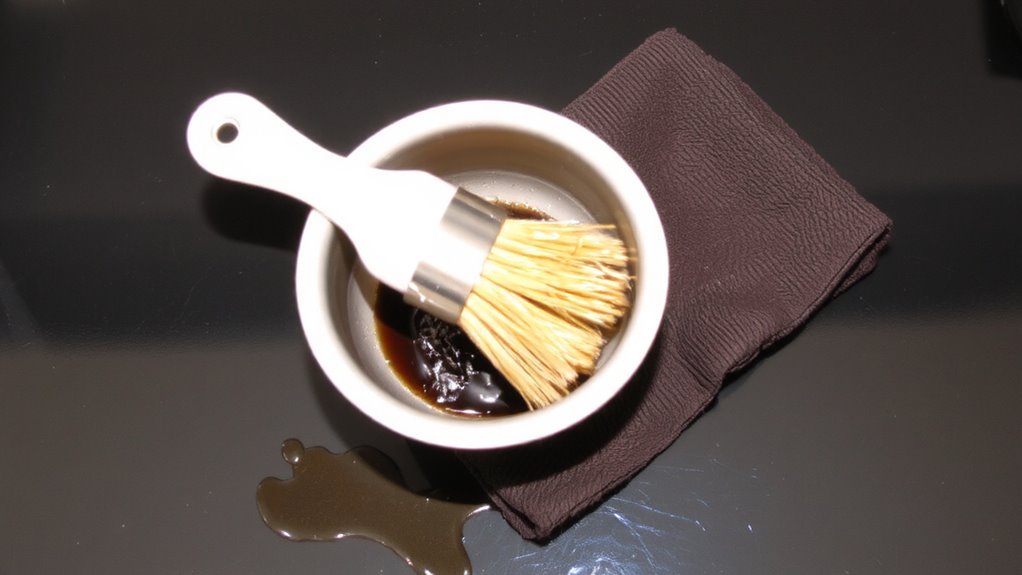
A grimy portafilter handle isn’t just unsightly-it can affect your espresso’s taste over time. Coffee stains and handle discoloration build up from oils and leftover grounds, especially if you skip daily cleaning. But you don’t need much time or effort. Just remove the portafilter after use and rinse it under hot water. Then, grab a soft sponge and a drop of dish soap. Scrub the handle thoroughly, focusing on crevices where grime hides. For stubborn coffee stains, a quick 30-second brush with a nylon brush helps. Dry it immediately to prevent water spots and further discoloration. This whole process takes about five minutes and should be done after every use. Regular cleaning prevents long-term oil buildup, keeps your gear looking sharp, and guarantees your espresso stays clean-tasting day after day. No special tools or cleaners needed-just consistency.
Best Clean Attracklers for Espresso Oil Buildup
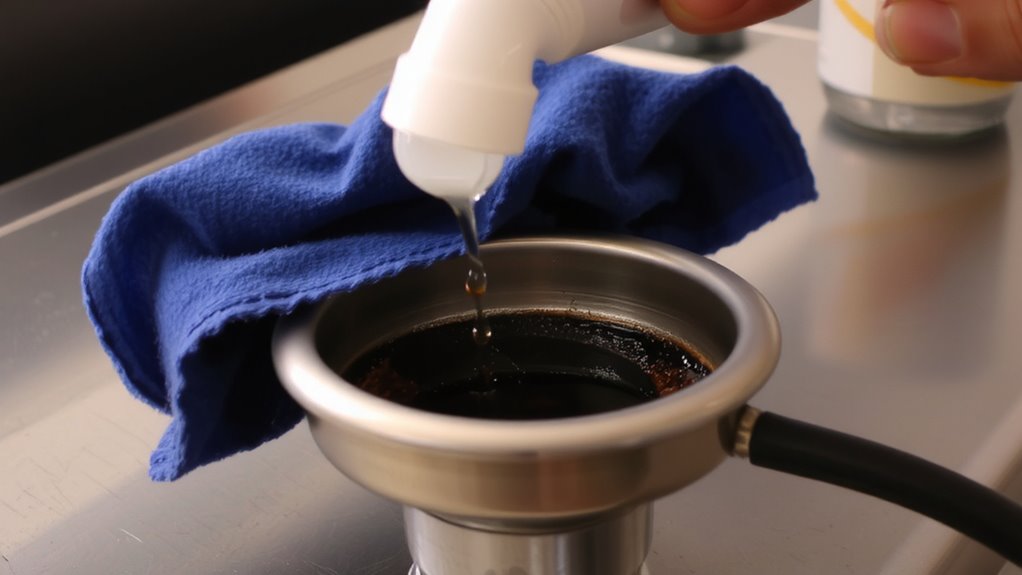
While regular rinsing helps, it won’t fully break down sticky espresso oil buildup on your portafilter handle over time. For tougher residue, chemical solvents like Cafiza or Urnex Espresso Machine Cleaner work effectively-just mix with water, soak the handle, and rinse thoroughly. These cleaners target oils without harming metal, but prolonged exposure may degrade rubber parts, so follow recommended soak times. For a deeper clean, ultrasonic cleaning is a strong option. Devices like the Crest Ultrasonic Cleaner use high-frequency sound waves to dislodge grime from crevices, offering a hands-off approach that’s especially useful for portafilters with intricate designs. Ultrasonic cleaning works best when paired with a dedicated coffee equipment solution, not just plain water. While it’s more costly upfront, it saves time and delivers consistent results with minimal effort, making it ideal for heavy-use environments or those wanting a thorough maintenance routine. Owners of La Marzocco espresso machines often find these cleaning methods essential for maintaining performance and longevity.
Scrub Tough Residue Without Damaging the Handle
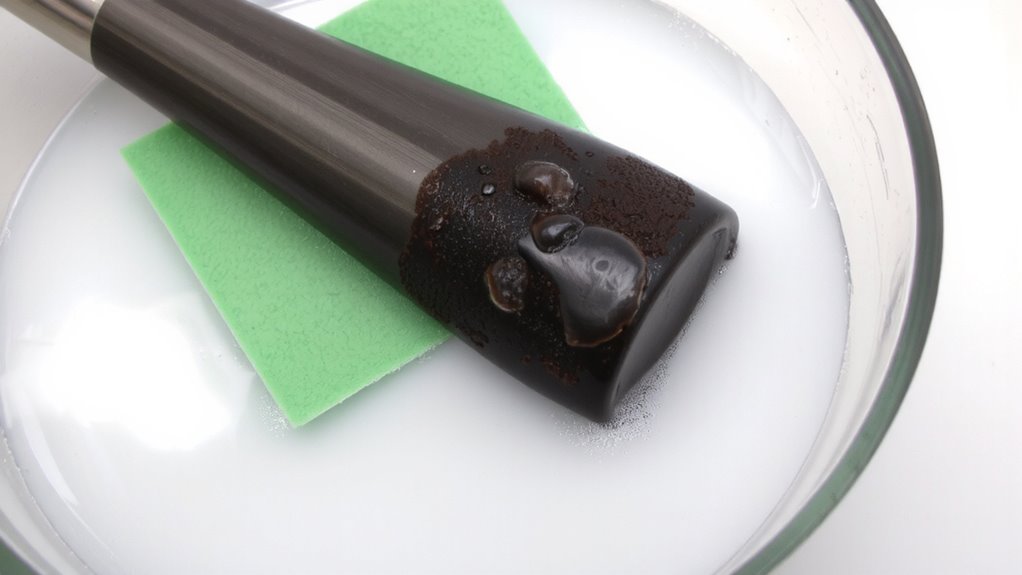
Grab a soft-bristle brush or a non-abrasive scrub pad-your first line of defense against stubborn coffee oils without scratching the handle. Use gentle scrub pressure and circular brush techniques to loosen residue while preserving the finish. Avoid steel wool or harsh pads; they might damage protective coatings. For especially caked-on oils, let the handle soak briefly in a water and detergent mix before scrubbing. Focus on textured areas where grime hides, but keep pressure consistent and moderate.
| Tool | Scrub Pressure | Best For |
|---|---|---|
| Soft-bristle brush | Light to mid | Daily maintenance |
| Non-abrasive pad | Mid | Built-up oils |
| Nylon scrubber | Light | Aluminum handles |
| Sponge | Low | Polished surfaces |
| Dental pick (plastic) | None | Crevice debris removal |
Brush techniques matter more than force-effective cleaning doesn’t require aggressive scrubbing.
How Often to Clean Your Portafilter for Great-Tasting Espresso
Keeping your portafilter clean isn’t just about looks-it directly affects your espresso’s taste. You should clean your portafilter after every use to preserve coffee freshness and prevent flavor degradation. Residual oils from used grounds turn rancid quickly, especially when exposed to heat and air. That buildup taints your next shot, dulling bright notes and adding bitterness. For daily users, a quick rinse and wipe isn’t enough. Backflush with water (or a dedicated detergent if your machine allows) once a week to remove deep-seated oils. For low-volume home machines, a thorough cleaning every few days works. Stainless steel handles resist staining better than plastic, but both need consistent care. Ignoring this step might save time short-term, but it harms extraction quality and consistency. Keep it simple: dump the puck, rinse the basket, wipe the rim and handle, and clean thoroughly on schedule. Your taste buds will notice the difference. Using a high-quality grinder like one of the best espresso grinders can also minimize excess oil buildup by producing consistent, clean grinds.
Why Coffee Oils Ruin Espresso (And Your Handle)
Since coffee oils linger on contact, they begin deteriorating the moment your shot ends, and that affects both flavor and function. Those oils quickly turn rancid, causing flavor degradation that ruins your espresso’s brightness and clarity. What was once a vibrant, balanced shot now tastes stale or bitter. You’re not just drinking old coffee-you’re tasting spoiled residue. Beyond taste, built-up oils contribute to equipment corrosion over time. They attract moisture and particles, accelerating wear on metal surfaces, especially on portafilter handles and group heads. Stainless steel may resist it longer, but aluminum or chrome-plated parts degrade faster. Left unchecked, gunked filters and sticky baskets follow, leading to poor extraction and harder cleaning later. Wiping your portafilter after each use helps, but only regular deep cleaning stops long-term damage. Your machine performs better, and your espresso stays true, when you stay ahead of the grime. Choosing the right best portafilters can also make maintenance easier and improve cleaning efficiency.
On a final note
You should clean your portafilter handle weekly to prevent coffee oils from turning rancid and affecting taste. Use a gentle detergent and a non-abrasive brush-like the Cafiza Powder or Urnex tablets-to avoid scratches. Steel handles resist wear better than plastic. If oils build up, a 10-minute soak helps, but don’t overdo it. Rinse well, dry completely. A clean handle means better shots and longer gear life.