Understanding the Role of Particle Surface Area in Coffee Extraction During Grinding
Smaller coffee grounds give more surface area for water to hit, speeding up extraction. That’s why espresso uses fine grinds and gets done in 30 seconds, while French press needs coarse grinds over four minutes. If your coffee tastes sour, it’s likely under-extracted; bitter means over-extracted. For even extraction, use a burr grinder like a Baratza Encore instead of a blade grinder. You’ll get better flavor balance, and what comes next might surprise you.
Notable Insights
- Smaller coffee particles increase surface area, speeding up extraction by exposing more coffee to water.
- Greater surface area allows faster dissolution of compounds, reducing brew time for methods like espresso.
- Coarse grinds limit surface area, slowing extraction and requiring longer brew times, as in French press.
- Uneven grind size creates inconsistent surface areas, leading to mixed under- and over-extracted flavors.
- Uniform particle size maximizes surface area consistency, promoting balanced extraction across all particles.
Why Smaller Grinds Extract Faster
While it might seem obvious that smaller coffee grounds brew faster, the real reason comes down to surface area. When you grind coffee finer, you dramatically increase the surface area exposed to water, which directly boosts extraction speed. More surface means more contact points for water to dissolve flavors quickly and efficiently. That’s why espresso, with its ultra-fine grind, extracts fully in 25–30 seconds, while a coarse French press grind takes four minutes. If your grind is too fine for your brew method, you risk over-extraction-even in a short time-leading to harsh notes. Conversely, too coarse and the extraction speed slows too much, leaving coffee weak. Matching grind size to your device-like using a conical burr grinder for consistency-gives you control. Know your brewer’s ideal range: V60 likes medium-fine, Aeropress handles fine, and French press needs coarse. Surface area isn’t just science-it’s your key to better coffee.
Why Your Coffee Tastes Sour or Bitter?
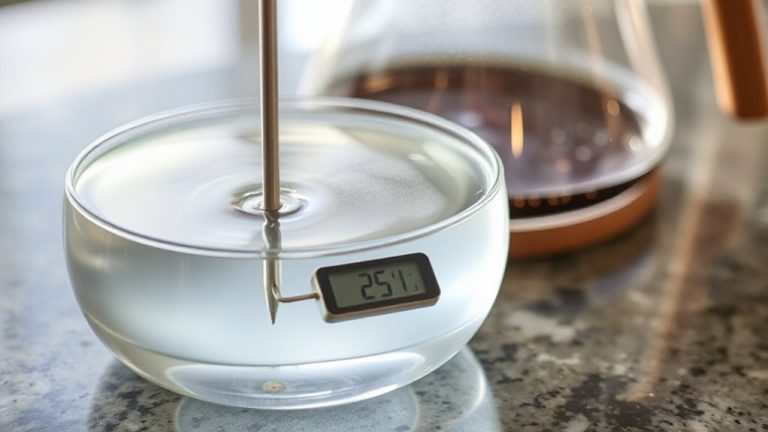
What if your morning coffee tastes sharp or overly harsh? That sour or bitter note usually means your extraction went off track. If your coffee tastes sour, the water didn’t dissolve enough from the grounds-common when water temperature is too low or the roast profile is dark but ground too coarse. Under-extraction leaves acids dominant. On the flip side, bitterness often points to over-extraction, especially if water temperature is too high or the roast profile is light but ground too fine. This pulls out more bitter compounds. You’re not just brewing coffee-you’re balancing chemistry. A gooseneck kettle helps control water temperature precisely, while matching grind size to roast profile keeps flavors in check. Light roasts need slightly longer contact time; dark roasts extract faster. Adjust one variable at a time, and taste carefully. Your palate is the best tool. Using the right gooseneck kettle can significantly improve your control over the pour-over brewing process.
How Even Grind Size Balances Flavor
Consistency in grind size is your best shot at balanced coffee. When particles are even, they extract at similar rates, giving you improved extraction uniformity. That means more of the good stuff-sugars, acids, and aromatics-comes out evenly, without over-extracting the fines or under-extracting the boulders. This directly supports flavor balance, reducing unwanted bitterness or sourness. Blade grinders, for instance, create uneven particles, making uniform extraction tough. Burr grinders-especially conical or flat burr models-deliver the consistency you need. If your grind’s too inconsistent, some particles dump bitter compounds while others contribute almost nothing. You’re not just grinding coffee; you’re setting up the entire extraction. For most brewers, that uniformity means sweeter, clearer, and more complete flavors in your cup. It’s not about fineness-it’s about evenness. According to Wirecutter, the best coffee grinders consistently provide the precision needed for uniform particle size.
Match Grind Size to Your Brew Method
Since not all brewing methods pull coffee the same way, you’ll want to match your grind size to how your brewer works. For espresso, use a fine grind-small particles extract quickly under high pressure, especially with standard brew temperature around 90–96°C. Too fine, and you’ll over-extract; too coarse, and it’ll run thin. For pour-over, a medium-fine grind works best, letting water flow steadily while extracting evenly-ideal when paired with good water quality. French press? Go coarse; it prevents sludge and over-extraction during long steeping. Cold brew needs coarse grinds too, since steep times are extended. Your machine’s brew temperature and water quality also affect extraction, but even the best setup fails with the wrong grind. Auto-drip machines often need medium grinds for balanced flow. Match the grind to your method, and you’ll get cleaner, more consistent results every time. Using a coffee scale with a built-in timer helps synchronize grind time with extraction for greater precision.
How Your Grinder Affects Extraction Consistency
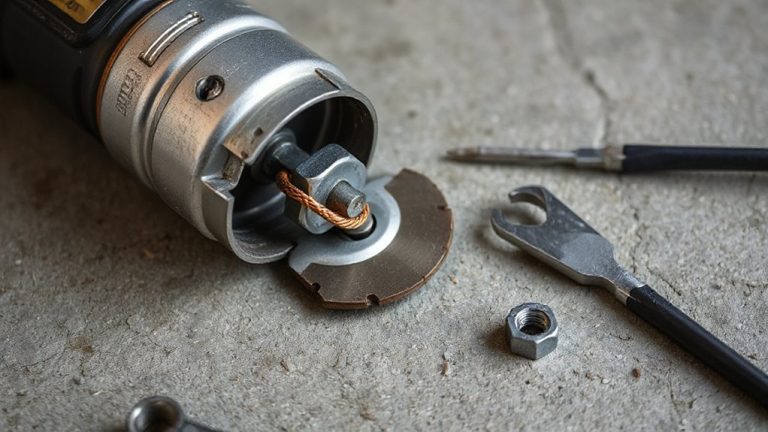
Your grinder’s design plays a key role in how evenly your coffee extracts, because not all grinders break beans into consistent particle sizes. Inconsistent particles lead to uneven extraction-some over-extract, others under-extract. Burr grinders, especially flat or conical types, offer better uniformity than blade grinders. Proper burr alignment is critical; misaligned burrs create uneven gaps, producing fines and boulders that hurt consistency. If your grinder heats up quickly, grind temperature rises, potentially warming the beans and altering flavor. High-end grinders like the Baratza Encore or Niche Zero manage heat well and allow burr calibration. Cheaper models often lack adjustment options, leading to poor alignment over time. For best results, choose a grinder with stable burr alignment and low heat retention. Regular cleaning and calibration help maintain performance, ensuring each brew is balanced and repeatable. Your coffee’s clarity starts with a reliable grind.
On a final note
You get better extraction when particles have more surface area, which is why finer grinds brew faster. Uneven grinds lead to some parts over-extracting (bitter) and others under-extracting (sour). A good burr grinder gives consistent size, improving flavor balance. Match the grind to your method-espresso needs fine, French press coarse. Blade grinders are cheaper but less even. For tastier coffee, control grind size and use consistent equipment every time.