The Ultimate Guide to Espresso Pulling, Tamping, and Dial-In Adjustments
You dial in espresso by adjusting dose, grind, and yield to match your beans and machine-start with 18g in, 36g out, and tweak one variable at a time. Tamp evenly with 30–40 pounds of pressure to prevent channeling. Fix sour shots with a finer grind, bitter ones with a coarser setting. Use stable water temperature (195–205°F) and consistent brew time. Machines like the Rocket R58 offer pressure profiling for better control. Small changes make big differences in flavor and balance. You’ll find the full picture with more precise steps and real-world tips.
Notable Insights
- Dial-in espresso by adjusting dose, grind, and yield to achieve balanced extraction and consistent flavor.
- Use a consistent dose (e.g., 18g) to isolate variables and accurately tune shot parameters.
- Tamp firmly and evenly with 30–40 pounds of pressure to prevent channeling and ensure uniform extraction.
- Adjust grind size to control brew time: finer for slower extraction, coarser for faster flow.
- Fine-tune temperature in 1°F increments to highlight sweetness or reduce bitterness based on bean profile.
What Is Espresso Dial-In?
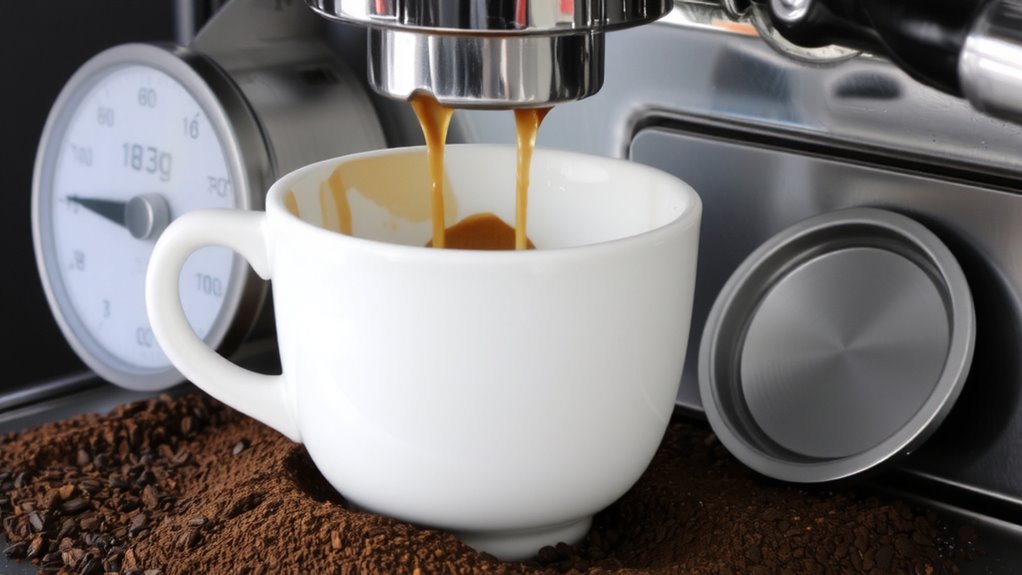
What does it take to pull a great shot of espresso? It starts with understanding espresso dial-in-the process of adjusting your setup to achieve balanced flavor. You’re not just setting grind size or dose; you’re doing espresso calibration to match your machine, beans, and environment. Dial-in lets you control extraction, ensuring consistency shot after shot. A key part is flavor profiling, where you tweak variables to highlight sweetness, acidity, or body based on the coffee’s origin and roast. You might use a scale, timer, and refractometer to measure results objectively. Brands like Baratza or Decent ESP offer tools that improve precision. While it takes practice, dial-in isn’t guesswork-it’s a repeatable method. Without it, even fresh beans can taste off. You need to recalibrate daily, as humidity and bean age shift results. It’s the foundation of quality espresso, not a one-time fix. A precise coffee refractometer helps quantify extraction yield for more accurate dial-in.
Dial In Dose, Grind, and Yield
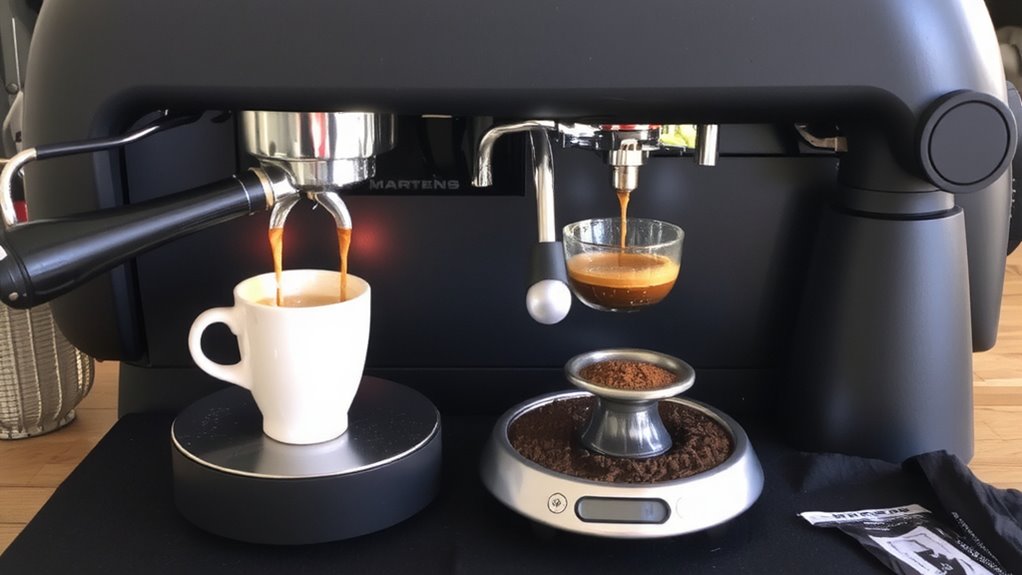
While dose, grind, and yield are separate variables, they work together in espresso dial-in to control extraction and balance flavor. For best results, maintain dose consistency-use the same coffee weight each time (like 18g)-so changes in taste come from grind or time, not fluctuating inputs. Grind size adjusts extraction speed: finer grinds slow water, increasing extraction; coarser speeds it up. Yield tracking helps you measure how much espresso you pull (e.g., 36g from 18g dose), guiding ratio decisions. A stable starting point lets you tweak one variable at a time.
| Dose (g) | Grind Setting | Yield (g) |
|---|---|---|
| 18 | 12 | 36 |
| 20 | 14 | 40 |
| 16 | 10 | 32 |
Track yield and taste to refine over time.
Tamp for Even Extraction
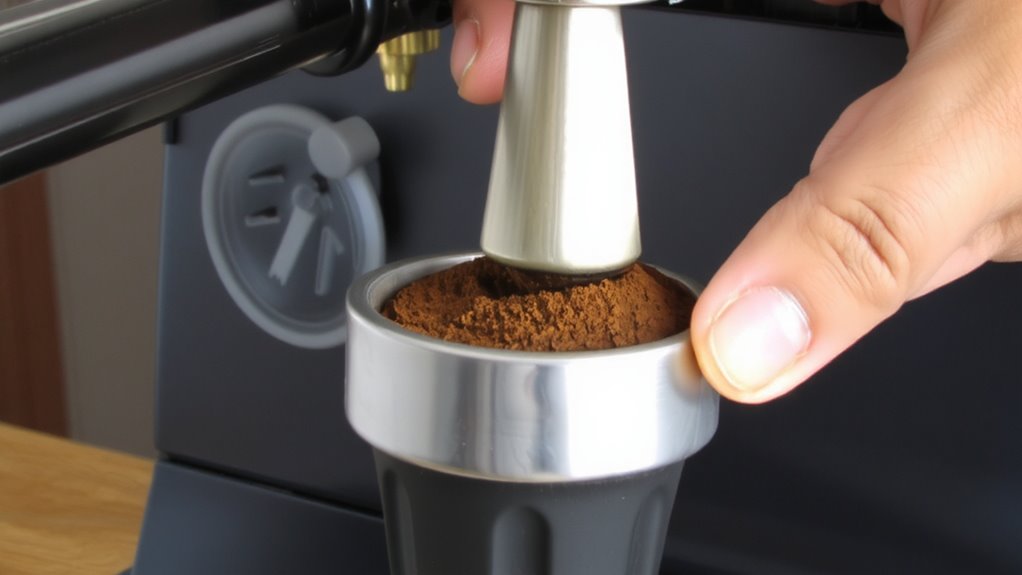
If you want even extraction, how you tamp matters just as much as your dose or grind. An uneven tamp creates channels in the puck, letting water rush through weak spots and leaving other areas under-extracted. For best results, aim for firm, level pressure every time-this is where tamp consistency makes a real difference. Use a calibrated tamper that fits your basket snugly, and check that the base is flat. Your portafilter alignment also plays a key role: if it’s cocked even slightly in the group head, water won’t distribute evenly. Always insert the portafilter straight and lock it in fully. Practice a smooth, two-step tamping motion-pre-tamp to settle the grounds, then apply 30–40 pounds of pressure for the final press. A level, consistent surface guarantees uniform flow and balanced shots. Top-performing tampers often feature precision-machined bases for optimal contact, making the choice of a calibrated tamper crucial for professional-grade results.
Fix Sour, Bitter, or Weak Shots
You’ve tamped with care, aligned your portafilter straight, and still ended up with a shot that’s sour, bitter, or thin-now it’s time to troubleshoot. A sour shot usually means it’s under-extracted-your grind is likely too coarse or dose too low. Try a finer grind or slightly increase coffee weight. Bitterness often points to over-extraction, so go coarser or reduce brew time. If the shot is weak or watery, check your dose and distribution-uneven coffee beds cause channeling. Remember, poor espresso affects milk texture; if your shot’s off, steamed milk won’t layer smoothly in drinks like lattes. Fixing extraction improves body and balance, which directly impacts drink pairing-bold shots suit sugary pastries, while balanced ones pair better with dark chocolate. Always dial in fresh-espresso changes with bean age and humidity.
Adjust Time, Temperature, and Pressure
Since grind size and dose aren’t the only factors shaping your shot, it’s time to look at time, temperature, and pressure-three levers that fine-tune extraction when the basics aren’t enough. You can adjust brew time by changing grind size or dose, but machines with flow control or pressure profiling open more options. Lower brewing temperatures (around 195°F) can reduce bitterness, while higher ones (205°F) boost clarity and sweetness-try adjusting in 1-degree increments. Machines like the Slayer or Rocket R58 allow pressure profiling, letting you start low and ramp up, which helps avoid channeling and improves body. Most home machines run at 9 bars, but some let you tweak pressure manually. If you’re pulling shots faster than 25 seconds, check your grind or try lowering temperature. For shots under 20 seconds, consider dialing in pressure profiling or extending brew time. These adjustments aren’t fixes-they’re refinements for when your base settings are already close.
On a final note
You’ve now got the basics to pull consistent shots. Dial in your dose, grind, and yield to match your equipment-like adjusting for a Lelit or Breville. Tamp evenly to avoid channeling. If shots taste sour, try a finer grind or longer pull. Bitter? Go coarser or shorten time. Most machines work best between 195–205°F. Small tweaks make big differences. Track changes, stick to routines, and you’ll get better results fast.