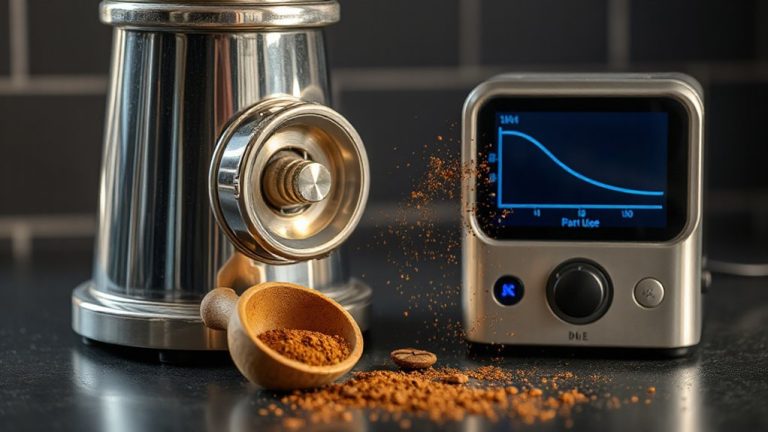
Why You Should Remove and Soak Your Grinder’s Hopper Monthly
You should remove and soak your grinder’s hopper monthly because coffee oils build up over time, especially from dark roasts, dulling flavor and causing inconsistent grinds. These oils trap stale particles, promote oxidation, and increase static, leading to messy, uneven grounds. A monthly soak in warm, soapy water-or a specialized cleaner like Urnex Grindz-removes residue, restores performance, and protects your grinder. Just unplug the unit, detach the hopper carefully, soak for 20–30 minutes, then rinse and dry fully. Proper reassembly guarantees smooth operation and better coffee. There’s more to get right than just the soak itself.
Notable Insights
- Monthly hopper soaks remove rancid oils that degrade coffee flavor and aroma.
- Oil buildup attracts stale particles, compromising grind consistency and brew quality.
- Soaking prevents clogs and static, reducing grounds from clinging or scattering.
- Regular cleaning extends grinder life by preventing residue-related wear and damage.
- A clean hopper ensures pure coffee taste by eliminating oxidized, bitter residues.
Why Coffee Oil Ruins Your Grinder and Brew
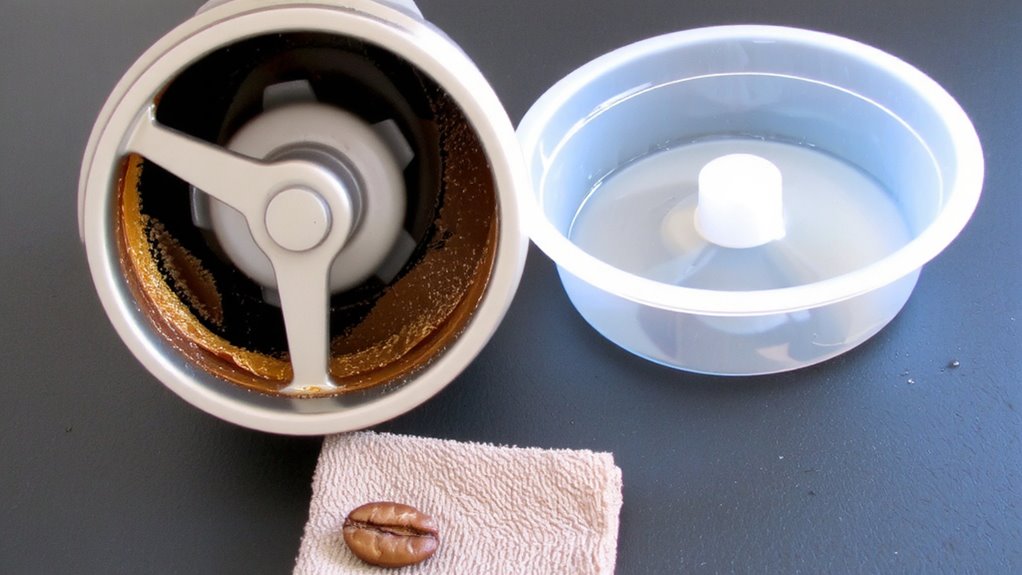
Think of coffee oils like invisible residue-they build up over time, even if you can’t see them. These oils coat your grinder’s burrs and hopper, attracting stale particles and accelerating coffee oxidation, which dulls flavor fast. You’ll notice your shots or brews tasting flat or rancid, especially with light roasts where nuances fade quicker. Oily beans, like dark roasts, worsen this, leaving gunk that clogs fine settings and harms grind consistency. Plus, old oils contribute to static buildup, making grounds cling to the hopper or burr chamber, leading to mess and wasted beans. Unlike dry, light roasts that produce less oil, oily beans demand more upkeep to avoid these issues. Left unchecked, oil residue degrades performance and taints every brew. Cleaning your hopper monthly reduces these problems, though it won’t fix oxidation already happening in stale beans. A well-maintained grinder ensures consistent performance, especially when using one of the best espresso grinders under $200, such as the Baratza Encore.
How a Monthly Hopper Soak Improves Coffee Taste
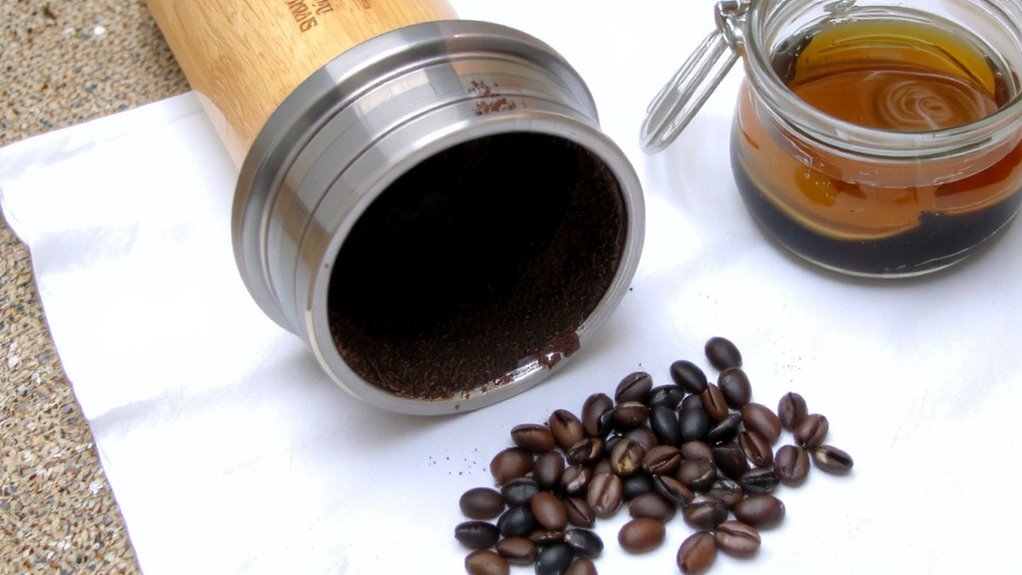
You’ve seen how coffee oils build up over time, dulling flavors and gumming up your grinder’s inner parts-especially with darker, oilier beans. A monthly hopper soak fights flavor degradation and supports aroma preservation by removing rancid residues that skew your coffee’s profile. Clean components mean fresher grinding, shot after shot. This simple habit guarantees your coffee tastes like it should-clean, bright, and true to origin.
| Factor | Impact |
|---|---|
| Flavor Degradation | Reduced with removal of stale oils |
| Aroma Preservation | Improved in freshly ground beans |
| Grind Consistency | Restored without oily residue |
| Brew Clarity | Enhanced due to cleaner particles |
You don’t need special solutions-just warm water and mild detergent. Regular soaking keeps your grinder performing without costly maintenance or premature wear. Using the right cleaning brush can further enhance the effectiveness of your monthly soak by reaching stubborn grime in tight spaces.
Remove Your Hopper Safely in 4 Steps
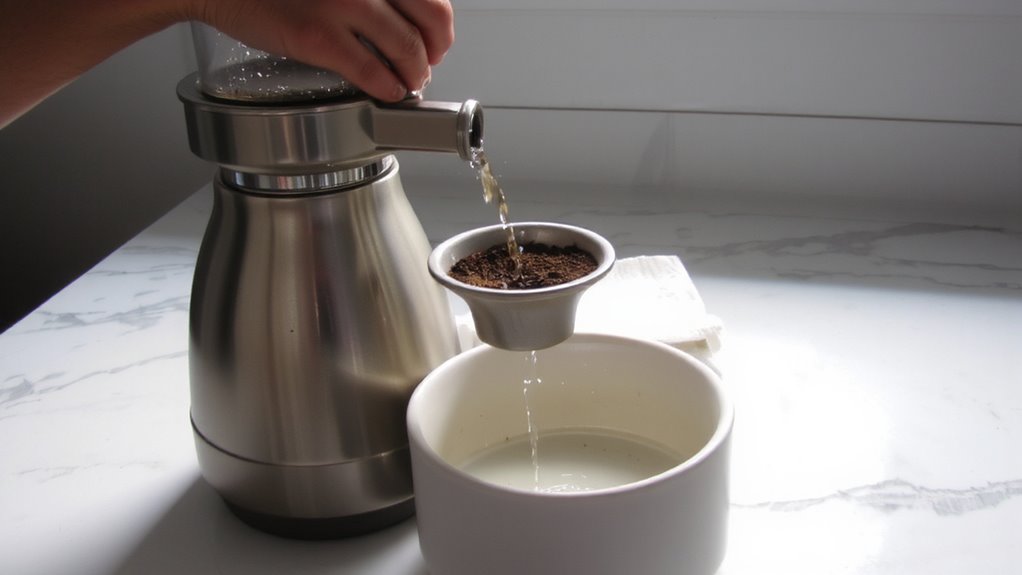
Start by making sure your grinder is unplugged-safety always comes first with electrical appliances. Now, grip the hopper firmly with both hands to guarantee safe handling during removal. Most models, like the Baratza Encore or Fellow Ode, use a simple twist-off design; rotate the hopper counterclockwise until it disengages. If it resists, don’t force it-check for coffee grounds jamming the connection. For grinders with a center pin, align the hopper’s notch properly to avoid damaging internal components. Hopper detachment should be smooth and controlled. Never yank or tilt it sideways, as this can crack plastic or misalign parts. Once off, place it on a clean, dry surface to prevent contamination. Safe handling minimizes wear and keeps your grinder in top shape. Doing this monthly helps maintain performance and flavor clarity-just remember, power off, steady grip, proper twist, gentle placement. A clean grinder ensures best grinders for filter coffee deliver optimal results.
Best Soak for Coffee Oils and Grounds
How do you cut through the sticky coffee oils and leftover fines that build up in your hopper over time? For a deep clean, skip plain water-it won’t tackle the residue buildup effectively. Instead, use a mix of warm water and a gentle, unscented dish soap. This combo loosens oils without leaving behind fragrances that could taint your coffee. Some users swear by specialized coffee equipment cleaners like Urnex Grindz or Cafiza, which are formulated to dissolve oils and fine particles. Just make sure to fully dissolve the powder in warm (not hot) water to avoid damaging plastic parts. Let the hopper soak for 20–30 minutes, giving it enough time to break down grime. Avoid abrasive scrubbers, which can scratch surfaces and trap future residue. This simple soak makes a noticeable difference in both performance and taste over time.
Dry and Reassemble Your Hopper Properly
After soaking, it’s best to rinse the hopper thoroughly with warm water to remove any soap or cleaning residue before drying. Dry each part completely with a clean, lint-free cloth, then let it air-dry for at least 30 minutes to guarantee no moisture remains-especially around the collar and lid. Once dry, reassemble the hopper carefully, checking for correct hopper alignment to avoid grinding issues or bean jams. If it’s misaligned, the grinder may not feed beans properly. Make sure the lid sealing is tight but not over-tightened, as this can warp the plastic over time. A secure seal keeps coffee fresh and prevents static from scattering grounds. Reattach it to the grinder body firmly, guaranteeing all tabs lock into place. This step keeps your machine running smoothly month to month.
What Happens If You Skip the Hopper Soak
You’ve dried and reassembled your hopper just right, making sure every part fits securely and functions as it should-but skipping the soak step before that cleaning process leaves problems behind that drying alone won’t fix. Residual coffee oils and fines cling to the plastic, creating a breeding ground for mold buildup, especially in humid environments. Once mold takes hold, it’s not just unsanitary-it can taint your coffee’s flavor fast. Plus, without a thorough soak, static accumulation worsens, making grounds stick to the hopper walls and creating messy spills during dosing. That static also disrupts pour consistency, which affects grind performance. Wiping it down doesn’t remove these embedded residues like soaking with warm water and mild detergent does. Over time, skipping this step wears down your equipment faster and compromises brew quality. Soaking dissolves what drying can’t address-keeping your machine hygienic, functional, and reliable month after month.
Make the Hopper Soak a Monthly Habit
Regularly soaking your grinder’s hopper every month keeps it running cleanly and consistently, just like clockwork. This simple step is key to effective grinder maintenance and guarantees your coffee tastes fresh. Oils and residue build up over time, affecting dose accuracy and flavor. Adding a hopper soak to your cleaning schedule takes little time but pays off in performance.
| Step | What to Do |
|---|---|
| 1 | Remove hopper and dump leftover beans |
| 2 | Soak in warm, soapy water for 20 minutes |
| 3 | Rinse, dry fully, and reattach |
Make this part of your monthly routine-set a phone reminder or pair it with bill payments. Consistency beats intensity when it comes to cleaning schedule success. A well-maintained grinder delivers better extraction, shot after shot.
On a final note
You should remove and soak your grinder’s hopper monthly to prevent old coffee oils from turning rancid and ruining your brew. A clean hopper means fresher, more consistent coffee. Just unplug the grinder, empty beans, disassemble carefully, and soak in warm, soapy water-or a mix of water and vinegar for tougher residue. Rinse well, dry completely, then reassemble. Skipping this leads to stale flavors and clogs. Make it a habit-your coffee will taste better every time.