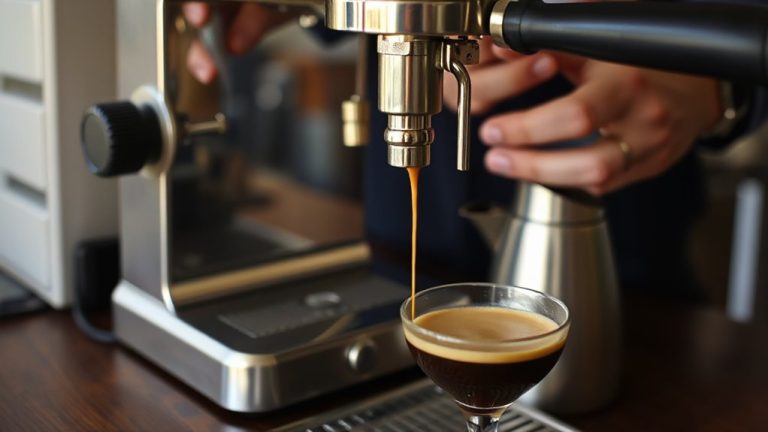
How the Bourbon Coffee Variety Delivers Balanced Sweetness in Central American Brews
You get balanced sweetness from Bourbon coffee because its genetics thrive in Central America’s volcanic highlands. Grown above 1,200 meters, cool temps and mineral-rich soils slow ripening, boosting sugar development. Volcanic drainage and night cooling enhance bean density, improving roast evenness and extraction. Process it as honey or natural, and you preserve more sweetness. Roasters in Antigua or Santa Ana favor it for clean, consistent cups. Try it light to medium roast for bright yet rounded results that reveal why this variety stands out.
Notable Insights
- Bourbon’s genetic lineage enhances sweetness and balance, yielding a clean, complex cup with soft cherry and floral notes.
- Volcanic soils in Central America provide potassium and magnesium, boosting sugar development in Bourbon coffee beans.
- High elevations slow bean maturation, increasing density and improving sweetness and acidity in the final brew.
- Honey and natural processing methods preserve mucilage, enhancing Bourbon’s body and consistent sweetness in ideal climates.
- Roasters favor Bourbon for its even roast response and reliable profile, highlighting sweetness across diverse brewing methods.
What Makes Bourbon Coffee So Unique?
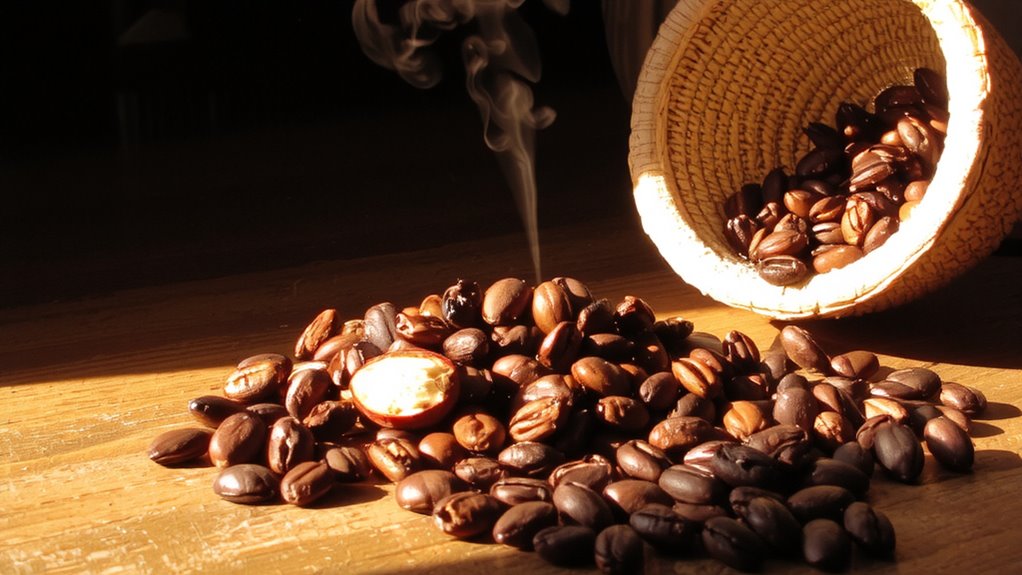
While not all specialty coffees deliver on flavor complexity, the Bourbon variety stands out due to its genetic lineage and distinct cup profile. You’ll notice its balance right away-particularly the floral notes that bloom when brewed with precise water temperature (around 195–205°F). These aromatics pair with soft cherry undertones, giving the cup depth without sharp acidity. Bourbon’s traits come through clearly when using manual pour-over methods like the Hario V60, where control over grind size and pour rate matters. Compared to other varieties like Typica or Catuai, Bourbon often tests higher in sensory panels for sweetness and clarity. Just keep in mind, it’s more disease-prone, so sourcing from reputable farms guarantees quality. You’re not just paying for taste-you’re paying for care. Brewing it right means respecting those delicate features with consistent technique.
Why Do Volcanic Highlands Elevate Bourbon’s Sweetness?
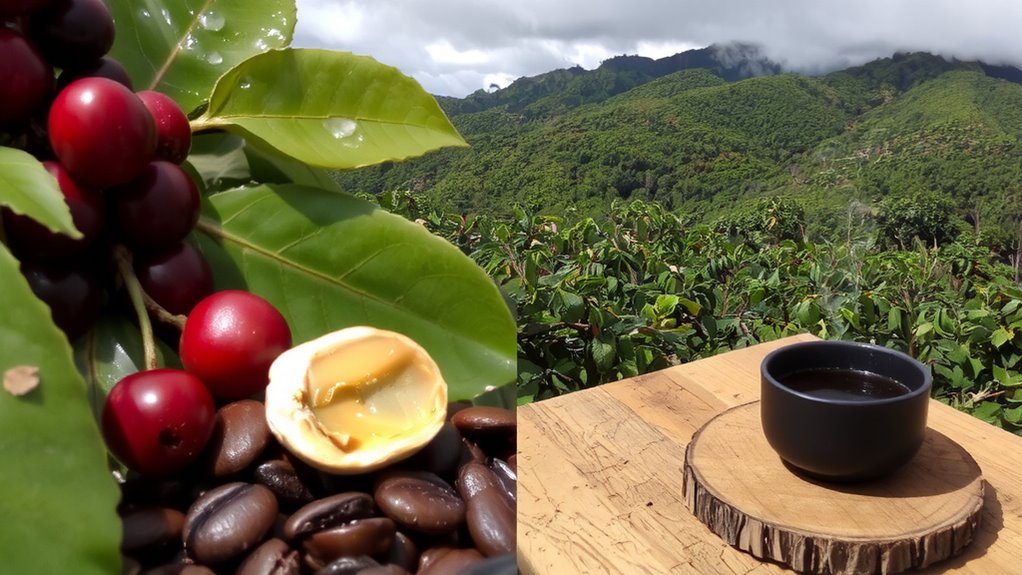
What if the secret to sweeter Bourbon coffee wasn’t just the bean, but where it’s grown? Volcanic highlands offer rich soils that boost mineral uptake, feeding the plants essential nutrients like potassium and magnesium, which support sugar development in the beans. You’ll notice this as a smoother, more pronounced sweetness in your cup. These regions also provide a consistent microclimate influence-cool nights and mild days slow cherry ripening, allowing sugars to accumulate gradually. The result? More balanced, complex flavors without harsh acidity. Unlike flat, dry areas, volcanic slopes drain well, reducing root stress and encouraging healthier growth. If you’re sourcing beans, look for Bourbon grown in places like Guatemala’s Antigua or Honduras’s Marcala-regions where volcanic soil and stable microclimates work together. You’ll taste the difference in clarity and sweetness, especially when brewed with precise water temperature and grind size. It’s not magic-it’s terroir, science, and care.
How Does Altitude Shape Bourbon’s Flavor?
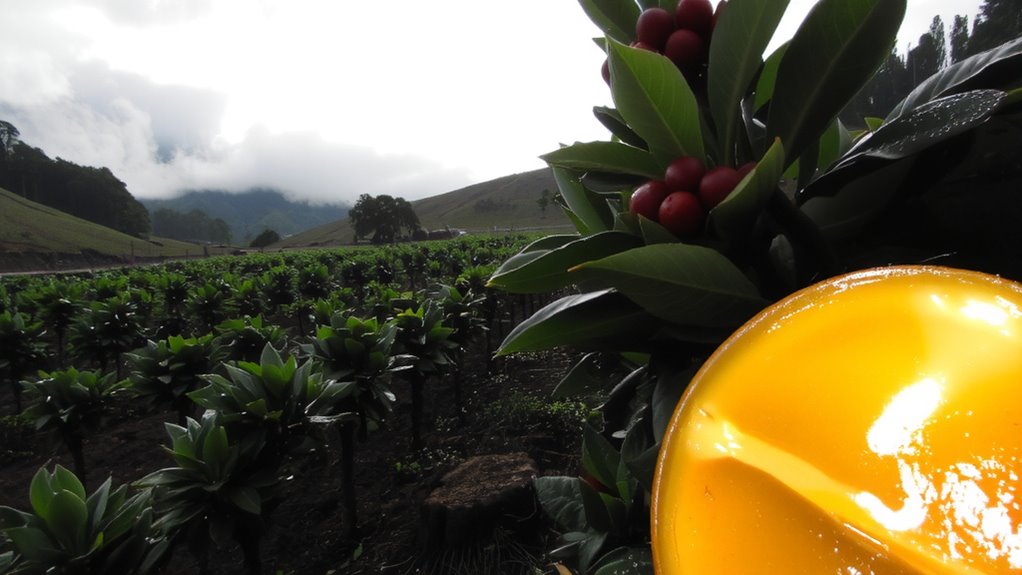
Altitude plays a direct role in how your Bourbon coffee tastes, building on the environmental benefits already seen in volcanic highlands. When grown above 1,200 meters, cooler temperatures slow bean development, increasing bean density. Denser beans often roast more evenly, helping you extract balanced sweetness and clean acidity. Higher elevations also reduce climate impact risks like pests and overheat, preserving plant health. However, too high-above 1,800 meters-can stress the plant, lowering yields. You’ll typically find the best balance between flavor complexity and reliability between 1,350 and 1,700 meters, especially in regions like Santa Ana, El Salvador, or Antigua, Guatemala. At these heights, consistent day-night shifts enhance sugar development without compromising bean size. You don’t need extreme altitude to get quality, but staying within this sweet spot gives you more control during roasting and brewing. Bean density and elevation go hand in hand-get it right, and your cup shows it.
Which Processing Methods Highlight Bourbon’s Character?
How do you bring out the best in Bourbon coffee once the beans are harvested? You start by choosing the right processing method. Natural drying works well in dry, sunny regions-think parts of Honduras or El Salvador-where you can spread whole cherries in the sun. This method boosts sweetness and body but demands constant monitoring to avoid fermentation flaws. Honey processing, especially yellow or red honey, strikes a balance: you remove the skin but keep some mucilage, then dry slowly. It gives you more control than natural drying and enhances Bourbon’s inherent sweetness and complexity. Black honey offers deeper body but takes longer and requires careful climate control. Each approach affects flavor differently, so match the method to your environment and goals. For consistent, high-scoring Bourbons, honey processing is often worth the extra labor.
Why Do Roasters Love Bourbon in Central America?
While Bourbon coffee doesn’t dominate every farm in Central America, you’ll find roasters actively seeking it out for its reliable cup quality and balanced profile. You love it because it responds well to a range of fermentation techniques, letting you dial in sweetness and clarity without surprise flaws. Whether using natural, honey, or washed processing, Bourbon delivers consistent acidity and body, making it easier to plan batch strategies. Its dense beans handle heat evenly, which means you can apply a variety of roast profiles-light or medium-with predictable results. You’ll notice clean development and even color change during roasting, reducing risk of baking or scorching. Unlike more finicky varieties, Bourbon offers flexibility without sacrificing complexity. That’s why many Central American roasters rely on it as a backbone for single-origins or high-performing blends. You’re not chasing novelty-you’re building repeatable quality.
On a final note
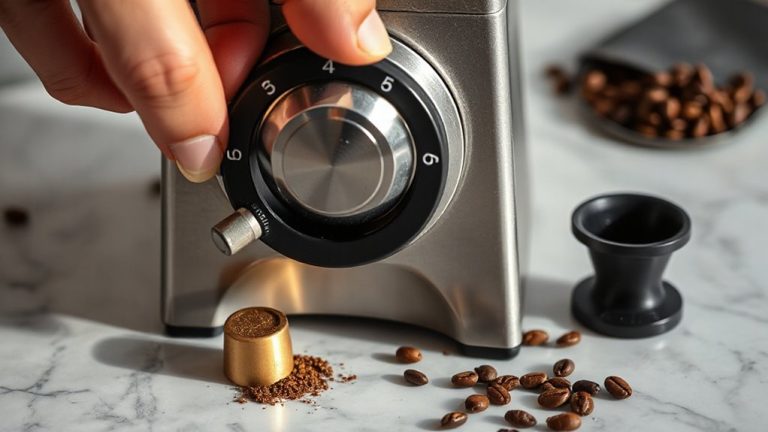
You’ll find Bourbon coffee delivers balanced sweetness thanks to its genetic makeup and ideal growing conditions in Central America’s volcanic highlands. At higher altitudes, slower bean development enhances sugar concentration. Washed processing sharpens clarity, while honey methods boost sweetness. Roasters favor Bourbon for its consistent cup quality and versatility. For best results, use a burr grinder and brew between 195°F and 205°F to highlight its nuanced profile.