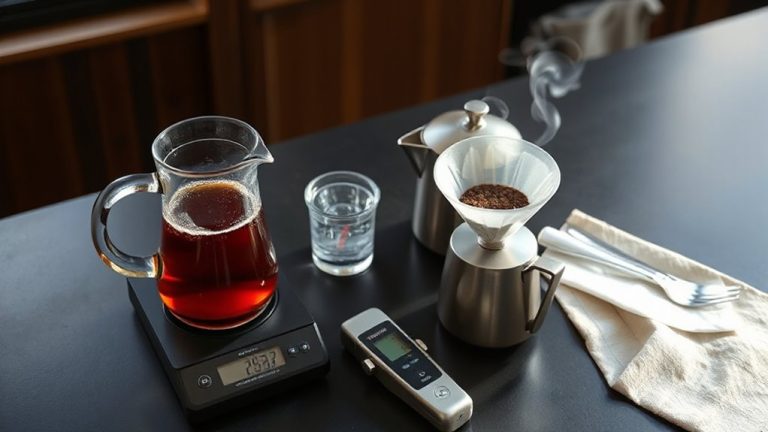
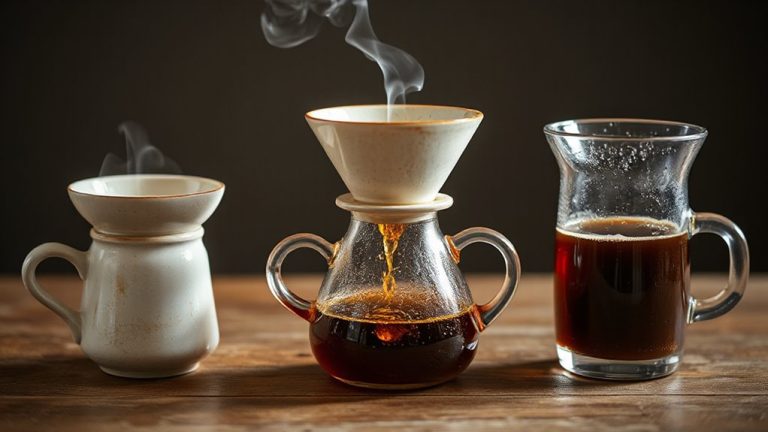
The Effects of Different Container Materials on AeroPress Brew Time Efficiency
Your AeroPress brew time and final temperature depend on your cup’s material. Stainless steel cools coffee fast despite its density, slowing extraction. Glass and plastic offer little insulation, dropping temps 10–15°F quickly. Even pre-warming helps only a little. Double-walled mugs retain heat best, keeping water stable for consistent, efficient brewing. They’re heavier but worth it for precision. Match your mug to your method-if speed and temp matter, skip basic cups. You’ll see why material choice shapes every brew.
Notable Insights
- Stainless steel containers cause rapid heat loss, lowering brew temperature and potentially slowing extraction during AeroPress brewing.
- Plastic cups absorb less initial heat, helping maintain more stable water temperatures for consistent brew timing.
- Glass mugs cool quickly, reducing brew efficiency and increasing variability in extraction due to rapid temperature drop.
- Double-walled mugs significantly improve heat retention, stabilizing brew temperature and supporting more efficient, repeatable AeroPress extractions.
- Thermal lag from container material affects the effective brew time, even with identical grind size and coffee-to-water ratios.
Why Container Material Changes AeroPress Brew Time
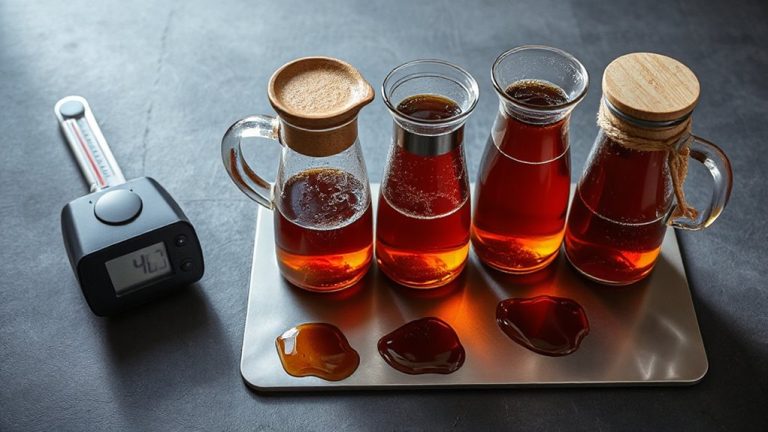
When brewing with an AeroPress, the material of the container you use-like glass, stainless steel, or plastic-can actually affect how long your brew takes, mainly because of how quickly each material absorbs heat. Materials with higher material density, like stainless steel, tend to pull heat from the water faster than lighter plastics. This creates thermal lag: the brief delay while your water reaches equilibrium with the container, cooling slightly before brewing even starts. Plastic vessels, being less dense, absorb less heat initially, helping maintain a more stable temperature early in the process. Glass sits in the middle-more insulating than metal but still prone to some heat loss. If you’re aiming for precision, that small temperature shift matters. You might need to adjust your steep time depending on your vessel, even if your grind and ratio stay the same. Choosing the right container isn’t just about durability-it directly shapes your brew time.
Does Stainless Steel Keep Heat Best for Faster Brewing?
Stainless steel doesn’t actually keep heat better than other common materials used in AeroPress brewing-despite its density, it pulls heat from water quickly on contact, leading to a noticeable initial temperature drop. That’s due to its high thermal conductivity, which transfers heat fast but doesn’t help with heat retention over time. So while the metal feels sturdy and looks sleek, it cools your brew faster in the first minute compared to other options. You might start with boiling water, but the steel mug pulls energy away, slowing extraction just when you want consistency. If speed and stable temperature matter, stainless steel isn’t your best bet. It’s great for durability and travel, sure, but not for maintaining ideal brewing temps. For faster, more efficient brewing, materials with lower thermal conductivity and better heat retention will serve you better. Think about what you’re optimizing for-build quality or brew performance.
How Glass Mugs Affect AeroPress Temperature and Timing
Glass mugs might seem like a clean, neutral option for catching your AeroPress brew, but they come with a thermal trade-off. They cool your coffee faster than stainless steel, often dropping the temperature by 10–15°F within a minute, which can slow extraction if you’re sipping over time. Since glass doesn’t insulate well, ambient humidity can further increase cooling, especially in drafty or moist environments. This rapid heat loss may affect flavor balance, particularly if your grind consistency leans uneven-finer particles over-extract as the brew cools, while coarser bits under-extract. Pre-warming the mug helps a little, but it’s a short-term fix. If you’re timing your AeroPress brew strictly or working in variable conditions, glass may introduce more fluctuation than you want. For steady results, consider the container’s thermal behavior as seriously as your water temp or grind size.
Do Plastic Cups Cool Your Brew Too Fast?
How quickly does your coffee lose heat when poured into a plastic cup? Not as fast as you might think, but plastic offers poor heat retention compared to materials like ceramic or double-walled steel. While it won’t crack from thermal shock like glass, plastic transfers heat rapidly to the environment, cooling your AeroPress brew faster. Most disposable and reusable plastic cups (like polypropylene) insulate slightly better than paper, but still let heat escape within minutes. If you’re drinking quickly, this isn’t a big issue. But for longer sessions, you’ll notice the drop. Thick-walled plastic helps a little, but can’t match vacuum insulation. Avoid thin, flimsy cups if temperature matters. For casual use or travel where breakage is a concern, plastic works-just don’t expect your coffee to stay hot. It’s a trade-off: convenience over heat retention.
Are Double-Walled Mugs the Quickest for AeroPress?
Why do your AeroPress brews stay hot longer in some mugs than others? Double-walled mugs, like the Fellow Ode or Keep Cup Brew, use insulating air gaps to slow heat loss, so your coffee stays hot without scalding your hands. They’re not necessarily quicker to brew in, but they maintain ideal drinking temps longer, which matters if you sip slowly. The mug weight tends to be higher than single-walled options, adding stability but reducing portability. A well-designed handle improves grip and heat protection, especially during morning rushes or outdoor brewing. Poor handle design can make even insulated mugs awkward or unsafe. While double-walled models outperform glass or ceramic in heat retention, their bulk may not suit every setup. Consider your space and routine-these mugs shine when consistency and comfort matter most.
Match Your Mug to Your AeroPress Method
While your AeroPress method shapes the flavor, the right mug can preserve that quality from brew to finish. If you use the standard method, a double-walled stainless steel mug keeps your brew temperature stable, supporting extraction consistency by reducing heat loss. These mugs insulate well but add weight-fine for home use, less so for travel. For the inverted method, where brewing takes longer, a tempered glass mug works if you want visibility and a neutral taste, though it cools faster. Ceramic mugs retain heat decently and feel familiar, but they’re fragile and slower to insulate. Your choice affects how long ideal conditions last. Matching your mug material to your method helps maintain ideal brew temperature through each sip, ensuring the extraction consistency you worked for doesn’t vanish after the first pour. Choose wisely. For top performance on the go, consider one of the best portable coffee cups that combine insulation efficiency with travel-friendly design.
On a final note
Your AeroPress brew time depends on how well your container retains heat. Stainless steel holds heat best, speeding up extraction. Glass cools faster, slightly extending brew time. Plastic cups lose heat quickly, potentially under-extracting your coffee. Double-walled mugs offer a middle ground, improving heat retention without the weight. Match your mug to your method-use preheated stainless for fast, full immersion brewing; save plastic for travel when speed matters less.