Controlling Sediment Build-Up in Turkish Coffee for a Smooth Cup Experience
Use a fine, powder-like grind with a quality burr grinder like the 1Zpresso JX-Pro to cut down on sludge. Heat water to just below boiling-195°F to 205°F-and avoid vigorous stirring or hard boiling to keep grounds settled. Let the coffee rest 3–5 minutes so sediment sinks, especially with extra-fine grinds. Pour slowly and steadily, tilting the cezve to ease the brew out cleanly. Choose fresh beans and proper gear for consistent results next time you make a batch.
Notable Insights
- Grind coffee to a fine, powder-like consistency using a quality burr grinder for minimal sediment.
- Brew with water just below boiling (195°F–205°F) to reduce agitation and promote even settling.
- Allow coffee to rest 3–5 minutes after brewing to let grounds fully settle before pouring.
- Use a cezve with a narrow spout and pour slowly to avoid disturbing the sediment layer.
- Choose fresh, high-density beans and avoid over-stirring to limit suspended fines.
Grind Turkish Coffee Fine to Reduce Sediment
The grind size of your coffee makes or breaks the sediment in your cup-go too coarse, and you’ll end up with a gritty mess at the bottom of your ibrik. For Turkish coffee, you need a powder-fine grind, finer than espresso, so particles suspend briefly and settle cleanly. A quality burr grinder, like the Baratza Encore or 1Zpresso JX-Pro, gives you consistent results. Blade grinders often create uneven grounds, increasing undesirable sludge. Finer grinds extract faster, so freshness matters-use beans roasted within the past two weeks for maximum solubility. Always consider coffee origin; denser beans from Ethiopia or Kenya may require slight grind adjustments. Stale beans or old storage tanks degrade flavor and increase muddiness. Grind just before brewing to preserve bean freshness and reduce sediment issues. This step isn’t about luxury-it’s practical control. Get the grind right, and you’re ahead. Using an electric Turkish coffee maker can further enhance consistency by maintaining precise temperature control during brewing.
Control Water Temperature and Avoid Over-Stirring

While you might be tempted to bring the water to a rolling boil right away, doing so can actually increase sediment in your Turkish coffee. Proper water control is key-heat the water until it’s hot but not rapidly boiling, around 195°F to 205°F, just before steaming breaks into a full boil. This helps dissolve the grounds evenly without disturbing settled particles. Equally important is your stirring caution: stir gently once or twice after adding coffee to the water, then stop. Over-stirring suspends fine particles, preventing them from settling naturally. Maintaining the perfect coffee brewing temperature ensures optimal extraction while minimizing unwanted sediment.
Use a cezve with a narrow spout for better control. These steps guarantee a smoother sip.
Let the Coffee Rest to Settle the Grounds

Don’t rush the cup-after heating and stirring, the smart move is to let your Turkish coffee sit. This pause allows natural coffee settling, where fine grounds slowly sink to the bottom. You’re encouraging ground separation without any extra tools or tricks-just time. Wait three to five minutes, depending on your heat source and coffee grind size. The finer the grind, the longer it takes. Letting it rest means less sludge in your sip and a cleaner finish. Avoid disturbing the cup during this phase, as agitation restarts sediment suspension. Some traditionalists use a cezve made of copper or brass for better heat control, which supports consistent settling. Others opt for a small ceramic ibrik to slow cooling. Either way, patience improves drinkability. This step isn’t optional if you want control over sediment. Letting the coffee rest is one of the most effective, no-cost ways to enhance your cup’s clarity and texture.
Pour Gently to Keep Sediment at the Bottom
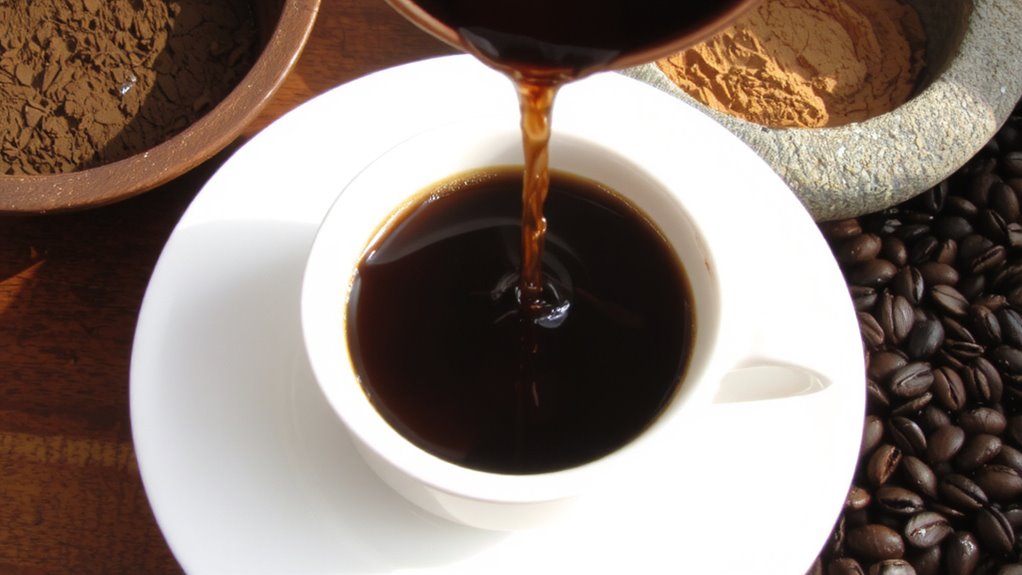
Since pouring too quickly can stir up the settled grounds, go slow and steady when transferring your coffee from the cezve to the cup. Gentle coffee pouring minimizes sediment disturbance, keeping the fine particles at the bottom where they belong. Tilt the cezve slightly and let the liquid flow in a thin, controlled stream-this simple technique makes a real difference in clarity and smoothness. Avoid tipping suddenly or shaking the pot, as even small movements can resuspend the sediment.
| Method | Sediment Control | Ease |
|---|---|---|
| Fast pour | Poor | Easy |
| Tilted slow pour | Excellent | Moderate |
| Stop midway pour | Good | Tricky |
| Double strain | Very good | Extra gear |
| Free pour | Poor | Fast |
Take your time-precision beats speed when avoiding grit in your cup.
Why Sediment Forms and How to Prevent It
You just saw how pouring technique affects the amount of sediment in your cup, but the story starts much earlier. Sediment forms because Turkish coffee uses an unfiltered brewing method, meaning the ultra-fine grounds don’t get trapped-they sink or settle after brewing. If your bean quality is poor or beans are unevenly ground, more fines and debris stay suspended, increasing sludge. Fresh, high-quality beans ground to a true Turkish consistency-like powdered sugar-help reduce unwanted particles. The brewing method itself also matters: boiling too hard stirs up grounds, while letting the coffee sit undisturbed after brewing lets sediment sink. Use a cezve with a narrow neck to help slow agitation, and avoid stirring after the foam forms. Let it rest 30 seconds before pouring, and you’ll keep most grit at the bottom where it belongs.
On a final note
You can minimize sediment in Turkish coffee by using an ultra-fine grind and cold water to limit over-extraction. Heat gently without boiling, and avoid stirring after pouring. Let the coffee sit for a minute so grounds settle at the bottom. Pour slowly, leaving the last sip in the cup-it’s where most sediment collects. A cezve with a narrow spout offers better control. While no method removes all sludge, these steps greatly improve clarity and mouthfeel.