French Press Coffee Strength: How to Adjust Grind and Brew Time for Boldness
Use a coarse grind, like sea salt, and a 1:12 coffee-to-water ratio for bold French press coffee. Steep for 4 minutes with water at 200°F-just off boiling. A burr grinder, like the Baratza Encore, guarantees even particles and prevents bitterness. Too fine a grind or too long a steep causes harshness; too coarse or too short leaves it weak. Adjust grind size and time together to fine-tune strength and clarity-and get closer to your ideal cup.
Notable Insights
- Use a 1:12 coffee-to-water ratio instead of 1:15 for a bolder French press brew.
- Grind coffee to a coarse, sea salt-like consistency to avoid over-extraction and sludge.
- Steep for 4 minutes to maximize extraction without increasing bitterness.
- Avoid water above 205°F to prevent scalding and bitter flavors.
- Use a burr grinder for uniform particles, ensuring consistent and balanced extraction.
How To Make Stronger French Press Coffee
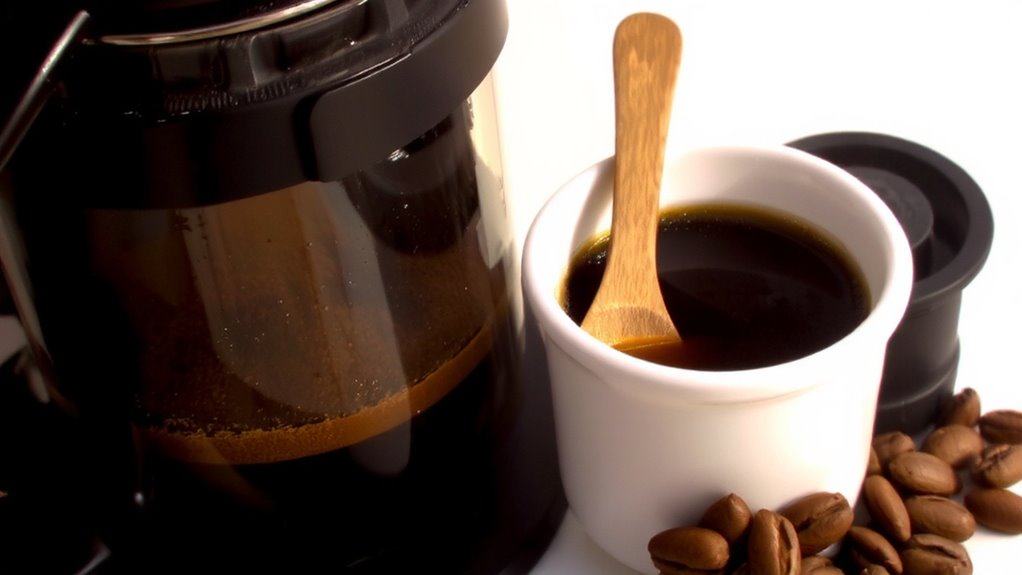
A stronger cup of French press coffee starts with the right grind and ratio. You’ll want a 1:15 coffee-to-water ratio, leaning closer to 1:12 if you prefer boldness. Use 30–34 grams of coffee per 500 ml of water. Water temperature matters-aim for 195–205°F. Too hot, and you risk scalding the grounds, bringing out bitterness; too cool, and the extraction falls flat. A gooseneck kettle helps control pour, but any sturdy kettle works. Coffee origin influences strength, too. Beans from Ethiopia might taste bright and sharp, while Sumatran ones offer deep, earthy notes that stand up well in high concentrations. Dark roasts often feel bolder, but don’t assume they’re stronger by caffeine. Adjust based on what you taste, not just what you expect. Pay attention-you’ll find your ideal balance. For optimal extraction, use a coarse coffee grind that prevents over-extraction and sediment in your cup.
Grind Size: How Coarseness Changes Strength
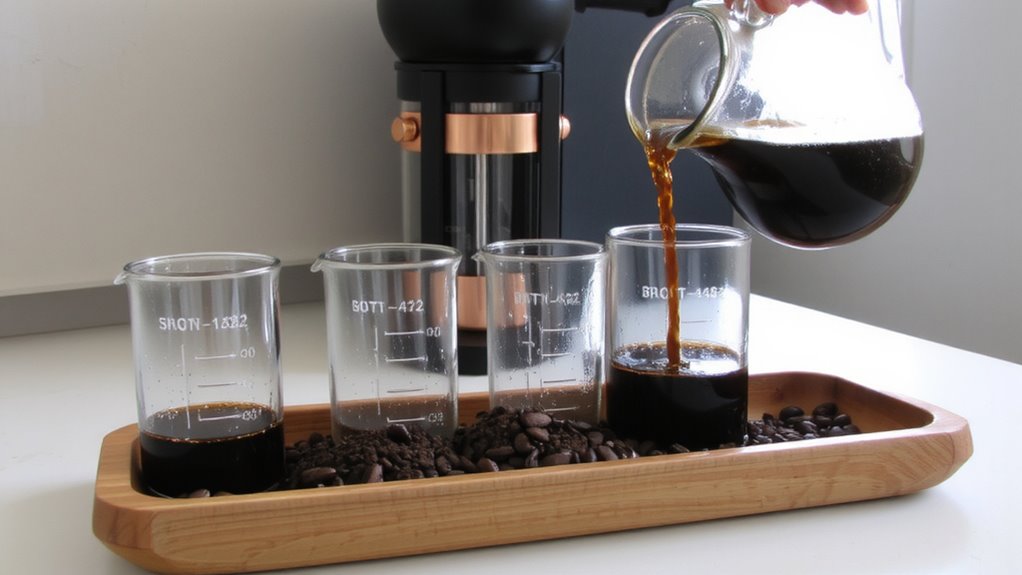
Your grind size plays a make-or-break role in how strong and flavorful your French press coffee turns out. Too fine, and you’ll get over-extraction-bitter, muddy coffee. Too coarse, and it’s weak and underdeveloped. The right coarseness guarantees balanced extraction, especially when paired with proper brew temperature and clean water quality. For consistent results, consider using one of the best French press picks for 2024, which are designed to complement optimal brewing techniques.
| Grind Level | Texture | Brew Impact |
|---|---|---|
| Extra Fine | Like powder | Over-extracts easily |
| Fine | Like table salt | Risks bitterness |
| Medium | Like sand | Too quick passage |
| Coarse | Like breadcrumbs | Ideal for French press |
| Extra Coarse | Like peppercorns | Weak, thin flavor |
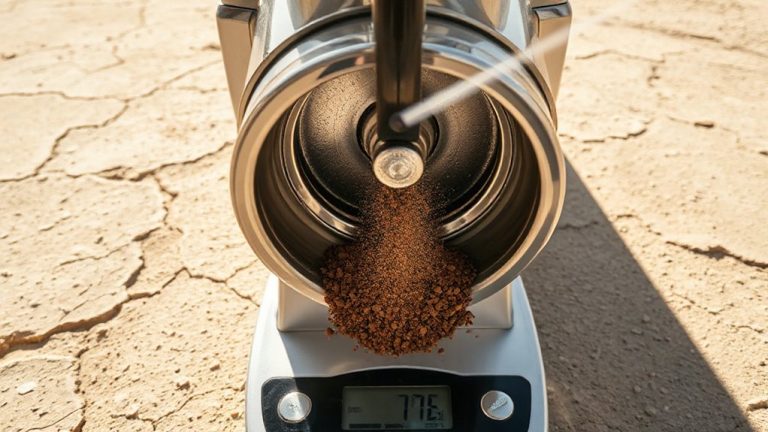
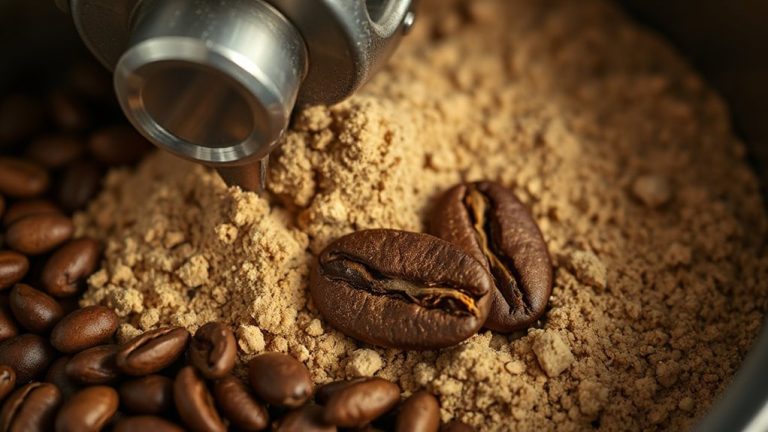
Stick to a consistent coarse grind. Inconsistent grinds pull unevenly, even with ideal water quality and stable brew temperature. Use a burr grinder for uniform particles. Blade grinders create uneven splits, harming extraction.
Use The Right Grind For Bold, Smooth Coffee
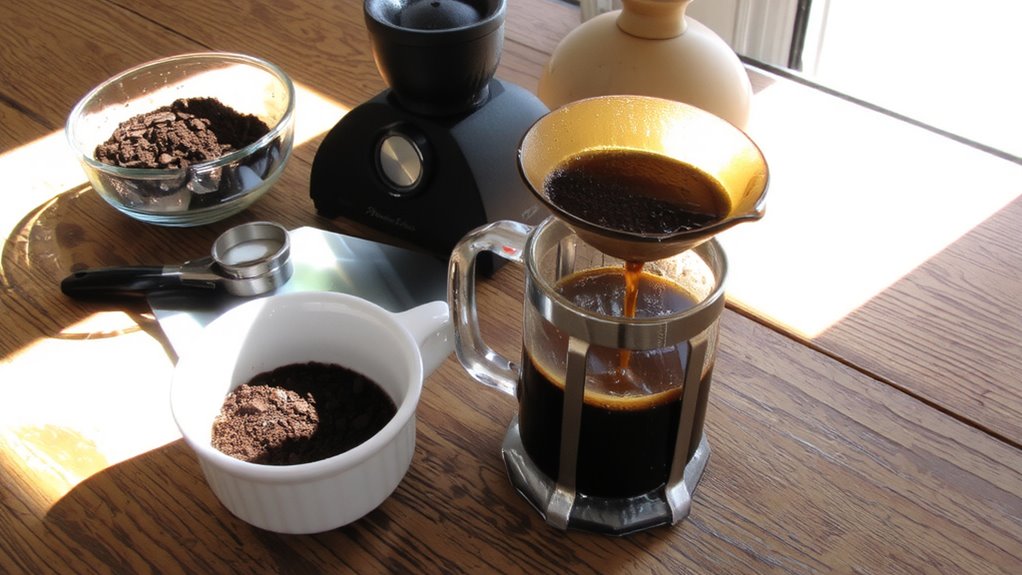
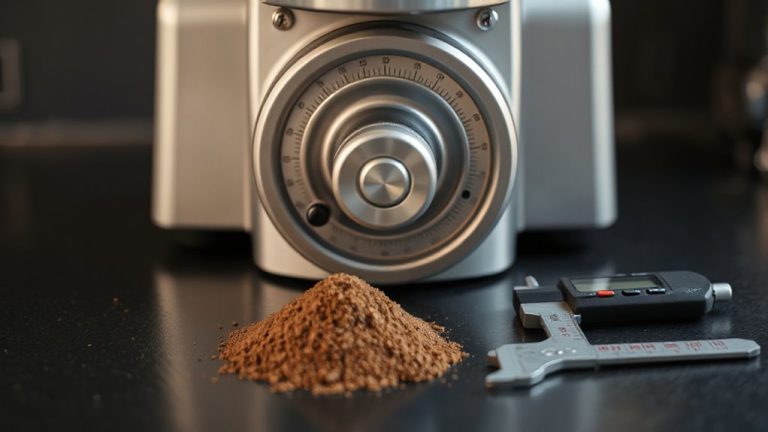
Getting the grind right means you’re not just avoiding bad coffee-you’re setting up every other variable to succeed. For French press, you need a coarse, even grind-think sea salt-to extract bold flavor without sludge or bitterness. If it’s too fine, you’ll clog the mesh and pull unwanted fines; too coarse, and the coffee tastes weak. Your coffee origin affects density and hardness, so adjust accordingly: dense beans from Ethiopia may need slight grinder tweaks versus softer Brazilian ones. Always pair grind with proper water temperature-just off the boil, around 200°F-to avoid scalding or under-extraction. A gooseneck kettle helps control pour. Use a burr grinder, like the Baratza Encore, for consistency. Blade grinders create uneven particles, leading to sour or bitter notes. Match your grind to your beans and temp, and you’ll get smooth, full-bodied coffee every time. For an eco-friendly brewing experience, consider a plastic-free French press that eliminates synthetic materials without compromising performance.
How Long To Steep For Maximum Flavor?
Three to four minutes is all it takes to extract rich, balanced flavor from coffee in a French press, but hitting that window consistently makes the difference between a great cup and a muddy one. You want water temperature just off boiling-around 200°F-so it extracts without scalding the grounds. If your water’s too cool, say below 195°F, you’ll under-extract, especially with dense beans from high-altitude coffee origin regions like Ethiopia or Colombia. Those beans often need full heat and exact timing to access their flavors. Steep less than three minutes, and your coffee tastes weak or sour; go past four, and bitterness creeps in, even with coarser grinds. Use a timer every time-don’t guess. This simple step guarantees clarity and depth, pulling out the best in each bean while avoiding harshness or flatness in the final cup.
How To Combine Grind And Time For Better Coffee
The grind size and steep time work together like gears in a clock-mess with one, and the whole system slips. You need a coarse grind for French press to prevent sludge, but if your coffee tastes weak, extend the steep time slightly instead of grinding finer. Going too fine can over-extract, especially at higher brewing altitude, where water boils at lower temperatures, slowing extraction. At high elevations, you might need to steep 5–6 minutes with water temperature just off boiling-around 200°F-to compensate. Conversely, at sea level, 4 minutes with 205°F water often suffices. Adjust both variables in tandem: a coarser grind with longer steep balances clarity and strength. Preheat your press, use a consistent pour, and stick to ratios-like 1:15 coffee to water-for repeatable results. Small tweaks make big differences.
Fix Weak Or Bitter French Press Coffee
If your French press coffee comes out too weak or unpleasantly bitter, the fix usually lies in three controllable factors: grind size, brew time, and water temperature. If it’s weak, your grind might be too coarse or your brew time too short-try a finer grind or extending steeping to 4 minutes. Bitterness often means over-extraction, so use a coarser grind or shorten brew time to 3 minutes. Water temperature matters too; boiling water (around 200°F) extracts well, but water that’s too hot burns the grounds and increases bitterness. Let it cool 30 seconds off the boil for better control. Consistent grind size improves brew consistency-blade grinders create uneven particles, leading to mixed extraction. A burr grinder gives even results, helping you achieve balanced flavor. Adjust one variable at a time to isolate effects and find your ideal taste.
On a final note
Use a finer grind and steep for 4–5 minutes to boost strength without bitterness. Too coarse or under-steeped, and coffee tastes weak; too fine or over-steeped, and it turns muddy. A burr grinder, like the Baratza Encore, gives consistent results. Adjust one variable at a time-grind size or time-for better control. Always use fresh beans and water just off the boil for cleaner, richer flavor.