Hand Grinder Maintenance: Cleaning Schedule & Steps
You should clean your hand grinder every one to two weeks if you use it daily, more often with oily dark roasts. Disassemble the parts, brush out old grounds, and wipe sticky spots with a slightly damp cloth-never soak metal. Use a nylon brush or cotton swab for tight spaces, and let everything dry fully before reassembling. Regular cleaning prevents rancid oils and clogs, keeps grinds consistent, and extends your grinder’s life. There’s more to get right.
Notable Insights
- Clean your hand grinder every one to two weeks with a nylon brush to remove coffee buildup and preserve flavor.
- Disassemble parts carefully and use a dry brush or microfiber cloth, avoiding water to prevent burr corrosion.
- For deep cleaning, use grinder cleaning tablets instead of rice, which can leave damaging residue.
- Dry all components thoroughly before reassembly to ensure grind consistency and prevent jamming.
- Store your grinder in a cool, dry place and avoid oily beans to reduce residue and extend lifespan.
Why Cleaning Your Hand Grinder Matters
A clean hand grinder isn’t just about looks-it directly affects your coffee’s flavor and consistency. When oils from coffee beans build up, they go rancid and taint your next brew, dulling the taste. Poor grinder hygiene leads to uneven particle sizes, clogging, and inconsistent extraction, especially noticeable in pour-over or espresso methods. Residue can also corrode burrs over time, shortening your grinder’s lifespan. Regular cleaning guarantees flavor preservation, letting each coffee’s unique notes come through clearly. Nylon brushes and soft cloths work well for daily debris removal; weekly deep cleans with grinder tablets or rice grains help dislodge stubborn buildup. Avoid moisture near burrs unless the manufacturer allows it-some materials warp or rust. Models like the 1ZPresso Q2 or Timemore C2 have removable burrs for easier access. Good maintenance isn’t fussy-it’s practical and necessary for quality brews. Keep it clean, keep it grinding, keep it tasting fresh. For those seeking top-performing options, checking out the best manual coffee grinders can help identify models designed with both performance and ease of maintenance in mind.
How Often to Clean Your Hand Grinder?
You’ll probably want to clean your hand grinder every one to two weeks if you use it daily, but the exact frequency depends on how often you grind and the type of beans you use. Oily beans like dark roasts clog the burrs faster, so they demand a higher grinder frequency-closer to weekly. Light, dry roasts may let you stretch your cleaning schedule. If you only use your grinder a few times a week, cleaning once every three to four weeks is likely enough. Skipping cleanings leads to stale grounds and inconsistent grinds, hurting brew quality. A consistent cleaning schedule prevents buildup and guarantees peak performance. Manual grinders with stainless steel burrs, like the 1ZPresso Q2 or Handground PG, still need regular maintenance despite their durability. Watch for visual residue or sluggish turning-that’s a clear sign it’s time to clean. Match your cleaning schedule to your usage and bean type for best results. Using the right cleaning brushes can make maintenance faster and more effective.
How to Clean Your Hand Grinder (Step by Step)
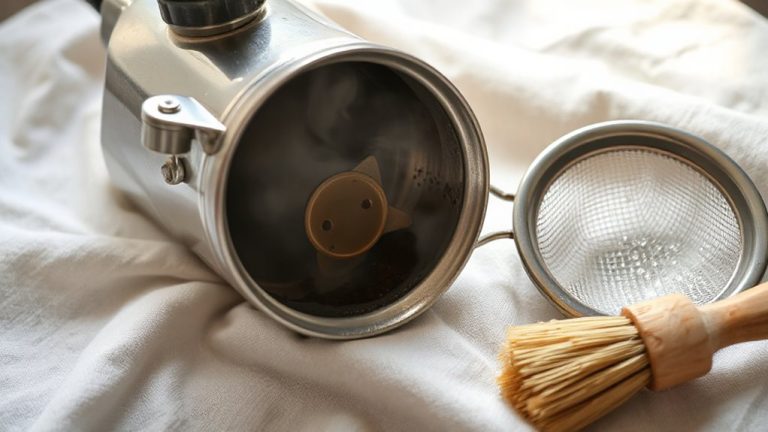
Why does your grinder seem harder to turn after a few uses? Chances are, it’s due to residue buildup from coffee oils and fine grounds sticking to the burrs and chamber. To fix that, start with grinder disassembly-carefully take apart the hopper, burr set, and grounds catcher, following your model’s instructions. Don’t force anything; most hand grinders are designed for easy breakdown. Once apart, brush out old grounds with a small, dry brush. Use a slightly damp cloth to wipe sticky spots, but avoid soaking any parts-especially metal burrs-since moisture can cause rust. Let all pieces air-dry completely before reassembling. Regular cleaning like this prevents long-term residue buildup, helps maintain grind consistency, and extends your grinder’s life. It only takes a few minutes and keeps your daily grind smooth and even. For optimal performance, consider using one of the best manual espresso grinders designed with precision burrs for consistency.
Best Tools for Cleaning Your Grinder
How do you keep your grinder in top shape without wasting time or money? The right tools make all the difference. For dry cleaning, a stiff-bristled brush handles daily grounds removal-think nylon or brass, depending on your grinder’s burrs. Brush selection matters: soft brushes won’t dislodge stubborn residue, while overly aggressive ones might scratch surfaces. For deeper cleaning, you’ll need solvent types like food-safe isopropyl alcohol or specialized coffee machine cleaners. Avoid harsh chemicals that leave odors or damage plastics. A microfiber cloth helps wipe down exterior parts, while cotton swabs reach tight spots around the burr housing. Never soak electronic grinders. Some use rice to clean grind chambers, but it’s risky and can leave dust. Stick to trusted tools: a quality brush, safe solvent, and lint-free cloths keep your grinder working efficiently with no guesswork.
How to Fix Common Hand Grinder Issues
Even if you maintain your hand grinder regularly, issues can still pop up over time. Grinder jams are common, especially if you use oily beans or grind too quickly. When this happens, stop turning, disassemble the burrs, and clean out any stuck grounds. For persistent clogs, use a small brush or dry toothbrush to clear residue. Blade misalignment is another issue-it causes inconsistent grounds and can damage your grinder. To fix it, check if the inner burr is seated correctly and tighten the retaining screw securely. On models like the Hario Skerton Pro or 1ZPresso Q2, slight wobble is normal, but excessive play means realignment is needed. Always reassemble parts in the correct order and avoid over-tightening plastic components. These fixes restore performance without needing replacement. While metal grinders handle wear better, plastic ones require gentler use. Address problems early to keep your grind quality steady.
Make Your Grinder Last Longer: Pro Tips
You’ve handled the common hiccups and gotten your grinder back on track, so now it’s time to keep those issues from coming back. Smart grinder storage goes a long way-keep it in a cool, dry spot away from moisture and dust. Leaving it exposed on a countertop near the sink? That’s asking for trouble. Instead, tuck it into a cabinet or use a simple cover. Your usage habits matter just as much. Grind only what you need, when you need it-overfilling or forcing stale beans strains the mechanism. Avoid oily beans in burr grinders; they gunk up faster. Clean it monthly, more if you grind daily. And never use water on metal parts. Treat your grinder like a precision tool, not a toaster, and it’ll deliver consistent results for years. Small habits add up.
On a final note
You’ve cleaned and maintained your hand grinder-now it’ll grind more evenly and last longer. Regular upkeep prevents clogs and flavor buildup, especially with oily beans. Use a brush and rice or dedicated tools, and disassemble monthly if you grind daily. Check burrs for wear; replace them if coffee tastes inconsistent. A dry, cool storage spot helps, too. These simple steps keep your grinder working right, brew after brew.