Delve Into Traditional Turkish Coffee Brewing and Its Cultural Significance
You brew Turkish coffee in a cezve, using ultra-fine grounds and cold water heated slowly to build foam without boiling. No filter is used, so the sediment stays in the cup. Serve it with water and sugar adjusted during brewing-sade, orta, or şekerli. The foam matters, so pour gently. After drinking, some swirl the cup and read the grounds. Tradition ties each step to hospitality and connection. There’s more to how it brings people together across regions.
Notable Insights
- Turkish coffee is brewed in a cezve using ultra-fine grounds, unfiltered water, and slow heat to preserve foam and flavor.
- The brewing process emphasizes foam formation, achieved by removing the cezve from heat just before boiling.
- Served in fincans with water and sugar adjusted during brewing, reflecting personal preference and ritual.
- Foam retention and no stirring after pouring highlight the drink’s ceremonial importance in hospitality traditions.
- Coffee grounds are used for fortune telling, with symbol placement offering insights into home, future, and life events.
What Makes Turkish Coffee Unique
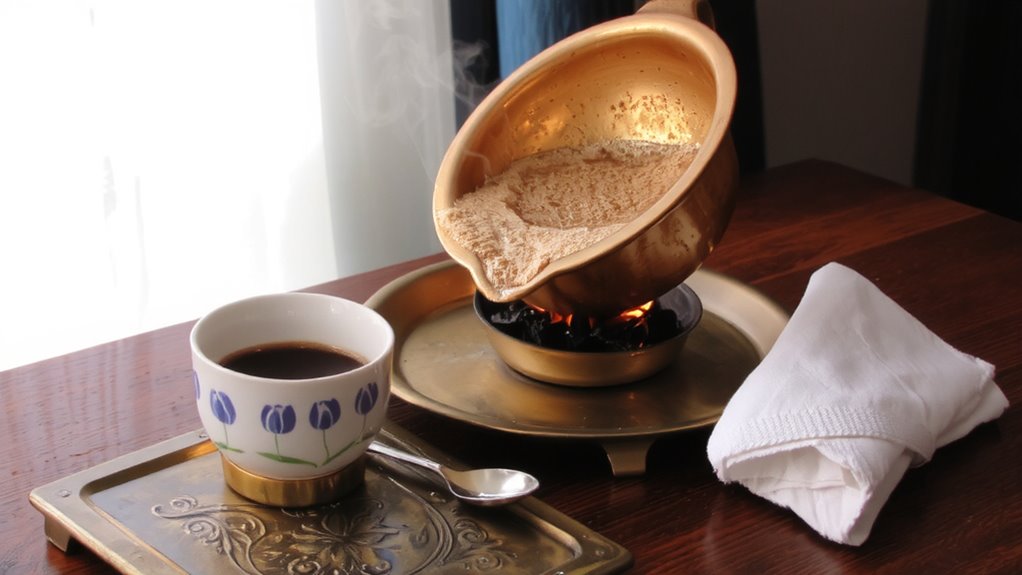
One key trait sets Turkish coffee apart: the grind. You need an extremely fine powder, almost like flour, so the coffee suspends in the water rather than settling. This isn’t just about texture-it’s central to the brewing technique. Turkish coffee isn’t filtered; it’s simmered slowly in a cezve, a small pot usually made of copper or brass. The fine grind, combined with sugar (if you use it) and water, creates a rich, concentrated drink with a foam layer on top. This method has been passed down for generations, making it a core part of cultural heritage across Turkey and the Balkans. Unlike drip or French press, this technique demands attention to heat control and timing. Automatic grinders struggle to achieve the right fineness-burrs work best. Your choice of cezve and grind consistency directly affects the outcome. For those seeking convenience without sacrificing tradition, an electric Turkish coffee maker can replicate the authentic brewing process with precision.
How to Brew Turkish Coffee at Home
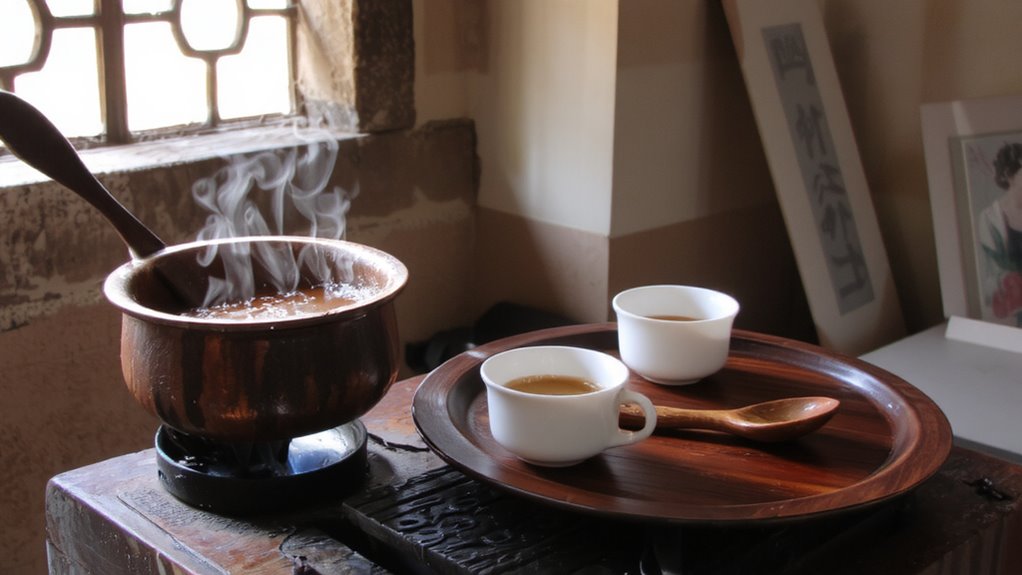
If you’ve never tried making Turkish coffee at home, it’s easier than you might think-once you have the right tools. Start by measuring one cup of water per serving and pouring it into your cezve. Add one to two teaspoons of coffee per cup, ensuring the grind size is fine-like powdered sugar-so it dissolves properly. Don’t stir yet. Heat the mixture over low flame. As it warms, add sugar if desired and gently stir until fully blended. Watch closely-the brewing time is short, usually 3 to 5 minutes. You’ll see foam begin to rise; this is key. Remove from heat just before boiling to preserve the foam. Pour slowly into cups, letting the grounds settle. Serve as is-no stirring. The result is strong, rich, and authentic.
The Tools: Cezve, Beans, and Heat
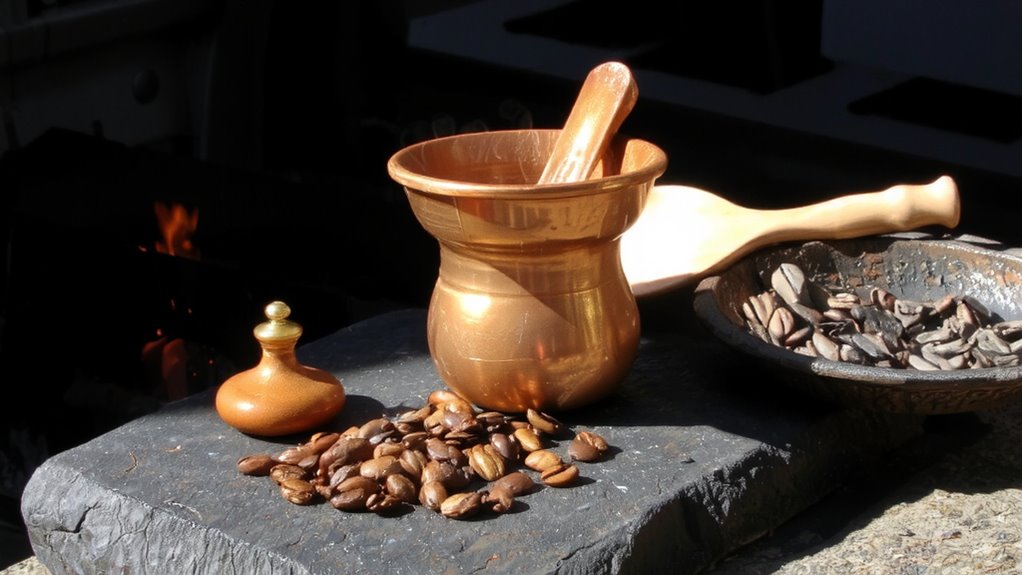
Your success with Turkish coffee starts with three essential elements: the cezve, the beans, and the heat source. The cezve-traditionally made of copper or brass-relies on precise cezve craftsmanship to distribute heat evenly and build the signature foam. A narrow top helps trap steam and foam, so shape matters. You can find stainless steel versions that resist corrosion, but copper offers superior heat control. For bean selection, choose a fine, almost powdery grind. Arabica beans are preferred for their smooth, complex flavor. Avoid pre-ground coffee; freshness impacts taste and crema. Always use cold, filtered water to control bitterness. A low, steady heat source-like a gas flame or electric hot plate-prevents scorching. Don’t rush the brew; slow heating draws out richness. Each tool affects the result, so treat them with care and purpose.
Serving Turkish Coffee: Etiquette and Meaning
While the brewing process lays the foundation, serving Turkish coffee carries its own set of rules that matter just as much. You serve it in small, handled cups called *fincans*, always with a glass of water first to cleanse the palate. Pour slowly to preserve the foam-that’s key. Coffee customs here aren’t just tradition; they reflect respect and hospitality. You typically offer sugar based on preference-sade (none), orta (one sugar), or şekerli (two)-decided during brewing. Holding the fincan by its rim shows you know the etiquette. This drink isn’t rushed; it’s part of social rituals meant for conversation and connection. Serving to guests before yourself, placing the cup correctly on the saucer, avoiding stirring after pouring-each small act has meaning. These steps aren’t optional if you want to honor the practice.
How to Read Turkish Coffee Grounds for Fortune Telling?
What makes the ritual of Turkish coffee complete if not the quiet moment after the last sip, when the cup is turned upside down to reveal what the grounds might say? You’ll let the cup sit for a minute so the damp grounds settle. Flip it onto the saucer to cool-this sets the patterns. Once it’s cool, you’ll rotate it three times clockwise before lifting it to read. You’re not guessing; you’re doing symbol interpretation and pattern analysis. Look for shapes: birds mean messages, circles stand for money, dots suggest obstacles. The position matters-handle-side symbols relate to home, the rim reflects near future. While some claim accuracy, it’s really about tradition, not science. Still, using a curved, handleless cezve-bottom cup helps patterns form clearer. It’s low-cost, adds fun to gatherings, and keeps culture alive. No tools needed-just observation and a steady hand.
Turkish Coffee Across the Balkans and Middle East
A strong cup of Turkish coffee isn’t just a Turkish tradition-it’s a staple across the Balkans and the Middle East, with each region putting its own spin on the brew. You’ll find subtle regional variations, like Bosnia’s sweeter, foam-heavy version or Greece’s use of a briki pot. In Lebanon, cardamom is common, while in Serbia, sugar levels are precisely declared-from none (skoro) to very sweet (taman). These differences aren’t just taste-they reflect local customs and social norms. Coffee diplomacy often plays out over these small cups, where offering coffee can ease tensions or seal agreements. The gear stays fairly consistent: a cezve (or ibrik), finely ground beans, and careful heat control. While electric versions exist, traditionalists prefer stovetop brewing for better foam. Your choice of pot material-copper, stainless steel, or brass-affects heat distribution, so pick based on your stove type.
Why Turkish Coffee Brings People Together
Sharing a cup of Turkish coffee isn’t just about drinking coffee-it’s a social ritual that builds connections. You’re not just serving caffeine; you’re creating shared moments where conversations flow and time slows. The process-using a cezve, measuring finely ground beans, and heating slowly-requires patience, making it ideal for company. People gather around the preparation, drawn in by the aroma and rhythm. These interactions strengthen social bonds, whether among family, friends, or even strangers. In homes across Turkey and beyond, offering coffee is a gesture of welcome and respect. It’s common during visits, after meals, or when settling disputes. Unlike quick espresso shots, this method isn’t rushed, so lingering is built in. Using aluminum or copper cezves affects heat control, while traditional small porcelain cups preserve temperature. No filters, no machines-just direct, deliberate engagement. That simplicity fosters authenticity, turning everyday encounters into meaningful exchanges.
On a final note
You now know how to brew Turkish coffee with a cezve, using finely ground beans and precise heat. It’s more than a drink-it’s a tradition that connects people, rich in history and ritual. Whether serving it properly or reading the grounds, each step has meaning. From Istanbul to Sarajevo, it’s shared the same way: slow, strong, and with intention.