Why You Must Descale Your Espresso Machine Every 3 Months (And How to Do It)
You should descale your espresso machine every three months because limescale from hard water builds up on heating elements and clogs water pathways, reducing brew temperature and pressure. This hurts extraction and flavor, especially in machines like the Breville Duo Temp or Gaggia Classic. Use a citric acid–based descaler like Urnex Cleancaf or Durgol, run it through the group and steam wand, then rinse thoroughly. Skip vinegar-it can leave odors. A proper reset guarantees peak performance and machine longevity-there’s more to get right for consistent, quality espresso.
Notable Insights
- Limescale from hard water reduces heating efficiency and clogs water pathways in espresso machines.
- Descaling every three months maintains optimal brew temperature, pressure, and flavor consistency.
- Use manufacturer-approved descalers like Urnex Cleancaf or Durgol to safely dissolve mineral deposits.
- Run descaler through group head and steam wand, then flush with fresh water for thorough cleaning.
- Rinse cycle 3–5 times and reset machine to remove residue and clear maintenance alerts.
How Limescale Wrecks Your Espresso Machine
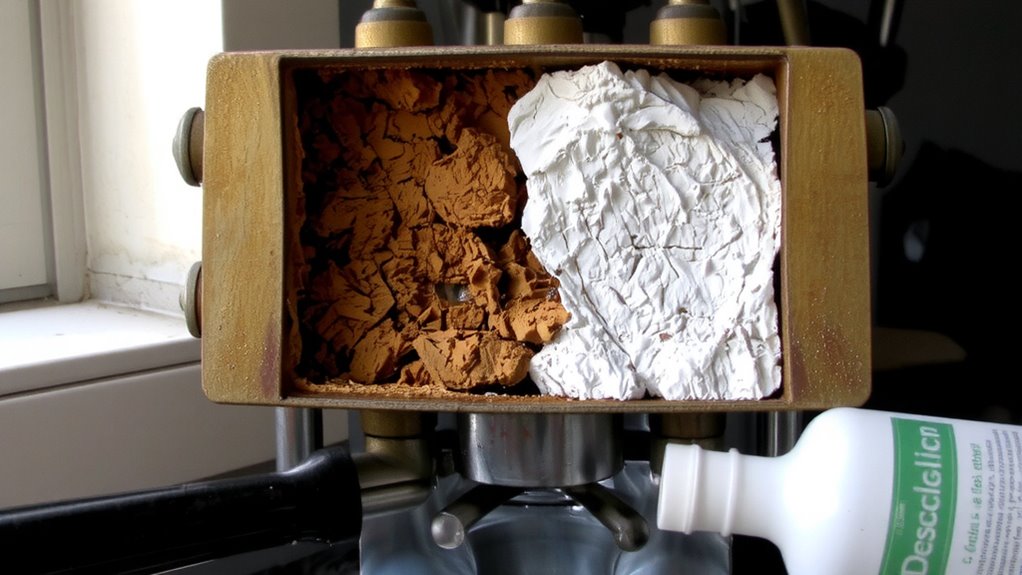
Limescale-the chalky white buildup you’ve probably seen in kettles or showerheads-is the quiet killer of espresso machines. It forms when hard water heats up, leaving behind mineral buildup that sticks to internal parts. Over time, this gunk coats heating elements and clogs narrow water pathways. That directly reduces heating efficiency, forcing your machine to work harder and longer to reach the right temperature. Not only does this wear out components faster, but it also leads to inconsistent brews. Machines like the Breville Duo Temp or Gaggia Classic start underperforming when scale builds up-lower pressure, weaker extraction. You might not notice it at first, but the taste suffers, and repair costs rise. Preventing this isn’t complicated, but it’s critical. Regular maintenance keeps water flowing cleanly and heating accurately. Skip it, and you’re risking machine life, flavor, and performance-all for something preventable. Using a Breville-approved descaling solution ensures optimal results without damaging internal components.
Descale Every 3 Months (Here’s Why)
Most experts agree-descaling your espresso machine every three months is the sweet spot for keeping it running well without overdoing maintenance. If you skip this, limescale builds up fast, especially if your water is hard. That’s where water hardness testing helps: it tells you whether you should stick to the three-month schedule or descale even sooner. Machines in areas with very hard water face faster mineral buildup, increasing the risk of clogs and poor heating. Regular descaling every 3 months protects against those issues and delivers real machine longevity benefits-fewer repairs, consistent temperature, and reliable brewing pressure. It’s not just about performance; it’s about getting full value from your machine. For most home users, quarterly maintenance balances effort and upkeep. Neglect it, and you’re likely facing costly fixes or early replacement. Stick to the schedule, and your machine stays in sync with your coffee routine. Using the right product matters-opt for a Nespresso descaler to ensure compatibility and optimal results.
Choose the Best Descaler for Your Machine
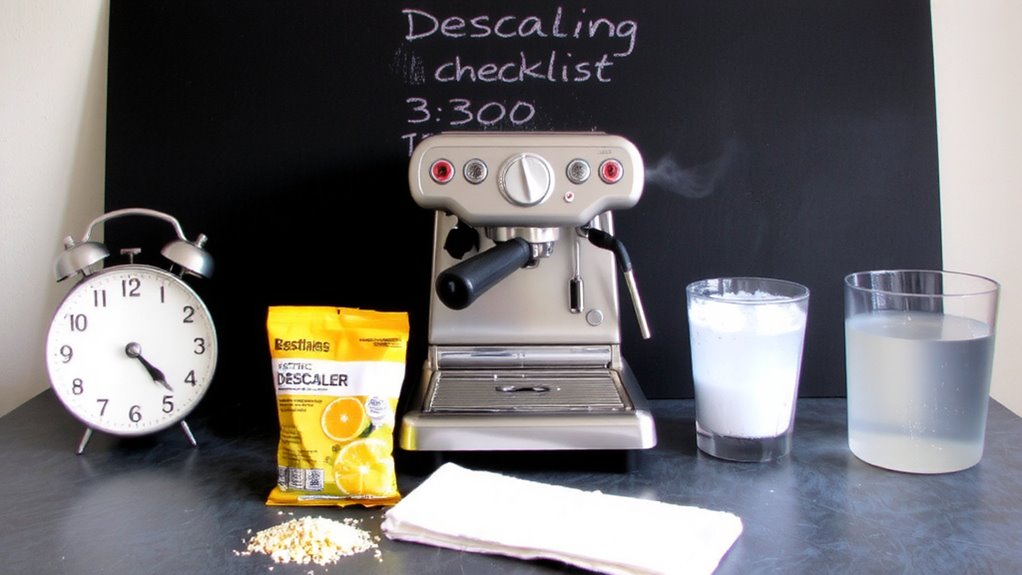
A good descaler makes all the difference when keeping your espresso machine in top shape, and not all products work the same way. You need one that effectively dissolves limescale without damaging internal parts. Always start with compatibility checks-using the wrong formula can void your warranty or harm seals and sensors. Check your machine’s manual for approved types: some brands, like Jura or Saeco, require specific formulations. For most home machines, citric acid–based or liquid descalers work well and are less corrosive. Popular brand recommendations include Urnex Cleancaf, Durgol Swiss Espresso, and Dezcal-each proven in performance and widely trusted. Powdered options are cost-effective but must be fully dissolved. Avoid vinegar; it’s unpredictable and may leave odors. Matching the right descaler to your machine guarantees safety, efficiency, and long-term reliability-so don’t guess when you can verify.
Run the Descaling Process Step by Step
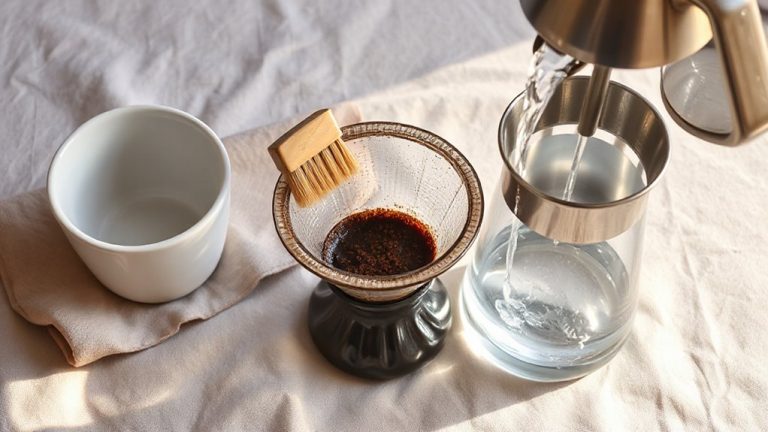
One way to keep your espresso machine running smoothly is by following a clear, step-by-step descaling process every few months. First, fill the water tank with a mix of descaler solution and fresh water, using the ratio recommended by the manufacturer. Turn the machine on and let it heat up. Then, run the solution through the group head and steam wand using short bursts-this helps break up mineral buildup. Repeat until the tank is empty. This process directly improves machine efficiency by restoring proper water flow and pressure. Without it, scale clogs internal parts, forcing your machine to work harder and reducing espresso quality. You’ll notice better crema, flavor, and consistency after descaling. Stick to the steps precisely-using too much solution or skipping bursts can damage components. Most machines have an indicator telling you when it’s time, but don’t wait longer than three months, especially if you use hard water.
Rinse and Reset After Descaling
After you’ve flushed out the descaling solution, it’s critical to thoroughly rinse the system to remove any leftover residue that could affect your espresso’s taste or damage internal components over time. Perform a full post descaling rinse by running fresh water through the brew group, steam wand, and water tank multiple times-usually 3 to 5 cycles, depending on your model. This step guarantees no acidic or chemical traces remain. Once rinsing is complete, follow the machine reset procedure as outlined in your manual; some brands like Breville or Gaggia require holding buttons to clear maintenance alerts. Skipping this reset may prevent proper operation, even if the machine appears clean. Always confirm both rinse completion and reset success before brewing. Neglecting either step risks residue contamination or incorrect diagnostics, undermining the entire descaling effort. Stay consistent to protect performance and longevity.
Skip These 5 Common Descaling Blunders
Why do so many people mess up descaling despite following the steps? Because small mistakes add up. First, ignoring water hardness myths-like assuming bottled water prevents scale-is false; some bottled water still leaves deposits. Second, using too much descaler damages seals. Third, skipping the rinse cycle leaves chemical residues that ruin your espresso’s taste. Fourth, running descaling solutions through steam wands blocks narrow pipes; detach them if possible. Fifth, poor descaler storage tips-like leaving solution in a hot garage-degrades its effectiveness. Store it in a cool, dark place in its original, labeled container. Always follow your machine’s manual for dose and dwell time. These blunders waste money and shorten machine life. Skip them, and your machine runs efficiently, brew after brew.
On a final note
Keep your espresso machine running right by descaling it every 3 months. Limescale builds up fast, especially with hard water, and it hurts performance and lifespan. Use a food-safe descaler like Urnex Dezcal or Durgol, follow the steps, then rinse thoroughly. Skipping this leads to slower shots, off flavors, or costly repairs. It takes 20 minutes-routine maintenance beats replacing a machine.