Exploring Carbonic Maceration in Coffee: Wine-Inspired Fermentation Techniques
You’re fermenting whole coffee cherries in sealed, CO₂-filled tanks to boost sweetness and fruitiness, much like in winemaking. This controlled, anaerobic process lasts 48–96 hours, requires ripe cherries, and needs precise temp and pressure control. It costs more than washed or natural methods but delivers cleaner, more complex cups with wine-like acidity. Expect flavors like red berries or tropical fruit, especially from producers in Colombia or Rwanda. Adjust your roast profile carefully, and you’ll uncover even greater potential.
Notable Insights
- Carbonic maceration in coffee involves fermenting whole cherries in sealed, CO₂-filled tanks, inspired by winemaking techniques.
- The anaerobic, oxygen-free environment slows sugar breakdown, enhancing sweetness and fruit-forward flavor complexity.
- Fermentation lasts 48–96 hours under controlled temperatures of 20–25°C to ensure consistency and quality.
- Strict cherry selection and lab monitoring of pH and sugar levels are critical for successful processing.
- Light roasting with lower charge temperatures helps preserve the bright, wine-like acidity characteristic of carbonic macerated coffees.
What Is Carbonic Maceration in Coffee?
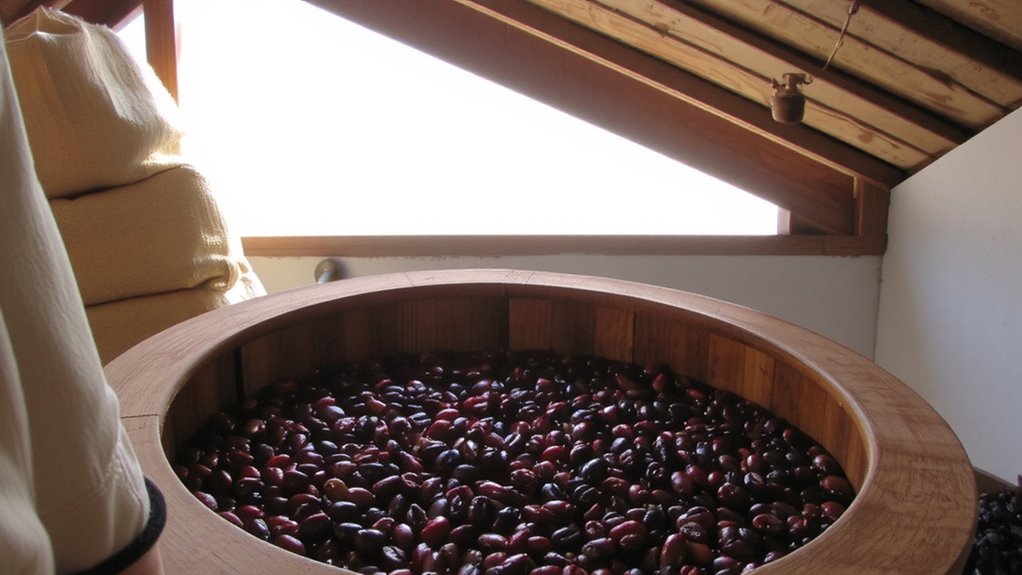
While you might associate carbonic maceration with wine, it’s been adapted in specialty coffee as a fermentation method that can intensify flavor. You place whole coffee cherries in a sealed tank filled with carbon dioxide, letting them ferment under controlled conditions. This process starts inside the fruit, where enzymes break down sugars anaerobically. Cherry selection is critical-you need ripe, undamaged cherries to guarantee consistency. Unripe or overripe fruit can throw off the balance, leading to off-flavors. Fermentation control matters too: producers monitor temperature, pressure, and time, often for 60 to 96 hours, to shape the outcome. Equipment like stainless steel tanks with pressure valves is standard. It’s costlier and more labor-intensive than washed or natural processing, but it offers unique, complex profiles. Not every farm can do it well-success depends heavily on precision and attention to detail.
How Carbonic Maceration Changes Flavor
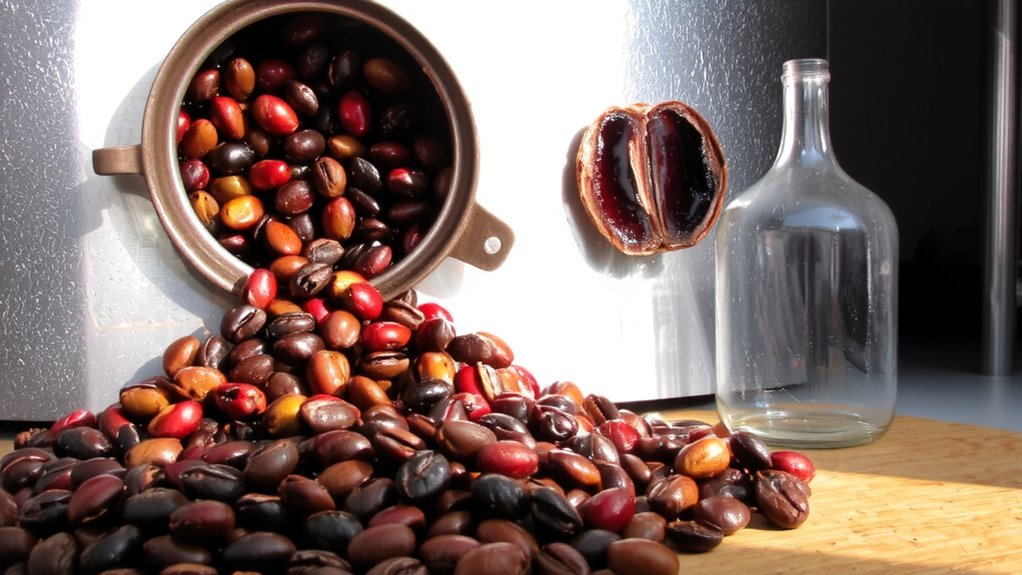
Because the coffee cherries ferment in a controlled, oxygen-free environment saturated with carbon dioxide, you end up with a slower, more uniform breakdown of sugars inside the fruit, which directly shapes the final cup profile. The extended fermentation duration allows for deeper, more consistent flavor development, often enhancing sweetness and complexity. You’ll notice brighter acidity and distinct fruit-forward notes-think red berries, stone fruit, or tropical hints-depending on the bean and process. Microbial influence is minimized since wild yeasts and bacteria struggle in the CO₂-rich tank, leading to cleaner, more predictable results than traditional fermentation. This control lets producers fine-tune flavors with less risk of off-notes. However, it demands precise monitoring of time, temperature, and gas levels. Too long in the tank and you risk over-fermentation; too short, and you miss the full flavor potential. It’s not a magic fix, but when done right, it elevates quality.
Adapting Winemaking’s Carbonic Maceration to Coffee
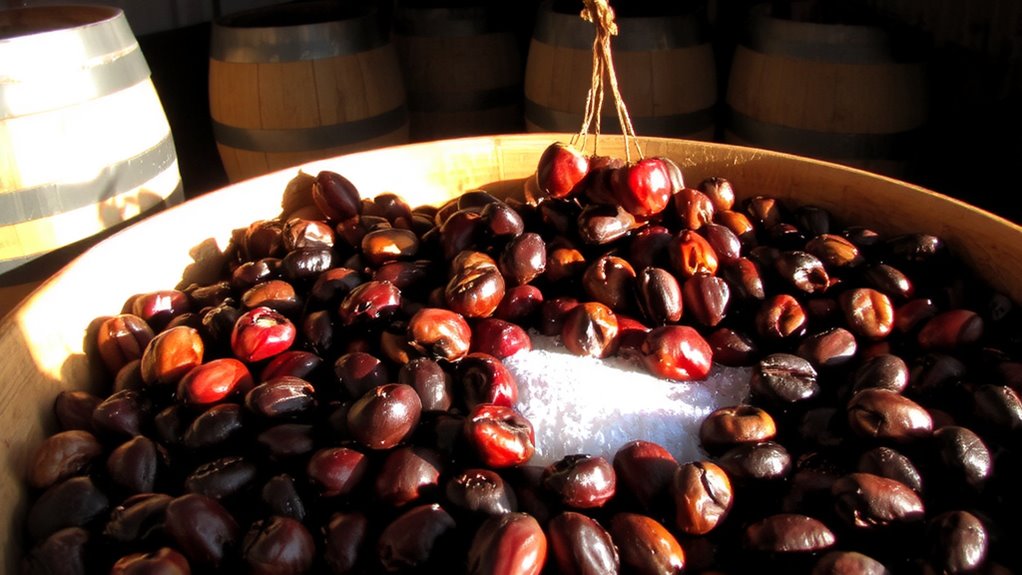
You’ve seen how carbonic maceration shapes flavor by slowing fermentation and boosting fruitiness and sweetness in coffee. Now, adapting this wine technique means rethinking your setup. Unlike wine, coffee ferments as whole cherries in sealed tanks, relying on internal enzymes and controlled oxygen levels. Yeast selection matters-some producers inoculate with specific strains to guide flavor, while others trust native microbes. Either way, consistency depends on precision. Temperature control is non-negotiable; keeping tanks between 20–25°C helps manage fermentation speed and prevents off-flavors. Too hot, and bacteria dominate; too cold, and the process stalls. Stainless steel fermentation tanks with cooling jackets offer the best control, though some use insulated plastic with ice packs. Unlike traditional methods, this demands monitoring, but the payoff is cleaner, more vibrant profiles. It’s not for every farm-cost and skill are barriers-but for specialty producers chasing distinct fruit tones, it’s a powerful tool.
How Producers Run Carbonic Fermentation
To run carbonic fermentation, producers start by carefully loading whole, ripe coffee cherries into sealed stainless steel tanks, often the same kind used in winemaking. You control the environment strictly-temperature and pressure must stay stable, so equipment calibration is critical. Even small errors can skew results, leading to off-flavors or stalled fermentation. The cherries ferment whole, with yeast acting inside the fruit, breaking down sugars slowly. Fermentation timing usually ranges from 48 to 96 hours, but it depends on the temperature and desired outcome. Some producers use lab tests to monitor sugar and pH levels throughout. You’ll need proper valves to release CO₂ safely and prevent tank damage. Unlike open fermentation, this method limits oxygen, which changes the chemical process. Success relies on consistency, the right gear, and close attention to detail throughout the cycle.
Flavor Profiles: What to Expect in the Cup
When the tank seals shut and fermentation begins, something unique happens inside the coffee cherry-carbon dioxide builds up, oxygen drops away, and the fruit starts to transform in a way that directly shapes how your cup will taste. You’ll often notice bright, candy-like acidity, with distinct notes of tart cherry emerging from the anaerobic environment. These coffees frequently carry a silky mouthfeel and layered sweetness, sometimes resembling floral honey in both aroma and aftertaste. The process amplifies fruit-forward characteristics, making the flavors more defined than in traditional fermentations. However, inconsistency can be an issue-some batches may turn overly fermenty or boozy if not monitored closely. Expect clarity and intensity, but know that results vary by producer skill and climate. The best lots highlight the method’s potential without veering into artificial extremes. It’s a deliberate choice for those seeking complexity rooted in process control.
How Roasters Use Carbonic-Macerated Beans
Though carbonic maceration brings intense fruit notes and aromatic complexity, roasting these beans demands a careful touch to preserve their unique character. You’ll need to monitor roast development closely-going too fast or hot can burn off delicate flavors. Many roasters opt for a slower ramp-up and lower charge temperatures to guarantee even heat penetration without scorching. Because each batch of carbonic-macerated beans can vary slightly in moisture and density, maintaining batch consistency requires extra attention to airflow and drum speed. Some use profile roasting software to log and repeat successful runs. Light to medium roasts work best, as darker profiles tend to overshadow the bright, wine-like acidity. Testing small sample roasts first helps fine-tune your approach before scaling up. With practice, you can reliably highlight the bean’s ferment-driven nuances while guaranteeing every batch meets quality standards.
The Future of Fermentation in Specialty Coffee
As fermentation gains traction as a key driver of flavor in specialty coffee, you’re likely seeing more experimental processing methods on café menus and roaster websites. You can expect microbial diversity to play a bigger role, as producers manipulate yeast and bacteria to shape taste profiles-like using specific strains to enhance fruitiness or reduce acidity. These controlled fermentations offer repeatable results, which matter to roasters seeking consistency. At the same time, climate adaptation is pushing changes; rising temperatures and unpredictable rainfall are disrupting traditional processing, making resilient, indoor fermentation setups more practical. Facilities like those in Colombia and Rwanda now use sealed tanks to stabilize conditions regardless of external weather. While these methods require more investment and technical knowledge, they offer better control and quality outcomes. You’ll find these coffees often labeled with processing details-look for terms like “anaerobic,” “yeast-inoculated,” or “extended fermentation”-so you know what you’re buying and can adjust brewing accordingly.
On a final note
You’ll find carbonic maceration adds fruitier, wine-like notes to coffee, but it’s not for every taste. It works best in anaerobic tanks, like those from Acaia or Bellwether, with strict temperature control. While it can boost complexity, it risks uneven fermentation if not monitored. Roasters adjust profiles to preserve delicate flavors, often using lighter roasts. Consider it a tool-useful, not essential-for exploring new profiles in specialty coffee.