Pulling Espresso Shots in High Humidity: Adjusting Grind and Dose for Consistency
On humid days, your beans absorb moisture, slowing shots and causing clumping. Adjust by grinding slightly coarser-try a quarter to half step-to improve flow and prevent clogging from extra fines. If shots taste bitter, reduce your dose by 0.5 to 1 gram to match the denser, less brittle beans. Store beans airtight, check shot time daily, and clean your grinder regularly. Small, smart tweaks keep pulls consistent. You’ll find even more ways to master muggy conditions with a few proven habits.
Notable Insights
- Adjust grind size coarser by a quarter to half step to counteract slower extraction in high humidity.
- Reduce espresso dose by 0.5 to 1 gram to prevent over-extraction caused by moisture-influenced bean density.
- Store beans in airtight containers with one-way valves to minimize moisture absorption and maintain freshness.
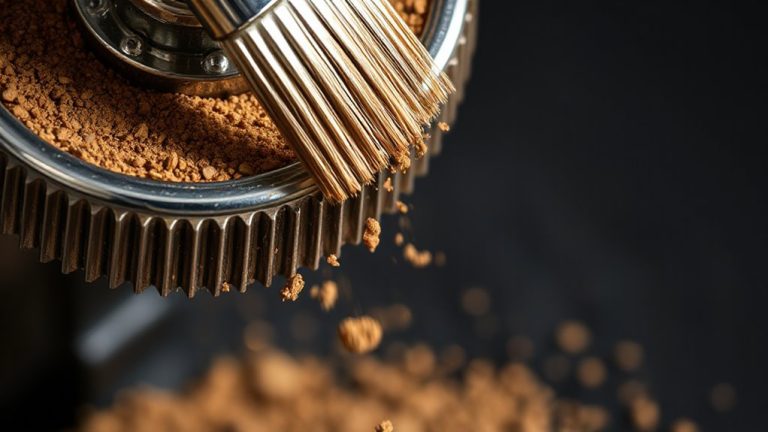
- Wipe grinder burrs and portafilters daily to reduce clumping and static caused by humid conditions.
- Monitor shot timing closely each day, as fluctuating humidity affects flow rate and extraction consistency.
Spot the Signs: Is Humidity Messing With Your Espresso?
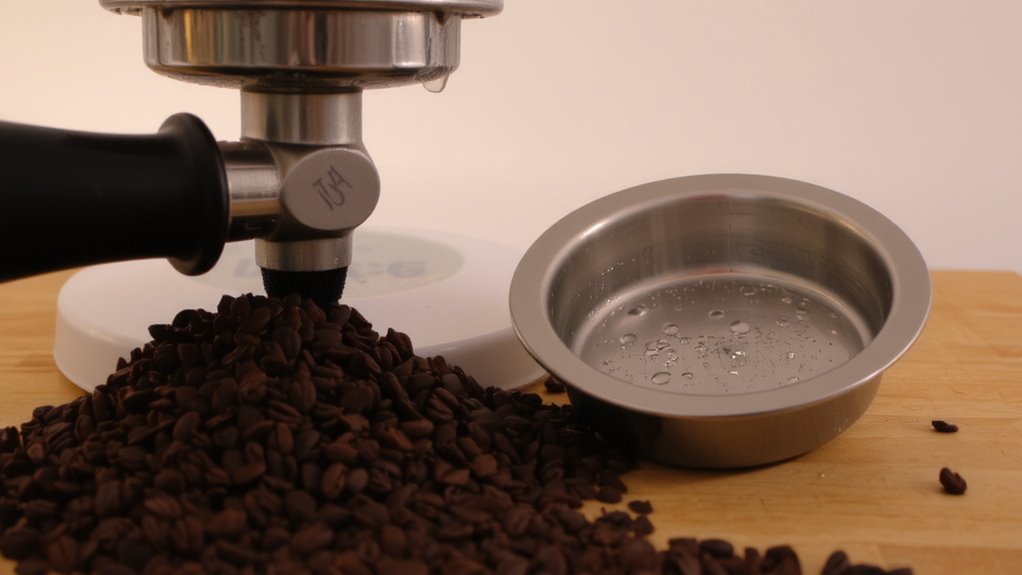
Ever notice how your espresso shots pull slower on muggy mornings? That’s likely due to moisture absorption in your coffee beans. When humidity rises, beans soak up water from the air, leading to bean expansion. This change affects how they break apart during grinding, often making them less brittle. You might see uneven particle sizes or feel that your usual grind setting suddenly produces finer resistance. Your shots may channel or under-extract even with the same dose and tamp. These signs point to humidity’s impact before you even start pulling. While sealed storage helps, beans exposed even briefly can absorb moisture. A noticeable shift in shot time without changing variables is a strong clue. If your environment lacks climate control, tracking daily humidity levels near your grinder gives actionable insight. Spotting these patterns early lets you adjust proactively.
Why Humid Beans Slow Your Grind and Extraction
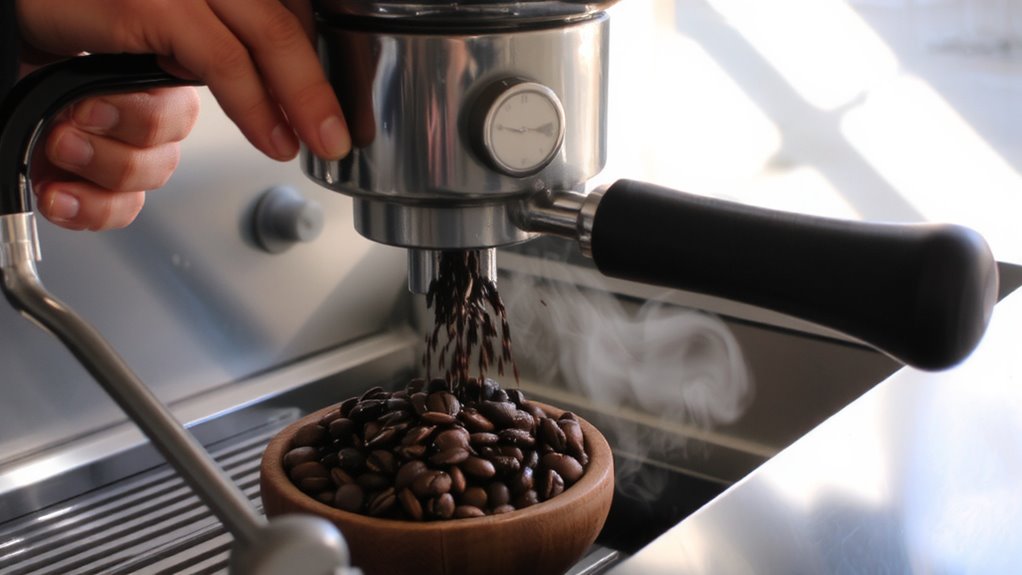
Because moist beans resist fracturing cleanly, your grinder has to work harder, slowing down the process and generating more heat. This happens due to increased moisture absorption, which alters bean density and makes the coffee less brittle. When beans absorb humidity from the air, they become slightly softer and more pliable, so the burrs don’t shear through them as efficiently. The result? Slower grinding, inconsistent particle size, and a higher chance of clumping. That uneven grind directly impacts extraction, often leading to clogged filters and restricted flow. You’ll notice longer shot times even if your dose and machine settings stay the same. Since bean density changes with ambient humidity, your grinder’s performance becomes less predictable day to day. This isn’t just about comfort-it’s physics. To maintain shot consistency, you’ve got to account for how stored beans interact with muggy environments, especially if you’re using a blade grinder or low-budget burr model.
Adjust Grind Size for Faster Flow in Muggy Weather
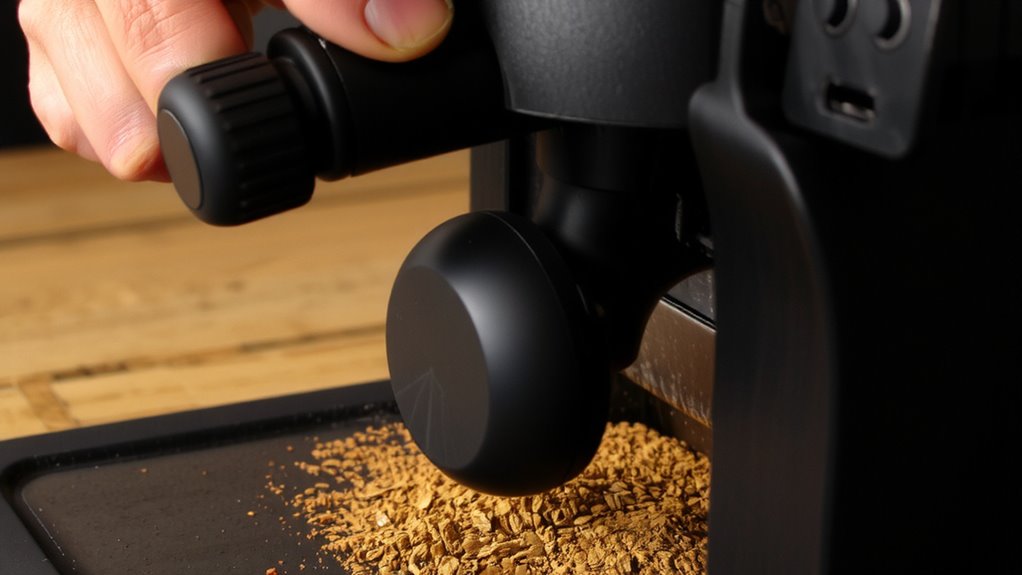
When humidity climbs, your usual grind setting might leave you with overextracted shots and frustratingly slow pours, so you’ll want to open up the grind slightly to improve flow. Moist beans resist grinding evenly, creating fines that clog the puck and restrict water. By adjusting coarser, you reduce channeling risks and support better flow optimization. Start with a quarter to half step wider on your grinder-Mazzer or Nuova Simonelli users often find sweet spots this way. This minor grind calibration can make a noticeable difference, especially with flat burrs. Don’t shift too fast; overshooting leads to sour, weak shots. Test in small increments, noting shot time and taste. Consistency matters more than speed, so track changes methodically. A stable environment helps, but when muggy weather hits, proactive grinding adjustments keep pulls in range. It’s not a fix-all, but it’s a practical first move. For more precise control in varying conditions, consider investing in one of the best espresso grinders featuring precision burr alignment.
Fix Bitter Shots by Tweaking Your Dose
Why do your espresso shots still taste bitter even after adjusting the grind? Because your dose might be too high, leading to over-extraction despite your grind changes. In high humidity, coffee absorbs moisture, making it denser and slower to extract-so maintaining the same dose can intensify bitterness. Try lowering your dose by 0.5 to 1 gram and reassess the flavor. This dose calibration helps match the coffee’s altered behavior in muggy conditions. Proper shot balancing isn’t just about grind or time; it’s about aligning dose with environmental changes. For instance, if you’re using a La Marzocco Linea or a Lelit Bianca, small dose tweaks can markedly shift extraction balance. Don’t assume yesterday’s dose works today. Test, taste, adjust. A slightly lower dose often yields cleaner shots, reducing harsh notes without sacrificing strength. It’s a simple, direct fix backed by consistent results-especially when humidity fluctuates.
Use These Daily Habits to Stay Consistent in High Humidity
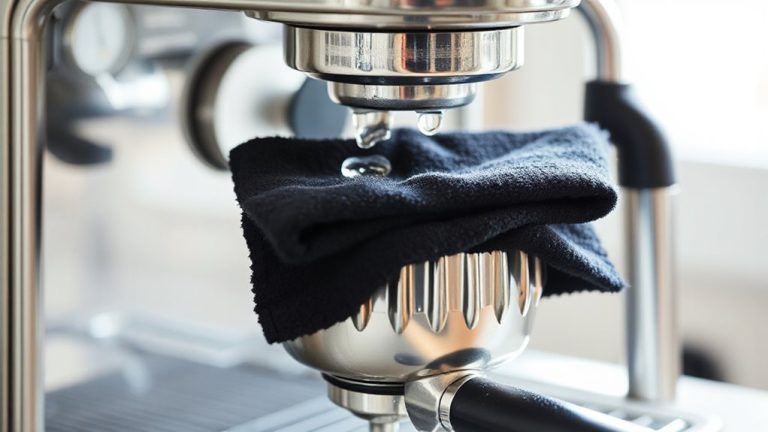
Even if you’ve nailed your grind and dose, skipping a few key daily habits can still wreck your espresso consistency in high humidity. Proper bean storage is critical-keep beans in an airtight container with a one-way valve, like the Fellow Atmos, to minimize moisture exposure. Avoid leaving beans out overnight; humidity makes them absorb water fast, altering extraction. You’ll see this in your shot timing-wet beans often lead to faster flows and uneven pulls. Check your shot timing every morning, even if nothing else changed. Humidity shifts daily, so relying on yesterday’s time isn’t reliable. Wipe down your grinder burrs and portafilter to prevent static and clumping, which skew dose accuracy. Tamp evenly and clean the group head between shots to maintain stability. These small steps, paired with attention to bean storage and shot timing, keep your espresso predictable when the air’s thick. No guesswork-just consistent results.
Adapt Your Routine to Humidity Changes
You’ve locked down your storage and daily checks, but humidity still shifts day to day, so your routine needs to move with it. When humidity rises, beans absorb moisture, increasing water activity and reducing bean density-this makes them softer and easier to grind fine. You’ll likely need to tighten your grind setting to maintain resistance. Low humidity does the opposite, drying beans out and requiring a coarser grind. Track daily shots: if flow feels too fast despite proper dose and tamp, humidity’s probably spiked. Adjust grind first-most common fix. Dose tweaks help too, but less dramatically. A refractometer helps monitor changes, but isn’t essential. Rancilio and Eureka grinders show how real-world machines respond to these shifts. Stay flexible. Your perfect shot today may need a quarter-turn adjustment tomorrow. Humidity’s unavoidable, but not unpredictable-adapt, measure, repeat. For consistent results, consider upgrading to one of the best value espresso grinders on the market.
Why Fresh Beans React to Humidity (and How to Handle It)
Since freshly roasted beans are more porous and still releasing gases, they’re especially prone to absorbing moisture from humid air, which alters how they grind and extract. This moisture absorption leads to inconsistent particle size during grinding and can dull your shot quality. Fresh beans also experience bean expansion post-roast, making their structure more vulnerable to humidity. To manage this, store your beans in an airtight container with a one-way valve, like the Fellow Atmos or Planetary Design Airscape. Grind just before brewing to minimize exposure. Using a high-quality coffee boiler system can help stabilize water temperature and pressure, reducing variability in extraction caused by environmental fluctuations.
| Factor | Impact in High Humidity |
|---|---|
| Moisture absorption | Slows extraction, causes clumping |
| Bean expansion | Increases porosity, raises sensitivity |
| Grind consistency | Becomes uneven, risks under-extraction |
| Shot time | Often extends, flavor turns flat |
Adjust your grind finer or reduce dose slightly when needed.
On a final note
You’ll need to adjust your grind finer and possibly reduce dose when pulling shots in high humidity, as moist beans grind slower and extract unevenly. Expect longer shot times and risk of bitterness if unaddressed. Check flow rate and taste daily. Rotate beans regularly and tamp consistently. A quality grinder like the Baratza Vario helps maintain precision. Stay proactive-small tweaks keep results steady despite weather changes.