How to Fix a Coffee Maker That’s Producing Weak Brew
Use 2 tablespoons of fresh coffee per 6 ounces of water and adjust to taste-weak brew often starts with too little coffee or stale beans. Grind your beans just before brewing with a burr grinder set to medium, like table salt. Check that your filter isn’t clogged and clean the machine monthly with vinegar to remove buildup. Make sure it heats to 195–205°F; otherwise, under-extraction happens. More details on optimizing each step follow.
Notable Insights
- Adjust the coffee-to-water ratio by using 1 to 2 tablespoons of coffee per 6 ounces of water for a stronger brew.
- Use freshly ground beans roasted within the past 2 to 4 weeks to ensure maximum flavor and freshness.
- Grind beans just before brewing with a burr grinder to achieve a consistent medium grind for optimal extraction.
- Clean the filter, brew basket, and machine regularly to prevent clogs and remove oil buildup that affect taste and flow.
- Descale the machine every 1–3 months and ensure it reaches 195°F–205°F to avoid under-extraction from low temperature.
Start Here: Fix Your Coffee-to-Water Ratio
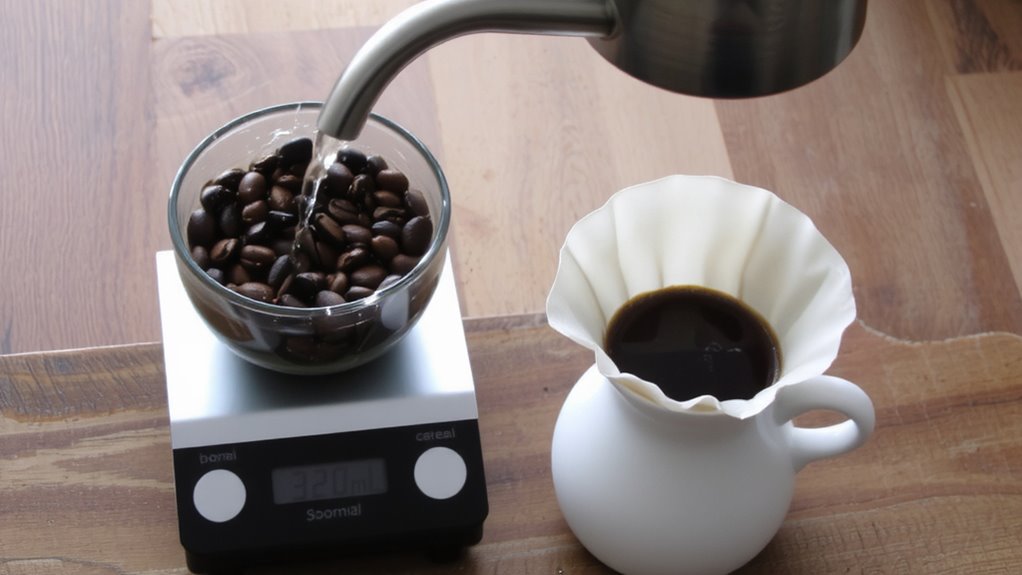
Most home brewers use too little coffee or too much water, which is why fixing your ratio is the easiest and most effective way to strengthen weak coffee. You want about 1 to 2 tablespoons of ground coffee per 6 ounces of water, depending on your taste and machine. Adjusting this ratio directly impacts coffee strength-more coffee or less water increases intensity. Brewing time also plays a role; too short, and you under-extract, leading to weak flavor. Most drip machines brew in 5–6 minutes, which works if the ratio is right. If yours takes longer, water may be over-diluting the brew. Try increasing grounds before extending brewing time, since longer contact can increase bitterness. Use your brewer’s settings only after balancing the ratio. This simple fix costs nothing and often solves the problem before tweaking equipment or method.
Use Fresh, High-Quality Coffee Beans
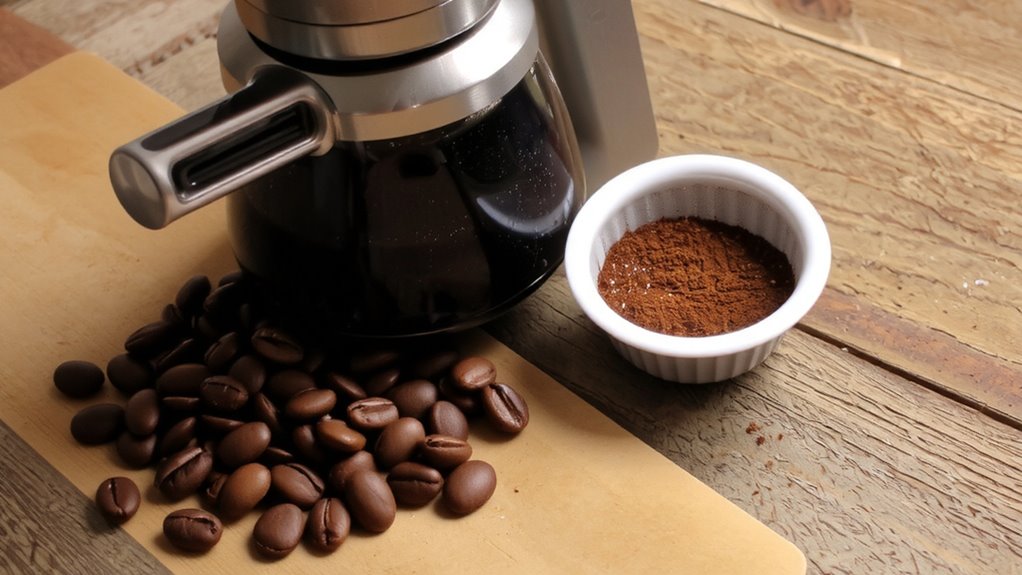
While your coffee-to-water ratio sets the foundation, the quality and freshness of your beans play a crucial role in determining how strong and flavorful your brew actually tastes. You’ll want to use beans roasted within the past two to four weeks-older than that, and the flavor fades fast. Look for clear labeling of bean origin, since beans from Ethiopia or Colombia often have brighter, more complex notes compared to mass-market blends. The roast profile matters too: a medium roast preserves more original flavor, while dark roasts deliver boldness but can mask subtleties. Avoid pre-ground or stale beans from supermarket shelves-they lack the aromatic oils that boost taste. Real freshness comes from whole beans stored in an airtight container away from light. If your coffee tastes flat, swapping in a recently roasted batch from a local roaster or trusted brand like Stumptown or Intelligentsia can make a measurable difference. For the best results, choose from the best coffee roasts for 2025 as recommended by top industry experts.
Grind Your Beans Right: Size Matters for Strength
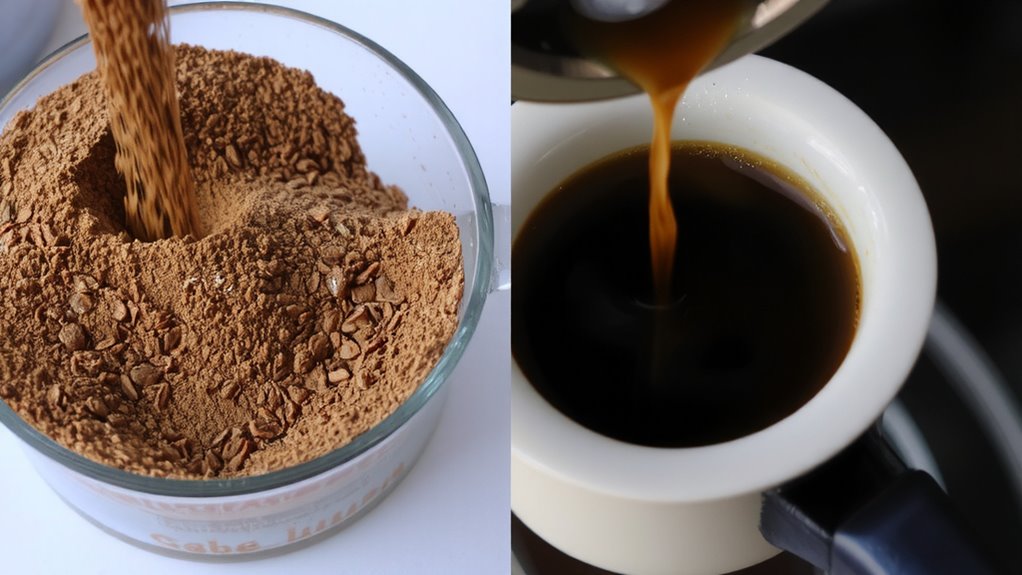
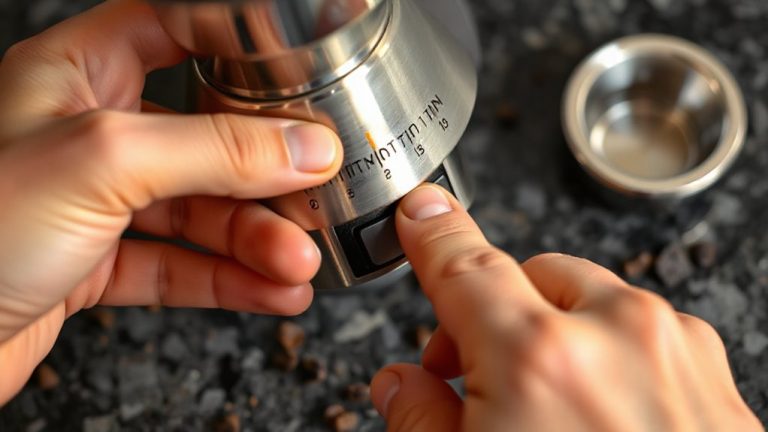
Grind size can make or break your brew. If your coffee tastes weak, the grind might be too coarse, letting water rush through too quickly and under-extracting flavor. For drip machines, use a medium grind-like table salt-for balanced extraction. Too fine, and you risk over-extraction or clogging; too coarse, and you’ll get weak, sour coffee. Always match the grind to your brewer: espresso needs fine, French press needs coarse. Bean freshness matters-whole beans stay flavorful longer, so grind just before brewing. Pre-ground coffee loses aroma fast and often has poor grind consistency, leading to uneven extraction. A blade grinder creates uneven particles; a burr grinder gives you far better grind consistency. Spend on a decent burr model like the Baratza Encore or Bodum Bistro-they’re reliable and improve every cup. Size and consistency really do shape strength. For optimal results, consider one of the best grinders for filter coffee, which are designed to deliver uniform particle size and enhance flavor extraction.
Check for Filter or Basket Clogs
If your coffee tastes weaker than usual, a clogged filter or brew basket might be restricting water flow. Debris or old grounds can block the small holes, especially if you’re using a fine grind or oily beans. Start by removing the filter and basket to inspect both. The filter type-paper, metal, or permanent-affects how easily clogs form; paper can get soaked and tear, while metal may trap residue over time. Likewise, basket design matters: some models have shallow baskets or poor hole placement, which can impede even saturation. For example, conical baskets often drain better than flat-bottom ones. Rinse all parts under warm water and use a soft brush to clear any buildup. Make sure water passes freely through the holes. A clear filter and clean basket help guarantee full extraction, giving you stronger, better-tasting coffee every time.
Clean or Descale Your Coffee Maker Now
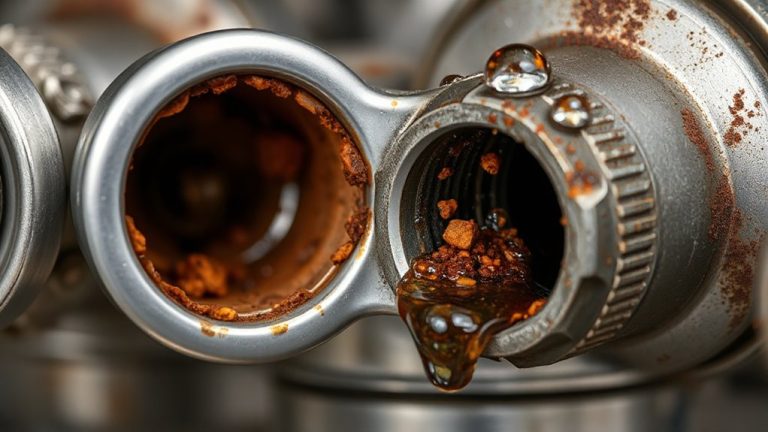
A clean filter won’t fix everything if mineral deposits or old coffee oils have built up inside your machine over time. These residues can interfere with water flow and flavor, leading to weak coffee. Mineral buildup, especially in hard water areas, coats internal parts and reduces heating efficiency, meaning water may not reach the ideal brewing temperature. To fix this, descale your coffee maker every 1–3 months using a vinegar solution or a commercial descaler like Dezcal. Run the solution through a brew cycle, then rinse with fresh water multiple times to remove residue. For drip machines, wiping the carafe and lid prevents oil buildup. Regular cleaning maintains peak performance and prolongs the machine’s life. Don’t skip this step-neglecting it affects taste and function, even if other parts seem fine. For Nespresso machines, using a recommended Nespresso descaler ensures optimal results without damaging internal components.
Is Your Coffee Maker Getting Hot Enough?
Why does your coffee taste weak, even after cleaning? The issue might be your coffee maker isn’t heating water enough. For proper extraction, water temperature should be between 195°F and 205°F. If it’s too low, your coffee will come out flat and under-extracted. A failing heating element can’t maintain this range, leading to weak brews. Older or cheaper models, like some basic drip machines, often struggle here. You can test this: run a brew cycle and check if steam appears or use a thermometer. If the water isn’t hot enough, the heating element may need replacement-or the machine may be beyond repair. While some models let you replace parts, it’s often more cost-effective to upgrade. Choosing a brewer with better thermal control, like a thermostat-regulated one, helps guarantee consistent heat.
Why Weak Coffee Happens: and How to Fix It Fast
Cold water or inconsistent heating isn’t the only reason your coffee tastes weak-sometimes, it’s about how you’re brewing. If your machine isn’t maintaining the right water temperature-between 195°F and 205°F-the result is under-extracted, flat coffee. Check your maker’s specs; cheaper models often fall short here. Also, consider brew time. Too fast, and the water doesn’t pull enough flavor from the grounds. Most drip machines should take 5 to 8 minutes for a full pot. If it finishes quicker, the contact time is too short. Try grinding your beans finer to slow extraction. Or, if your machine allows, adjust the brew strength setting. Using fresh, coarsely ground beans and clean equipment makes a noticeable difference. Don’t overlook simple fixes-scale buildup can disrupt both water temperature and flow, so descale every few months.
On a final note
You’ve checked the basics: ratio, beans, grind, and cleanliness. Now, make sure your machine heats properly-older models sometimes don’t reach ideal brewing temps. If issues persist, consider a newer machine like the Bonavita 1800 or Technivorm Moccamaster, known for consistent extraction. Drip brewers vary, so match your gear to your standards. Weak coffee usually comes down to one fixable factor-track it step by step.