French Press Coffee for Campers: Portable Brewing Without Electricity
You can make great coffee at camp with a French press-no electricity needed. Just boil water, add coarse grounds, steep four minutes, and press. Durable stainless steel models like the GSI or Snow Peak hold up well and keep heat. Skip instant or drip bags; they don’t brew as rich a cup. Use fresh, dry beans, grind coarse, and avoid oily or flavored ones that clog the press. Clean simply by rinsing after. The right technique and gear make all the difference out there.
Notable Insights
- French presses require no electricity, making them ideal for campsite coffee with just hot water and coarse grounds.
- Durable stainless steel models like GSI or Snow Peak resist damage and retain heat during outdoor use.
- Compact, lightweight designs (under 1.5 lbs) with secure lids prevent leaks in backpacks.
- Freshly ground beans, coarse consistency, and a 4-minute steep yield the best flavor without bitterness.
- Avoid paper filters and electricity-simply rinse after use for easy cleanup in the wild.
Why a French Press Is Ideal for Camp Coffee
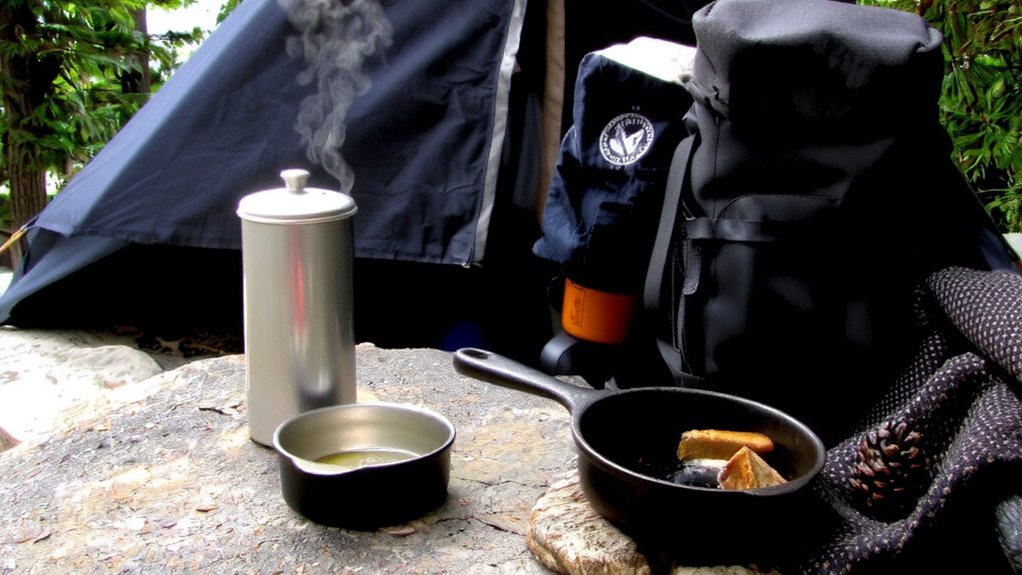
While some campers opt for instant coffee or single-serve drip bags, you’ll get noticeably better flavor and more control with a French press-no electricity or paper filters required. Its Durable Design withstands rough handling, especially stainless steel models like the GSI Outdoors Java Press or the Snow Peak Coffee Press-T. Glass versions work well too but need careful packing. The Simple Operation means you boil water, add coarse grounds, steep for four minutes, then push the piston. It’s consistent and adjustable based on your taste. Unlike pour-over setups, there’s no need for special paper or constant pouring. You just need a heat source and clean water. Cleanup’s easy-rinse out grounds or dispose of them properly. Just avoid grinding too fine, or the piston’ll stick. With minimal parts and reliable performance, it’s a practical pick for backpacking or car camping alike. For those avoiding plastic, consider a plastic-free French press made entirely from stainless steel or borosilicate glass.
Packing Your French Press for Any Campsite
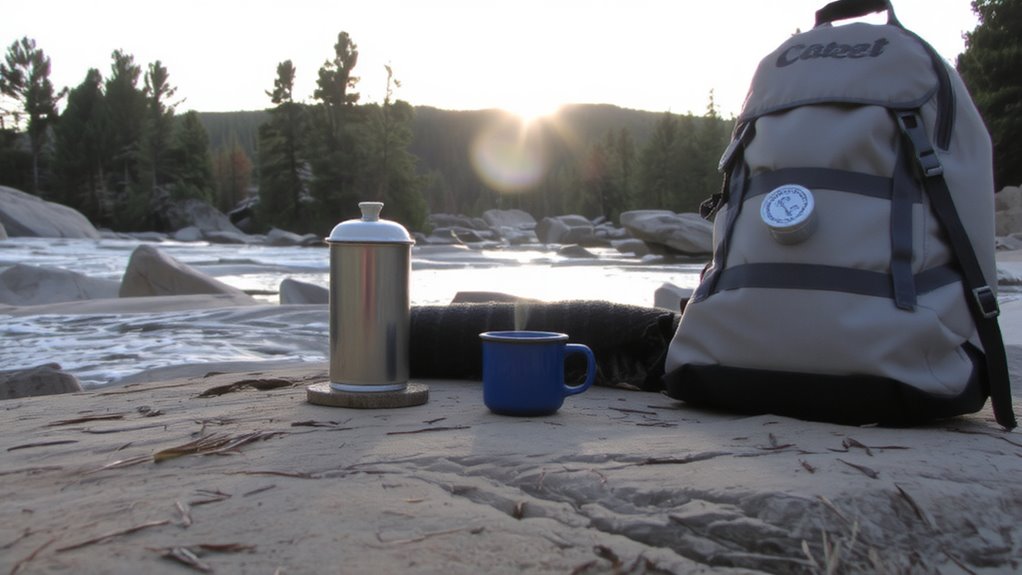
You already know a French press brews better coffee outdoors with minimal gear, and now it’s time to get it safely to your campsite. Choose a model with a sturdy, insulated stainless steel body-glass breaks too easily. Its portable design fits neatly in a backpack or camp kitchen box, often weighing under 1.5 pounds. Look for one with a secure lid and integrated pump lock to prevent spills on the trail. Most compact presses hold 17–34 ounces, offering solid campsite compatibility whether you’re car camping or backpacking. Avoid models with fragile seals or loose parts. Rugged brands like GSI Outdoors or Kinto Travel come with protective sleeves and withstand bumps. Pack it in the center of your bag, surrounded by soft gear for cushioning. No disassembly is needed if stored properly. With the right case and smart packing, your press arrives undamaged and ready. For those who also enjoy traditional campfire brews, consider checking out the best camping percolators for a comprehensive buying guide.
Choose the Best Coffee for Camping French Press
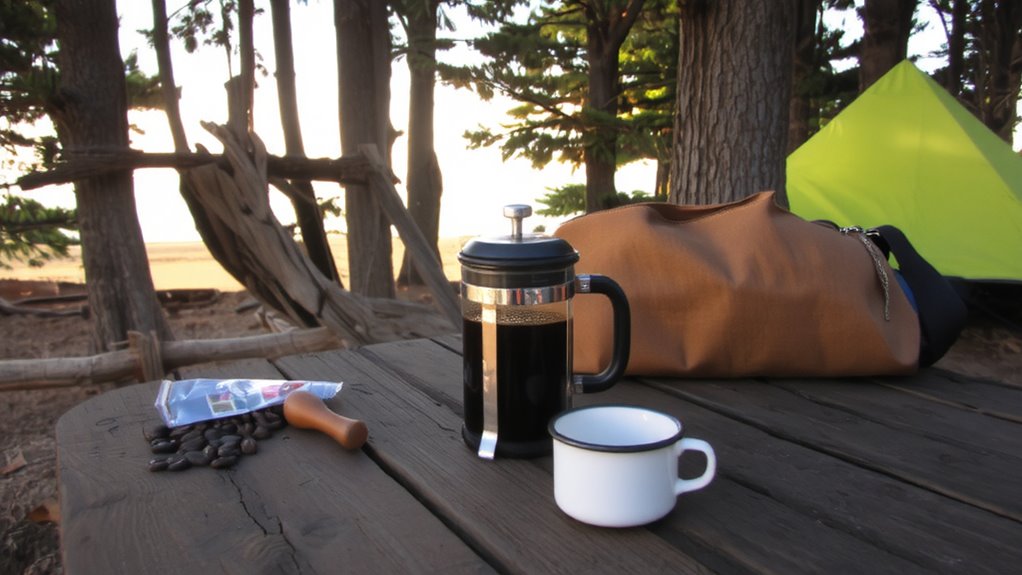
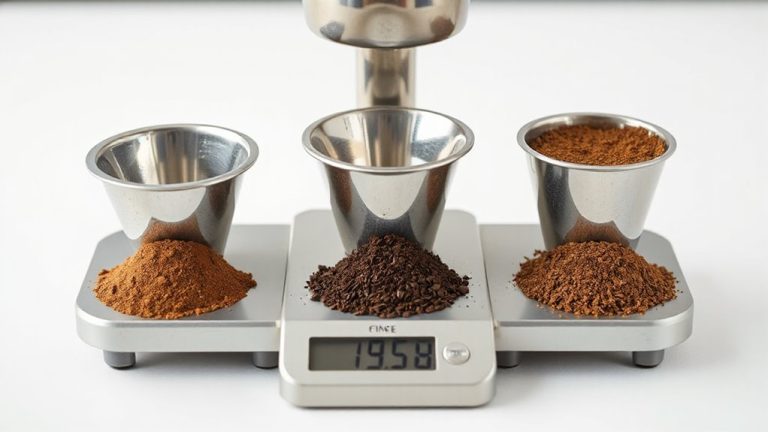
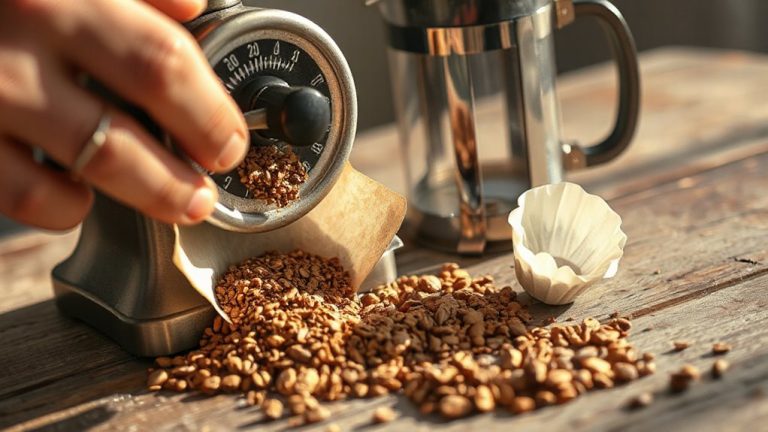
Freshness matters most when picking coffee for your French press in the wild. Coffee freshness directly impacts flavor and aroma, so choose beans roasted within the past two to three weeks. Pre-ground won’t cut it-grind your beans just before brewing to lock in quality. That means pack a small hand grinder or opt for pre-portioned whole beans. Look for roast dates on the bag, not just expiration labels. Bean origin also plays a role. Central and South American beans often deliver balanced, nutty profiles that hold up well outdoors, while African beans can offer brighter, fruitier notes you might enjoy at camp. Dark roasts brew bold and rich, but medium roasts tend to preserve more origin character. Avoid flavored or oily beans-they can clog your French press. Stick to trusted brands like Colombia, Ethiopia, or Guatemala for consistent quality in rugged conditions. For a smooth, low-acidity option ideal for outdoor brewing, consider Brazilian coffee which is known for its rich, nutty-sweet profile and excellent performance in French press setups.
How to Brew Coffee With a French Press at Camp
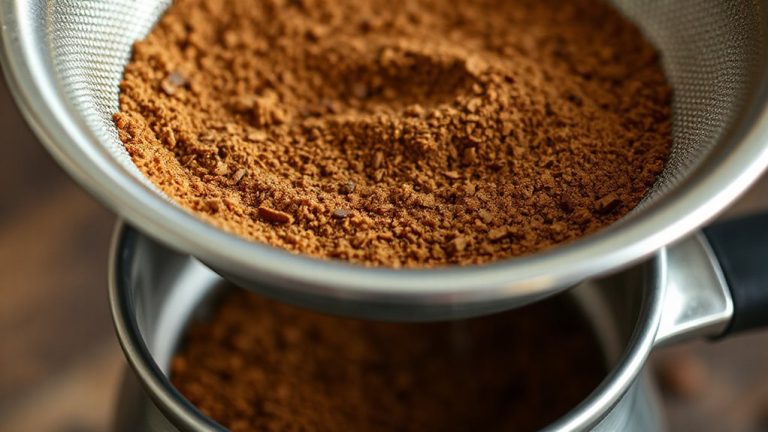
The ritual of brewing camp coffee starts with preparation-your French press needs the right mix of grind size, water temperature, and timing to deliver a clean, flavorful cup. Use a coarse, even grind consistency to prevent sludge and guarantee proper extraction; a burr grinder at home works best. Heat water to just off-boil-around 200°F-then add it to your press over the grounds. Stir gently, let steep for four minutes, then press slowly. Pour immediately to avoid over-extraction. If you’re near a water source and have time, try the cold brew option: mix coarsely ground coffee with room-temp water, steep for 12–24 hours, then press and serve over ice. It’s smoother and less acidic, ideal for hot climates. Cold brew demands planning but cuts fuel use. Always clean your press after to maintain performance.
Avoid These 5 French Press Mistakes While Camping
Why do so many campers end up with muddy, bitter coffee despite using a French press? You’re likely making one of five common mistakes. First, you’re using poor water quality-impure or mineral-heavy water ruins flavor, so filter it if needed. Second, you’re not controlling temperature control; boiling water scalds grounds, while water that’s too cool under-extracts. Aim for just off the boil-about 200°F. Third, you’re grinding too fine; use a coarse, even grind to prevent silt in your cup. Fourth, you’re steeping too long-four minutes is ideal. Over-steeping creates bitterness. Finally, you’re plunging too hard or too fast, agitating the grounds. Press slowly and steadily. Avoid these, and you’ll get clean, rich coffee every time, even in the backcountry.
Clean and Store Your French Press On the Go
Your French press’s performance hinges on a quick, thorough clean after each brew-skipping this invites stale oils and off-flavors. Rinse the carafe, plunging mechanism, and filter right after use with hot water; trap coffee grounds in the filter before dumping. Use a small brush to scrub residue from the mesh, especially where grounds cling. If soap’s available, a drop helps, but rinse well-residue affects taste. For drying technique, invert the press on a towel or hang components with a carabiner to air-dry fully; trapped moisture breeds mildew. When packed, use protective storage solutions like padded mesh bags or dedicated French press cases to prevent cracks. Avoid stuffing it loose in your pack-glass breaks, plastic warps. Stainless steel models handle rough use better. Keep the plunging mechanism disassembled to preserve spring tension. Proper cleaning and smart storage extend its life and keep your coffee tasting fresh, trip after trip.
On a final note
You’ve got a reliable way to make great coffee outdoors with your French press. No power? No problem. Just heat water, add coarse grounds, and press. It’s simple, durable, and easy to clean. Watch your brew time and water temp to avoid bitterness. Skip pre-ground coffee-grind fresh if you can. Compared to pour-over or instant, it’s often faster and more consistent. Pack it right, rinse it well, and it’ll last trip after trip. Simple, effective, and camp-approved.