Why You Should Recalibrate Your Grinder After Changing Bean Types
You should recalibrate your grinder after switching beans because density and moisture vary by origin and roast. Ethiopian beans are hard and need a coarser grind, while softer Brazilian beans grind finer. Dark roasts crumble easily, risking bitterness; light roasts need finer settings for balance. Skipping adjustment leads to sour or bitter coffee. Clean the grinder first, reset the burrs, and test for even particle size-your brew’s clarity depends on it. Next steps reveal how to fine-tune fast.
Notable Insights
- Different bean densities affect grinding resistance, requiring adjusted settings for consistent particle size.
- Moisture content varies between beans, influencing hardness and grind texture during milling.
- Roast level changes bean structure; darker roasts are more brittle and produce finer grinds.
- Using old settings risks over- or under-extraction, leading to bitter or sour coffee flavors.
- Residual grounds from previous beans cause contamination and uneven dosing in the grinder.
Why Different Beans Need Different Grind Settings
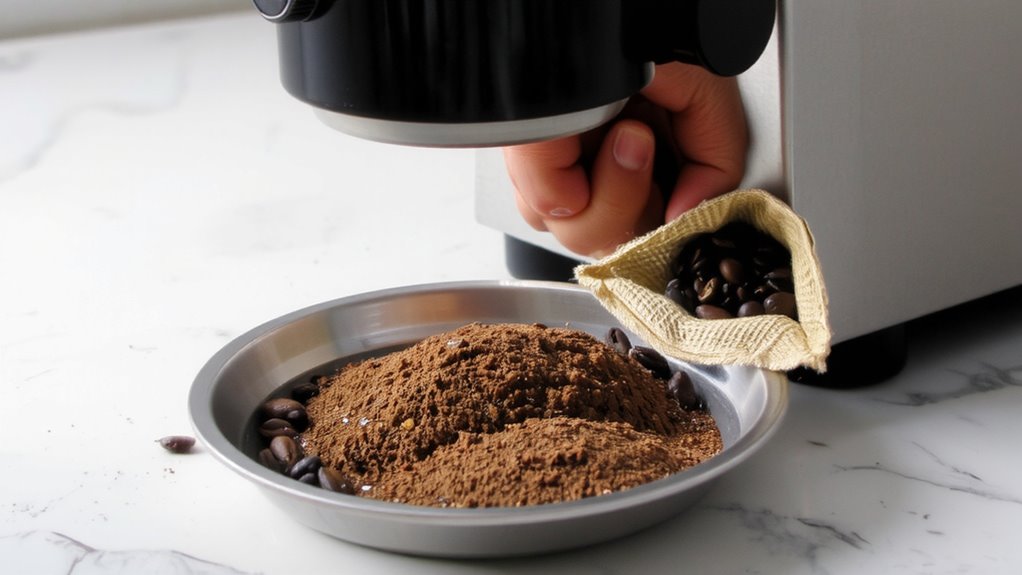
Bean density is the main reason you’ll need to adjust your grinder when switching coffees. Different bean variety affects how hard or soft the coffee is, changing how it grinds. For example, dense beans like Ethiopian heirlooms resist grinding more than softer Brazilian beans, so you’ll need a coarser setting for the former to avoid over-extraction. Moisture content also plays a role-higher moisture makes beans tougher, altering how they break apart. Freshly harvested or humid-climate beans often retain more moisture, requiring finer adjustments. If you don’t recalibrate, your shot might pull too fast or too slow. Light roasts usually demand finer grinds than dark roasts due to density differences. But even within the same roast level, switching origins means retesting. Use grind tests, not presets. Start close to your last setting, then tweak based on taste and timing. Consistency comes from adapting, not assuming. A high-quality best coffee grinders will offer the precision and consistency needed to make these adjustments effectively.
Why Roast Density Changes Your Grind Outcome
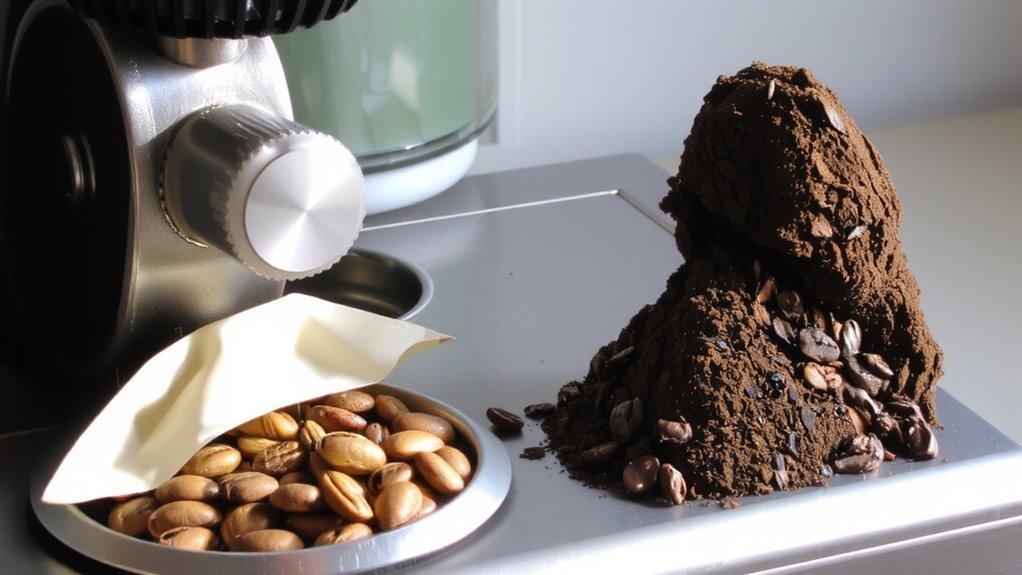
A good number of coffee lovers overlook how roast level directly impacts grind consistency and extraction. Darker roasts undergo more roast expansion, making beans larger and more brittle. This increased bean porosity means they grind finer and more unevenly compared to dense, hard beans at lighter roasts. When you switch from a light to a dark roast without adjusting your grinder, you risk over-extraction-your particles are too small. Light roast beans, less expanded and less porous, need a finer grind setting to extract properly, while dark roasts usually require a coarser setting to prevent clogging and fines buildup. Your grinder doesn’t automatically adapt to these structural changes. That’s why recalibration isn’t optional-it’s essential. Ignoring roast density leads to inconsistent particle size, uneven flow, and poor flavor clarity, even with the same bean type. Adjust for density, and you’ll pull more balanced, repeatable shots. For best results, consider upgrading to one of the top coffee grinders recommended for precision and consistency across bean types.
Sour or Bitter? What Your Coffee Is Telling You
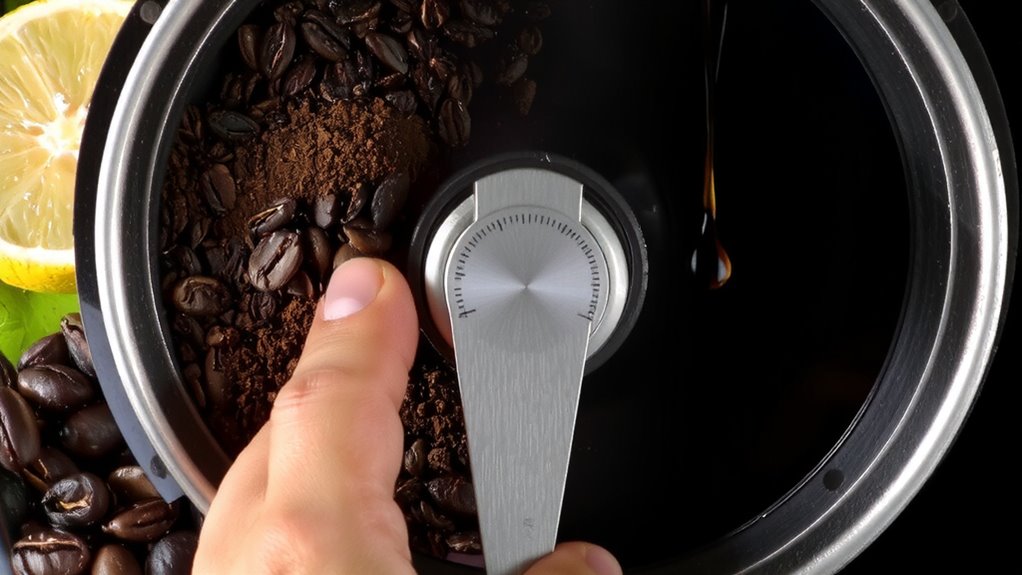
You’ve adjusted your grinder for roast density, but if your espresso still tastes off, the issue might be hiding in the flavor itself. Sour or bitter notes signal imbalance-your grind may be too coarse or too fine, disrupting flavor balance. Each bean’s unique taste profile reacts differently to extraction time. A high-quality espresso grinder ensures consistent particle size, which is critical for dialing in the perfect shot. Here’s what to watch for:
| Flavor Cue | Likely Cause |
|---|---|
| Sour, sharp, underdeveloped | Under-extraction (grind too coarse) |
| Bitter, ashy, dry | Over-extraction (grind too fine) |
| Weak, watery | Channeling or inconsistent grind |
| Balanced, sweet, clear | Ideal extraction |
| Harsh, metallic | Over-roasted or stale beans |
Adjusting grind size fine-tunes extraction, helping align flavor balance with the bean’s natural taste profile. A consistent grind improves shot repeatability. Don’t ignore off-flavors-they’re feedback. Match your grind to what you taste, not just the roast date or origin.
How to Reset Your Grinder for a New Bean
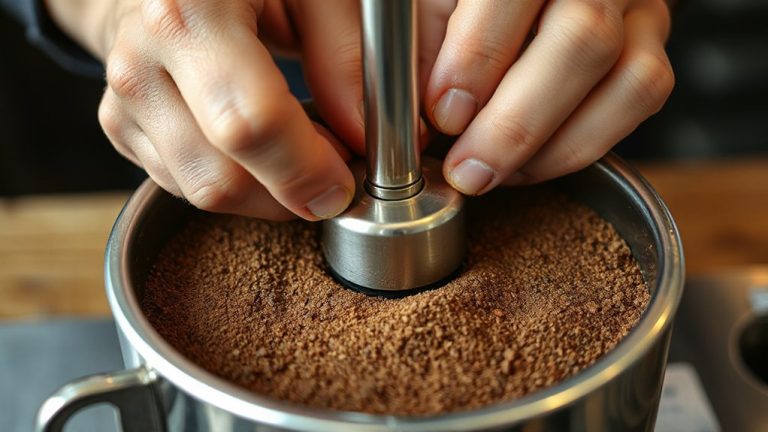
Start by clearing old grounds from your grinder before introducing a new bean-residual coffee can skew your flavor and throw off calibration. Run a few clean beans or use a grinder brush to remove built-up fines. Once cleared, check your burr alignment; misaligned burrs cause uneven particle size and hurt grind consistency. Even minor shifts impact extraction, especially with denser or more delicate beans. Adjust the burr spacing according to your brewing method-espresso needs finer settings than pour-over. After adjusting, grind a small amount and inspect the texture. It should look uniform, not gritty or powdery. Poor consistency often points back to burr issues or incorrect settings. Make small tweaks until you hit the right range. Don’t rush this step-proper setup guarantees balanced shots or cups every time. Precision now saves wasted beans later.
Mistakes That Ruin Your Grind When Changing Beans
If you skip cleaning out old grounds before switching beans, those leftover particles will mix with your new dose and throw off both flavor and grind consistency-especially with light roasts or high-acidity beans that highlight imperfections. Static cling can also scatter fine particles around the burrs, skewing dose weight and promoting uneven bean fracturing. Adjusting grind settings without accounting for bean density leads to poor extraction. Always purge a few grams to clear residual coffee and stabilize the new grind.
| Mistake | Effect |
|---|---|
| Skipping grinder cleanup | Flavor contamination, inconsistent grind |
| Ignoring static cling | Loss of fines, dosing errors |
| Not adjusting for bean hardness | Uneven bean fracturing |
| Changing beans mid-dose | Cross-contamination |
| Using old grind setting | Under/over-extraction |
Speed Up Your Grind Calibration
While dialing in a new bean doesn’t have to take forever, skipping steps can cost you more time in the long run. You can speed up calibration without sacrificing accuracy by sticking to a clear routine. Start with your previous grind setting as a baseline, especially if beans are from the same region. Adjust in small increments-most grinders need only 1–2 notches difference between similar coffees. Use a scale and timer to track changes, helping improve calibration speed and repeatability. Consistent dosing and tamping matter just as much as grind consistency, so keep those steady. Burrs that are clean and sharp deliver more uniform particles, cutting down trial and error. Avoid rushing; even fast calibrations take 3–5 attempts. With practice, you’ll predict adjustments better, making each session faster and more reliable.
On a final note
Changing beans means adjusting your grinder-different densities and roasts extract unevenly if you don’t. A light roast needs finer grounds than a dark, oily one, or you’ll get sour or bitter coffee. Skip this step, and even great beans underperform. Reset your grind size, then tweak in small increments. A calibrated grinder saves beans and improves taste. It’s not fussy-it’s necessary.