How to Optimize Grind Size for a Balanced Cold Brew With Minimal Bitterness
Use a coarse, uniform grind-like sea salt-to slow extraction and reduce bitterness in cold brew. A burr grinder gives consistent particles, preventing fines from over-extracting and boulders from tasting sour. Finer grinds risk harshness, especially over 12–24 hours. Match coarser grinds to longer steeps and fresher beans; adjust slightly for older beans or shorter times. This balance yields a smoother, cleaner cup every time-details on why follow.
Notable Insights
- Use a coarse grind resembling sea salt to slow extraction and minimize bitterness during long steep times.
- Choose a burr grinder for uniform particles, preventing uneven extraction that causes sour or bitter off-flavors.
- Match coarser grinds to longer steep times (e.g., 24 hours) to avoid over-extraction and harsh notes.
- Adjust grind size based on bean freshness-fresher beans can handle slightly finer grinds without increased bitterness.
- Avoid blade grinders, as inconsistent particles lead to fines (bitter) and boulders (sour), ruining balance.
Understand Why Grind Size Shapes Cold Brew Taste
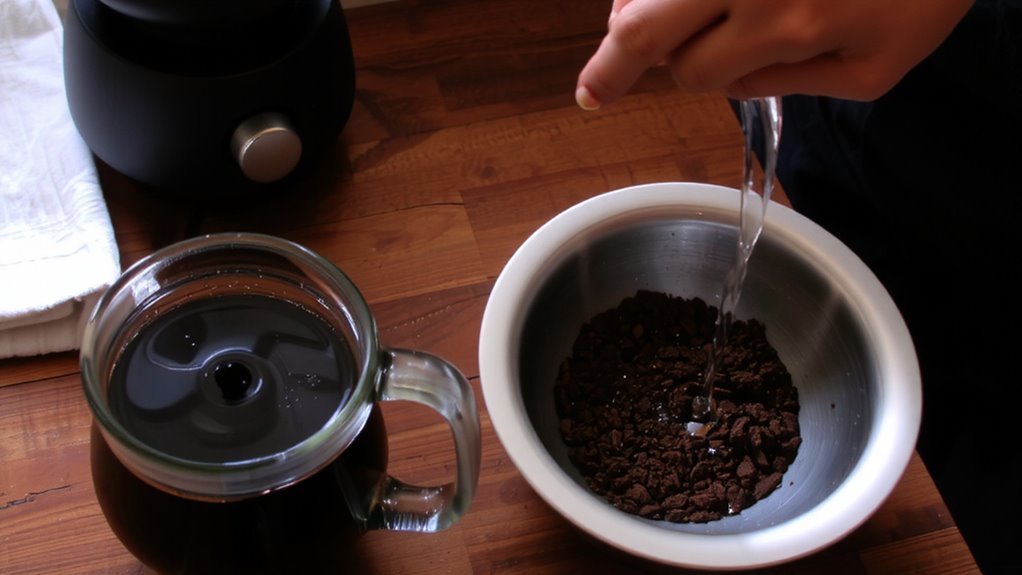
While cold brew might seem forgiving compared to hot coffee, the grind size you use actually has a direct impact on extraction and, ultimately, flavor. Since you’re steeping grounds for hours instead of seconds, water temperature stays low-usually room temp or chilled-slowing extraction markedly. That means surface area matters more: finer grinds expose more coffee to water, speeding up extraction but risking over-extraction and bitterness if left too long. Your brew vessel also influences results. A wide French press, for example, increases surface contact compared to a narrow toddy system, altering extraction even with the same grind. Too fine, and sediment clogs filters or muddies your cup. Too coarse, and under-extraction leaves weak, sour coffee. Finding the right balance guarantees clean, balanced flavor. Grind size isn’t just detail-it’s central to how your cold brew turns out. For best results, pair your grind with a cold brew French press designed to handle extended steeping and coarse-to-medium grinds.
Go Coarse for a Smoother, Less Bitter Cold Brew
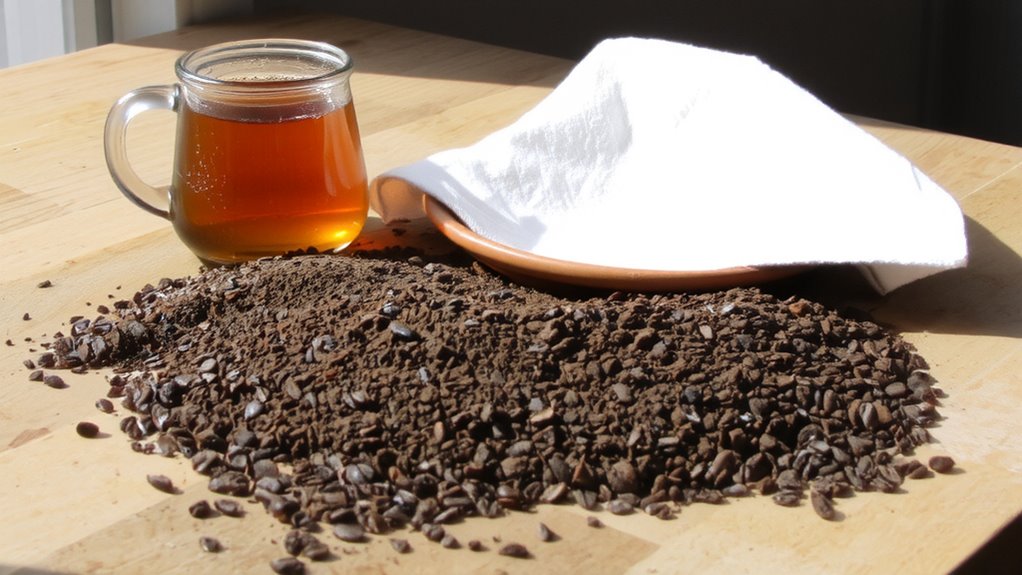
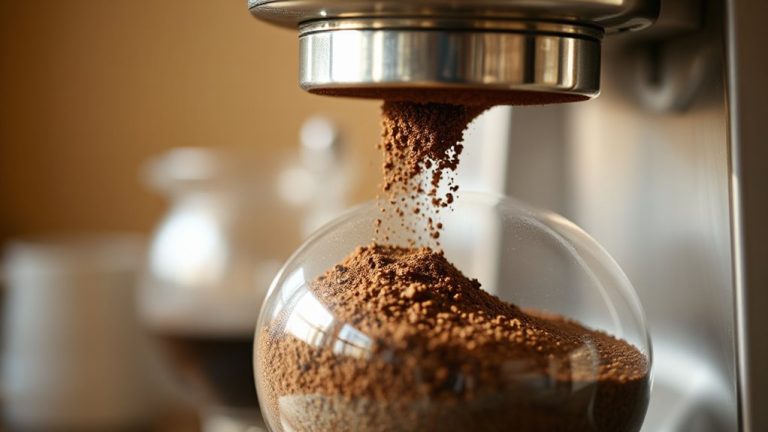
Because cold brew steeps for 12 to 24 hours, a coarse grind gives you better control over extraction without pulling out harsh compounds. You want that coarse texture-think sea salt or breadcrumbs-so water moves slowly through the grounds, avoiding over-extraction. This leads to a smoother, rounder cup with minimal bitterness. Finer grinds increase surface area, which speeds up extraction and often brings out unwanted astringency. But with a coarse grind, you get more consistent, smooth extraction over time. It’s ideal for immersion methods like mason jars or French presses, where contact time is long. If you use a cold brew tower or drip system with shorter contact, coarse might not suit as well. Still, for most home setups, going coarse reduces the risk of sour or bitter notes. Choose a burr grinder, not a blade, to achieve this reliably. Investing in one of the best grinders for cold brew ensures uniform particle size, which is critical for even extraction and optimal flavor, and models like the baratza encora consistently top reviews for their performance.
Keep Grinds Uniform for Balanced Flavor
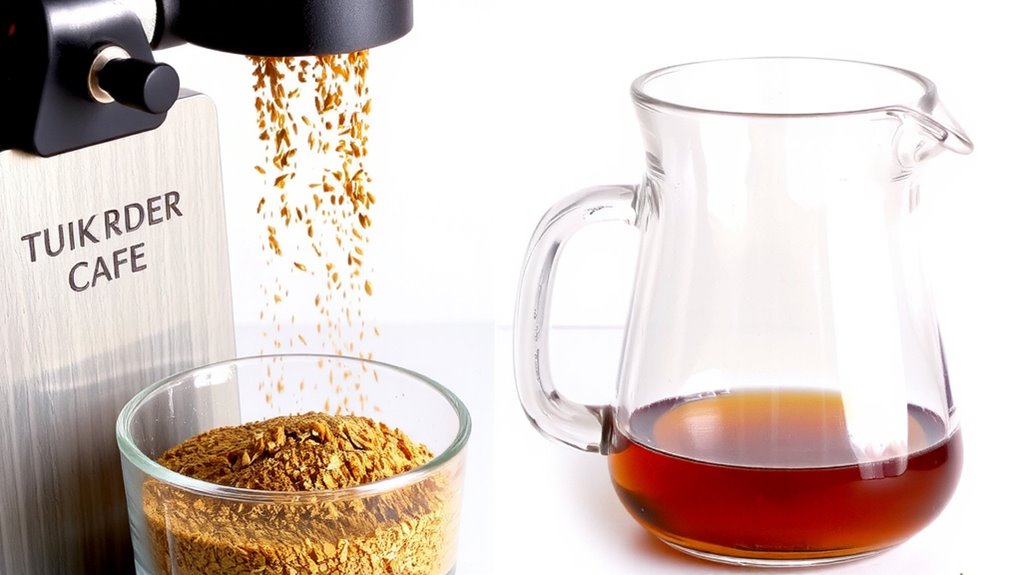
A coarse grind sets the stage for smooth cold brew, but even the right size won’t help if the particles aren’t consistent. Inconsistent grinds lead to uneven flavor extraction-fine bits over-extract and add bitterness, while coarse chunks under-extract and taste flat. That’s why grind consistency matters just as much as size. A blade grinder might chop unevenly, creating a mix of powdery fines and large chunks. A burr grinder, especially a flat or conical type, gives far more uniform particles. This uniformity guarantees all coffee steeps at the same rate, bringing out balanced sweetness and aroma without harsh notes. For cold brew’s long steep time-12 to 24 hours-consistent grinds prevent off-flavors from sneaking in. If your brew tastes muddled or sharp one day and weak the next, check your grinder. Upgrading to a quality burr model is one of the most effective, low-effort improvements you can make for reliable results. Choosing the best mill grinders can significantly enhance your cold brew’s flavor profile.
Avoid These Cold Brew Grind Mistakes That Ruin Flavor
If you’re using a blade grinder, you’re likely introducing the biggest variable that can throw off your cold brew’s flavor-uneven particle size. Some grounds end up too fine, increasing overextraction risk and pulling out bitter compounds. Others stay too coarse, leading to underextraction flaws like weak, sour taste. This mix means inconsistent flavor, no matter how precise your brew time or ratio. Coffee like Colombian or Ethiopian beans show these flaws more clearly due to their delicate acidity and aroma. Even slight grind inconsistency skews results. You might think longer steeping helps, but it worsens overextraction without fixing underextracted chunks. Skipping a quality grinder introduces problems you can’t fix downstream. Fixing the grind issue early guarantees cleaner, more balanced cold brew. Avoiding these mistakes sets the foundation-not the finishing touch-for better flavor.
Use a Burr Grinder for Better Cold Brew Grind Control
That uneven grind from a blade grinder is exactly why stepping up to a burr grinder makes such a noticeable difference in your cold brew. You need uniform grind consistency to prevent over-extraction in fines and under-extraction in boulders. A burr grinder crushes beans between two abrasive surfaces, giving you far better control over particle distribution than a spinning blade. This evenness means water extracts flavors more uniformly during long steep times, reducing bitterness. Entry-level models like the Baratza Encore or OXO Brew Conical Grinder deliver reliable results without breaking the bank. Blade grinders might be cheaper, but they create erratic particle distribution, which harms flavor balance. For cold brew, where extraction happens slowly over 12–24 hours, consistent grind size isn’t just helpful-it’s essential. You’ll get cleaner, smoother results with fewer off-notes. Upgrade your grinder, and you’ll likely taste the difference in your next batch.
Adjust Grind Size for Your Brew Time and Bean Freshness
Since cold brew steeping times can vary from 12 to 24 hours, you’ll want to adjust your grind size to match-finer for shorter steeps, coarser for longer ones. Fresh beans with high bean density extract slower, so they handle finer grinds without over-extraction. Older beans or those exposed to air develop more grind oxidation, losing brightness and increasing bitterness, especially with fine particles. A coarser grind helps minimize these flaws.
| Steep Time | Grind Size | Best For |
|---|---|---|
| 12 hrs | Medium-fine | Fresh, dense beans |
| 16–18 hrs | Medium | Balanced extraction |
| 24 hrs | Coarse | Older beans, less oxidation risk |
Match grind size to your beans’ age and roast date. Dense, fresh beans allow flexibility; stale or oxidized grounds need coarser crushes to stay smooth.
On a final note
You’ll get the best cold brew by using a coarse, even grind from a burr grinder. This reduces bitterness and extracts flavor smoothly over long brew times. Finer grinds can over-extract and turn sour or harsh, especially overnight. Adjust slightly based on bean freshness-older beans may need a touch finer. Consistency matters more than precision, so skip blade grinders. A $30–$50 conical burr model like the Baratza Encore or 1Zpresso Q2 keeps results reliable and clean.