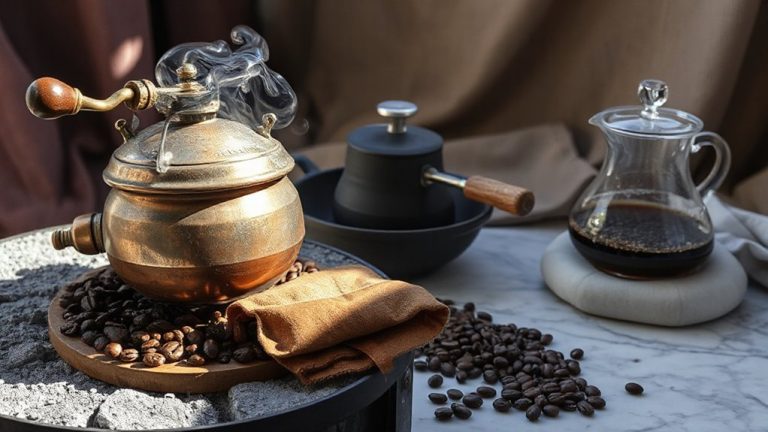
The Complete Guide to Manual Brewing Equipment: Pour-Over, French Press, and AeroPress
You get more control with manual brewing, whether it’s pour-over, French press, or AeroPress. Pour-over, like with a Hario V60, gives clean, bright coffee but needs attention to grind and pour. French press offers rich, full-bodied coffee using a coarse grind and steep time. The AeroPress is fast, portable, and brews smooth coffee in under two minutes. Each method needs a burr grinder, good water, and proper temperature-knowing these details improves your cup, and there’s more to get right where it counts.
Notable Insights
- Manual brewing methods like pour-over, French press, and AeroPress offer full control over variables for customized, high-quality coffee.
- Pour-over requires precise technique, including gooseneck kettle use, bloom time, and consistent grind size for optimal extraction.
- French press uses full immersion and a metal filter, delivering rich, full-bodied coffee with a coarse grind and 4-minute steep.
- AeroPress brews clean, smooth coffee quickly using pressure, with versatility for espresso-like or filtered coffee styles.
- Essential gear includes a burr grinder, scale, gooseneck kettle, and quality water to ensure balanced, flavorful results across all methods.
Why Manual Brewing Is Worth the Hype
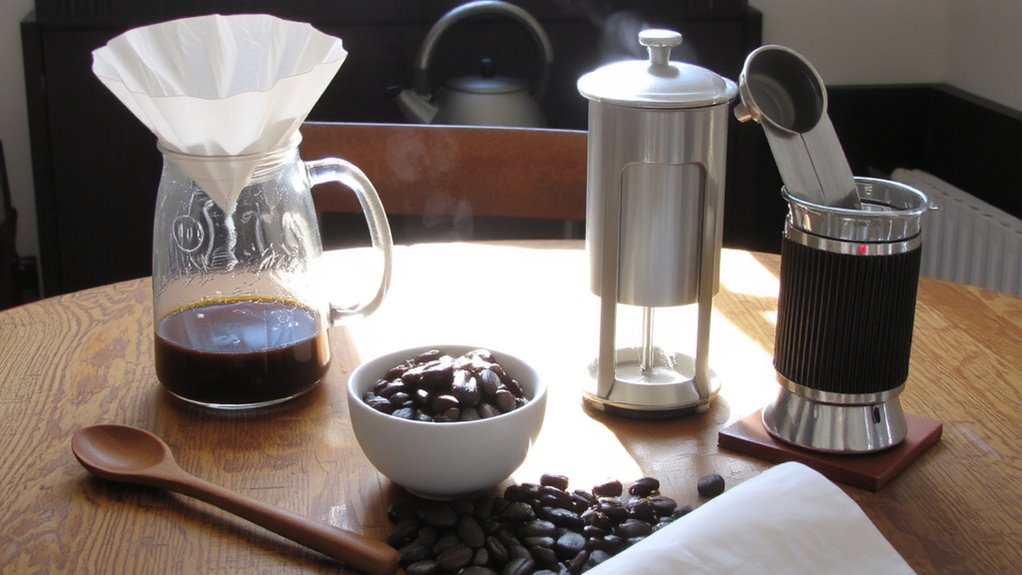
While automatic machines offer convenience, going manual gives you far more control over the brewing process, and that’s why so many enthusiasts swear by it. You’re not just pressing a button-you’re part of the action. Manual brewing turns coffee into a ritual, blending tradition with craftsmanship. Each pour, grind, and timer check adds intention, encouraging mindfulness. It slows the morning into something deliberate, even therapeutic. Whether you use a French press, pour-over, or AeroPress, your choices shape the final cup. This hands-on method doesn’t require fancy skills, just attention. You learn how water temperature, brew time, and grind size affect flavor. It’s practical, repeatable, and customizable. Unlike automated systems, manual tools are often simpler, easier to clean, and more portable. For many, the process is as satisfying as the coffee itself-making the effort part of the experience. You can enhance your results by selecting the right tools based on expert-tested best coffee gear picks.
The Precision of Pour-Over in Manual Brewing
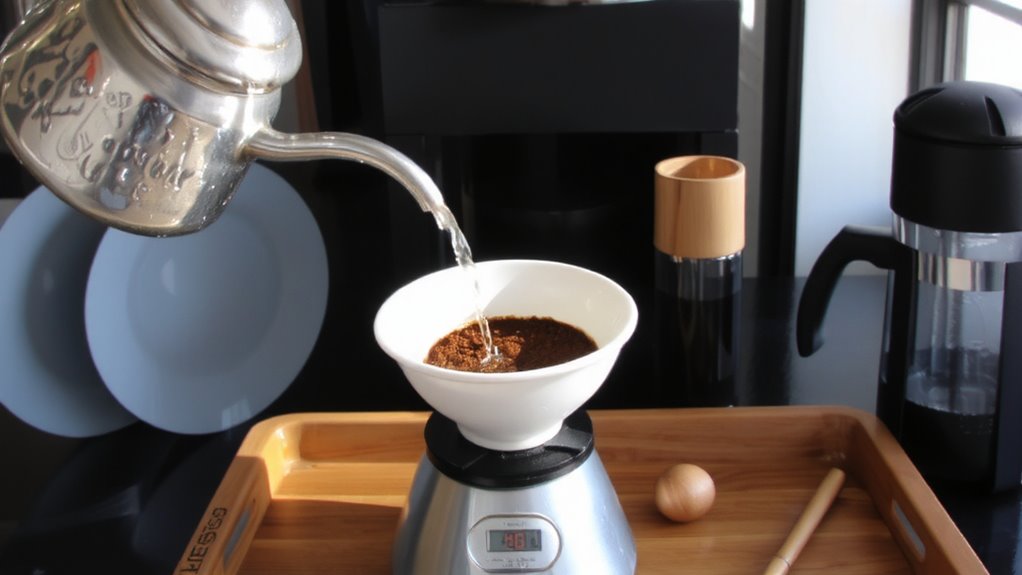
Pour-over coffee puts you in control, and that control means precision. You decide the water temperature, pour speed, and bloom time, all of which affect flavor. Using fresh, high-quality beans and proper grind consistency guarantees even extraction-critical for clean, balanced coffee. A burr grinder helps because it produces uniform particles, preventing under- or over-extraction. Water chemistry matters too; filtered water with balanced minerals brings out sweetness and acidity, while tap water with impurities can create off-flavors. Equipment like the Hario V60 or Kalita Wave responds directly to your technique. Pour slowly and steadily, and you’ll see how small changes impact taste. While this method demands attention, it rewards effort with clarity and nuance. It’s not for those who want speed, but if you value flavor control, pour-over delivers-directly from your hands to the cup. For those exploring this method, selecting the right best V60 drippers can enhance both performance and consistency.
Why French Press Brews Rich, Full-Bodied Coffee
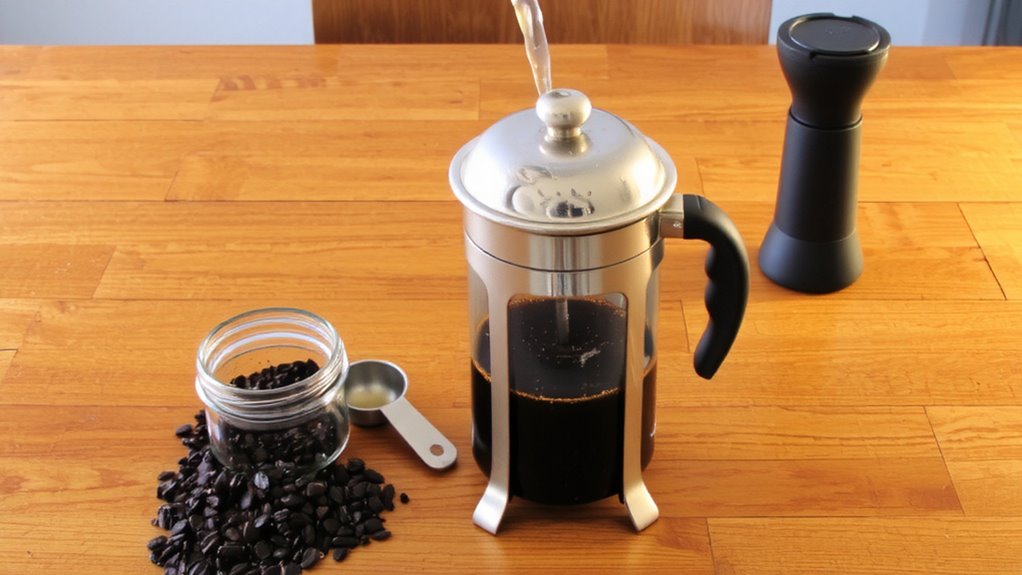
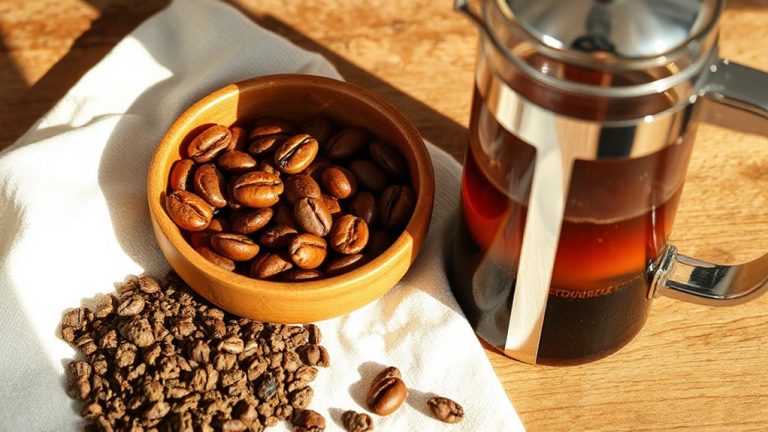
You get a heavier, more textured cup from a French press because it uses full immersion brewing-where coffee steeps completely in water for several minutes before being pressed. The metal filter plays a key role: it lets oils and fine particles pass through, boosting body and richness. Unlike paper filters, it doesn’t strip away flavor compounds, giving you a bold result. Your steep time-usually 4 minutes-is critical. Too short, and the coffee tastes weak; too long, it becomes overly bitter. Adjust grind size to fine-tune extraction. For 2024, the top models offer improved plunger mechanisms and heat retention, making best French press picks stand out for both durability and performance.
| Feature | French Press Benefit |
|---|---|
| Brew Method | Full immersion for even extraction |
| Filter Type | Metal filter retains oils |
| Steep Time | 4 minutes ideal for balance |
This simplicity makes it reliable, but cleanup and sediment are trade-offs.
How the AeroPress Masters Speed and Versatility
Since it uses pressure and a short brew time, the AeroPress delivers coffee quickly without sacrificing clarity or strength. You get a smooth, rich cup in under two minutes, making it perfect for mornings when time’s tight. Rapid brewing is built into its design-just add hot water, stir, and press. The compact chamber and piston create gentle pressure, extracting flavor efficiently without bitterness. AeroPress innovations like its durable plastic build, easy cleanup, and adaptability let you experiment with brew methods, from espresso-like shots to regular coffee. It’s lightweight and travel-friendly, great for camping or commuting. Unlike slower methods, it doesn’t require special training or equipment. You can tweak grind size, water temperature, and brew time to suit your taste. Whether you like strong or mild coffee, the AeroPress adapts effortlessly.
What You Need to Brew: Pour-Over, French Press & AeroPress Gear
The AeroPress may win for speed and simplicity, but other brewing methods each bring their own set of tools and requirements. For pour-over, you’ll need a dripper like the Hario V60 or Chemex, paper filters, a gooseneck kettle, and a scale. The gooseneck gives you precise control for even saturation, which matters because grind consistency directly affects extraction. French press brewing is more forgiving but still needs a burr grinder for a coarse, uniform grind and a sturdy carafe-like the Bodum Chambord. All three methods demand proper water temperature: aim for 195–205°F. Too hot, and coffee burns; too cool, and it under-extracts. An electric kettle with temperature control makes this easy. Skip the blade grinder-consistent grind consistency is key. Each method also needs good water, clean gear, and fresh beans to perform well.
Choose the Right Method for Your Routine
How much time do you actually have each morning? Your answer shapes which brew method fits your routine. If you’re rushing, the AeroPress wins with a 1-minute brew. Pour-over takes 3–4 minutes and demands focus, ideal if your morning rituals include quiet precision. The French Press needs 4 minutes steep time and is great for relaxed mornings.
| Method | Brew Time | Best For |
|---|---|---|
| Pour-Over | 3–4 min | Clean cups, bright flavor profiles |
| French Press | 4 min | Full body, bold flavor profiles |
| AeroPress | 1–2 min | Speed, travel, consistency |
Each method suits different schedules and flavor profiles. Match your gear to your time and taste-no extra steps needed. Choose based on what you actually do, not what’s trendy.
Brew Like a Pro: Expert Tips for Better Coffee
While your brew method sets the foundation, small tweaks in technique can make a noticeable difference in flavor-without needing pro gear. Start by using freshly ground beans and water just off the boil, adjusting based on roast profiles. Lighter roasts often benefit from slightly hotter water to extract bright notes, while darker roasts do better with slightly cooler water to avoid bitterness. Pour slowly and evenly, letting the coffee bloom for 30 seconds to release trapped gases. Your choice of manual brewer interacts with coffee origins-Ethiopian beans shine in a pour-over with their floral tones, while Sumatran beans often produce bold, earthy flavors in a French press. Match roast profiles to your taste: lighter roasts highlight origin character, darker roasts bring body and richness. Small, intentional changes improve consistency and flavor without extra cost.
On a final note
You’ve got options, and each method fits different needs. Pour-over gives control and clarity but takes practice. French press is simple and bold, though it leaves more sediment. AeroPress is fast, clean, and travel-friendly, great for experimenting. Match your pick to your time, taste, and cleanup tolerance. No single best choice-just what works best for you, daily.