How Climate Change Is Affecting Global Coffee Production: Challenges and Solutions for Farmers and Roasters
Climate change is pushing coffee farms out of prime growing zones as rising temperatures and irregular rain hurt yields and bean quality. You’re seeing more pests like the coffee berry borer move uphill, while Arabica crops struggle with heat and saturated soils. Farmers are planting resilient varieties like Catimor and using shade trees or mulch to protect soil. Roasters are adapting through direct sourcing and fair contracts. Smart, on-the-ground changes now help secure the coffee you rely on later.
Notable Insights
- Rising temperatures are reducing suitable coffee-growing areas, forcing farmers to relocate crops uphill with limited success.
- Erratic rainfall disrupts flowering cycles, leading to uneven harvests and lower yields, especially for sensitive Arabica plants.
- Warmer climates expand pest ranges, increasing infestations of coffee berry borer and raising costs for pest control.
- Farmers are adopting climate-resilient coffee varieties that tolerate heat and disease but may sacrifice traditional flavor profiles.
- Sustainable practices like shade-growing, mulching, and direct trade help farmers adapt and improve long-term supply chain resilience.
How Climate Change Is Shrinking Coffee-Growing Regions
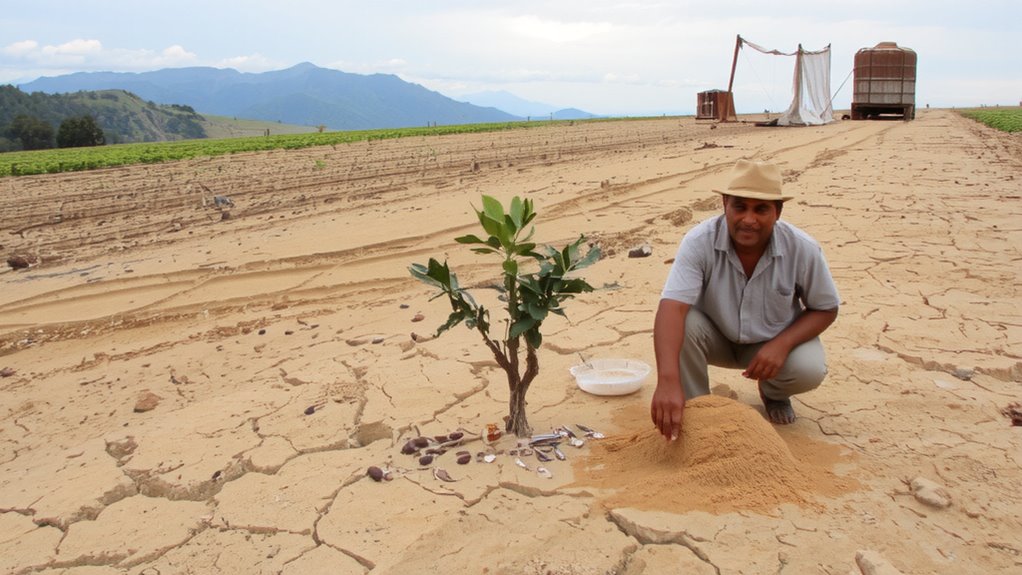
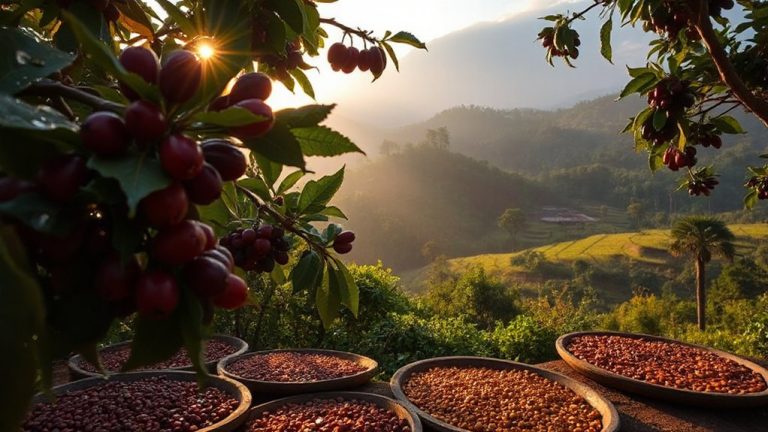
While coffee might seem like a stable morning staple, the areas where it can be reliably grown are shrinking due to rising global temperatures and shifting rainfall patterns. You’re likely unaware, but key regions like Ethiopia’s highlands and parts of Colombia now face rising temperatures that push coffee plants beyond their ideal 18–22°C range. As heat increases, farmers must move crops uphill, but there’s limited space and soil isn’t always suitable. At the same time, reduced rainfall stresses plants, lowering yields and bean quality. Arabica, which makes up 60% of global production, is especially vulnerable. You can expect supply disruptions that affect both availability and pricing. Some farms are adapting by planting shade trees or switching to hardier varieties like Robusta, but these come with trade-offs in flavor and market demand. Your morning cup depends on these real-world shifts-ones you can’t ignore.
Why Erratic Rain Is Ruining Coffee Harvests
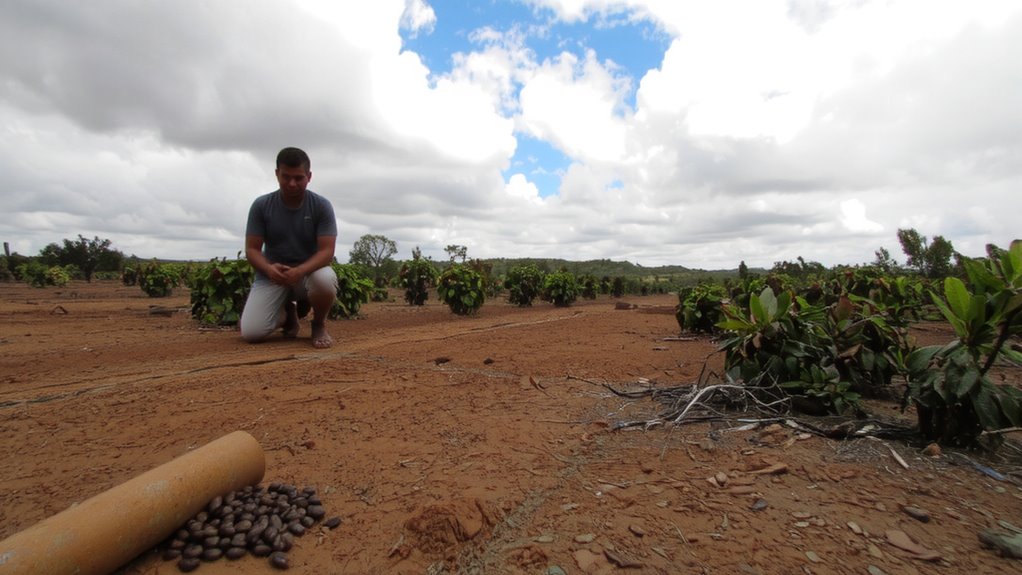
When rains come too heavy or not at all, your coffee harvest takes a direct hit-timing and consistency matter just as much as temperature for healthy coffee plants. Erratic rainfall disrupts the natural cycle, triggering unpredictable blooming that throws off harvest schedules and reduces yield quality. If flowers bloom at different times, you end up with uneven ripeness, making selective picking harder and less efficient. On the other hand, when downpours saturate the soil, waterlogging roots cuts off oxygen, weakening plants and increasing disease risk. Arabica, especially, can’t tolerate soggy conditions for long. Farmers in Colombia and Ethiopia report more frequent crop stress due to these shifting patterns. Simply adjusting irrigation helps a little, but it’s no substitute for steady seasonal rains. Monitoring soil moisture and planting cover crops can reduce damage, but long-term solutions demand climate adaptation at scale.
How Warming Climates Are Spreading Coffee-Killing Pests
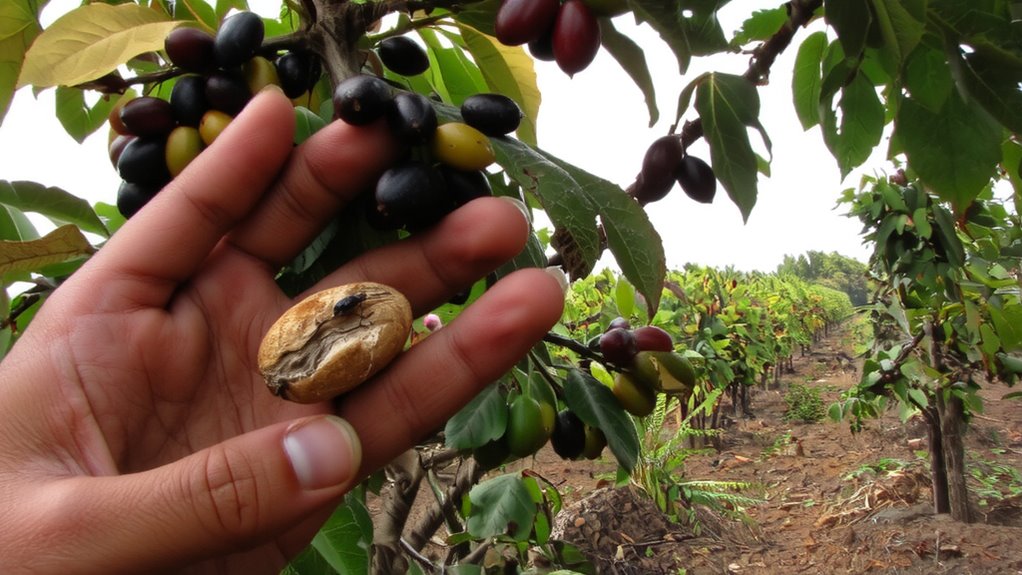
As temperatures rise, you’re seeing pests that once couldn’t survive at higher elevations move into prime coffee-growing regions, and that’s bad news for crop health. Warmer conditions allow insects like the coffee berry borer and white stem borer to thrive where they previously couldn’t, shifting pest migration patterns. These temperature driven infestations harm yields and increase farming costs. You’ll need more frequent monitoring and targeted interventions, which can strain smallholders. Pesticides help but may affect bean quality or the environment. Some farmers use shade trees to moderate microclimates, slowing pest spread. Resistant cultivars exist but aren’t a one-size-fits-all fix. You’re better off combining field scouting, natural predators, and regional data tracking. Acting early limits damage. Ignoring shifts in pest behavior risks bigger losses down the line. Watch trends closely-your harvest depends on it.
Growing Climate-Resilient Coffee Varieties
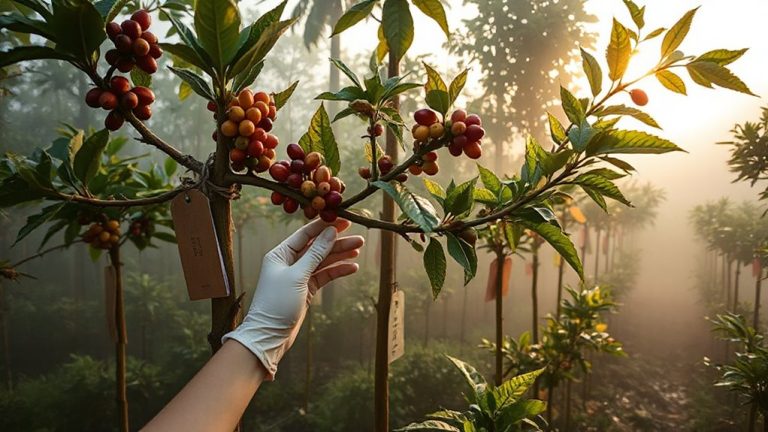
If you’re looking to safeguard your coffee crop against a changing climate, switching to climate-resilient varieties is one of the most practical steps you can take. These hardier plants offer better drought tolerance and resist rising temperatures and diseases. Some, like the disease-resistant Catimor or the drought-tolerant F1 hybrids, are bred for survival in tough conditions. While they may not always match the flavor quality of Arabica, they provide reliability when climate stress increases. Genetic modification is still limited in coffee, mostly due to regulations and consumer concerns, but research is exploring ways to enhance drought tolerance safely. You’ll need to balance yield, taste, and adaptability when choosing varieties. Planting trials on small plots first helps assess performance. Though not a fix-all, resilient varieties reduce risk and keep farms productive. For long-term sustainability, they’re a necessary part of your strategy.
Shade-Grown Coffee and Soil Management to Boost Resilience
Planting climate-resilient coffee varieties helps you manage heat and disease, but adjusting how and where you grow makes a big difference too. Growing coffee under canopy cover reduces temperature stress, conserves moisture, and supports biodiversity, which naturally controls pests. You don’t need full forest cover-partial shade from trees like guamo or banana works well, especially in hotter regions. Pair this with organic mulching using coffee pulp, leaves, or grass clippings to improve soil structure, retain water, and reduce erosion. Mulching also boosts microbial activity, slowly releasing nutrients your coffee plants need. While shade systems may slightly lower yields, the trade-off is more stable production during extreme weather. Plus, healthier soils mean less need for synthetic inputs. You’ll need to manage tree competition carefully-prune regularly to avoid excessive shading or root competition. Simple practices like these strengthen resilience without major costs or tech.
Supporting Farmers: How the Supply Chain Can Adapt
While growing conditions are shifting, the supply chain can play a key role in supporting coffee farmers through more direct, flexible, and long-term partnerships. You can help by choosing brands that use direct sourcing, cutting out middlemen so farmers get more income and stability. This model builds trust and lets you know exactly where your beans come from. Fair trade certification also guarantees farmers receive fair wages and work under safe conditions, though it can come with higher costs and paperwork. Direct sourcing often offers more transparency and faster adaptation to climate challenges. Roasters who commit to multi-year contracts help farmers plan for resilience, like switching varieties or investing in soil health. You don’t need special gear to support this-just look for labels or company statements about sourcing practices. Your buying choice influences how fairly and sustainably coffee is grown and traded.
What’s Next for Coffee in a Warming World
How will coffee survive a hotter, more unpredictable planet? You’ll need to adapt, and so will the entire supply chain. Rising temperatures and erratic weather threaten traditional coffee-growing regions, pushing farmers to higher altitudes or new varietals. Carbon pricing may soon affect your costs-roasters paying into emissions programs could pass some expenses to you. But it also incentivizes sustainable farming and lower-emission transport. Consumer education plays a key role: when buyers understand why shade-grown, climate-smart coffee matters, demand shifts. That supports farmers investing in resilience. You can help by choosing brands transparent about sourcing and emissions. Consider lighter roasts from diverse microclimates-they often have lower carbon footprints. Equipment-wise, energy-efficient roasters and grinders reduce long-term impact. Action now-through purchases, messaging, and support-shapes what coffee looks like in 2050. It’s not just flavor at stake; it’s survival.
On a final note
You’ll need to adapt as climate change reshapes coffee supply. Beans from traditional regions may become scarcer or pricier, so consider resilient options like disease-resistant varieties or shade-grown coffees. When choosing gear, prioritize consistency-brewers with stable temperature control help manage fluctuating bean quality. Supporting transparent supply chains guarantees farmers get fair support, which in turn stabilizes your access to quality beans long-term. Plan for change-it’s already brewing.