Coffee Bean Types and Varieties: Exploring the Unique Flavors of Arabica and Robusta Beans
You’ll find Arabica beans grow at higher altitudes, offering smoother, sweeter flavors with notes of fruit and sugar, while Robusta thrives at lower elevations and delivers bold, earthy taste with more caffeine and bitterness. Arabica suits pour-over or drip for a clean cup; Robusta adds punch to espresso blends. If you’re weighing flavor versus strength, knowing their traits helps you pick the right bean for your brew. There’s more to how they’re grown and paired that could shift your choice.
Notable Insights
- Arabica beans offer nuanced flavors like fruit, sugar, and wine, thriving at high altitudes in Latin America and East Africa.
- Robusta beans have a strong, earthy taste with higher caffeine and are commonly grown in Vietnam and low-altitude African regions.
- Arabica grows best between 2,000–6,000 feet, where cool temperatures and volcanic soil enhance flavor complexity and bean density.
- Robusta’s high caffeine content contributes to bitterness and acts as a natural defense, making the plant more resistant to pests.
- Arabica suits pour-over and drip brewing, while Robusta’s bold profile and crema make it ideal for espresso and Moka Pot preparations.
Arabica vs Robusta: What’s the Real Difference?
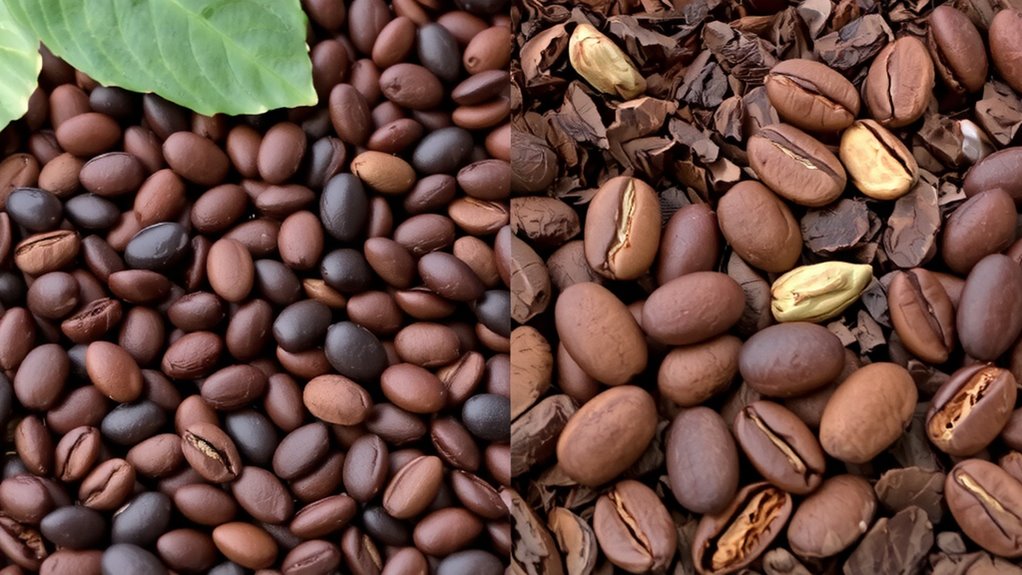
Ever wonder why some coffees taste smooth and sweet while others hit you with bold, earthy intensity? That difference often comes down to bean origin and variety. Arabica beans, mostly grown in Latin America, East Africa, and higher elevations, offer nuanced flavors-think notes of fruit, sugar, and wine. They’re harvested once a year during a specific harvest season and are more delicate, requiring careful handling. Robusta, common in Vietnam and parts of Africa, grows at lower altitudes and is hardier. It delivers a stronger, harsher taste with more caffeine and less acidity. Most premium blends use Arabica for drinkability, while Robusta often appears in espressos for added crema and kick. If you prefer milder, complex coffee, go Arabica. For punchy, budget-friendly brews, Robusta works. Know your taste and check the label-origin and harvest season can signal quality and flavor.
Why Growing Altitude Favors Arabica?
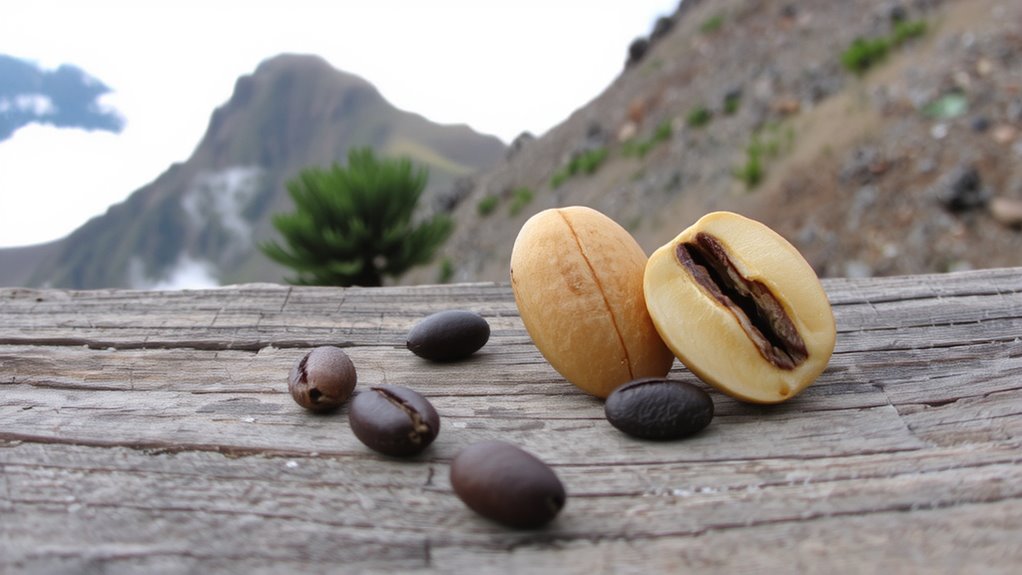
While higher elevations aren’t ideal for every coffee plant, they’re where Arabica truly thrives. You’ll find it grows best between 2,000–6,000 feet, where cooler temps slow bean development for denser, more complex flavors. Arabica’s lower bean resilience means it can’t handle pests or harsh weather like Robusta, but high-altitude regions offer fewer pests and stable climates. The soil composition at these heights-often volcanic, well-drained, and rich in minerals-supports its delicate needs.
| Factor | Why It Favors Arabica |
|---|---|
| Altitude | Slows growth, enhancing flavor |
| Temperature | Cooler temps reduce disease risk |
| Soil Composition | Volcanic soils boost nutrient uptake |
| Humidity | Lower humidity limits mold |
| Bean Resilience | Weak, so clean, stable zones help |
Choose high-grown Arabica for better clarity and acidity in your brew.
How Robusta’s Caffeine Shapes Its Flavor?
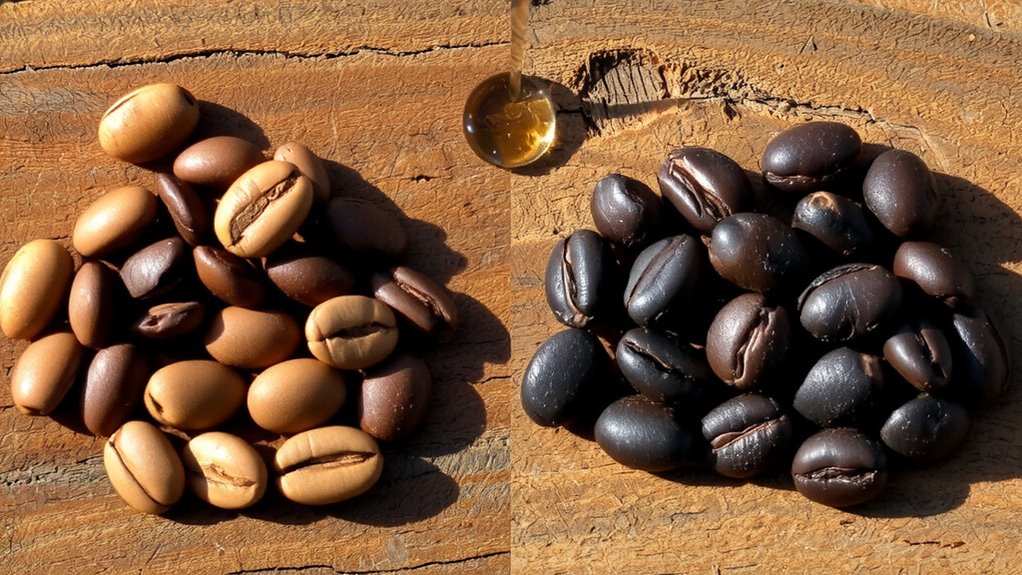
Caffeine isn’t just a stimulant-it’s a flavor architect, especially in Robusta. You’ll notice its impact right away: Robusta beans pack nearly double the caffeine of Arabica, and that directly amps up the caffeine bitterness and overall flavor intensity. This bitterness isn’t just sharp-it’s earthy, grainy, sometimes rubbery-making Robusta a bold choice. That high caffeine content acts as a natural defense in the plant, but in your cup, it shapes a punchy, unapologetic profile. You’ll often find it in espresso blends where its strong backbone helps build crema and cut through milk. If you’re after boldness over nuance, Robusta delivers. Just know, the same traits that add flavor intensity can overwhelm delicate notes. For straight Robusta brews, use a French press or dark roast to slightly soften the edge. It’s not about refinement-it’s about power and practicality.
Growing Conditions: Climate, Altitude, and Crop Challenges
Since Arabica and Robusta thrive under very different conditions, knowing what each plant needs helps explain why they’re grown where they are and how that affects your daily brew. Arabica prefers higher altitudes, cooler temps, and well-drained soil composition-often grown between 2,000 and 6,000 feet. It’s more delicate, needing careful attention and shade. Robusta, on the other hand, grows lower and hotter, usually below 3,000 feet, and handles harsher climates. It has strong pest resistance, surviving threats like coffee leaf rust better than Arabica. That means fewer pesticides and lower farming costs. However, even Robusta suffers if soil composition lacks nutrients or drainage. Both rely on consistent rain and proper soil prep, but Robusta’s hardiness makes it easier to grow in tough regions. Knowing these conditions helps you understand why origin matters in your cup-climate and crop challenges directly shape bean quality, availability, and price.
How to Taste the Difference Between Arabica and Robusta?
What sets Arabica and Robusta apart in your cup isn’t just origin or price-it’s taste. You’ll notice Arabica is smoother, often with hints of sugar, fruit, or berries, while Robusta tastes harsher, with earthy, woody notes and more bitterness. To spot the difference, use the cupping technique: smell the grounds, then slurp the brew to spread flavors across your tongue. Brew temperature matters-keep it between 195°F and 205°F for accurate tasting. Too hot, and bitterness masks subtleties; too cool, and flavors dull. Arabica’s delicate notes show best with this precision. Robusta’s boldness stands out even with less control, but proper temp helps balance its sharp edge. Taste them side by side using the same method, and the contrast becomes clear. No fancy gear needed-just attention to water heat and a consistent cupping routine. For French press brewing, choosing the right beans enhances these sensory differences, with best coffee for French press offering optimal flavor extraction.
Arabica or Robusta? Match the Bean to Your Brew Method and Taste
How do your taste preferences and brewing method shape the choice between Arabica and Robusta? If you prefer balanced flavor notes and a smoother cup, go for Arabica-especially with pour-over or drip brewing. For higher brew strength and bold, earthy tones, Robusta works well in espresso or Moka pot setups. Your method affects extraction, so match the bean to your gear.
| Brew Method | Best Bean Type |
|---|---|
| Pour-over/Drip | Arabica |
| Espresso/Moka Pot | Robusta |
| French Press | Depends on preference |
Arabica delivers sweeter, more complex flavor notes, while Robusta offers intense brew strength and crema. Choose based on your preferred taste and equipment-there’s no one-size-fits-all.
On a final note
You’ll find Arabica smoother and more aromatic, best for drip or pour-over brewing where flavor clarity matters. Robusta packs more caffeine and bitterness, ideal for espresso blends needing crema and punch. Choose Arabica if you prefer nuanced tastes; pick Robusta for boldness or when blending. Match the bean to your method-light roasts highlight origin traits, dark roasts smooth out harsh notes. Your brew gear and taste preferences should guide the choice.