Best Coffee Beans for Home Grinding That Taste Fresh Every Time
Grind 100% Arabica beans like Amazon Fresh Colombia Medium Roast shortly before brewing for the freshest taste. These dense, high-elevation beans stay aromatic up to four weeks if stored airtight. Pair them with a burr grinder-such as the Cuisinart DBM-8P1 or KIDISLE CG9406-for consistent particle size and better extraction. Avoid blade grinders if you prefer drip or espresso, since they heat beans and create uneven grounds. Light to medium roasts preserve origin flavors and reduce grinder clogging. You’ll discover which grind and bean combination works best for your method with a few tested steps.
We are supported by our audience. When you purchase through links on our site, we may earn an affiliate commission, at no extra cost for you. Learn more. Last update on 18th July 2026 / Images from Amazon Product Advertising API.
Notable Insights
- Choose 100% Arabica beans from reputable origins like Colombia or Ethiopia for balanced, flavorful cups with fresh, aromatic profiles.
- Opt for medium roast beans to preserve origin character while achieving a smooth, full-bodied taste ideal for home grinding.
- Buy whole beans and grind them just before brewing to maximize freshness, as pre-ground coffee loses aroma rapidly.
- Prioritize beans with a clear roast date and use within 7–21 days for peak flavor, avoiding those without date labeling.
- Store beans in an airtight container at room temperature, away from light and moisture, to maintain freshness up to four weeks.
Amazon Fresh, Colombia Whole Bean Coffee Medium Roast, 32 Oz
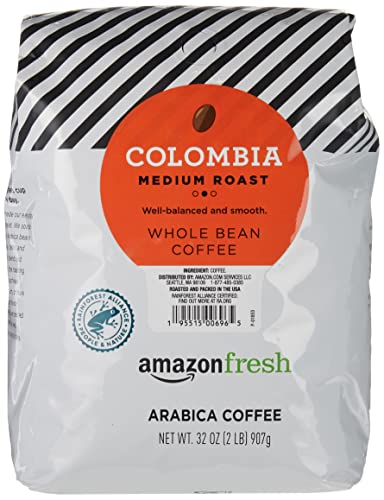
If you’re looking for a reliable, no-fuss coffee bean that works well for daily home grinding without breaking the bank, Amazon Fresh Colombia Whole Bean Coffee is a solid pick. I use it because it’s 100% Arabica, grown in Colombia, and roasted here in the U.S., which helps maintain freshness. The medium roast delivers a balanced, full-bodied cup with a smooth finish-nothing too flashy, but consistent. At 32 ounces, the bag lasts a while and cuts down on ordering hassle. Sure, it won’t beat a specialty single-origin, but for everyday drip or pour-over, it’s practical and dependable.
Best For: Home coffee drinkers seeking a consistent, affordable 100% Arabica medium roast for daily brewing without premium pricing.
Pros:
- 100% Arabica beans sourced from Colombia for a smooth, balanced flavor
- Medium roast with full body and smooth finish, suitable for drip and pour-over methods
- Large 32-ounce bag offers value and reduces repurchasing frequency
Cons:
- Lacks the complexity and nuance of specialty single-origin or craft-roasted coffees
- Roasted in the U.S. but not labeled with a roast date, making freshness hard to gauge
- Generic packaging and branding may not appeal to coffee enthusiasts seeking artisanal quality
Cuisinart Electric Burr Coffee Grinder (DBM-8P1)
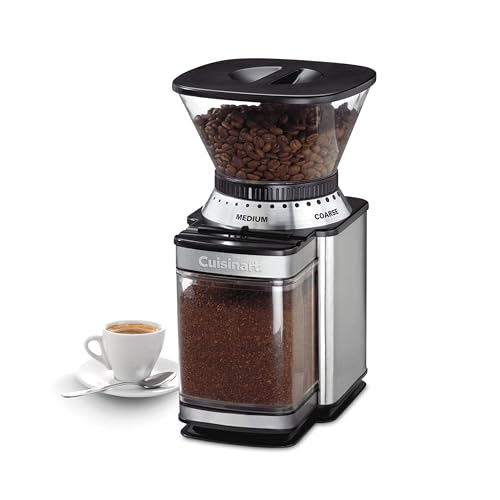
The Cuisinart Electric Burr Coffee Grinder (DBM-8P1) works best for home brewers who want consistent grind quality without spending hundreds on high-end gear. I use its 18-position dial to match the grind to my brew method, from espresso to French press. Flat burrs crush beans evenly, pulling out more flavor than blade grinders. The 8 oz. hopper holds enough for 18 cups, and the removable chamber makes cleanup simple. It’s BPA-free, has a built-in timer, and shuts off automatically. At 4.5 pounds, it’s sturdy but compact. Cuisinart discontinued it, but you might find it secondhand-just check for wear. It’s reliable, practical, and still a solid pick for daily grinding.
Best For: Home brewers seeking a reliable, consistent, and affordable burr grinder for daily coffee preparation across various brewing methods.
Pros:
- Offers 18 precise grind settings with flat burr technology for optimal flavor extraction
- Features a removable bean hopper and grind chamber for easy cleaning and maintenance
- Compact, BPA-free design with automatic shut-off and built-in cord storage for convenience
Cons:
- Discontinued by manufacturer, limiting availability to secondhand or unused stock
- Potential wear on burrs with heavy long-term use, especially if sourced used
- 8 oz. hopper capacity may require refilling for larger brewing batches
Amazon Basics Electric Coffee Grinder

Since I prioritize simplicity and value in my daily coffee routine, the Amazon Basics Electric Coffee Grinder stands out as a practical choice for beginners or anyone needing a no-frills option for home grinding. I use it for coffee beans, herbs, and spices, and it handles 30 grams in about 10 seconds with stainless steel blades. It’s compact, lightweight, and fits neatly on my counter. The clear lid lets me watch the grind, which helps avoid over-pulverizing. It’s not for precision grinds like espresso, but works well for drip or pour-over. At 120 volts, it’s built for U.S. outlets, and Amazon’s warranty offers basic protection. While it lacks the consistency of burr grinders, I find it a reliable, budget-friendly pick-especially if you’re just starting out or don’t need fine grind control. I’d skip it if you’re serious about specialty coffee, but for everyday use, it’s a solid entry-level tool that won’t drain your wallet.
Best For: Beginners or casual coffee drinkers seeking an affordable, straightforward grinder for everyday drip or pour-over coffee without the need for precise grind settings.
Pros:
- Grinds 30 grams of coffee beans in about 10 seconds with durable stainless steel blades
- Compact, lightweight design with a clear lid to monitor grinding and prevent over-processing
- Budget-friendly with a manufacturer’s warranty and broad utility for herbs, spices, and nuts
Cons:
- Lacks grind consistency, making it unsuitable for espresso or precision brewing methods
- Not as durable or quiet as higher-end burr grinders
- Limited capacity and not ideal for serious coffee enthusiasts or frequent use
Hamilton Beach Fresh Grind Coffee Grinder

You’ll find the Hamilton Beach Fresh Grind Coffee Grinder works best if you’re after a no-fuss, budget-friendly option for daily home grinding-especially when you want something reliable for coffee beans, spices, or seeds without cluttering your countertop. I use it for small batches-up to 12 cups-and appreciate the simple press-and-hold function. It’s quieter than pricier models, with stainless steel blades that handle beans, peppercorns, or flaxseed fine. The removable bowl makes filling and cleanup easy, and I toss the lid and bowl in the dishwasher. Built-in cord storage keeps things tidy. It’s compact, durable, and ranks high among blade grinders-ideal if you want practicality without frills.
Best For: Home users seeking a simple, affordable, and compact grinder for daily use with coffee beans, spices, or seeds.
Pros:
- Durable stainless steel blades effectively grind coffee, spices, and seeds
- Removable bowl and dishwasher-safe parts make cleanup easy
- Compact design with built-in cord storage saves counter space
Cons:
- Blade grinder may produce inconsistent grind size compared to burr grinders
- Requires holding the button during operation, limiting convenience
- Not ideal for large batches or commercial use
Conical Burr Coffee Grinder 35 Settings
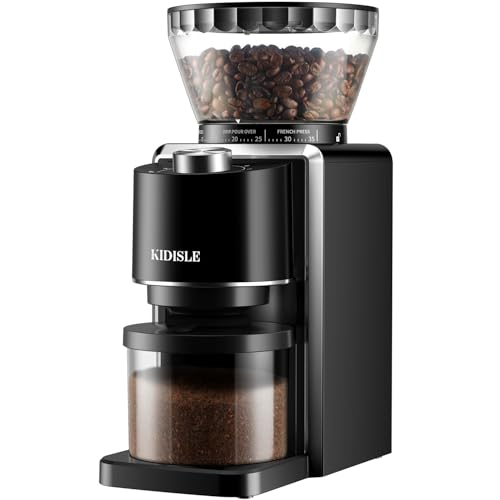
When choosing coffee beans for home grinding, anyone using a conical burr grinder with 35 precise settings gets the most control over extraction, especially if brewing into multiple methods like espresso or French press. I rely on the KIDISLE CG9406 because its conical burrs crush beans evenly, reducing bitterness. The 35 settings let me fine-tune from fine espresso to coarse French press. Its clear hopper and container let me watch bean levels, and the compact design fits neatly on my counter. I appreciate the 2–12 cup selector and anti-static feature, which cuts mess. It’s lightweight, easy to clean, and ranks solidly among burr grinders.
Best For: Home coffee enthusiasts who want precise grind control across multiple brewing methods with a compact, easy-to-use grinder.
Pros:
- 35 adjustable grind settings provide excellent precision for espresso, drip, French press, and more
- Conical burrs ensure uniform grinding and optimal flavor extraction with minimal bitterness
- Transparent hopper and container allow for easy monitoring, while anti-static technology reduces mess
Cons:
- Lightweight design may feel less durable or stable during grinding
- Limited cup capacity range (2–12 cups) may not suit large gatherings
- New 2025 model with limited long-term user reviews or reliability data
Wancle Electric Coffee & Spice Grinder
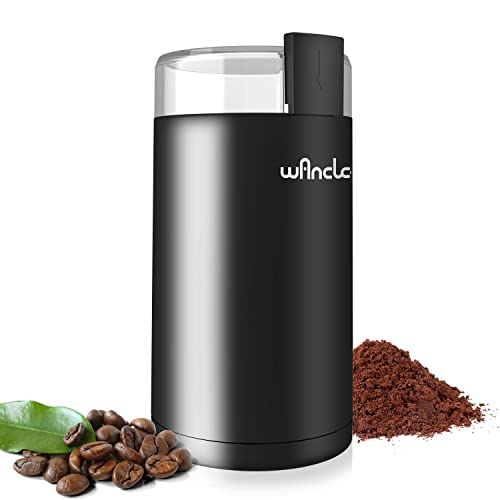
Who wouldn’t want a grinder that handles both morning coffee beans and evening spice blends without breaking a sweat? I use the Wancle Electric Coffee & Spice Grinder daily, and it’s solid-thanks to its pure copper motor and stainless steel blade. It grinds up to 60g evenly, whether coarse for French press or fine for espresso. The transparent lid lets me watch the grind, so I never overdo it. It won’t heat up beans, which keeps flavors fresh. At 150 watts, it’s powerful but compact (just 3.5 x 3.5 x 6.6 inches). I clean it fast with the included brush. Model P00273 works on 120V-perfect for U.S. outlets. It’s #3 in electric blade grinders and ranks high in Home & Kitchen. While not a burr grinder, it’s a practical, budget-friendly pick for consistent results and multi-use grinding, especially if you love coffee and cook often.
Best For: Home coffee enthusiasts and home cooks who want a compact, budget-friendly, multi-use grinder for daily coffee and spice preparation.
Pros:
- Powerful 150-watt pure copper motor delivers consistent grinding without overheating
- Stainless steel blade and transparent lid allow for even, observable grinding of coffee, spices, and herbs
- Compact design and included cleaning brush make it convenient for kitchen use and maintenance
Cons:
- Blade grinder may produce less uniform particle size compared to burr grinders
- Limited to 60g capacity, which may not suit high-volume needs
- Not ideal for users outside the U.S. due to 120V requirement
Lavazza Espresso Whole Bean Coffee (2.2 lb)
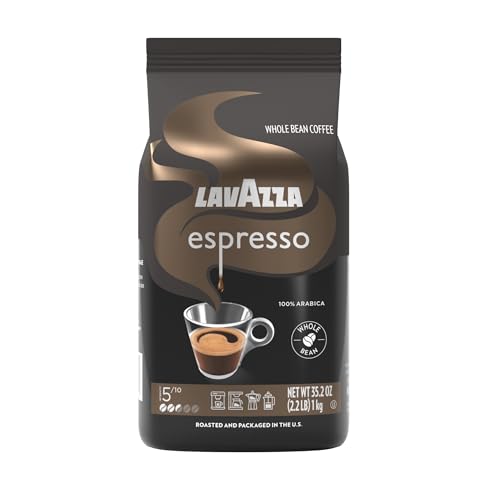
One solid choice for home grinders who prioritize consistent flavor and wide brewing compatibility is the Lavazza Espresso Whole Bean Coffee in the 2.2 lb bag. I use it because it’s a medium roast (5/10 intensity) with a balanced, sweet finish and subtle floral and fruit notes-thanks to 100% Arabica beans from South America and Africa. It works in my espresso machine, moka pot, drip brewer, or French press. Since Lavazza’s been perfecting blends since 1895, I trust their sourcing and consistency. The large bag stays fresh if stored well, making it practical for daily use without frequent repurchasing.
Best For: Home coffee enthusiasts who want a versatile, medium-roast whole bean coffee with consistent flavor and compatibility across multiple brewing methods.
Pros:
- Balanced medium roast with sweet, aromatic finish and pleasant floral and fruit notes
- Suitable for a variety of brewing methods including espresso, moka pot, drip, and French press
- Sourced from 100% Arabica beans with a heritage brand known for quality and sustainability since 1895
Cons:
- Larger 2.2 lb bag may be impractical for those who prefer buying smaller quantities to ensure freshness
- Flavor profile may be too mild for those who prefer bold, dark roast characteristics
- Requires proper storage to maintain freshness due to extended use after opening
Burr Coffee Grinder with 45 Settings
If you’re serious about freshness and grind consistency, the COFIBREWS Burr Coffee Bean Grinder (CG215B-SV) with 45 settings gives you the control needed for everything from French press to espresso. I use it daily and appreciate the 40mm stainless steel burrs that grind at 450rpm, reducing heat to protect flavor. The 45 settings let me fine-tune the grind precisely, while the anti-static design cuts down on clumping. I can set grind time in 0.5-second increments or choose single/double shots right from the LED panel. It fits most portafilters, and cleaning’s easy-just remove the parts and rinse. At 5.7 pounds, it’s stable but compact enough for small kitchens.
Best For: Coffee enthusiasts who demand precise grind control and consistency across multiple brewing methods, from espresso to French press.
Pros:
- Offers 45 precise grind settings with low-speed 450rpm grinding to preserve flavor and aroma
- Features an anti-static design and removable parts for consistent results and easy cleaning
- LED touch control allows exact time adjustments in 0.5-second increments and one-touch operation
Cons:
- Does not include a portafilter, which may be expected for espresso users
- Hopper capacity of 300g may require refilling for larger brewing needs
- Limited to 120V AC, making it less suitable for international use without adapters
Cuisinart Coffee Grinder 2.5 oz (DCG-20BKN)
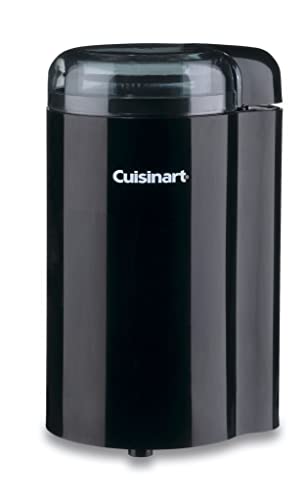
The Cuisinart Coffee Grinder 2.5 oz (DCG-20BKN) suits home brewers who want a no-fuss grinder for daily coffee without overspending or sacrificing consistency. I use it for grinding enough beans for up to 12 cups, and the one-touch operation makes it simple. Its 70g capacity and stainless steel blades deliver a reliable grind, though not as precise as burr grinders. The compact design fits small spaces, and the cord storage keeps things tidy. A safety lock prevents use if the lid’s open, which I appreciate. It’s not perfect-blades can heat beans slightly-but at this price, it’s a solid pick for casual drinkers who still want freshness.
Best For: Home coffee drinkers seeking an affordable, compact, and reliable blade grinder for daily use with consistent results.
Pros:
- One-touch operation with a 70g capacity handles up to 12 cups of coffee easily
- Durable stainless steel blades and compact design fit well in small kitchens
- Includes safety interlock and cord storage for convenience and peace of mind
Cons:
- Blade grinder may generate heat, potentially affecting coffee flavor
- Less grind precision compared to burr grinders
- Plastic housing feels less premium despite overall solid build
Coffee Grinder Electric with 30 Settings – 12 Cups
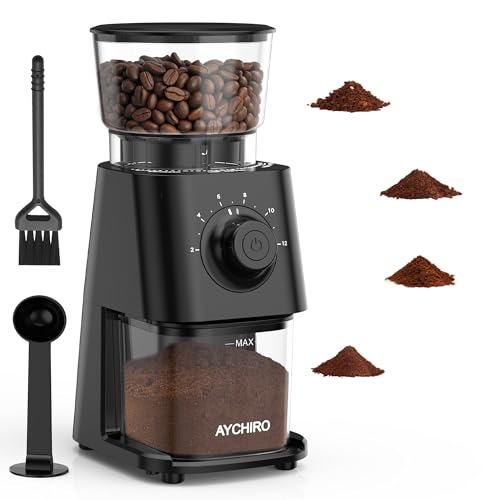
You’ll get the most out of your morning brew with the AYCHIRO Electric Burr Grinder, especially if you’re someone who values consistency and flexibility in their coffee routine. I use its 30 grind settings to match any brew method-from espresso to French press-without flavor loss. The dial adjusts smoothly, so switching grinds is simple. Its 12-cup capacity suits small batches or family use, and the removable stainless steel burrs make cleaning easy with the included brush. I unclip the hopper and grounds container quickly for travel or storage. At just over 4 pounds and under 6.5 inches wide, it fits tight spaces. It’s built for U.S. voltage only, so avoid using it abroad.
Best For: Coffee enthusiasts who want precise grind control and easy maintenance in a compact, user-friendly electric burr grinder.
Pros:
- Offers 30 grind settings for precise customization across all brewing methods, from espresso to French press
- Features removable stainless steel burrs and containers for easy cleaning and travel convenience
- Compact design with space-saving footprint and 12-cup capacity suits small kitchens and daily use
Cons:
- Designed for 120V U.S. voltage only, limiting usability abroad without a converter
- Plastic construction may feel less durable compared to premium grinders with full metal builds
- Limited color options, currently only available in black
Factors to Consider When Choosing Coffee Beans for Home Grinding
You’ll want to take into account bean origin because it affects flavor-beans from Ethiopia often taste fruity, while Colombian ones tend to be nutty and smooth. Roast level matters too, as dark roasts give bold, smoky notes but less acidity than lighter ones, and freshness keeps flavor sharp, so look for roast dates on the bag. Make sure the grind size matches your brewer, and pay attention to aroma and oil-shiny beans can mean a dark roast with more body, but they might clog grinders if too oily.
Bean Origin Importance
While coffee’s final flavor depends on many factors, where the beans are grown plays a decisive role in shaping their character, and understanding origin helps you choose wisely for home grinding. You’ll find that altitude, soil, and climate directly impact taste-higher elevations usually yield denser beans with brighter acidity and more complexity. Think citrus and florals from Ethiopian beans, or nutty, chocolatey notes from Colombian or Brazilian beans. Single-origin coffees let you taste these unique regional traits clearly. Processing methods common in certain areas-like natural or honey in Central America-add further flavor and body differences. By paying attention to origin, you can match beans to your preference: go for East African beans if you like vibrant acidity, or South American beans for a smoother, rounder cup. Knowing origin gives you practical insight into what your coffee will actually taste like.
Roast Level Impact
Roast level shapes how the coffee’s origin character comes through in your cup, building on the regional traits highlighted by single-origin beans. Light roasts preserve more of the bean’s natural flavors-think bright acidity, floral hints, or fruity notes-but they’re denser, so you’ll need a grinder that handles hard beans well for even extraction. Medium roasts balance acidity and body, giving you a smoother, more approachable cup with moderate bitterness; they’re forgiving with most grinders. Dark roasts lose much of their origin character, turning smoky or bitter from longer heat exposure, and they produce fewer aromatic compounds, which can dull flavor after grinding. They’re less dense, so your grind settings must adjust accordingly. Pick light to medium roasts if you want complexity and clarity; go dark only if you prefer bold, roasted-forward taste. Match your roast to your grinder’s precision and your taste preference-don’t assume darker means stronger.
Freshness And Flavor
Most often, the key to a vibrant cup starts with freshness-something you can’t afford to overlook when grinding at home. You’ll want beans roasted within the last 7 to 10 days, as that’s when flavor peaks. After 21 days, oxidation degrades quality fast. Always choose whole beans-pre-ground loses aroma quicker due to increased surface area. Store your beans in an airtight container at room temperature, where they’ll stay fresh up to four weeks. If you buy in bulk, freeze portions you won’t use within a month; it slows degradation with minimal impact. Avoid clear or flimsy packaging-light, heat, and moisture break down oils and aromatics fast. When beans go stale, you’ll notice flat, dull flavor, no matter how well you brew. Freshness isn’t just ideal-it’s essential for tasting what the coffee has to offer.
Grind Size Match
To get the most out of your coffee at home, you’ve got to match the grind size to your brewing method-otherwise, you’re setting yourself up for a bitter or weak cup. If you’re pulling espresso, go fine-around 200–300 microns-so the water meets enough resistance for proper extraction under high pressure. For French press, use a coarse grind, about 700–850 microns, to avoid sludge and over-extraction. Drip coffee? Stick to medium, roughly 450–650 microns, for balanced flavor and flow. No matter your method, consistency matters: uneven particles lead to uneven brewing. That’s why a burr grinder beats a blade grinder every time-it gives you uniform particles and prevents channeling, where water shortcuts through loose spots. Adjusting your grind isn’t just helpful-it’s essential. Your beans might be fresh, but the wrong size will ruin their potential. Match it right, and you’ll pull out the best flavor every time.
Aroma And Oil Content
You’ll notice a richer aroma in your cup when you grind beans just before brewing, since the volatile compounds responsible for scent begin fading soon after roasting. Lighter roasts keep more of their natural aromatic complexity-think floral, citrus, or fruity notes-because they’re exposed to less heat. These beans usually have lower surface oil, which helps preserve freshness and prevents grinder clogs. Darker roasts develop more surface oil, which can boost aroma intensity but also speeds up staling through oxidation. Oily beans may gunk up your grinder over time, especially in blade or cheap burr models, leading to uneven grounds. For the most vibrant, nuanced fragrance, pick freshly roasted light to medium roast beans with a dry surface. Grinding right before brewing traps aromatic gases, giving you the liveliest cup possible. Avoid pre-ground or overly shiny beans-they’ve likely lost their peak aroma.
Processing Method Effects
Freshly ground beans deliver more than just aroma-they also reveal how the coffee was processed before it reached your grinder. You’ll notice washed beans taste cleaner and brighter, since the mucilage is removed before drying, boosting acidity and clarity. If you prefer a sweeter, fruit-forward cup with heavier body, naturally processed beans-dried with the fruit intact-are your best bet, though they need careful drying to avoid spoilage. Honey-processed beans strike a middle ground, keeping some mucilage for added sweetness and body without the intense ferment of naturals. Keep in mind each method affects bean density and moisture, which in turn impacts grind consistency and extraction. Washed beans often grind more evenly, while denser naturals may require grinder adjustments. Choosing the right processed bean isn’t just about flavor-it shapes your grind and brew performance too. Pick based on your taste and equipment setup.
Storage For Longevity
While flavor and grind consistency often take center stage, how you store your beans plays a critical role in preserving the quality you paid for. Keep them in an airtight container to limit oxygen exposure, which quickly dulls aroma and taste. Store that container in a cool, dark spot-light and heat break down delicate flavor compounds fast. Don’t refrigerate your beans; moisture and temperature swings encourage condensation, which degrades quality and risks mold or off-flavors. For longer storage beyond three weeks, freezing works if you use a vacuum-sealed or moisture-proof bag, locking in freshness for up to a month. Choose opaque, non-reactive containers made of ceramic, stainless steel, or tinted glass to block UV light and prevent chemical interactions. Just make sure the seal is tight and the interior won’t absorb odors. You’ll keep your beans tasting like they should-clean, vibrant, and true to origin.
Frequently Asked Questions
How Long Do Ground Coffee Beans Stay Fresh?
Ground coffee stays fresh for about 15 to 30 minutes after grinding, losing aroma and flavor fast. You’ll notice a flat, stale taste within a few hours. Even sealed, it degrades substantially in 24 hours. For the best flavor, you should grind beans just before brewing. Pre-ground coffee in bags? It’s convenient but never tastes as vibrant as freshly ground. Use it within a week if opened, but expect compromises.
Can I Use a Blender Instead of a Grinder?
You can use a blender instead of a grinder, but you won’t get consistent results. Blenders crush beans unevenly, producing a mix of boulders and dust that leads to uneven extraction. Blade grinders are cheap but similar; burr grinders cost more but deliver uniform particles. If you’re serious about flavor, skip the blender. It’s better than pre-ground, but not by much. For fresh, balanced coffee, a burr grinder is worth the investment.
Should I Clean My Grinder After Each Use?
Yes, you should clean your grinder after each use if you’re using oily beans or switching roasts, but weekly cleaning works for most home setups. Oils build up and go rancid, altering flavor. Wipe burrs with a dry brush or use grinder cleaning tablets. Blade grinders need more frequent wiping. Regular cleaning keeps flavors consistent and extends the machine’s life. It takes two minutes and prevents stale, off-tasting coffee. Skip it, and you risk ruining even the freshest beans.
What’s the Best Way to Store Whole Beans?
You should store whole beans in an airtight container away from light, heat, and moisture. Keep them in a cool, dark cupboard-not the fridge or freezer, since condensation degrades quality. Use opaque containers like the Airscape or Fellow Atmos to limit exposure to air and light. Buy small batches, grind only what you need, and use beans within 2–3 weeks for the best flavor and aroma.
Does Grind Size Affect Coffee Strength?
Yes, grind size affects coffee strength. You control extraction by adjusting it-finer grinds increase surface area, boosting strength if brewed properly, but can cause bitterness if over-extracted. Coarser grinds reduce extraction, often yielding weaker or sour coffee. For example, espresso needs a fine grind; French press uses coarse. Match the grind to your brewer. Use a burr grinder for consistency. Too fine or too coarse? Adjust until flavor balances.