What Makes Dedza Coffee a Consistent, Accessible East African Choice
You get consistent, high-quality Dedza coffee because small farmers grow Arabica at 1,400–1,800 meters, where cool temps and volcanic soil boost flavor without harshness. Cooperatives run washing stations like Kalilangwe, ensuring clean, bright beans with notes of citrus and stone fruit. Fair trade certification supports fair pay and stable supply, making it more accessible than pricier East African beans. You can rely on its balance for pour-over or milk drinks-and there’s more to uncover about how it stays that way.
Notable Insights
- Grown at high altitudes of 1,400–1,800 meters, Dedza coffee develops dense, flavorful beans with bright acidity.
- Smallholder cooperatives ensure consistent quality through centralized wet mills and shared best practices in farming.
- Fair trade certification and ethical supply chains provide stable prices and direct market access for farmers.
- Wet-processed Arabica beans from volcanic soils yield a clean, balanced cup with citrus and floral notes.
- Structured logistics and cooperative networks make Dedza coffee reliably available to international buyers.
What Is Dedza Coffee?
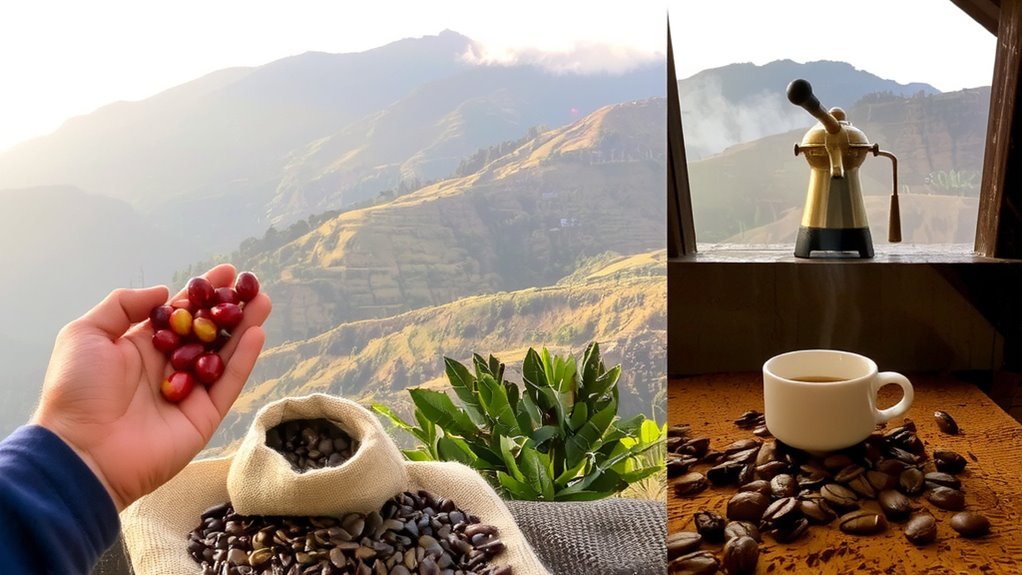
While you might not have heard of Dedza coffee yet, it’s a quietly rising name in East African specialty beans, grown in the Dedza region of Malawi near the Nyika Plateau. Its origin history traces back to smallholder farms established in the mid-20th century, influenced by British colonial agriculture but reshaped by local growers emphasizing sustainable hand-harvesting. The regional influence is clear: fertile, clay-rich soils and traditional wet-processing methods give the beans a clean, balanced profile with mild citrus and nutty notes. Most Dedza coffee is Arabica, often processed at central washing stations like Kalilangwe or Kachere. You’ll find it approachable when brewed as filter or pour-over using a Hario V60 or Chemex-medium grind, water just off boil. It’s less intense than Ethiopian Yirgacheffe but more complex than many mass-market blends. Accessibility and consistency make it a practical daily choice. For those seeking a standout brew, choosing the best coffee for Chemex can enhance Dedza’s nuanced flavors.
How Altitude and Climate Shape Dedza’s Beans
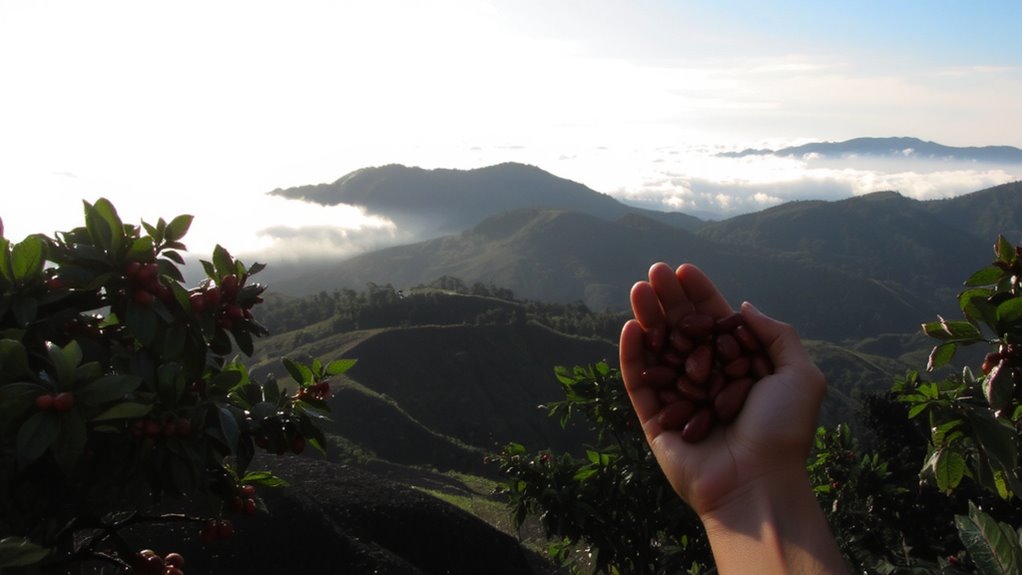
Because Dedza sits between 1,400 and 1,800 meters above sea level, the higher elevation slows the coffee bean’s development, helping it build denser structure and more nuanced flavors. You’ll notice how temperature variations between day and night preserve acidity and enhance complexity. These shifts, combined with rich volcanic soil composition, give Dedza beans their balanced profile and clean finish. The consistent climate reduces stress on plants, leading to more uniform harvests year after year.
| Factor | Effect on Beans | Practical Result |
|---|---|---|
| High altitude | Slower maturation | Denser, more flavorful beans |
| Daily temperature variations | Preserved acidity | Bright, lively cup |
| Volcanic soil composition | Rich in minerals | Smooth, balanced taste |
| Stable climate | Even ripening | Consistent roast performance |
Smallholder Cooperatives Behind Dedza’s Quality
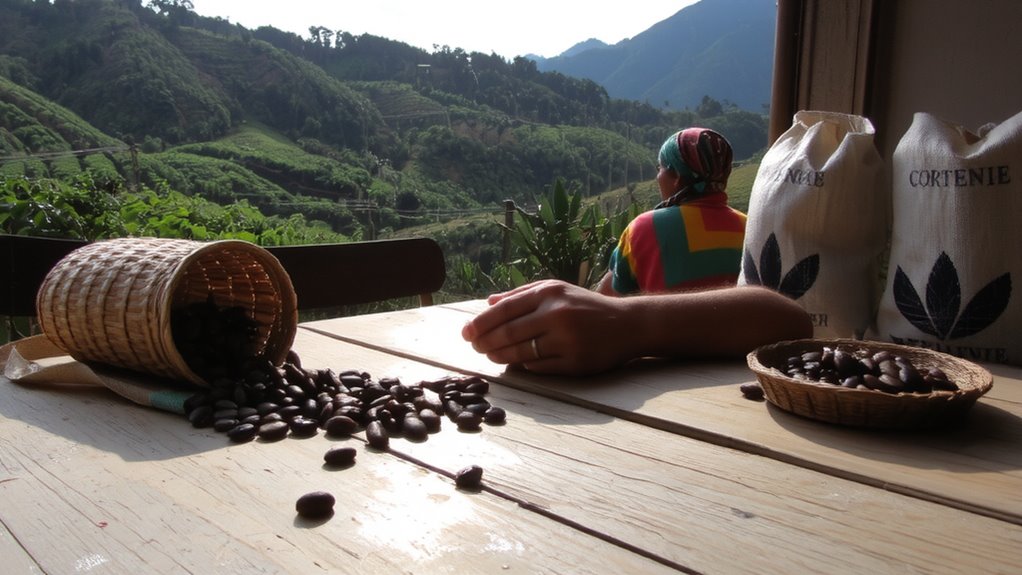
The backbone of Dedza’s consistent coffee quality lies in its network of smallholder cooperatives, where hundreds of farmers manage plots of 1 to 3 hectares each. You work directly with these cooperatives to guarantee uniform bean standards and sustainable practices. Gender equity is embedded in operations-women hold leadership roles and receive equal access to training and resources. This balance strengthens decision-making and improves farm outcomes. Youth engagement is also prioritized, with programs offering technical training and incentives to keep younger generations involved. Cooperatives supply centralized wet mills you’ll find are efficient and low-cost, improving consistency. Membership gives farmers better pricing and access to international buyers, which supports reinvestment. Unlike larger estates, these smallholder groups rely on collective action to maintain quality and respond to market demands. When you source from Dedza, you’re backing a model that values inclusivity and long-term sustainability over quick yields.
Tasting Notes: Citrus, Stone Fruit, and Clean Finish
Bright citrus and juicy stone fruit define Dedza coffee’s profile, giving each cup a lively, approachable edge. You’ll notice a bright, balanced acidity that enhances the fruit notes without overwhelming them-think ripe peach and orange zest. When brewed light to medium, the floral aroma comes through clearly, adding complexity without tipping into sharpness. This coffee works well with pour-over methods like the Hario V60, where clarity matters, or a standard drip brewer for everyday use. The clean finish means no bitter aftertaste, making it easy to drink black or with a splash of milk if preferred. Avoid dark roasting at home, as it can mute the nuanced flavors. For best results, grind fresh and use water just off boiling. You’re not chasing intensity here-it’s about harmony, where each element, from floral aroma to balanced acidity, supports a cup that’s flavorful yet consistently smooth.
Fair Trade and Ethical Access in Dedza
While you savor the bright citrus and stone fruit notes in your cup, it’s worth knowing how Dedza coffee reaches you-and under what conditions. Most Dedza beans carry fair trade certification, meaning farmers receive stable prices and safe working conditions. This isn’t just feel-good branding-fair trade certification enforces limits on exploitative labor and supports community investment. Dedza’s co-ops also follow ethical sourcing practices, cutting out exploitative middlemen. You directly support smallholders who own their plots and control processing methods. These practices don’t guarantee top-tier microlot quality every time, but they do guarantee baseline consistency and social accountability. For roasters and cafés focused on responsible menus, that balance matters. Unlike uncertified East African beans, which may skip price guarantees or transparency, Dedza’s model offers traceability. Ethical sourcing practices here aren’t optional extras-they’re built into the supply from farm to出口. You get a dependable bean with verified origins.
Why Roasters Trust Dedza’s Supply Chain
You can taste the difference when supply chain reliability backs every batch, and that’s exactly what sets Dedza apart for roasters who prioritize consistency and transparency. When you’re planning roast schedules or scaling up production, you need green coffee that arrives on time, every time-Dedza delivers. Their supply reliability means fewer disruptions, predictable quality, and better inventory control. Roasters don’t just buy beans; they build long term partnerships with Dedza, knowing contracts are honored and communication stays clear. Unlike volatile suppliers, Dedza works with structured export logistics and traceable sourcing, reducing risk. You’re not gambling on arrival dates or grade shifts. This stability lets you focus on roasting-not damage control. For roasters managing tight margins and high standards, Dedza’s dependable flow supports efficient operations. It’s not hype; it’s tested performance. That’s why roasters keep coming back.
Sustainable Quality: Dedza’s Specialty Coffee Model
Because quality doesn’t happen by accident, Dedza builds it into every step of their specialty coffee model, from farm to export. You get consistent bean integrity because farms follow strict agroecological practices and careful processing. Harvest consistency is guaranteed through centralized wet mills and real-time quality checks. This isn’t luck-it’s design.
| Aspect | Dedza Standard | Common Alternative |
|---|---|---|
| Bean Integrity | High (fully traceable) | Variable (blended lots) |
| Harvest Timing | Precise, phased picks | Mass harvesting |
| Post-Harvest | Immediate processing | Delays common |
You can rely on Dedza coffees to perform predictably on roasting profiles and in cupping scores. Their model cuts waste, reduces defects, and supports better pricing-without needing premium branding. It’s sustainable not just environmentally, but economically. For roasters who value control and clarity, this system delivers.
On a final note
You’ll find Dedza coffee reliable and easy to source, especially if you value consistent East African beans without paying top-tier prices. It works well with pour-over or drip brewers-think Hario V60 or Chemex-bringing out its citrus and stone fruit notes. While not as bold as Ethiopian Yirgacheffe, it’s cleaner and more balanced than many commercial blends. Look for Fair Trade-certified bags to support ethical practices. Store it in an airtight container away from light to preserve freshness.