French Press Stirring Technique: When and How to Stir for Maximum Extraction
Stir your French press once right after pouring hot water to guarantee all grounds are saturated. Use a slow spiral motion with a sturdy spoon, like wood or plastic, for 5–10 seconds. This boosts extraction, improves flavor, and prevents dry clumps. Avoid stirring later or too hard-both can release bitter fines. One firm stir at the start is enough for balanced coffee. The right technique makes a clearer, richer cup every time.
Notable Insights
- Stir immediately after pouring hot water to ensure even saturation and prevent dry clumps.
- Perform one firm, gentle stir for 5–10 seconds using a slow spiral motion to maximize extraction.
- Use a wooden or plastic spoon to avoid scratching the carafe and reduce agitation of fines.
- Avoid late stirring, as it disrupts steeping and can reintroduce over-extracted particles.
- Never stir aggressively or repeatedly, as it increases bitterness, silt, and tannin release.
Why Stirring Your French Press Boosts Flavor
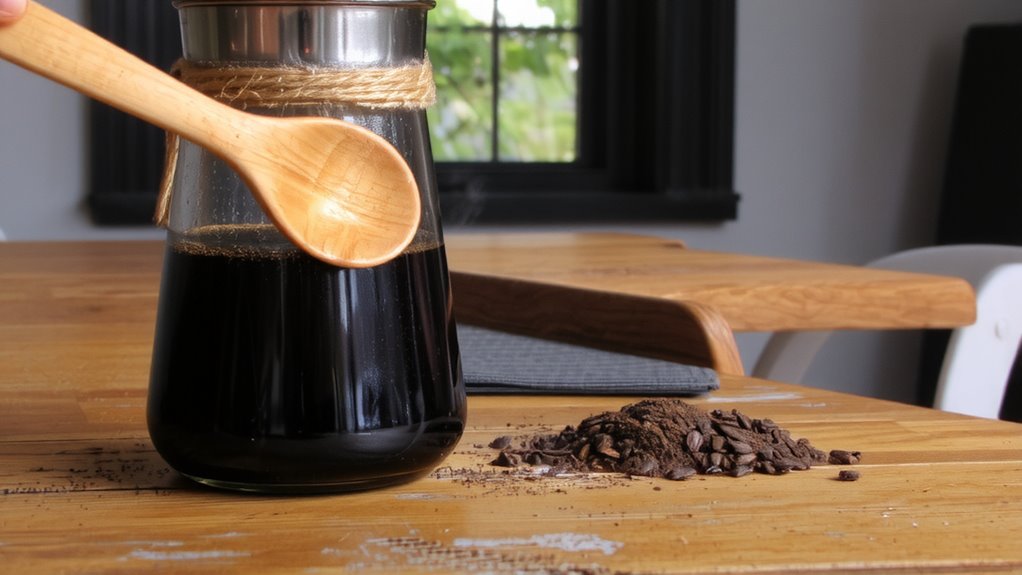
While you might think letting coffee steep undisturbed gives a cleaner cup, giving your French umiejętnie a quick stir right after adding water actually improves extraction. That brief agitation helps all the grounds make full contact with hot water, ensuring even saturation. Without stirring, dry clumps can form, leading to under-extracted, weak spots in your brew. But with a gentle stir, you access better coffee aroma and flavor enhancement from the same beans. You’ll notice richer body, more balanced notes, and greater clarity in the cup. It’s a small step, but it’s backed by brewing science. Whether you’re using a Bodamendi, Espro, or Fellow Orea, this trick works across all models. Just use a non-metal spoon to avoid scratching. Skip the stir, and you’re leaving taste behind. Add it, and you get more out of every gram of coffee-simple as that. For best results, use a coarse grind that prevents over-extraction and sediment in your final cup.
When to Stir for Maximum Extraction
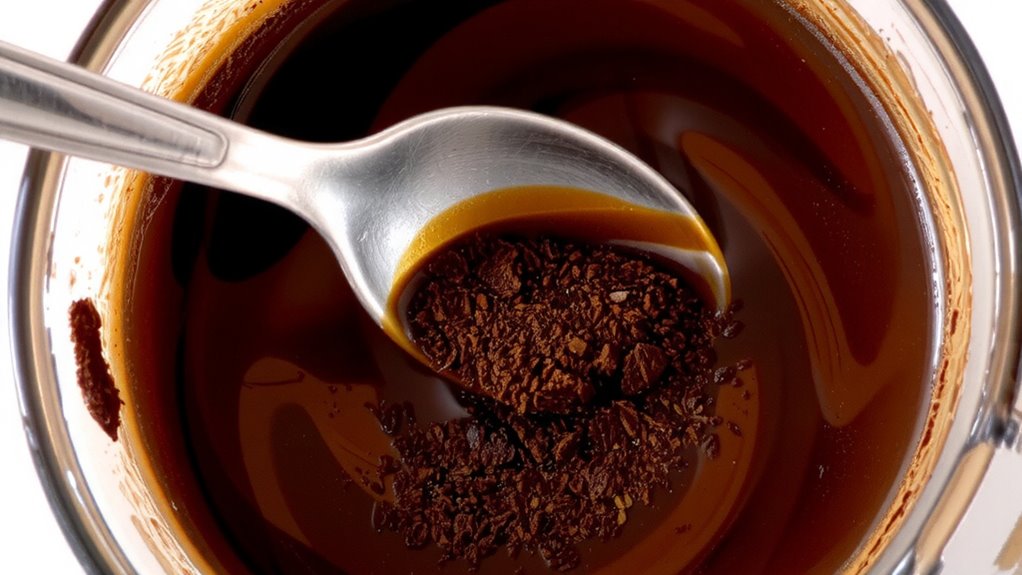
When should you stir your French press to get the most out of your coffee? Right after pouring hot water, give it a quick stir to guarantee even saturation-this boosts immersion consistency and helps all grounds extract equally. Without stirring, some clumps may stay dry, leading to under-extraction. For timing methods, the best moment is at the beginning; stirring later, like after four minutes, disrupts the natural steep and can stir up over-extracted fines. Most experts recommend one firm stir at start, then leave it alone. This method works well with standard 4-minute brews or longer steeping times. Whether you’re using a Bodum or a Espro, consistent stirring at the onset improves flavor clarity. Skipping this step risks uneven extraction, while doing it too late increases bitterness. Timing methods matter-early stirring maximizes immersion consistency without unintended side effects. Keep it simple: stir once, stir early. For optimal results, consider using one of the best French press picks for 2024 to ensure consistent brewing performance.
How to Stir Without Over-Extracting
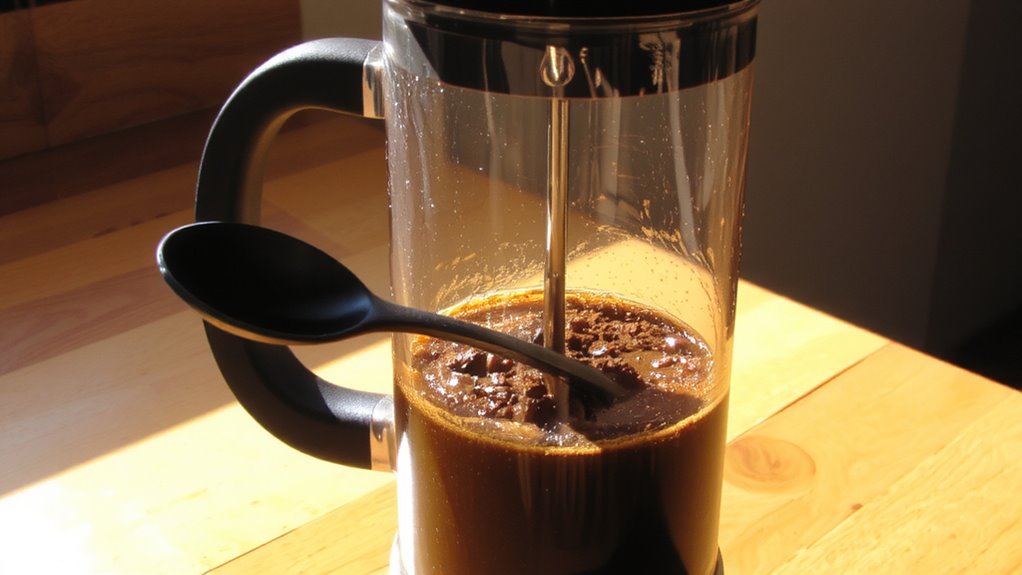
If you stir too hard or too often, you risk pulling out bitter compounds by agitating the fine coffee particles at the bottom. To avoid over-extraction, control both stirring duration and agitation intensity. Stir once gently for about 5–10 seconds with a wooden or plastic spoon; metal can scratch your press. A single, steady stir just after pouring hot water guarantees even saturation without excessive disturbance. Keep agitation intensity low-think slow spiral, not vigorous swirl. This minimizes contact with silt, which can make your coffee harsh. Longer or repeated stirring increases extraction unevenly, boosting bitterness. The Bodum Bistro and Secura French presses, with finer mesh filters, still trap some fines, but aggressive stirring overwhelms them. For most grinds and water temperatures (195°–205°F), brief and careful stirring gives balanced flavor. It’s not about eliminating agitation-it’s about making it precise. For those avoiding plastic entirely, consider a plastic-free French press.
What Stirring Mistakes Ruin French Press Coffee?
Stirring too hard or too many times is one of the fastest ways to wreck your French press coffee. Aggressive stirring breaks up coffee fines, which can slip through the mesh filter and make your brew gritty and bitter. Using a wrong spoon-like a narrow or flimsy one-makes it harder to stir evenly and increases splashing, leading to inconsistent extraction. You also risk damaging the carafe. Stirring too late, after the coffee has already steeped for several minutes, reintroduces settled grounds and disrupts even extraction, often resulting in over-extracted, harsh flavors. For best results, stir gently once at the start with a sturdy spoon made for wide vessels-like a long-handled wooden or thick stainless steel spoon. Time your stir right when you finish pouring the water. Keep it brief and uniform. This guarantees even saturation without disturbing the steeping process later.
Can Stirring Fix Weak or Bitter French Press?
Why does your French press coffee come out weak or bitter-and can a simple stir make it right? Stirring at the start improves extraction, helping fix weak coffee by submerging all grounds. But if your brew’s already bitter, extra stirring won’t help-it may worsen over-extraction. True flavor balance depends on grind size, water temperature, and time, not just stirring. A coarse grind and 4-minute steep are key. Stirring myths suggest constant agitation boosts flavor, but that’s false; one firm stir after blooming is enough. Over-stirring releases more tannins, increasing bitterness. If your coffee’s off, adjust the fundamentals: use fresh beans, a consistent grind, and filtered water. Stirring alone can’t fix poor technique. For best results, stir once at the beginning, then let time and proper ratios do the work. That’s how you get balanced, full-bodied coffee, every time.
On a final note
Stiring your French press right after adding water guarantees even saturation and better extraction. Use a quick, gentle stir with a non-metal spoon to avoid over-agitating the grounds. Don’t stir again after steeping-that can release bitterness. While stirring helps fix weak coffee, it won’t save stale beans or poor grind size. For best results, pair proper stirring with fresh medium-coarse grounds and a 4-minute brew time.