What Makes Mulanje Mountain Coffee a Rare, Spicy-Floral Find
You’re tasting clove and jasmine because Mulanje coffee grows above 1,800 meters on Malawi’s volcanic slopes, where cool temps and daily fog slow bean development for greater sweetness and complexity. Hand-harvested only from small plots, it’s sun-dried carefully and sorted to minimize defects. Light roasts in a Hario V60 or Kalita Wave best highlight its spicy-floral notes. Limited harvests and poor transport keep it rare-knowing its source helps you understand why it stands apart.
Notable Insights
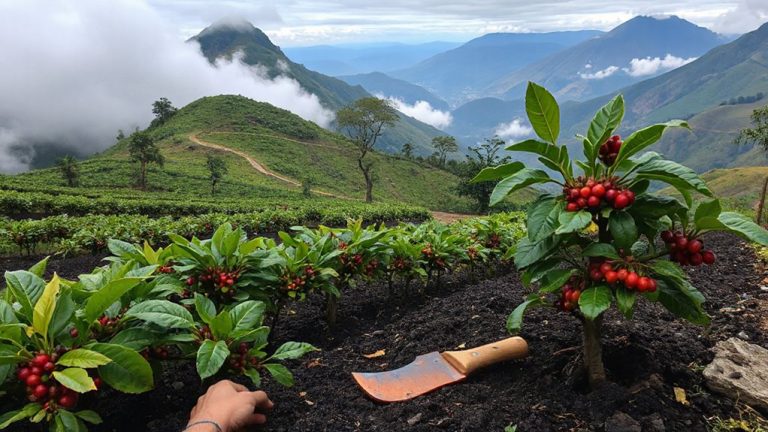
- Grown only on Mount Mulanje’s lower southern slopes above 1,800 meters, its high-altitude volcanic terroir enhances density and mineral-rich complexity.
- Daily fog and cool temperatures slow bean development, boosting sugar accumulation and contributing to smooth, balanced, floral flavor notes.
- Hand-harvested by smallholder farmers who selectively pick ripe cherries, ensuring quality and minimizing defects through meticulous post-harvest sorting.
- Sun-dried in thin layers with frequent turning, this labor-intensive process preserves the beans’ spicy-clove and jasmine-like aromatic profile.
- Limited to a few hundred hectares with poor transport infrastructure, it remains rare and seldom exported beyond specialty fair-trade markets.
What Makes Mulanje Coffee Unique in Africa?
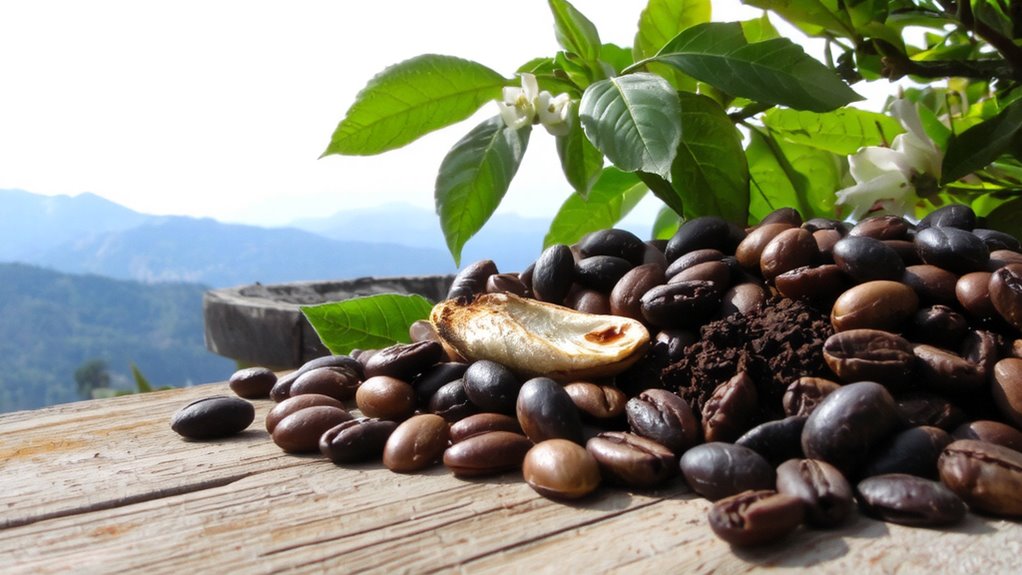
Mulanje Mountain’s volcanic soil and high-altitude climate give its coffee a distinctive edge in Africa’s specialty market. You’ll notice the bean origin plays a key role-grown above 1,800 meters, these Arabica beans develop slowly, boosting density and flavor complexity. That terroir, combined with careful hand-harvesting, makes Mulanje stand out in regions dominated by larger producers like Kenya or Ethiopia. Its trade history is quieter but growing; once limited to local exchanges, it now reaches EU and U.S. specialty roasters through fair-trade cooperatives. While not as widely available as Tanzanian Peaberry or Sidamo, its consistency appeals to manual brewers like the Hario V60 or Kalita Wave. If you’re using a conical burr grinder, aim for medium-fine settings to highlight its crisp acidity. It’s not just rarity-it’s proof that small origins can compete on quality when grown and processed with precision.
The Misty Microclimate Behind Its Flavor
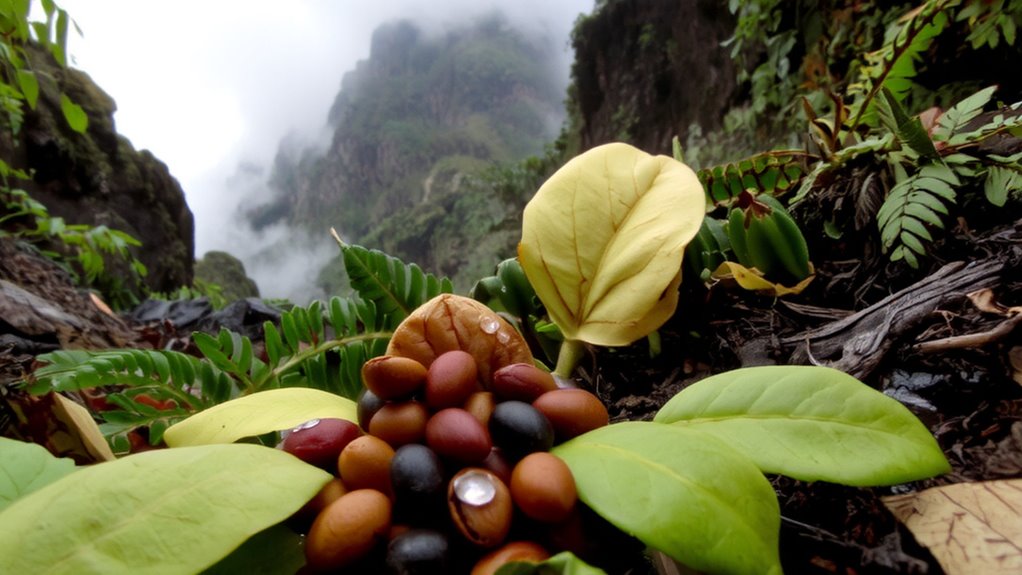
While dense fog rolls in daily, it’s not just scenery-it’s a critical part of what shapes Mulanje’s coffee flavor. You’ll notice the consistent cloud cover slows bean development, letting sugars build gradually for a smoother, more balanced cup. This mist shields plants from harsh sun, moderating temperature fluctuations that could stress crops and weaken quality. Without extreme swings, the beans mature evenly, enhancing uniformity in roast and taste. You’re looking at a microclimate where humidity stays high, and daily fog acts like a natural insulator-protecting flavor integrity. Unlike regions with erratic weather, Mulanje’s stable, misty rhythm reduces risks during flowering and cherry growth. If you roast or brew this coffee, expect clarity and complexity rooted in environmental consistency. For best results, use a gooseneck kettle and medium grind to highlight its nuanced profile. It’s not flashy-it’s precise, shaped by nature’s steady hand.
How Altitude and Volcanic Soil Shape the Bean
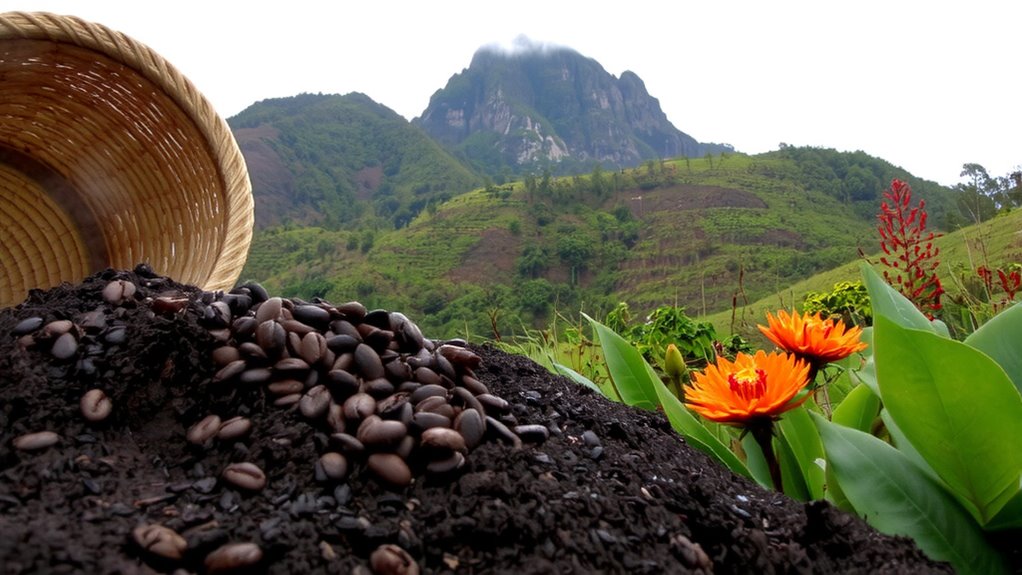
You’ve seen how the mist shapes Mulanje’s beans, slowing development for balanced sweetness and even roast potential. Now consider how high elevation-over 1,800 meters-forces the plant to grow slower, producing denser beans ideal for roasting. These conditions enhance acidity and complexity, essential for clean, bright cups. But it’s the volcanic terroir that adds distinction. The soil, rich in minerals from ancient lava flows, imparts subtle spice and floral hints you’ll notice in the cup profile. High elevation also reduces pests and disease pressure, cutting the need for chemical inputs. This natural advantage means less processing interference, letting the bean’s true character show. When roasting, expect consistent development due to the bean density. For best results, use a roaster with strong heat retention, like a Probat or even a well-calibrated Hottop. The combination of volcanic terroir and high elevation doesn’t just shape the bean-it defines its rare potential.
How Smallholder Farmers Craft the Harvest
Though the mountain’s altitude and soil set the stage, it’s the smallholder farmers who shape the harvest with careful, hands-on work. You rely on traditional harvest techniques, picking cherries by hand to avoid damaging the delicate branches. Timing matters-only ripe, red cherries are chosen, ensuring sugar development for better bean quality. You spread harvested cherries in thin layers to dry in the sun, turning them often for even moisture loss. This method helps prevent mold but requires clear weather and space. Mechanical harvesters aren’t used here; the terrain’s too steep and the crop too small-scale. Bean selection happens both in the field and post-drying-only full, high-density beans move forward. Flatter or cracked beans get removed, which improves consistency. Proper sorting lowers defect rates, a key step before export grading. These practices demand more labor but offer better quality control than bulk operations.
Tasting Mulanje Mountain Coffee: Clove, Jasmine, and Tea-Like Finish
What makes Mulanje Mountain coffee stand out in the cup? You’ll notice it right away: a distinct clove essence in the aroma, followed by a bright jasmine aroma that lifts the profile. When brewed with a pour-over, like a Hario V60, these floral and spicy notes open cleanly. The medium body carries a subtle warmth, not sharp or overly bold. Finish it off, and you’ll get a clean, tea-like aftertaste-light, slightly tannic, similar to highland oolong. It cools well, making it adaptable for slower tasting sessions. Compared to washed African coffees, Mulanje has more aromatic complexity but less fruit intensity. For best results, use filtered water and grind fresh. Light to medium roasts preserve the jasmine aroma and clove essence without introducing smokiness. Avoid dark roasting-it dampens the delicate finish. This isn’t a bold espresso bean; it shines in manual brews that highlight nuance.
Why Mulanje Coffee Is So Rare
While many African coffees benefit from large-scale cultivation, Mulanje Mountain coffee remains exceedingly rare due to its extremely limited growing region-confined almost entirely to the lower southern slopes of Mount Mulanje in Malawi, an area spanning just a few hundred hectares. You won’t find vast plantations here; instead, smallholder farmers manage tiny plots, making commercial expansion nearly impossible. The remote location adds to the challenge-poor infrastructure slows transport and increases costs, limiting access to broader markets. Limited cultivation means产量 is low, and most beans never leave the region. Harvests are labor-intensive, with hand-picking the norm, further restricting output. Even if demand rises, the terrain and climate allow only so much growth. You’re dealing with a crop tied to a specific ecosystem, one that can’t be easily replicated. That’s why, even among specialty coffees, Mulanje remains a rare find-geography and scale keep it that way.
Where to Buy Authentic Mulanje Mountain Coffee
You won’t find Mulanje Mountain coffee at your average supermarket or big-chain café, given how little of it is grown and how few beans make it beyond Malawi. Your best bet is through specialty online retailer options that source directly from Malawian farms. Look for fair trade certification to guarantee ethical sourcing and better quality control. Websites like Moyez Coffee or retailers partnering with Malawi’s smallholder cooperatives often carry authentic batches. These sellers typically offer whole beans, which preserve freshness-just grind them before brewing for the best flavor. Availability may vary by season, so check shipping dates. While prices are higher than standard coffee, you’re paying for rarity and traceability. Avoid generic brands claiming “Mulanje” without sourcing details. Stick to trusted platforms with clear origin info, roast dates, and fair trade certification to get the real thing.
On a final note
You’ll need a good burr grinder and pour-over setup, like a Hario V60, to highlight Mulanje’s floral notes. Grind fresh, use filtered water at 200°F, and brew with precision-its delicate spice and jasmine tones fade with sloppiness. Because it’s rare and often sold in small batches, buy from trusted roasters like Monmouth or Has Bean to avoid fakes. Store in an airtight container, away from light.