Decoding Coffee Grading Systems: What You Need to Know About International Standards for Ensuring Quality Across Supply Chains
You rely on coffee grading to guarantee quality beans reach your grinder, and standards vary by country and certifier. High-altitude, defect-free beans like Colombia’s or Kenya’s AA grades roast evenly and taste cleaner. The SCA scores above 80 define specialty coffee, while Fair Trade focuses on ethics, not flavor. Larger, denser beans mean better consistency in your cup-especially with light roasts. You’ll get fewer off-flavors and better extraction when starting with top-graded beans; knowing the system helps you choose wisely-what’s behind the label matters.
Notable Insights
- Coffee grading evaluates beans for defects, size, density, and flavor to ensure quality and roast consistency.
- Higher altitudes produce denser, more flavorful beans with fewer defects, directly influencing grade and cup quality.
- Countries like Colombia, Kenya, and Ethiopia use size, screen grading, and defect counts in nationally standardized systems.
- The SCA’s 100-point scale certifies specialty coffee above 80 points, aligning global quality expectations.
- Fair Trade certification supports ethical sourcing but does not guarantee sensory quality like SCA grading does.
What Is Coffee Grading and Why It Matters
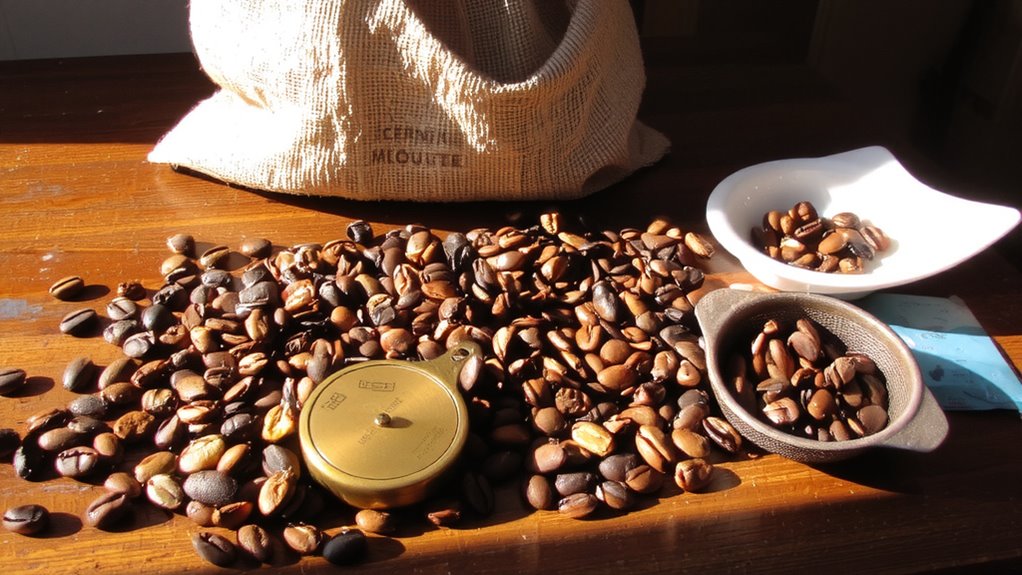
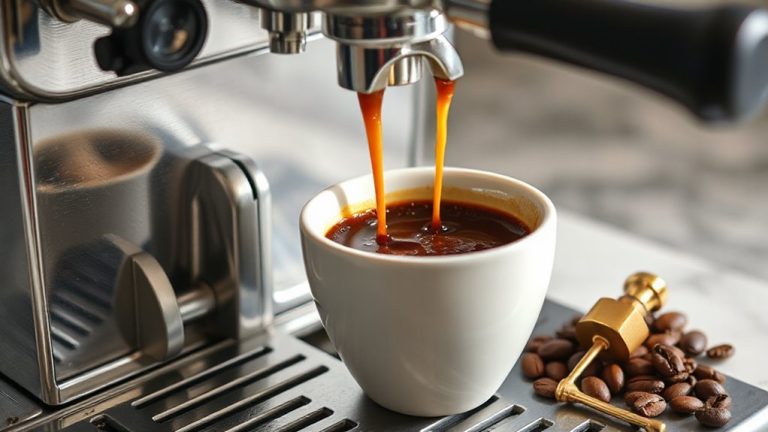
With coffee, what you taste starts long before brewing-grading determines quality from the farm to your cup. You rely on this system to guarantee consistency and flavor integrity. Grading evaluates beans for defects, uniformity, and size, but also predicts sensory outcomes like flavor profiles and aroma characteristics. When beans are properly graded, you’re more likely to get a clean, balanced cup with distinct notes-floral, fruity, nutty-depending on origin and processing. Poor grading means inconsistencies, off-flavors, or musty notes that ruin even expert brewing. Arabica often scores higher due to superior aroma characteristics and smoother flavor profiles versus robusta. For you, this means choosing graded beans from reputable suppliers improves your brewing success. Whether using a French press or espresso machine, starting with well-graded beans is practical, non-negotiable quality control-because great equipment can’t fix flawed beans.
How Altitude, Defects, and Bean Size Affect Coffee Grade
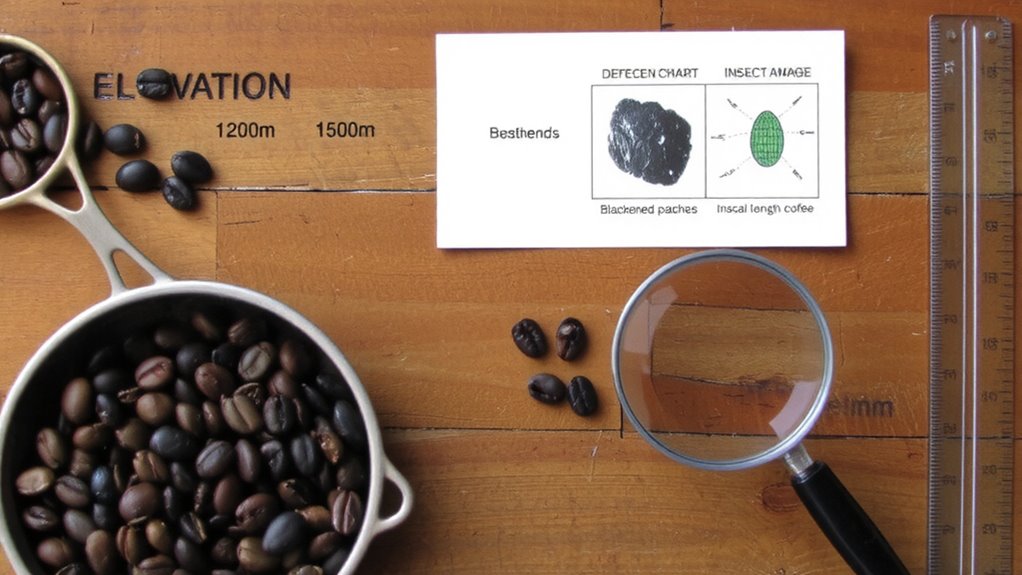
While you might think flavor is shaped mostly during roasting or brewing, it’s actually altitude, bean size, and defect levels that lay the foundation for coffee grade-and ultimately, your cup quality. Higher altitudes produce slower-growing beans with greater bean density, which typically leads to more complex flavors and better roast consistency. Dense beans respond more evenly to heat, reducing the risk of under- or over-roasting. Bean size matters too-larger beans, like Grade 1 Arabica, are sorted to guarantee uniformity, helping roasters achieve even results. Defects, such as black beans or insect damage, are strictly counted; fewer defects mean higher grades and cleaner taste. Buyers rely on these physical traits because they directly influence how the coffee will roast and taste. You’ll want to prioritize low defect counts and high bean density if you’re aiming for quality and predictability in every batch.
How Major Coffee-Producing Countries Grade Their Beans
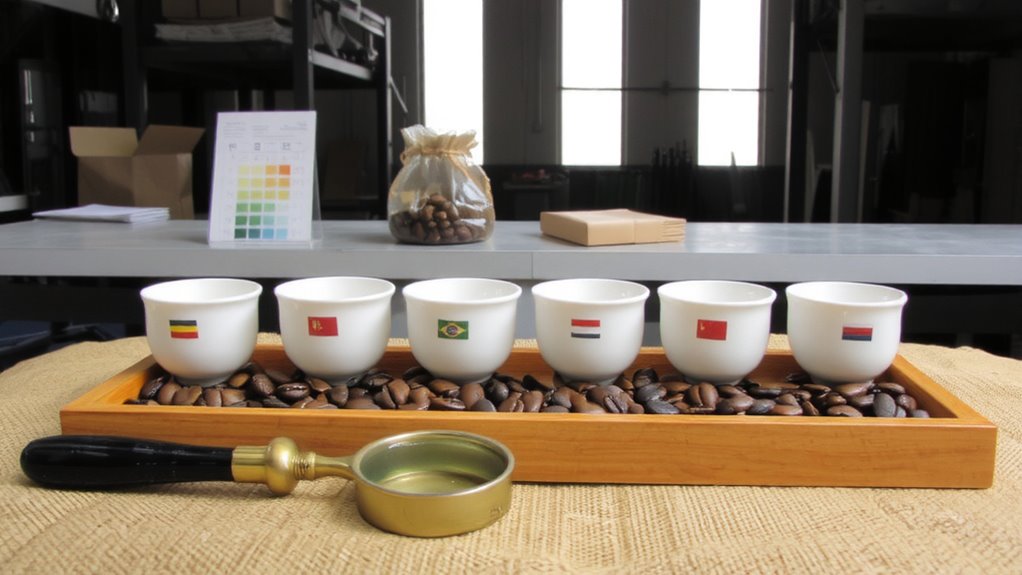
Grading standards vary from country to country, and knowing the differences helps you make smarter buying decisions. In Colombia, beans are graded by size and screen classification, with stricter standards at higher altitudes. Ethiopia focuses on bean defects and cup quality, often linking grade to specific harvest methods like selective picking, which improves consistency. Kenya uses a letter system (E, AA, AB), where larger beans receive higher marks. Brazil relies heavily on screen size and defect counts, influenced by mechanical harvest methods that may compromise bean integrity. Drying techniques also play a key role-dry-processed beans in Yemen or Indonesia often score lower defect-wise due to sun-drying on farms, while wet milling in Central America guarantees cleaner, more uniform grades. Understanding these national systems helps you judge quality beyond labels, especially when comparing origins side by side.
How Certifications Like SCA and Fair Trade Influence Grading
You’ve seen how countries set their own rules for grading beans, but third-party certifications add another layer that can affect both quality and price. The Specialty Coffee Association (SCA) uses strict sensory and physical standards to score beans above 80 points, often aligning high marks with consistent roast performance and clarity in flavor. While not a direct grading body, its influence pushes producers toward precision, affecting how beans are evaluated globally. Fair Trade certification, on the other hand, emphasizes ethical sourcing and fair wages, with less focus on taste and more on sustainability impact. It guarantees minimum prices, helping small farms survive market swings. However, some critics say it doesn’t always improve quality. Both certifications can boost market access, but they serve different goals-one targets flavor excellence, the other social equity.
How Coffee Grading Affects Your Morning Cup
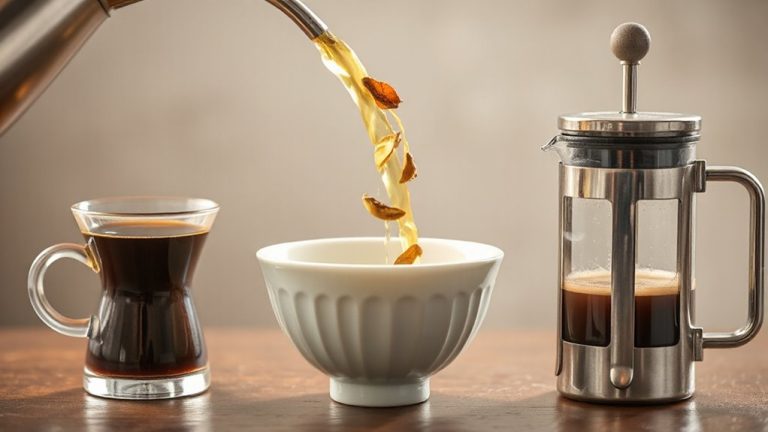
What exactly happens to that high-grade bean between the farm and your French press? Grading guarantees uniform size and density, which boosts roast consistency-you won’t get unevenly roasted, bitter beans. That matters because consistent roasting preserves the coffee’s intended flavor profile, whether it’s fruity Ethiopian notes or the nutty depth of Colombian beans. Lower-graded coffee often contains defects and irregular beans, leading to off-flavors and sour or burnt hits in your cup. High-grade beans also mean fewer impurities, so your grinder and brewer stay cleaner, and extraction improves. If you’re using a pour-over or espresso machine, that precision makes a real difference. While specialty-grade beans cost more, they deliver reliable taste and performance. For daily brewing, especially with light or medium roasts where flaws are more obvious, starting with a top-grade bean simply works better. It’s not magic-just better inputs leading to better results.
On a final note
You now know coffee grading isn’t just marketing-it’s a practical system based on altitude, bean size, and defects that affects flavor and consistency. Grades like Screen 18 or SCA Specialty help you compare quality across origins. While certifications add value, they don’t replace grade. When buying beans, check the grade to gauge quality, but remember: freshness and roast matter just as much in your cup. Choose based on both data and your taste.