Advanced Guide to Using Grind Size and Dosage Adjustments for Drip Coffee Machines
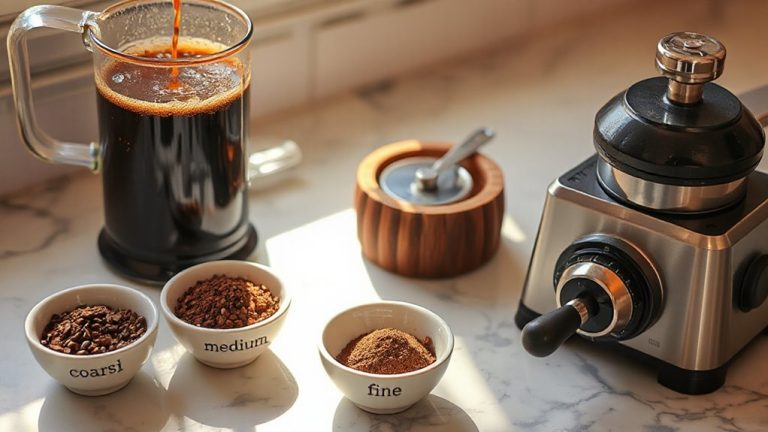
Use a medium grind, like table salt, for most drip machines to balance flow and extraction. Too coarse and your coffee tastes weak; too fine and it turns bitter. Start with a 1:16 ratio-20g coffee to 320g water-and adjust from there. If it’s weak, increase the dose by 0.5–1g. If bitter, reduce the dose or coarsen the grind slightly. Always use a flat-burr grinder and scale for consistency. You’ll get better results when you know how each variable shapes your cup.
Notable Insights
- Use a medium grind, resembling table salt, to optimize extraction and flow rate for drip coffee machines.
- Adjust coffee dose by 0.5–1g to correct weak or bitter coffee before changing grind size for more predictable results.
- Maintain a coffee-to-water ratio between 1:15 and 1:17 for balanced strength and clarity in every brew.
- Ensure grind consistency with a flat-burr grinder to prevent uneven extraction and off-flavors in drip brewing.
- Control brew time between 4–6 minutes by fine-tuning grind size, avoiding under- or over-extraction in drip machines.
How Grind Size Affects Your Drip Coffee
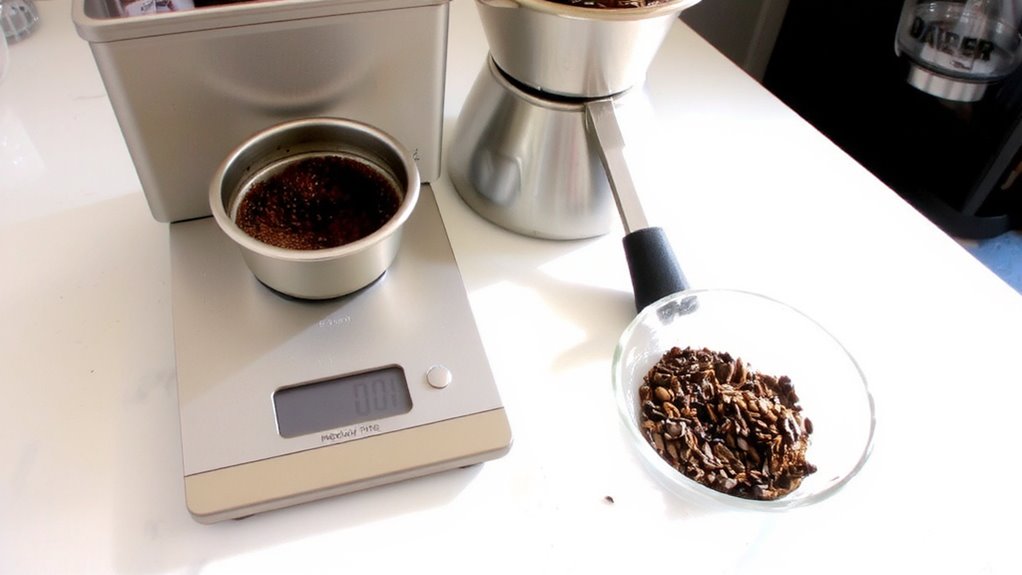
While it might seem small, the size of your coffee grounds plays a big role in how your drip coffee turns out. If the grind is too coarse, water passes through too quickly, lowering extraction efficiency and leaving your coffee weak and underdeveloped. Too fine, and water struggles to move, over-extracting and creating bitterness. A consistent particle distribution guarantees even extraction, which most flat-burr grinders achieve better than blade models. Machines like the Baratza Encore or Fellow Ode deliver reliable results. Inconsistent grinds cause some particles to extract too much while others extract too little, muddling flavor. For drip brewing, aim for a medium grind-similar to table salt. This balances contact time and flow rate, supporting peak extraction efficiency. Small adjustments matter, so always calibrate your grinder fresh. The right grind size isn’t one-size-fits-all, but consistent particle distribution gets you closer every time. Freshly roasted beans perform best when paired with a high-quality coffee bean grinder that preserves their nuanced flavors during grinding.
Dial In the Perfect Coffee-To-Water Ratio
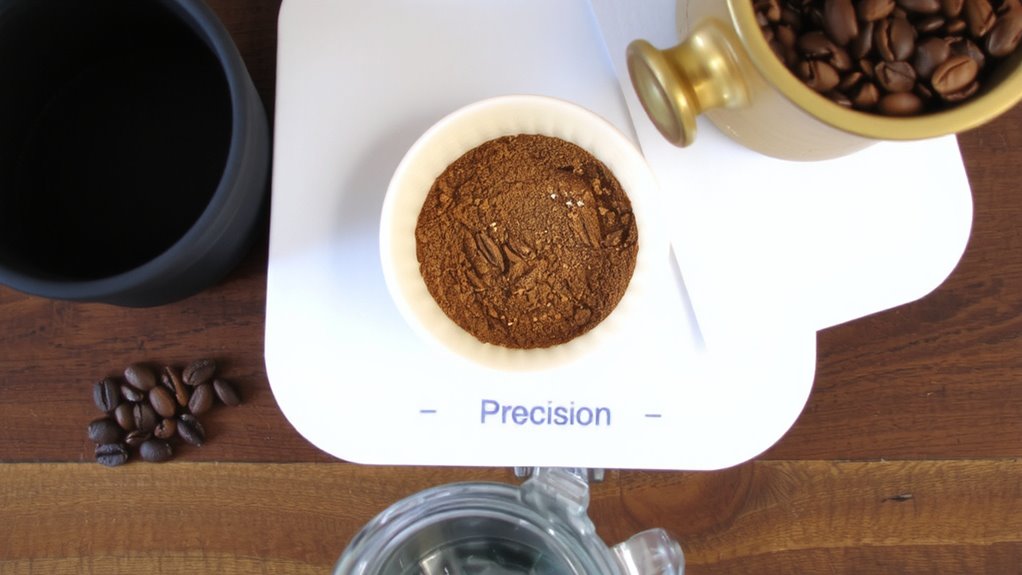
You’ve got your grind size set to medium-consistent, even, and fine-tuned for drip-now it’s time to nail the coffee-to-water ratio. Use a 1:15 to 1:17 ratio (coffee to water) as a baseline. For 20g of coffee, that’s 300–340g water. Brew strength and clarity depend on precise measurements, water temperature (keep it between 195–205°F), and proper bloom time (30 seconds). Letting coffee bloom guarantees even extraction, especially with fresh beans. Adjust ratios slightly based on roast and taste, but avoid changing dose now-save that for fine-tuning later. Using a high-precision coffee bean scale ensures consistency in every brew.
| Ratio | Water (g) for 20g Coffee |
|---|---|
| 1:15 | 300 |
| 1:16 | 320 |
| 1:17 | 340 |
| Bloom Time | 30 sec (recommended) |
Fix Weak or Bitter Coffee With Dose Tweaks
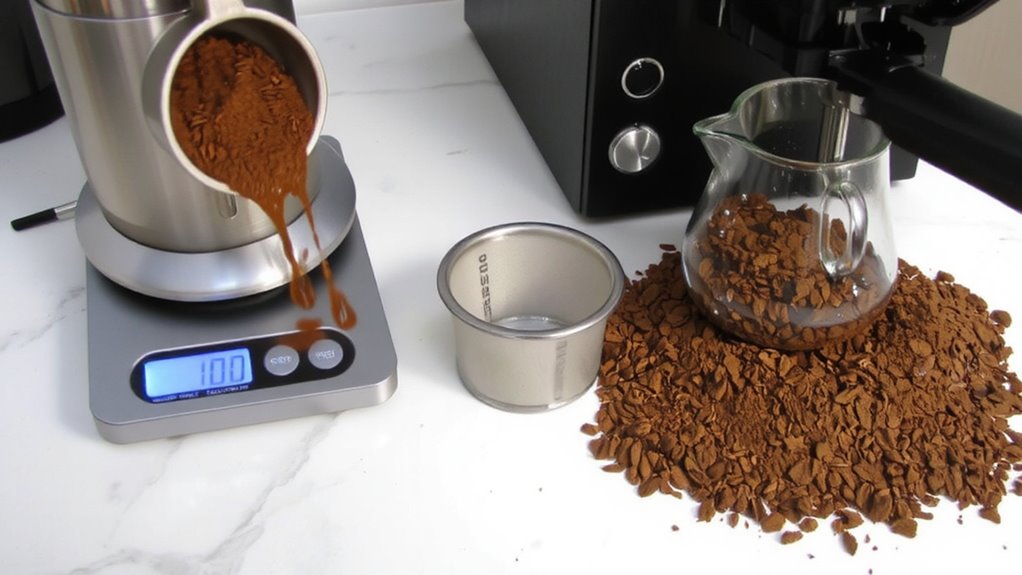
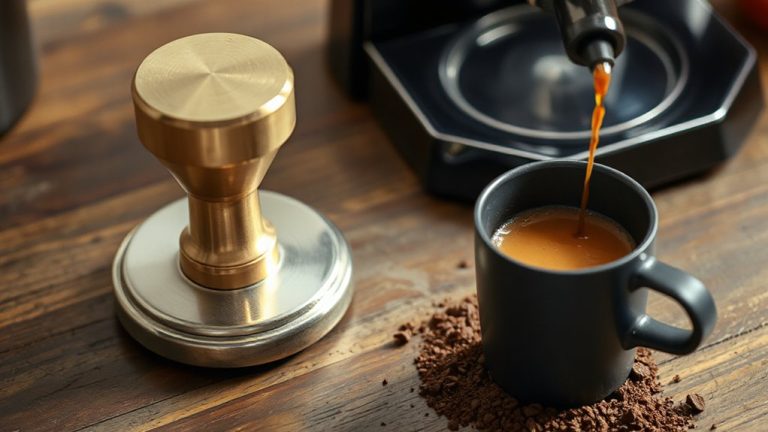
A small dose adjustment can make a big difference when your coffee tastes weak or bitter. If your brew is weak, try increasing the coffee dose by 0.5 to 1 gram-this boosts extraction and strengthens flavor without needing to change the grind. For bitter coffee, reduce the dose slightly; too much coffee can over-extract, especially if your machine’s water temperature runs high. Unlike espresso, drip machines don’t use tamping pressure, so dose and grind are your main levers. Keep water temperature between 195°F and 205°F for balanced results. Too cool, and coffee tastes sour; too hot, it amplifies bitterness. Adjust dose first-it’s faster and more predictable than changing equipment. Use a digital scale for accuracy. Small, deliberate tweaks lead to more consistent, flavorful cups. Exploring flavor profiles systematically can enhance your understanding of extraction, much like with coffee tasting kits.
Match Grind Size to Your Machine’s Brew Time
Since brew time affects extraction, matching your grind size to your machine’s flow rate is key to balanced coffee. If your brew takes too long, your coffee tastes bitter; too short, and it’s weak. Most home drip machines run on medium brew pressure, extracting in 4–6 minutes. For paper filters, which slow flow, use a slightly medium-coarse grind to avoid over-extraction. Metal or permanent filters let water pass faster, so go finer-medium works best. Machines with higher brew pressure, like some advanced models, push water quicker, requiring a coarser grind to prevent harshness. Start with a medium grind and adjust: finer if weak, coarser if bitter. Always consider your filter type and machine’s natural flow. Tweaking grind size to match brew time gives better results than changing dose alone. It’s a direct, effective way to improve taste with the gear you already have.
Use These Pro Tips for Consistent Drip Brews
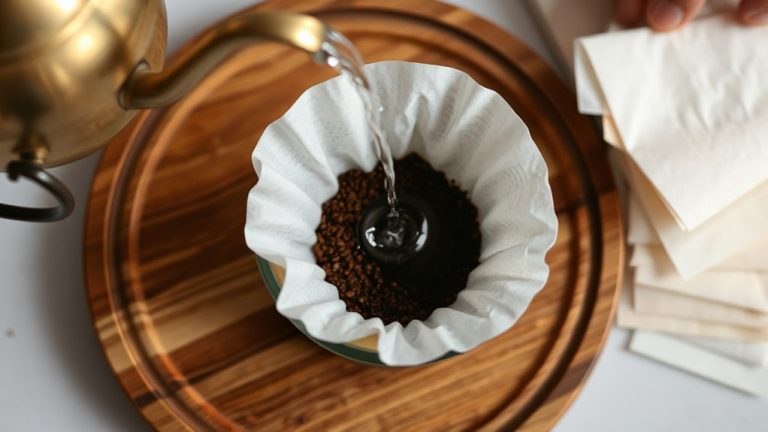
Getting the grind right sets the foundation, but consistency in your routine locks in the results. Always use the same digital scale and timer-small variances in dose or brew time affect extraction. Stick to a consistent grind size unless adjusting for taste or seasonal bean changes. Your drip machine should maintain a stable brew temperature between 195°F and 205°F; if it doesn’t, consider upgrading to a model like the Technivorm Moccamaster, known for precise heat control. Water quality matters just as much-use filtered water with balanced minerals, like that from a Brita or Third Wave Water packets, to avoid off-flavors and scale buildup. Pre-wet paper filters to eliminate paper taste. And clean your machine monthly with descaling solution to maintain performance. Small habits make the difference between good and repeatable brews.
On a final note
You now know how grind size and dose directly impact your drip coffee’s strength and flavor. Use a consistent grinder, adjust fine or coarse based on taste, and tweak coffee weight to fix weak or bitter brews. Match your grind to the machine’s brew time-medium for most drip models. Stick to a 1:15 to 1:17 coffee-to-water ratio, and always weigh your dose for repeatable results. Small changes make a real difference.