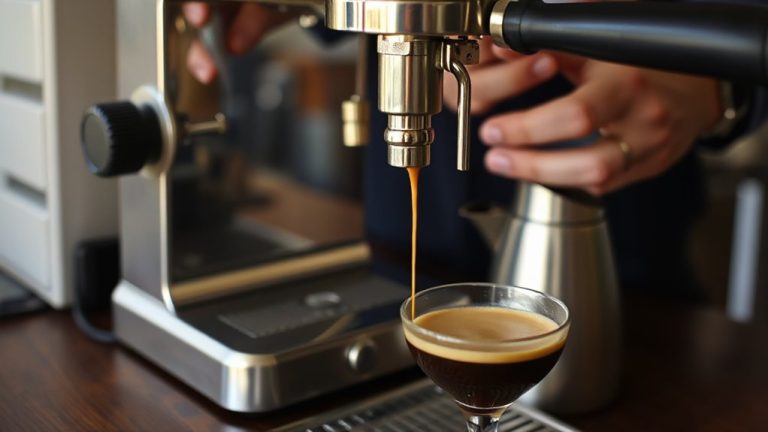
What Happens During the Washed Coffee Processing Method From Harvest to Drying
You pick only ripe red cherries by hand to guarantee sweetness, then depulp within 12 hours to avoid spoilage. Next, you ferment the beans 12–48 hours to break down sticky mucilage, depending on temperature. Afterward, you wash them thoroughly to stop fermentation and remove residue, using clean water for flavor clarity. Finally, you dry the beans to 10–12% moisture, either on beds, patios, or with dryers. Each step sharpens the coffee’s clean, bright profile-understanding the details helps you choose better batches.
Notable Insights
- Coffee cherries are hand-picked at peak ripeness to ensure optimal sweetness and flavor development.
- Depulping within 12 hours removes the outer skin and pulp to prevent premature fermentation.
- Fermentation lasts 12–48 hours, using natural enzymes to break down sticky mucilage from the beans.
- Washing with clean water halts fermentation and removes residual mucilage for flavor clarity.
- Beans are dried to 10–12% moisture using beds, patios, or mechanical dryers for long-term stability.
Harvesting Cherries for Washed Coffee at Peak Ripeness
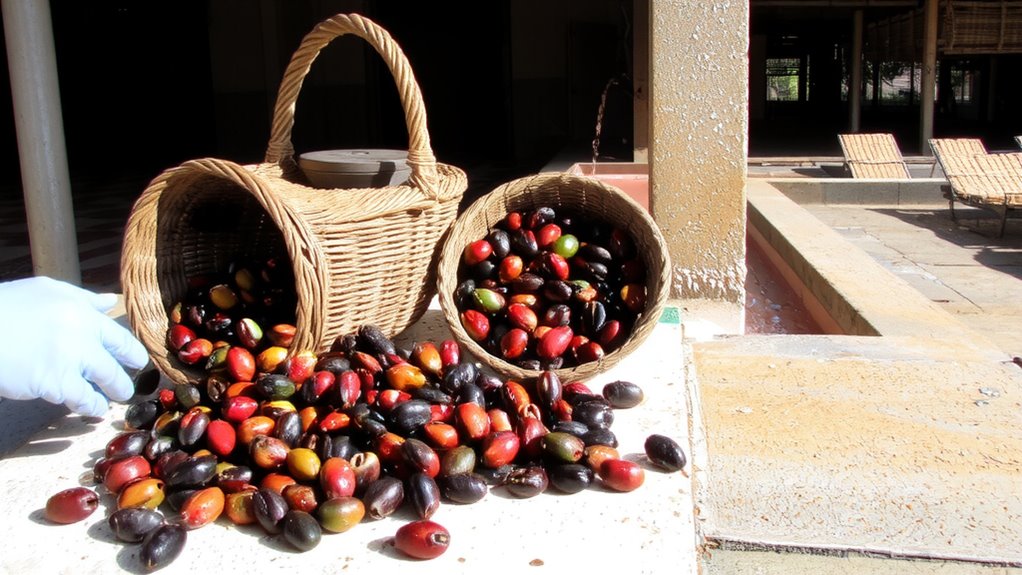
Most specialty coffee producers pick coffee cherries by hand, and for washed processing, timing matters-we’re talking about harvesting only when each cherry hits peak ripeness. You’ll need to monitor weather conditions closely, as excessive rain or drought can speed up or delay ripening, affecting uniformity. If you harvest too early, the beans lack sweetness; too late, and they ferment on the tree. This precision creates labor challenges-pickers must make multiple passes through the same trees, selecting only ripe red cherries. That means higher costs and more workers compared to strip-picking. Small farms often struggle with the labor demands, especially during short harvest windows. Using trained teams helps, but reliability depends on local availability and pay rates. You’re balancing quality against efficiency here-peak ripeness is non-negotiable for clean, bright washed coffees, but it demands planning around climate shifts and workforce logistics.
Depulping the Fruit Right After Harvest
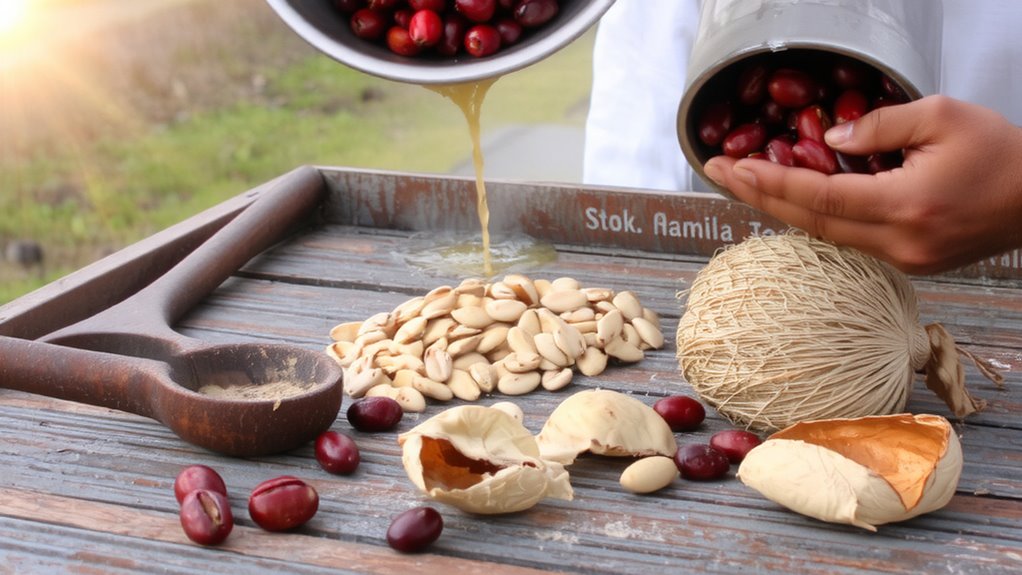
Once the cherries are harvested, you’ll want to depulp them as soon as possible-ideally within 12 hours-since delaying can lead to unwanted fermentation and off-flavors. You’ll use a depulping machine, like a disc or drum pulper, which removes the outer skin and some pulp from the beans. These machines need regular equipment maintenance-cleaning rollers, checking for wear-to run efficiently and avoid damaging beans. After depulping, you’re left with wet parchment coffee covered in sticky mucilage, but that step comes later. For now, handle the leftover fruit pulp right. Proper waste management matters: composting pulp reduces environmental impact and can enrich soil. Some farms route pulp to biogas systems or dry it for fuel. Avoid letting waste pile up near water sources. Quick, clean processing preserves cup quality and keeps your operation running smoothly.
Fermenting to Break Down the Sticky Mucilage
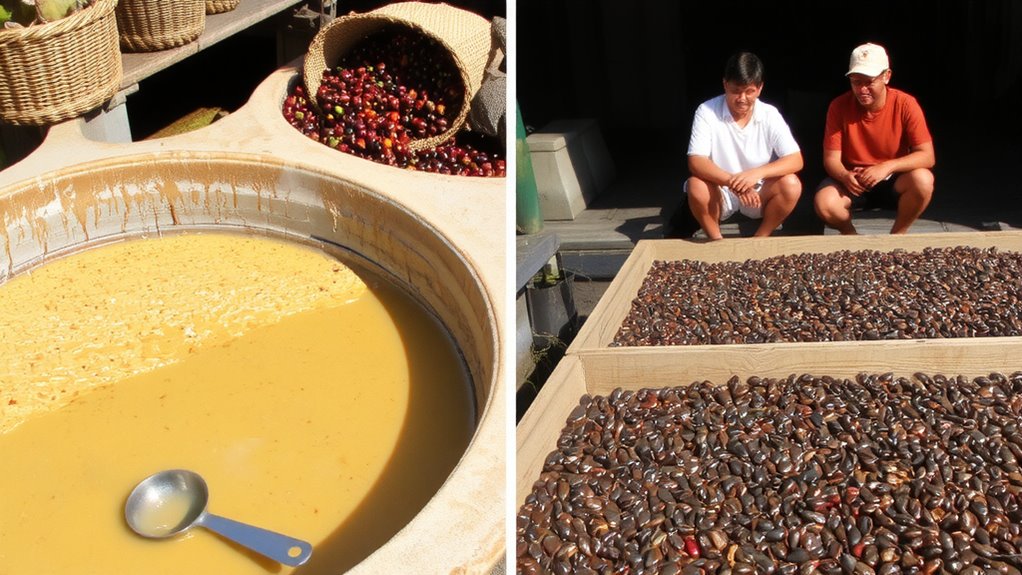
After removing the outer fruit, you’re left with beans still coated in a sugary layer called mucilage. To remove it, you’ll rely on fermentation, where enzymatic breakdown and microbial activity work together. You place the beans in a tank-often with water-for 12 to 48 hours, depending on temperature and humidity. During this time, natural enzymes and microorganisms start digesting the mucilage. Fermentation tanks can be open or sealed, and while traditional methods use ambient microbes, some producers inoculate with specific yeast strains for consistency. Under-fermenting leaves residue; over-fermenting risks sour or off flavors. Monitoring pH or tactile feel-slippery to clean-is key. This step demands attention but doesn’t require expensive gear. It’s low-tech, yet precision matters. You’re not just waiting-you’re managing a biological process that directly shapes quality.
Washing Beans for Clean, Bright Flavor
While fermentation loosens the mucilage, you’ll need to wash the beans thoroughly to stop the process and remove any remaining sticky residue. You’ll typically use a washing channel or a mechanical washer, where water quality plays a pivotal role-clean, fresh water prevents off-flavors and guarantees consistency. Poor water quality, like hard or contaminated water, can taint the beans’ bright, clean profile. Your scrubbing technique matters too: too gentle, and mucilage remains; too aggressive, and you risk damaging the beans. Most producers use rotating drums or pulsating washers for even, controlled friction that removes residue without harm. This step directly impacts flavor clarity, so consistent water flow and proper equipment calibration are essential. Efficient washing preserves acidity and sweetness, key traits of high-quality washed coffees. Done right, it sets the stage for uniform drying without defects.
Sorting Beans by Float to Ensure Uniformity
A quick float test is all it takes to separate dense, high-quality beans from the rest. You’ll toss your freshly washed beans into a tank of water, where bean density decides who stays and who goes. Light, underdeveloped, or damaged beans float; dens⏐er, premium ones sink. Water temperature matters-too cold and you slow the process, too warm and you risk encouraging early fermentation. Keep it around 20–25°C (68–77°F) for reliable results.
| Bean Type | Behavior in Water | Result |
|---|---|---|
| High density | Sinks quickly | Keep for drying |
| Medium density | Sinks slowly | Evaluate further |
| Low density | Floats | Discard or repurpose |
Sorting this way guarantees uniformity, which leads to even drying and better flavor clarity. It’s simple, effective, and requires no fancy gear-just a tank and attention to detail.
Drying Washed Coffee to Ideal Moisture
Since drying plays a critical role in preserving the clean, bright flavors of washed coffee, getting the moisture content right is non-negotiable. You need to dry your beans to about 10–12% moisture to prevent mold and guarantee stability during storage. You can use raised beds, patios, or mechanical dryers-each affects drying duration and moisture consistency. Raised beds offer better airflow and more even drying but take longer, usually 7–10 days in ideal weather. Patios are faster but require frequent raking to maintain moisture consistency. Mechanical dryers cut drying duration to 24–48 hours and offer climate control, but they risk uneven drying if not monitored. No matter the method, you must check moisture levels regularly with a meter. Inconsistent drying leads to uneven roasting and flavor defects. Aim for uniform moisture throughout the batch-consistency matters more than speed.
How Each Step Boosts Clarity and Acidity
You’ve nailed the drying stage when your beans hit that 10–12% moisture sweet spot, setting the foundation for stable, high-quality coffee-but the clarity and bright acidity washed beans are known for don’t just come from one step. It starts at depulping, where you remove the outer fruit quickly, locking in the bean structure before fermentation degrades it. The controlled wet fermentation that follows uses natural enzymatic activity to break down mucilage evenly, preserving delicate acids. Rinsing removes residues that could mute flavor. Throughout, cool, clean water maintains consistency. Compared to natural or honey processes, this method minimizes sugar retention on the bean, allowing intrinsic acidity to shine. You’re not adding flavor-you’re revealing it. Each precise step, from harvest to drying, works together to deliver a cup with crisp brightness, clean finish, and defined flavor notes you can actually taste.
On a final note
You wash coffee to get clean, bright flavors by removing fruit and mucilage early. After picking ripe cherries, depulp them fast, ferment to loosen stickiness, then rinse thoroughly. Sorting by float cuts defects. Dry beans slowly to 10–12% moisture for stability. This method demands more water and care than natural or honey processes but gives more consistent acidity and clarity. Ideal for light roasts that highlight fruitiness. Use it when flavor precision matters most.