Maximizing Flavor by Selecting the Right Material Container During Turkish Coffee Preparation
You’ll get the best flavor with a copper or silver cezve-they heat quickly and evenly, preserving aroma and building rich crema. Copper’s traditional and responsive, while silver offers the purest taste due to its non-reactivity. Brass works well but may alter flavor if unlined. Stainless steel is durable and affordable but slows heat control. Match your choice to your stove: copper for gas, magnetic stainless steel for induction. The right material means better brews every time-and there’s more to contemplate for perfect results.
Notable Insights
- Copper cezves enhance aroma retention and deliver even heating for a clean, bright cup with maximal flavor expression.
- Silver cezves offer superior thermal conductivity, ensuring precise temperature control and a pure, unaltered taste profile.
- Brass cezves heat faster than stainless steel but must be lined to avoid metallic taste and preserve coffee quality.
- Stainless steel cezves provide consistent results with low maintenance, though they may slightly dull aroma and flavor intensity.
- Match cezve material to stove type-copper and brass for gas, magnetic stainless steel for induction-to optimize heat performance.
How Cezve Material Shapes Turkish Coffee Flavor
Material matters when it comes to your cezve-what it’s made of directly affects heat transfer, flavor clarity, and the overall brewing experience. Copper heats quickly and evenly, boosting aroma retention and producing a clean, bright cup, but it requires maintenance to prevent tarnishing. Stainless steel is durable and low-maintenance, though it may slightly dull flavor and reduce aroma retention. Brass offers a middle ground but can affect taste if not lined. Each material also influences sediment texture-copper’s smooth interior helps settle fine grounds gently, while uneven surfaces may stir up grit. Traditionalists prefer hand-hammered copper for its balance of performance and aesthetics. For daily use, lined brass or high-quality stainless steel gives reliable results. Your choice shapes not just how fast the coffee boils, but how the oils, scent, and sediment behave-directly altering your final cup’s character and mouthfeel. Pick based on your stove and taste priorities.
Why Heat Control Matters for Crema and Taste
If you’re after that rich, golden froth and balanced flavor Turkish coffee is known for, how you manage heat during brewing makes all the difference. Too much heat too fast kills crema formation; too little and your coffee lacks depth. The right container supports steady heat retention, allowing gradual expansion of gases and oils critical for that signature foam. Here’s how key factors play out:
| Factor | High Heat Risk | Stable Heat Benefit |
|---|---|---|
| Crema Formation | Bubbles burst quickly | Smooth, lasting froth |
| Flavor | Bitter, charred notes | Rich, nuanced extraction |
| Heat Retention | Rapid loss after boil | Even warmth through pour |
Control matters-you’re not just heating coffee, you’re shaping its entire profile from foam to finish. Choose gear that sustains, not shocks.
Copper Cezves: Precision and Tradition
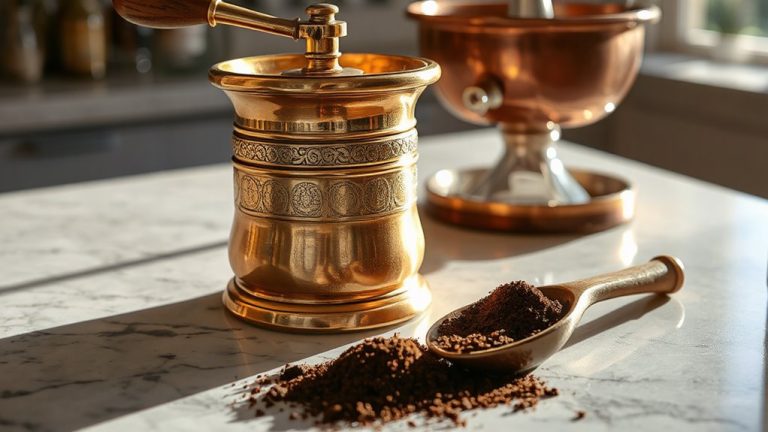
You’ve seen how consistent heat shapes crema and flavor, and now it’s time to look at a vessel built for exactly that kind of control-copper cezves. Lightweight yet excellent at distributing heat, copper guarantees even warming, helping you avoid scorching the grounds. It’s no surprise these pots are prized where precision matters. Beyond function, copper cezves carry deep cultural significance across the Middle East and Balkans, often passed down through generations. Their traditional craftsmanship stands out in hand-hammered details and engraved patterns, each piece reflecting regional styles. While they require occasional polishing to prevent tarnishing, many users find the care worthwhile. You’ll often see copper used in ceremonies or special occasions, reinforcing its role beyond the stove. If you value both performance and heritage, a copper cezve offers a reliable, time-tested option. Just remember to hand-wash it to preserve its finish and longevity.
Brass Vs. Stainless Steel: Speed and Cost
While copper earns praise for precision, brass and stainless steel cezves offer different advantages that balance speed, durability, and cost. You’ll find brass heats faster due to better thermal conductivity, helping you reach the ideal foam quicker. That responsiveness suits experienced users who want control without constant adjustment. Stainless steel isn’t as quick, but it’s consistent and won’t tarnish. It’s also lighter and easier to maintain. For a price comparison, stainless steel usually wins-most models cost less than brass and resist dents and scratches better. Brass, while pricier, adds vintage appeal and slightly faster heat transfer. But it requires polishing to keep its shine. If speed matters and you don’t mind upkeep, brass is solid. If you want low maintenance and value, stainless steel delivers. Both materials work-your choice depends on budget and how you brew.
Silver Cezves: Does the Material Improve Flavor?
Silver cezves stand out for their elegant appearance and excellent heat conductivity, outperforming both brass and stainless steel in how quickly they respond to temperature changes. Their high silver conductivity allows for rapid, even heating, giving you tighter control during brewing-critical when you’re aiming for that perfect foam. Since silver doesn’t react with acidic or alkaline compounds in coffee, it offers exceptional flavor neutrality, preserving the bean’s true taste without metallic or bitter notes. You won’t taste the container, which is ideal if you prefer clarity in your cup. However, pure silver cezves are expensive and require regular polishing to prevent tarnishing. They’re also softer, so rough handling can lead to dents. While they won’t chemically enhance flavor, their thermal precision and inert quality make them a top choice for purists who value consistency and purity in every sip.
Best Cezve Materials for Your Stove Type
If you’re using a gas stove, almost any cezve material will work, but some choices deliver better control and durability. Copper and brass cezves heat quickly and evenly, offering excellent stove compatibility and long-term material durability, though they require regular polishing. Stainless steel is low-maintenance and resilient, making it ideal for daily use, especially if you value consistent results. For electric or induction stoves, your options narrow. Stainless steel with a magnetic base works best on induction, ensuring efficient heat transfer. Aluminum heats fast but warps over time and isn’t always induction-safe, creating stove compatibility issues. Enameled or coated cezves look attractive, but chipping can expose metal, reducing material durability. Choose based on your stove type and usage frequency. Prioritize direct heat response with gas, and magnetic bases for induction. Match function to your setup for best brewing.
On a final note
Your cezve material affects heat control, crema, and flavor. Copper heats evenly and works well on all stoves but needs polishing. Brass heats fast but can overheat. Stainless steel is durable and low-maintenance but retains heat longer, risking bitterness. Silver conducts heat smoothly and looks great but costs more. Match the material to your stove-gas works with most, while induction needs magnetic bases. Choose based on your heat source, maintenance willingness, and budget for best results.