Typica vs Bourbon Coffee: Flavor, Roast & Brew Guide
You’ll find Typica clean and bright, with floral notes and a silky body, while Bourbon tastes richer, with fruit and caramel sweetness. Typica’s acidity shines in light roasts; Bourbon’s sugar content gives it a smoother finish, great for espresso. Both respond to terroir, but Bourbon stays sweet across conditions. Roast Typica lightly to preserve clarity; take Bourbon to Full City for depth. The right brew method-like V60 for Typica or flat-bottom for Bourbon-brings out their best. There’s more to how genetics shape these differences than meets the sip.
Notable Insights
- Typica offers a clean, silky body with bright acidity and floral or citrus notes.
- Bourbon has a tea-like or syrupy body with smoother acidity and pronounced sweetness.
- Typica’s finish is bright and sustained, emphasizing clarity and delicate flavors.
- Bourbon delivers a rounder finish with caramel-like sweetness and red fruit or chocolate notes.
- Genetic differences contribute to Bourbon’s higher sugar content and Typica’s refined acidity.
Typica Vs Bourbon: How Flavor Differs In The Cup
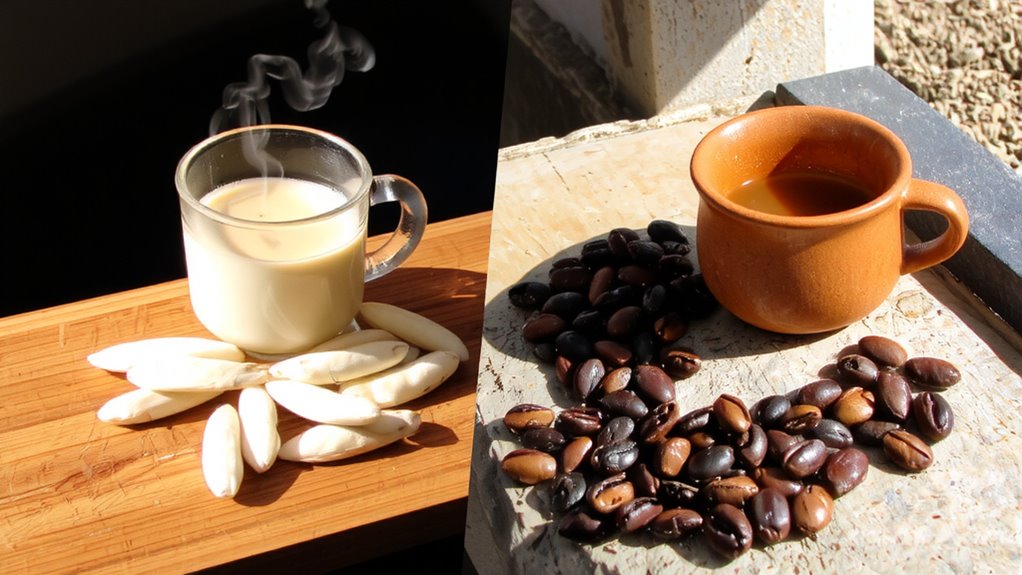
When it comes to flavor in the cup, Typica and Bourbon coffee beans each bring distinct profiles shaped by their genetics and growing conditions. You’ll notice Typica often delivers a clean, silky body with delicate notes of citrus and floral tones, especially when medium-roasted. It tends to have a lighter mouthfeel but a bright, sustained finish contrast that lingers nicely. Bourbon, on the other hand, usually offers a slightly heavier body-think tea-like or syrupy-often with sweet chocolate or nutty body notes. Its finish contrast is smoother and less sharp, making it a practical choice for espresso blends where balance matters. You’ll get more perceived sweetness in Bourbon, while Typica excels in clarity. For filter brewing, go with Typica to highlight acidity; for mixed methods or milk drinks, Bourbon’s rounded profile holds up better. Both work well with pour-over or batch brew-just match the bean to your taste goal.
Why Typica And Bourbon Taste Different (It’s In The Genes)?
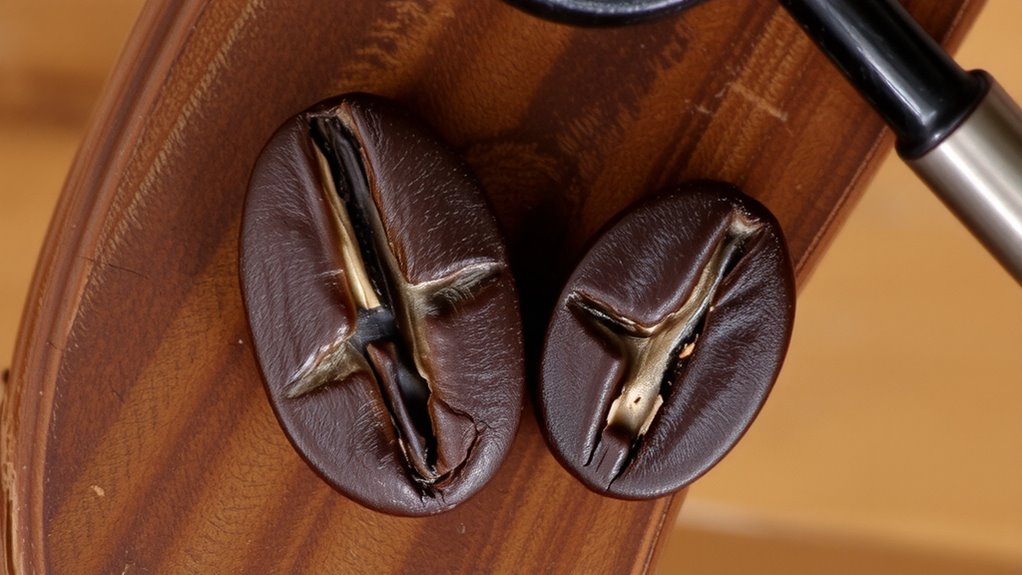
Though they share a common ancestor, Typica and Bourbon express different flavors in the cup largely because of genetic variations that affect sugar development, acidity, and bean structure. You can trace these differences to specific genetic markers that influence how each variety grows and ripens. These markers shape key metabolic pathways responsible for producing sugars, organic acids, and aromatic compounds in the bean. Bourbon tends to develop higher sugar content due to these pathways, often resulting in sweeter, more intense cups. Typica, while still sweet, channels energy differently, yielding more delicate profiles. These genetic traits are stable across environments, so you’ll notice consistent distinctions even when both are grown under similar conditions. Selecting between them isn’t just about terroir-it’s about understanding how inherent biology shapes flavor from farm to roast.
Typica’s Taste: Clean, Bright, And Silky-Sweet
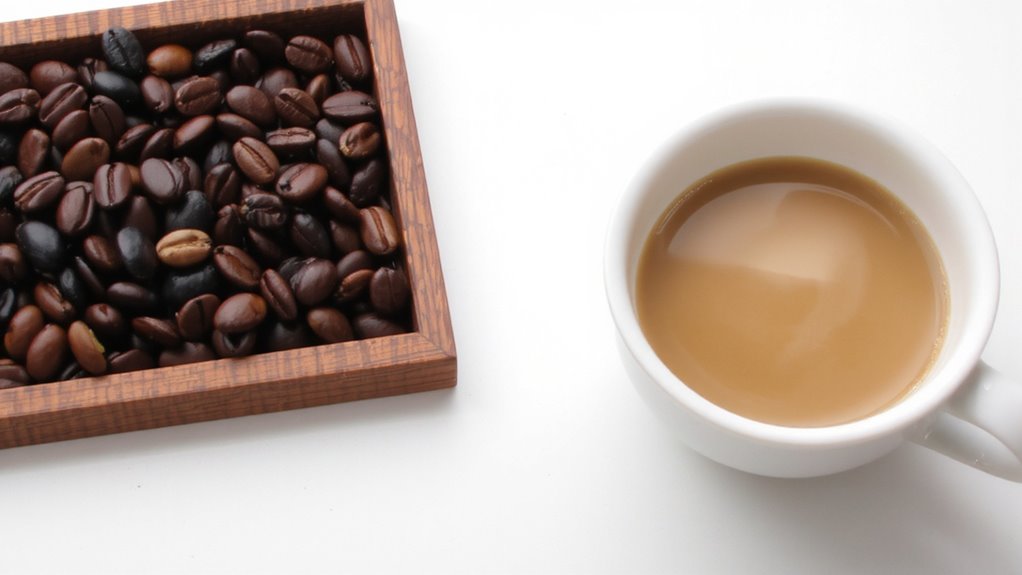
A hallmark of high-quality coffee, Typica delivers a cup defined by clarity and balance. You’ll notice its clean profile first-nothing muddies the flavors. Expect bright, delicate acidity that lifts the sip, not overwhelms it. Floral notes often emerge, especially when brewed light, giving subtle hints of jasmine or honeysuckle. The sweetness isn’t bold or syrupy; it’s silky-smooth, like raw honey dissolving in warm tea. To capture this, use a pour-over like the Hario V60 with water just off boil (200°F) and a medium-fine grind.
| Emotion | Flavor Experience |
|---|---|
| Calm | Soft floral notes |
| Focus | Clean taste |
| Pleasure | Silky-sweet finish |
| Clarity | Delicate acidity |
Bourbon’s Flavor: Rich, Fruity, And Caramelly Sweet
Bourbon beans bring a richer, more fruit-forward profile compared to Typica, with a sweetness that leans toward caramel rather than honey. You’ll often notice red fruit hints like cherry or berry, especially when brewed light to medium. Roasting them just to second crack brings out deep chocolate undertones without masking their complexity. If you’re using a pour-over or a flat-bottom dripper, expect clearer floral notes than with a cone-shaped V60. For espresso, a slightly darker roast enhances body and brings those caramelly tones forward. Unlike Typica’s delicate sugars, Bourbon holds up better under heat, making it a reliable pick for high-yield brewing. Just don’t over-extract-high pressure or long brew times can turn those chocolate undertones bitter. Keep grind size and water temperature steady to highlight balance.
How Terroir Changes Typica Vs Bourbon Coffee
Typica’s clean, honeyed sweetness and Bourbon’s fruity depth respond differently to the same growing conditions, so your choice of bean means considering where it’s grown just as much as how you brew it. Soil composition directly affects nutrient uptake, and Typica tends to be more sensitive to mineral variations, often producing lighter, more delicate cups in volcanic soils. Bourbon, meanwhile, handles diverse soils better and maintains its signature sweetness even in less ideal conditions. Microclimate influence plays a big role too-higher elevations with cool nights boost Typica’s acidity, while Bourbon thrives in slightly warmer microclimates, developing deeper fruit notes. You’ll notice Ethiopian Typica differs sharply from Peruvian, just as Honduran Bourbon tastes distinct from Réunion. If consistency matters, source beans from farms that document elevation, soil type, and regional climate data. That info gives you real control over flavor outcomes without guessing.
Roasting Tips For Typica’s Brightness Vs Bourbon’s Sweetness
Dial in your roast profile to match the bean’s natural tendencies-Typica rewards a gentle approach that preserves its bright, tea-like clarity, while Bourbon handles a bit more heat to deepen its caramelized sweetness. For Typica, use lighter heat application and shorter roast development to avoid flattening its delicate acidity; think City to early Full City. Too much heat too fast can scorch its nuanced notes. Bourbon, being denser, tolerates stronger heat application, especially in the mid-roast phase, helping build body and amplify sweetness through even roast development. Aim for Full City for best results. With both, monitor closely: drum roasters give better control than air roasters, but either works with careful tweaking. You’ll get the best Typica expression when roast development stops just before second crack. For Bourbon, pushing slightly into second crack can boost chocolatey depth without losing balance.
Typica Vs Bourbon: Which One Should You Brew?
What kind of cup are you after-clarity or richness? If you want bright, clean notes with floral and citrus tones, go for Typica. It rewards careful brewing: use a slightly lower brew temperature (195–200°F) and a medium-fine grind size to highlight its delicate acidity. Bourbon, on the other hand, delivers fuller body and caramel sweetness. It’s more forgiving, working well at standard temps (200–205°F) with a medium grind. Typica shines in pour-overs like the Hario V60, where clarity matters. Bourbon performs reliably in most methods, including Chemex and AeroPress. Your gear choice should match the bean’s strengths. If you’re using a grinder like the Baratza Encore, adjust the grind size precisely. Both beans need fresh roasts and consistent brew temperature. Pick based on flavor preference and method-not hype.
On a final note
You’ll find Typica delivers crisp brightness and silky sweetness, ideal for light roasts that highlight clarity. Bourbon offers deeper fruit and caramel notes, shining in medium roasts that boost body and sweetness. Both respond closely to terroir and roast style, so match Typica to clean brewing methods like pour-over, Bourbon to fuller methods like Kalita or espresso. Choose based on your preferred flavor profile and brewing setup.