Why Pre-Infusion Should Be Adjusted for Finely Ground Coffee
You should adjust pre-infusion for finely ground coffee because fine grinds absorb water fast and restrict flow. Too long or high-pressure pre-infusion can overextract, making espresso bitter or cause channeling. Limit it to 3–5 seconds and use 2–4 bars of pressure to guarantee even saturation without mashing the puck. Machines like the Decent Espresso or Rocket R58 let you fine-tune these settings. Spot issues early, and you’ll find how small tweaks lead to better shots.
Notable Insights
- Fine grinds absorb water quickly, requiring shorter pre-infusion to prevent overextraction.
- Low pre-infusion pressure (2–4 bars) ensures even saturation without compacting fines.
- Extended pre-infusion can make fine grinds mushy, increasing channeling risk.
- Properly adjusted pre-infusion promotes uniform puck expansion and consistent flow.
- Correct timing and pressure during pre-infusion reduce dry pockets and improve shot balance.
What Is Pre-Infusion and Why It Matters for Fine Grinds
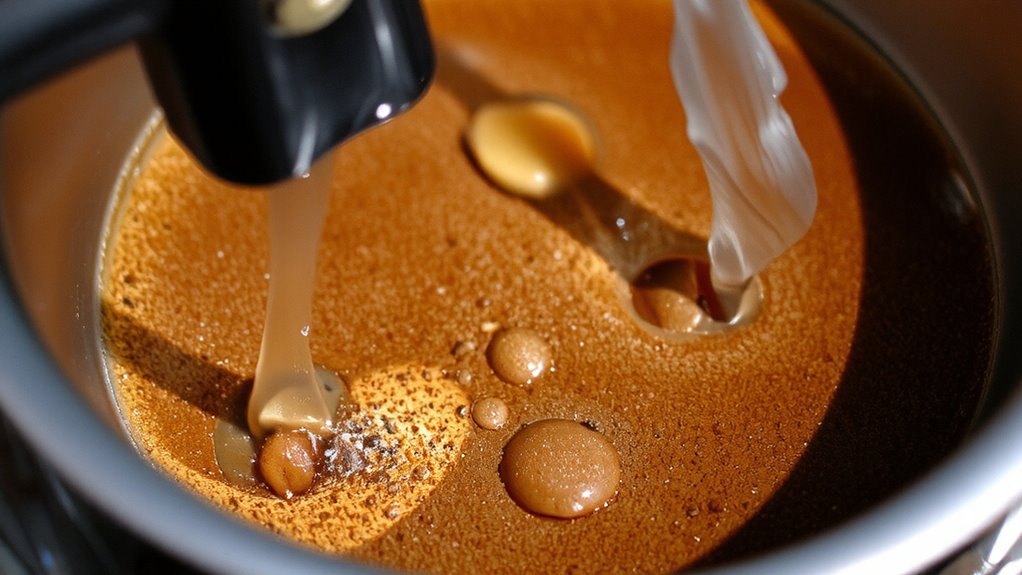
While you might be using a fine grind to extract more flavor from your espresso, skipping pre-infusion could lead to uneven extraction or channeling. Pre-infusion is the initial, low-pressure phase where a small amount of water wets the coffee puck before full pressure kicks in. This step allows for even water distribution and helps manage coffee expansion, reducing the risk of dry pockets or concentrated flow paths. Without it, water might force through weak spots, creating inconsistency. Machines like the Breville Dual Boiler or Rocket R58 include programmable pre-infusion, giving you control. It’s especially helpful with fine grinds, which pack tightly and resist even saturation. You’re not fixing a problem-you’re setting the stage for balanced extraction. Use it to improve shot stability, especially when dialing in new beans or working with dense, fresh roasts.
Why Fine Grinds Cause Bitterness or Clogging
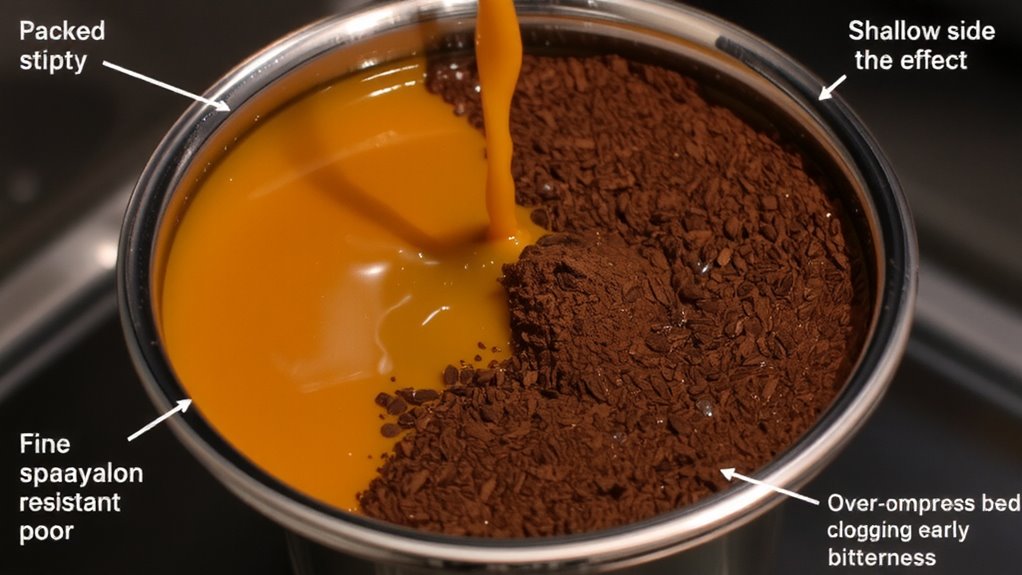
Fine grinds can quickly turn your espresso from rich and balanced to bitter or even undrinkable. When grounds are too fine, water struggles to flow evenly, increasing overextraction risks and pulling harsh, bitter compounds. You’re also more likely to see channel formation, where water exploits weak paths through the puck, leaving some areas under-extracted and others scorched. This imbalance ruins flavor and consistency. Clogging becomes a real issue, especially on machines with lower pump pressure or restricted flow, slowing shot time and increasing maintenance. Investing in one of the best espresso machines can significantly improve flow control and pre-infusion accuracy, helping mitigate these issues.
| Issue | Result |
|---|---|
| Overextraction risks | Bitter, astringent espresso |
| Channel formation | Inconsistent flavor, spotty puck wash |
Adjusting grind size just slightly can prevent these problems. Don’t assume finer is better-precision matters.
Shorten Pre-Infusion Time for Fine Grinds
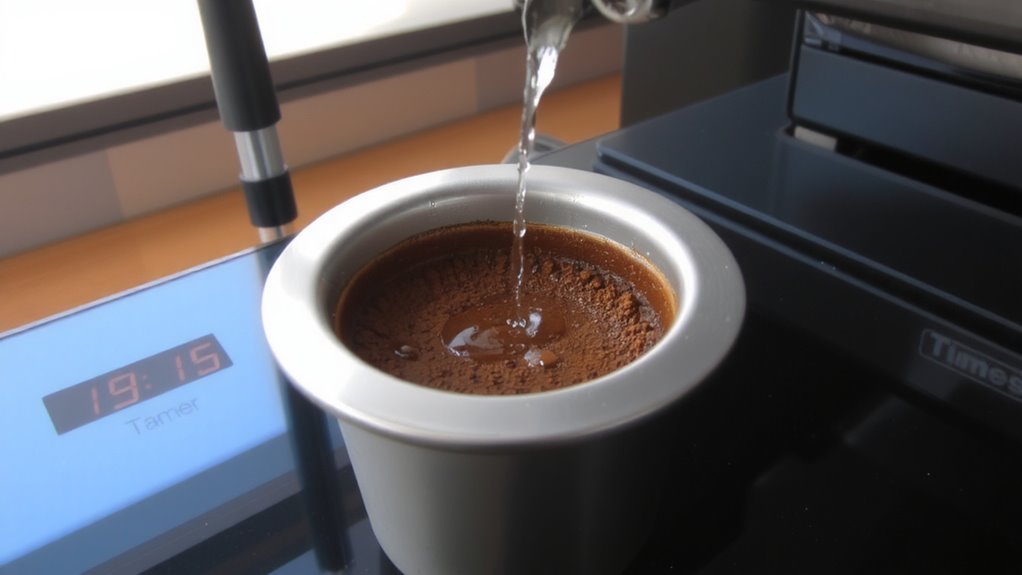
Because fine grinds absorb water quickly and swell early in the brew cycle, shortening pre-infusion time helps prevent overextraction and clogging. You want your grind consistency tight and uniform-any fines can compact too fast if pre-infusion lasts too long. That’s when you run into water channeling, where water bypasses dense zones and extracts unevenly. By reducing pre-infusion to 3–5 seconds, you let the puck saturate just enough without turning mushy. Machines like the Slayer or Decent Espresso let you fine-tune this easily. With standard gear, try stopping pre-infusion as soon as you see drip-through. It’s a small tweak, but it improves shot stability, especially with dense, fine grinds used for espresso. Too long and you risk sourness turning to bitterness. Keep it short, sharp, and matched to your grind size.
Use Lower Pre-Infusion Pressure for Fine Grinds
If you’re working with finely ground coffee, starting your pre-infusion at a lower pressure-around 2 to 4 bars-gives the puck a gentler start and reduces the chance of fines being forced into tight clusters too soon. This slow ramp-up helps maintain better pressure balance across the bed, letting water distribute evenly before full pump pressure hits. Without this control, you risk immediate flow restriction, channelling, or uneven extraction. Machines with programmable pressure profiles, like the Rocket R58 or Decent Espresso, let you set this precisely. Even with standard gear, briefly cracking the portafilter handle or using a manual lever can mimic low-pressure starts. The goal isn’t to eliminate pressure fast but to delay it just long enough for the coffee to swell and stabilize. Lower pre-infusion pressure isn’t just helpful-it’s often necessary for fine grinds to avoid restricting flow too early and locking up your shot.
Spot the Signs of Too-Long Pre-Infusion
How do you know when your pre-infusion’s gone too long? You’ll start seeing clear signs like overextraction symptoms-your shot tastes bitter, dry, or harsh, with a lingering unpleasant finish. That’s because extended pre-infusion on fine grinds can extract too much too soon, especially if water sits too long before main pressure kicks in. You might also notice uneven saturation, where some grounds look waterlogged while others stay dry. This channeling leads to inconsistent flavor and wasted coffee. If your espresso crema is dark with blond streaks or your shot pulls faster than expected after a long pre-infusion, timing’s likely off. Machines like the Linea Mini or Profitec Pro allow precise control, so tweak settings in one-second increments. Watch the puck after brewing-soupy or patchy grounds confirm the problem. Adjusting duration helps, but don’t ignore grind size and distribution first.
Adjust Pre-Infusion for Fine Grinds: Step-by-Step
What’s the sweet spot for pre-infusion when you’re working with fine grinds? Start by reducing pre-infusion time to 5–7 seconds-too long risks channeling, too short hurts taste consistency. Use a scale and timer to monitor each shot. Fine grinds, like those for espresso, compact easily, so gentle water pressure at the start improves flow stability. Begin with low pressure (around 2–3 bars) before ramping up. If your machine allows, adjust pre-infusion duration in 1-second increments and taste the results. Machines like the Decent EP5 or Profiteer PB2 give you this kind of control. Watch for even puck saturation-dry spots mean it’s too short. If flow sputters or stalls, your grind might be too fine or pre-infusion too aggressive. Adjusting step-by-step guarantees better extraction and repeatable flow stability, leading to more consistent, balanced shots day after day.
On a final note
You should tweak pre-infusion when using fine grinds to avoid clogging and bitterness. Shorten the time and lower the pressure-many machines, like the Breville Duo Temp, let you adjust this easily. If you see slow drip or sour notes, it’s a sign. Proper tweaks lead to balanced shots. Skip long pre-infusions here; they work better with coarser beans. Adjusting helps you pull better espresso consistently.