Why Freshly Ground Coffee Makes a Noticeable Difference in Taste and Aroma
You get more flavor and aroma with freshly ground coffee because grinding releases hundreds of volatile compounds that start fading fast. Pre-ground loses these notes within minutes, leaving flat, dull brews. Whole beans stay fresher longer, and grinding just before brewing locks in richness. A burr grinder gives even particles for better extraction. If you want to know how small changes in grind or gear affect your cup, the details matter more than you think.
Notable Insights
- Freshly ground coffee retains volatile compounds that rapidly escape after grinding, preserving rich aroma and flavor.
- Aroma intensity peaks immediately post-grind, enhancing sensory experience during brewing and drinking.
- Whole beans protect flavor compounds from oxidation, while pre-ground coffee degrades quickly upon exposure to air.
- Consistent grind size from burr grinders optimizes extraction, balancing flavor and avoiding bitterness or sourness.
- Brewing immediately after grinding prevents staling, ensuring maximum freshness, richness, and origin character in the cup.
Why Freshly Ground Coffee Has More Flavor
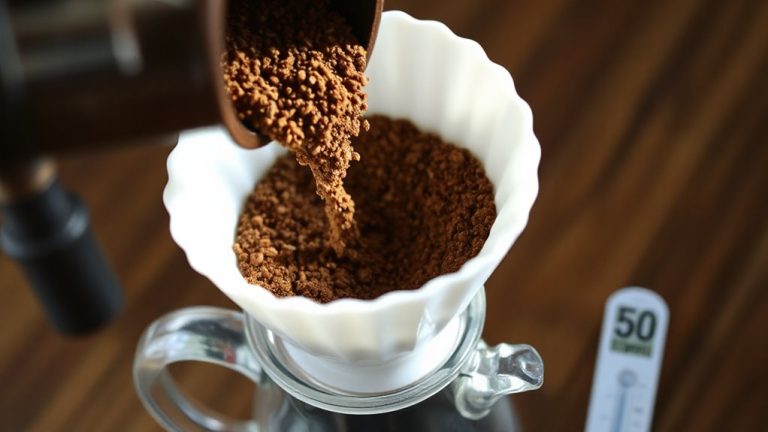
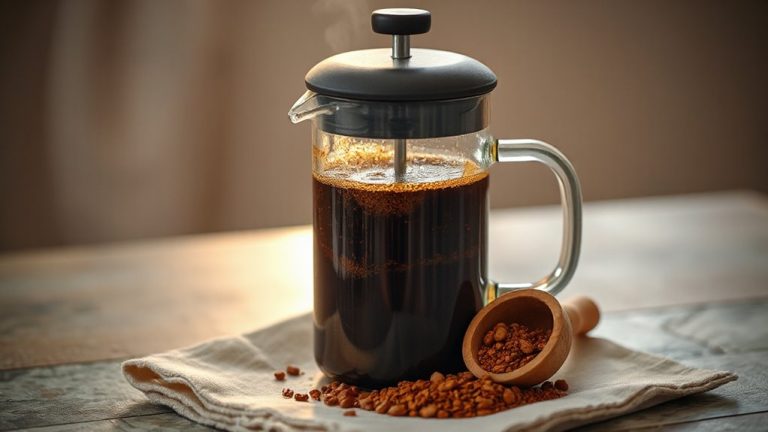
Flavor starts the moment you grind. Once the bean is cracked open, volatile compounds begin escaping immediately, which means aroma intensity peaks right after grinding. That’s why you want to brew right away-waiting even 30 seconds can noticeably reduce richness. Pre-ground coffee loses too much too fast, no matter how it’s stored. For true flavor preservation, grind beans just before brewing using a burr grinder, which delivers consistent particle size. Inconsistent grinds, like those from blade grinders, extract unevenly, muting flavor. A good burr model, like the Baratza Encore, helps maintain both aroma intensity and balanced taste. Drip machines with built-in grinders often skimp on grind quality, so standalone units are better. You don’t need high-end gear, but you do need consistency. Fresh grinding isn’t about luxury-it’s the baseline for getting what the coffee has to offer. The best coffee grinders combine durability, grind consistency, and ease of use to elevate every cup.
What Happens When Coffee Goes Stale
Once you grind coffee, the clock starts ticking-exposure to air kicks off staling reactions that degrade quality within minutes. The oxidation process begins immediately, breaking down essential oils and volatile compounds responsible for aroma and flavor. This leads to noticeable flavor degradation, leaving your brew dull and flat. Light, heat, and moisture speed up this decline, so even a few hours post-grind make a measurable difference.
| Factor | Effect on Ground Coffee |
|---|---|
| Air | Triggers oxidation process |
| Light | Accelerates flavor degradation |
| Heat | Speeds up staling reactions |
| Moisture | Promotes mold and off-flavors |
| Time | Reduces aroma and complexity |
You’ll get the best results by grinding just before brewing. Pre-ground coffee might be convenient, but it sacrifices freshness fast-especially if it’s been sitting on a shelf. For quality, always opt for whole beans and grind them yourself.
Whole Bean vs. Pre-Ground: The Taste Test
A side-by-side taste test between whole bean and pre-ground coffee reveals a clear difference, even to those who aren’t baristas. You’ll notice the whole bean version delivers a richer aroma and more distinct flavor notes, thanks to better aroma preservation. Once ground, coffee loses volatile compounds quickly, dulling its scent and taste. Pre-ground often sits for weeks, even months, before you brew it-this means most of its original character, tied to its bean origin, is already gone. Whole beans, if stored properly, keep those qualities intact until you grind them. If you’re using a drip machine or French press, grinding just before brewing makes a noticeable difference. Sure, pre-ground is convenient, but if you care about flavor clarity and origin authenticity, whole bean is the practical choice. A $20 blade grinder is enough to start seeing benefits. For those on the go, a portable coffee maker with grinder can deliver fresh, flavorful coffee anywhere.
How Grind Size Affects Your Brew
When you’re brewing coffee, getting the grind size right matters just as much as starting with good beans, because it directly affects how water extracts flavor during brewing. Too fine, and your coffee tastes bitter from over-extraction; too coarse, and it comes out weak and sour. Different methods need different sizes-espresso demands a fine grind, while French press works best with coarse. Consistency is key: uneven particle distribution leads to some bits over-extracting while others under-extract. That’s why burr grinders beat blade grinders-they deliver better grind consistency. Poor particle distribution creates unbalanced flavor, no matter how fresh the beans. For drip machines, aim for medium; for pour-over, go medium-fine. Match the grind to your brewer’s contact time and flow rate. When your grind size and consistency are on point, you get even extraction and a cleaner, fuller cup every time. A high-quality coffee grinder for Moccamaster ensures optimal grind uniformity tailored to drip brewing.
How to Start Grinding Fresh Coffee at Home
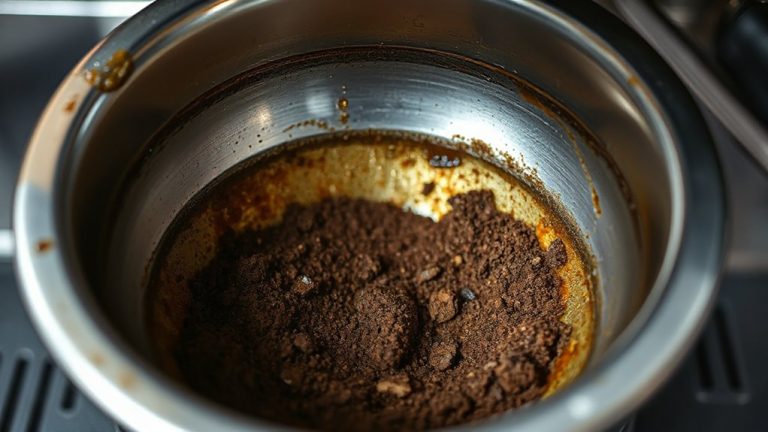
What’s the easiest way to start grinding fresh coffee at home without overspending or overcomplicating things? Begin with a simple hand grinder or an entry-level electric burr grinder-both offer consistent results. Pair it with whole beans stored in an airtight container away from light and moisture. Good storage solutions preserve flavor and extend freshness. Clean your grinder monthly to prevent oil buildup; this equipment maintenance guarantees better taste and longevity. Use this quick reference to compare options:
| Grinder Type | Pros |
|---|---|
| Hand burr | Quiet, portable, affordable |
| Electric burr | Fast, consistent, convenient |
| Blade | Cheap, widely available |
| Manual ceramic | Durable, low heat build-up |
| Entry-level burr | Balanced cost and performance |
Start small, focus on freshness, and adjust as you go.
Why Your Grinder Matters More Than You Think
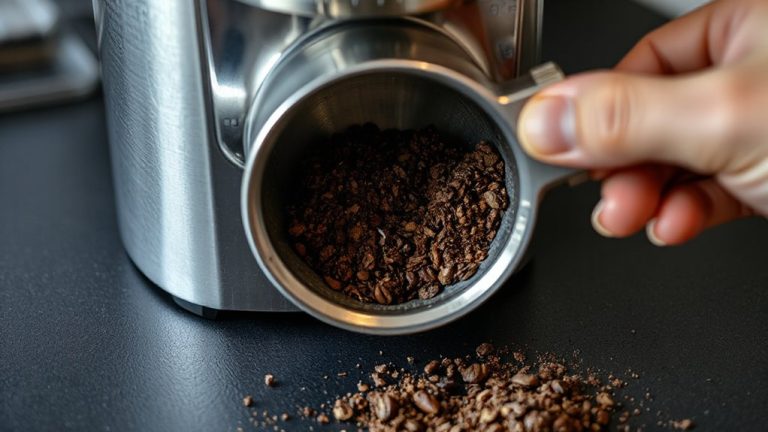
If you’re still using pre-ground coffee, you’re missing the biggest factor in flavor control-your grinder. Bean quality means little if your grind consistency is off. Uneven particles extract at different rates, leading to bitter or weak coffee. Blade grinders, while cheap, chop beans unevenly and create heat that dulls aroma. A burr grinder gives you uniform grounds, letting you match the grind to your brew method-coarse for French press, fine for espresso. This precision improves extraction and highlights the coffee’s true flavors. Investing in a decent burr grinder, like the Baratza Encore or Timemore C2, makes a noticeable difference. It’s not about fancy gear-it’s about control. Freshly grinding right before brewing locks in aroma and oils that go stale in pre-ground coffee. Your brew is only as good as your grinder. Treat it like a key ingredient, because it is.
On a final note
You’ll notice better flavor and aroma when you switch to freshly ground coffee. Once ground, coffee loses aroma and complexity fast. Whole beans stay fresh longer, so grinding just before brewing preserves oils and volatiles. A burr grinder, like the Baratza Encore, gives even particles for balanced extraction. Blade grinders create uneven grounds, leading to bitter or weak coffee. For tastier results, invest in whole beans and grind at home-your brew method depends on consistent grind size, and this simple step delivers the most impact.