How to Adjust Grind for a Balanced Ristretto With High Sweetness and Low Bitterness
Use a fine grind, just short of powdered sugar, to slow water flow and boost sweetness in your ristretto. If the shot pulls under 18 seconds and tastes sour, your grind’s too coarse-adjust finer in 0.5-click increments. If it takes over 30 seconds and turns bitter, go coarser. Tamp with 30 pounds of pressure and distribute evenly to prevent channeling. Fresh beans and a quality burr grinder like the Baratza Sette or Eureka Mignon make a real difference in control and consistency. You’ll find how small tweaks fine-tune flavor.
Notable Insights
- Use a fine grind similar to powdered sugar to slow extraction and enhance sweetness in ristretto.
- Adjust grind in 0.5 to 1 click increments to hit a 15–18 second shot time for balanced flavor.
- Apply 30 pounds of even tamping pressure to prevent channeling and ensure uniform extraction.
- Distribute grounds evenly using an OCD or twist-and-pull method for consistent flow and reduced bitterness.
- Track grind settings, yield, and time in a log to dial in optimal sweetness and minimize sourness or bitterness.
Why Grind Size Is Critical for Ristretto
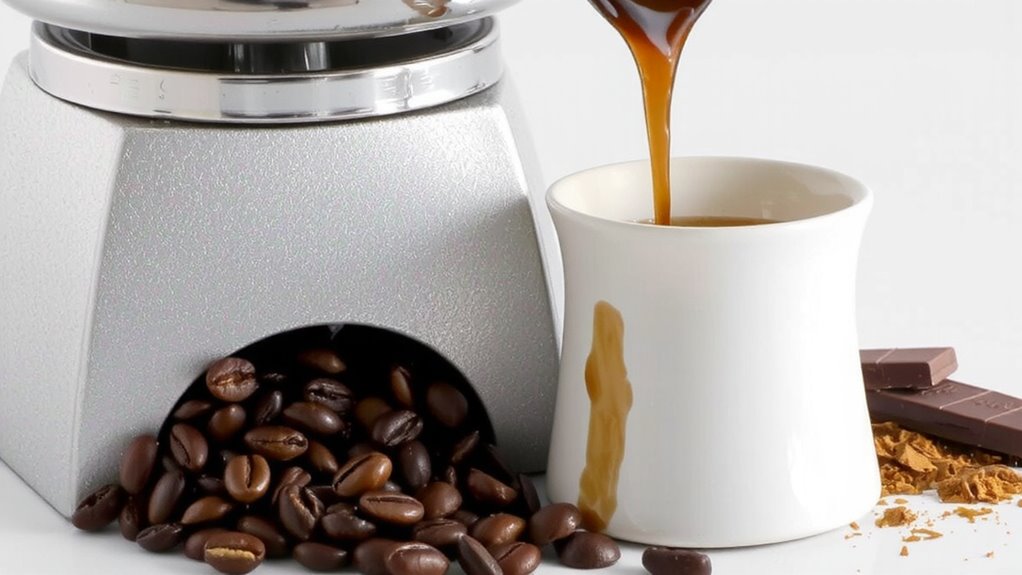
While you might think the type of coffee bean matters most, getting the grind size right is actually what makes or breaks a ristretto. Too coarse, and water pressure rushes through too fast, pulling little flavor. Too fine, and flow stops, risking clogs or bitter over-extraction. A consistent, fine grind-similar to table salt-creates resistance, letting water extract rich sweetness in the short brew time. Freshly grinding moments before brewing preserves bean freshness, ensuring peak aromatics and acidity. Pre-ground coffee loses flavor quickly, which dulls your shot. Use a burr grinder like the Baratza Sette 270 or Eureka Mignon for precision. Blade grinders won’t cut it-they create uneven particles. With ristretto, every variable counts: grind size directly controls extraction under high pressure. Match it to your machine’s pump pressure and dose, and you’ll pull sweeter, more balanced shots reliably. For those preferring hand grinding, a high-quality manual espresso grinder offers excellent control and consistency.
Is Your Ristretto Grind Too Coarse or Too Fine?
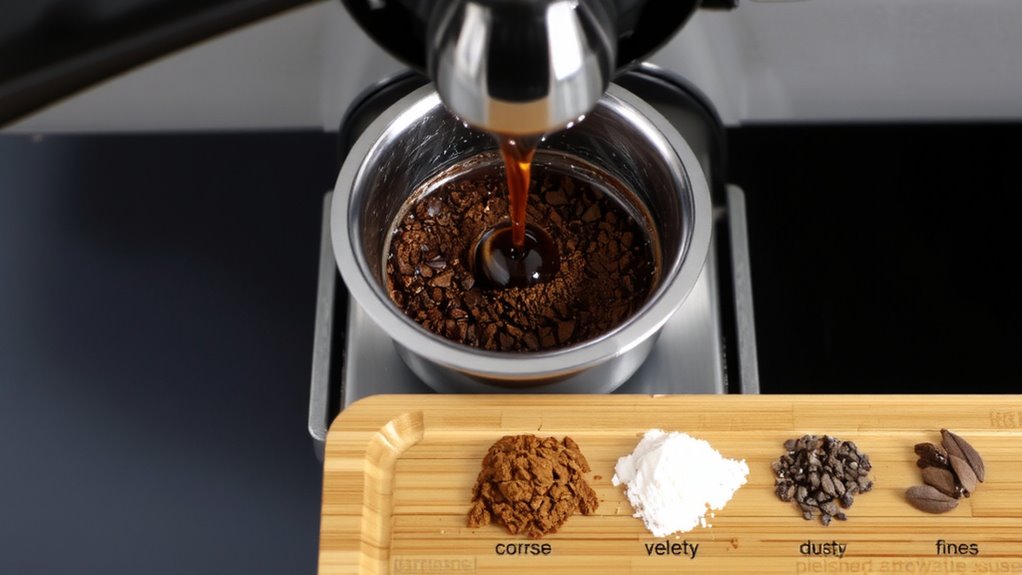
How can you tell if your ristretto grind is off? If your shot pulls too fast with weak flavor, your grind’s likely too coarse. If it crawls and tastes harsh, it’s probably too fine. Bean age and grinder temperature both play roles here. Older beans lose gasses, needing a slightly finer grind, while fresh ones may require a coarser setting. Grinder temperature from long sessions can subtly shift particle size, affecting consistency. Choosing the right espresso grinder can make a significant difference in achieving consistent grind size and optimal extraction.
| Issue | Too Coarse | Too Fine |
|---|---|---|
| Flow Rate | Fast (under 18 sec) | Slow (over 30 sec) |
| Flavor | Sour, thin, low sweetness | Bitter, astringent, dry |
| Best Fix | Adjust finer; check bean age & grinder temperature | Adjust coarser; let grinder cool |
How to Dial In Your Grinder for Balance
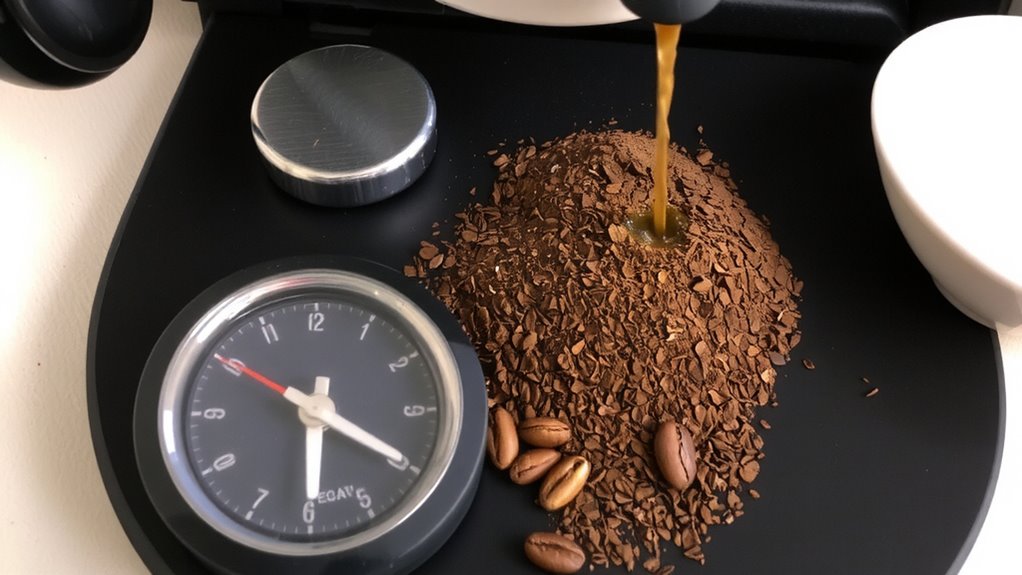
Since flavor balance hinges on precise grind settings, dialing in your grinder matters more than most realize. Start with small adjustments-0.5 to 1 click finer or coarser-and pull test shots after each change. Consistency in tamping pressure is essential; apply 30 pounds of pressure evenly to avoid channeling. Uneven extraction often stems from poor distribution technique, so use a simple twist-and-pull or OCD-style leveling tool to spread grounds uniformly. If your shot runs too fast and tastes weak, go finer. If it drips slowly and turns bitter, adjust coarser. Always let your grinder settle after changes-especially blade grinders, which generate heat and inconsistency. Burr grinders like the Baratza Sette or Eureka Mignon give better control. Track your adjustments in a log, noting grind setting, yield, and time. That way, you refine your process methodically-no guesswork. For reliable performance under $1000, consider models featured in the best espresso grinders under $1000 roundup.
What the Ideal Ristretto Grind Looks Like
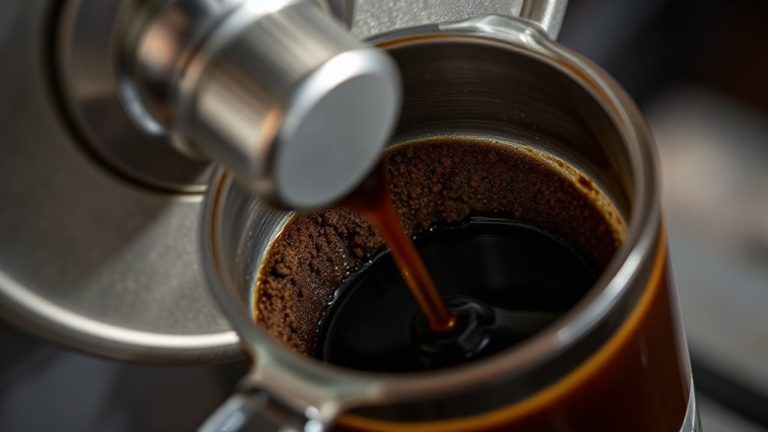
Though you’re aiming for a bolder, sweeter shot, the ideal ristretto grind is noticeably finer than espresso-think powdered sugar versus coarse sand. This fine grind slows water flow, allowing extraction of rich sweetness without pulling bitter compounds. You’ll need consistent tamping pressure-around 30 pounds-to compact the grounds evenly and prevent channeling. Too light, and water rushes through weak spots; too hard, and you risk over-extraction. Pair this with stable water temperature, ideally between 195°F and 200°F, to avoid scalding the coffee or underdeveloping flavors. Lower temps can mute acidity but may reduce sweetness if the grind isn’t fine enough. The goal is a 15–18 second shot with thick, syrupy flow and a generous crema. Your grinder’s burrs must be sharp and aligned-blunt ones generate uneven particles, hurting control. Adjust incrementally, then evaluate taste, not just time.
Keep Your Grind Consistent for Every Shot
You’ll almost always get better results when your grind stays consistent shot after shot. Even with the right grind size, inconsistency introduces variables that hurt sweetness and increase bitterness. Your tamping pressure and distribution technique must stay uniform to guarantee even extraction. A few degrees of grind variation or slight tamp tilt can unbalance a shot.
| Factor | Why It Matters | Tip |
|---|---|---|
| Grind Setting | Affects flow rate and extraction | Use marked settings on your grinder |
| Tamping Pressure | Impacts puck density | Apply 30 lbs evenly; use a guide |
| Distribution Technique | Prevents channeling | Try the OCD or tapping method |
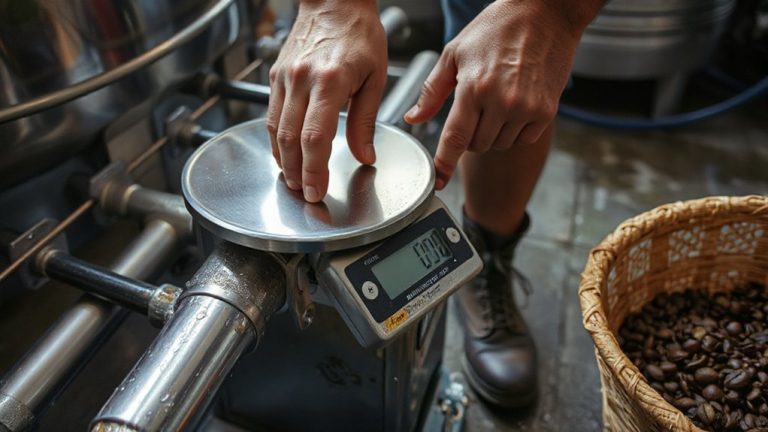
| Dose Consistency | Stabilizes brew ratio | Weigh beans per shot (e.g., 18g) |
Even small changes add up-stay precise, stay repeatable.
On a final note
You’ll know your ristretto grind is right when the shot runs 15–20 seconds for 18–22 grams out, tasting sweet without harsh bitterness. Too coarse? It’ll be weak and sour-adjust finer. Too fine? It’ll crawl and turn bitter-go coarser. Use a burr grinder like the Baratza Sette for consistency. Clean it weekly to prevent clogs. Small changes matter; tweak in small steps and taste each shot. Fresh beans help, but grind balance makes the difference.