Laurina Coffee: 40% Less Caffeine, Jasmine-Honey Flavor Notes
You’re seeing Laurina gain traction in low-caffeine specialty coffee because it’s naturally 40% lower in caffeine than regular Arabica-no processing needed. It delivers clean, sweet flavors like jasmine and citrus, best brought out with light roasting and gentle brew methods like pour-over. Its rarity comes from low yields and farming challenges, making it costly. Still, roasters using Loring machines or small batches can highlight its delicate profile. You’ll find it’s becoming a go-to for those wanting less caffeine without losing complexity. There’s more to how it’s shaping the market.
Notable Insights
- Laurina is a naturally low-caffeine Arabica variety with 40% less caffeine, ideal for specialty coffee drinkers seeking reduced caffeine without flavor loss.
- Its unique floral and sweet flavor profile, including jasmine and honey notes, distinguishes it in premium low-caffeine specialty markets.
- Limited cultivation due to low yields and disease sensitivity restricts supply, enhancing its rarity and market exclusivity.
- Laurina thrives in high-altitude, controlled environments, primarily grown in Réunion, Colombia, and Hawaii, supporting niche sustainable production.
- Precise light roasting preserves its delicate acidity and complexity, positioning Laurina as a premium option in natural low-caffeine specialty coffee segments.
What Is Laurina Coffee and Why Is It Trending?
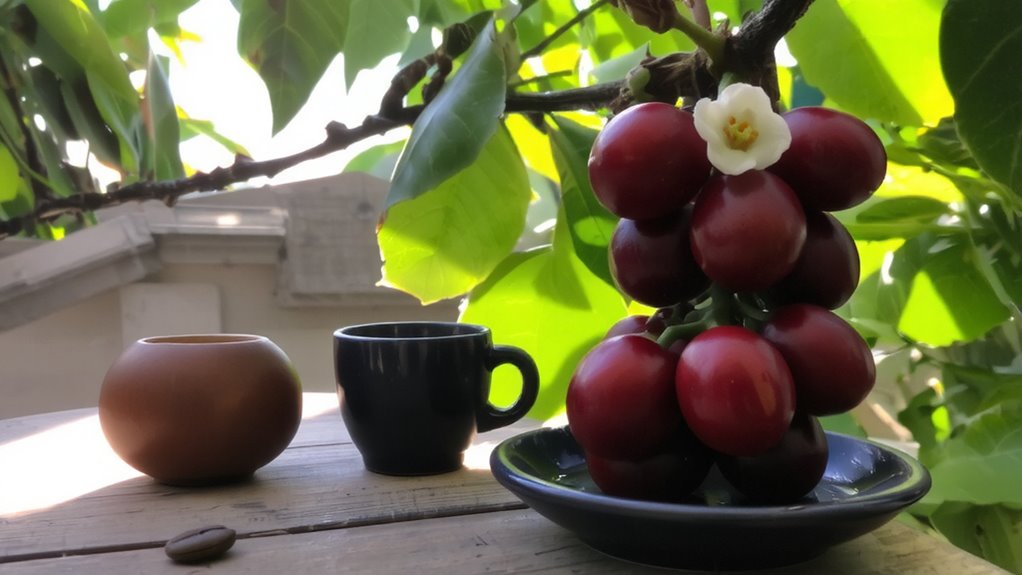
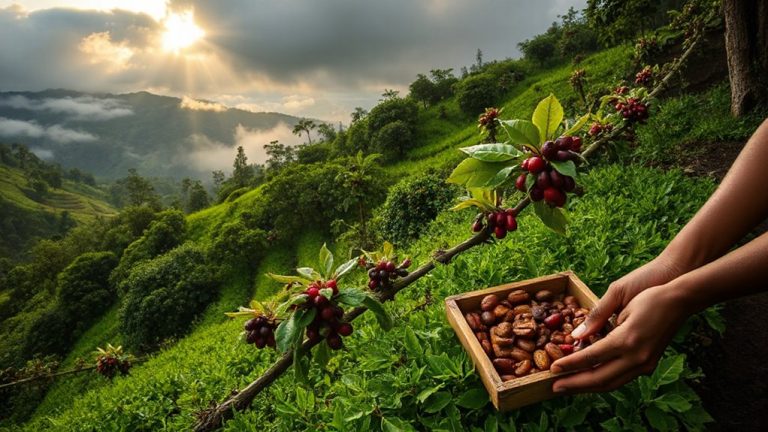
What if you could enjoy a truly low-caffeine coffee without turning to processed decaf? You can-with Laurina. Also known as Bourbon Pointu, this rare Arabica variety naturally contains about 40% less caffeine than standard arabica beans. Its historical origins trace back to Réunion Island (formerly Bourbon), where it was first identified in the 18th century. Though production declined due to low yield and disease sensitivity, recent interest in naturally low-caffeine options has revived it. Today, limited global cultivation exists in places like Réunion, Colombia, and Hawaii, often in high-altitude, specialty-focused farms. Laurina grows slowly and requires precise conditions, making it costly and scarce. Yet, its clean, sweet profile with citrus and floral notes appeals to discerning palates. Compared to standard low-acid or decaf options, Laurina offers a distinct alternative-not chemically treated, but naturally nuanced. It’s not widely available, but when you find it, brew it like any specialty coffee: pour-over or espresso works best.
Laurina’s Natural Low Caffeine Advantage
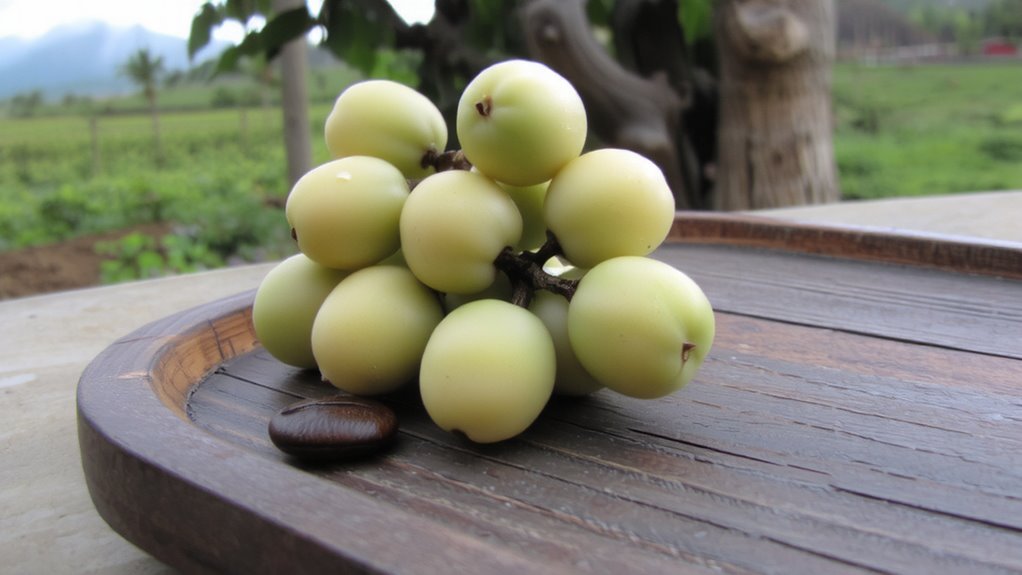
Laurina’s edge lies in its genetics-a rare mutation that slashes caffeine content by roughly 40% compared to standard Arabica beans, all without chemical processing. You’re getting lower caffeine naturally, thanks to genetic mutations that suppress caffeine synthesis while maintaining cup quality. That means no lab work or artificial stripping-just a bean that evolved differently. This trait makes Laurina ideal if you’re sensitive to caffeine but still want a flavorful, authentic coffee experience. Because it grows like traditional Arabica, it supports sustainable cultivation with lower chemical input needs and fits into existing farming systems. However, yields are typically smaller, so supply stays limited. You’ll likely pay more per pound, but the trade-off is a cleaner stimulant profile and eco-friendly production. Look for transparent sourcing to guarantee you’re getting true Laurina, not blended or decaf imposters. Brewing methods don’t need adjusting-use your usual gear and grind settings for reliable results. For those seeking chemical-free decaf alternatives, the Swiss Water Process offers a similarly clean and natural decaffeination method.
The Sweet, Floral Flavor of Specialty Laurina
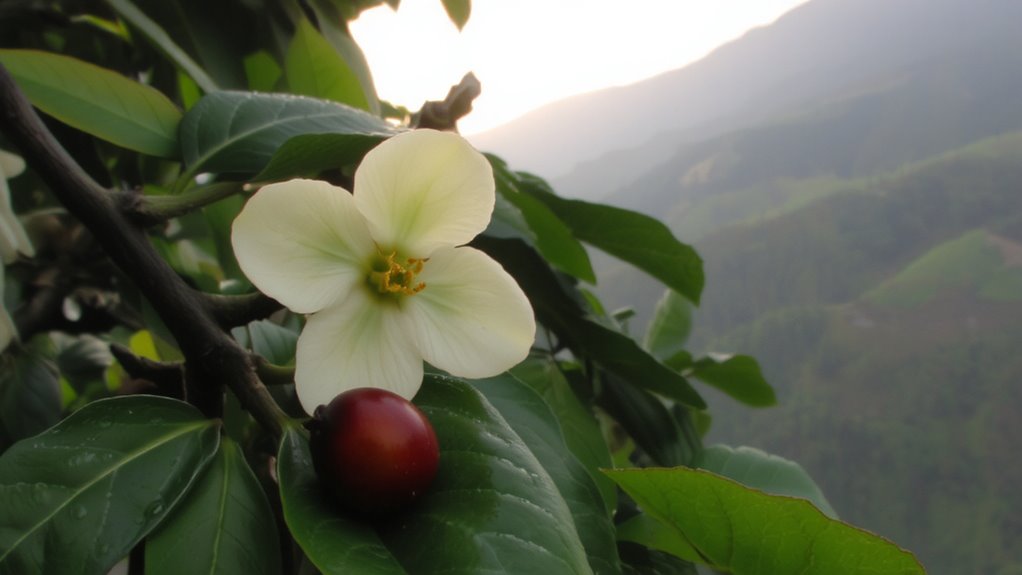
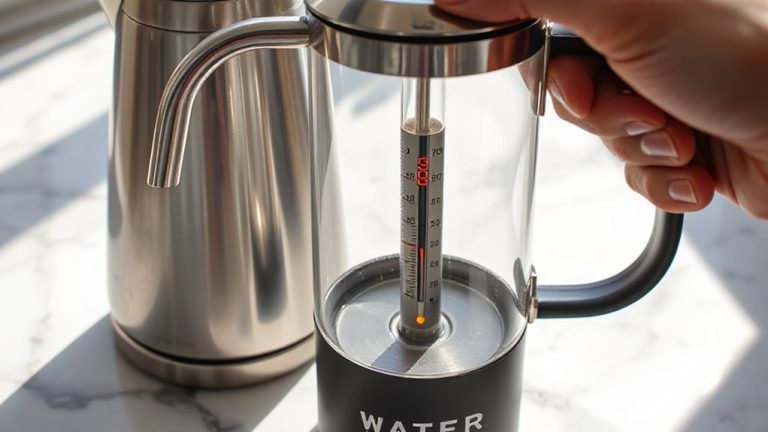
A smooth, aromatic profile defines this rare bean, with notes of jasmine, citrus blossom, and raw honey that shine especially bright in lighter roasts. You’ll notice the floral notes are distinct but delicate, so avoid dark roasting-it dulls their complexity. The sweetness intensity is higher than most arabicas, making it ideal for filter methods like pour-over or Chemex that highlight clarity. Use water just off boil (195–205°F) and a medium-fine grind to extract balance without bitterness.
| Flavor Aspect | Laurina Characteristic |
|---|---|
| Floral notes | Pronounced, jasmine-forward |
| Sweetness intensity | High, honey-like |
| Acidity | Bright, citrusy |
| Body | Light to medium |
This profile thrives with precision brewing. A gooseneck kettle and scale improve consistency. You’ll get the most nuance from freshly roasted, high-quality batches brewed within two weeks of roast.
Why Laurina’s Low Yield and Fragility Make It Rare
That delicate floral character you taste in specialty Laurina doesn’t come easy-it’s the result of a plant that’s naturally low-yielding and highly sensitive to its environment. You’ll find Laurina struggles where other varieties thrive, making it a tough choice for most growers. It’s susceptible to disease, especially coffee leaf rust, and needs precise conditions to survive. Pests and temperature swings hit it harder than standard arabica, requiring more care and resources. Because of its genetics, it has a limited harvest potential-often producing less than half the beans of high-yield varieties. Farmers who grow it do so despite lower returns, not because of them. That rarity isn’t accidental; it’s built into the plant. You’re paying for scarcity shaped by biology and risk, not just flavor. Efforts to stabilize it are ongoing, but for now, expect low volumes and high value.
How Roasters Highlight Laurina’s Delicate Profile
While you might be tempted to treat Laurina like any other specialty coffee, roasting it well means adjusting your approach to protect its subtle sugars and floral notes. You’ll need precise roasting techniques-think lower temperatures and shorter development times-to avoid scorching its delicate structure. Many roasters use profile roasters like the Loring or Probat to maintain control, ensuring even heat without overexposure. Fast ramps and early drops help with flavor preservation, locking in its jasmine, citrus, and brown sugar tones. Going too dark or too fast strips complexity, so monitor drop temps closely-usually best between 385°F and 400°F. Unlike hardier beans, Laurina can’t recover from aggressive roasting, so consistency matters. Batch size also plays a role; smaller loads reduce variability. Whether you use a drum or fluid bed roaster, prioritize stability and responsiveness. Each choice impacts the final cup, making attention to detail non-negotiable for showcasing Laurina’s true character. For those preparing for off-grid brewing situations, having a reliable portable coffee maker can ensure access to specialty coffee even during emergencies.
Why Laurina Appeals to Low-Caffeine Coffee Lovers
Roasting Laurina with care reveals its most valuable trait for low-caffeine coffee drinkers-its naturally reduced caffeine content, typically around 0.4% to 0.7%, far below the 1.2% to 1.5% in most arabica beans. This trait comes from a rare genetic mutation that suppresses caffeine production, making it ideal if you’re sensitive to stimulants or want to cut back without sacrificing flavor. Unlike decaf processed coffee, Laurina retains its original taste profile since no chemical or water-based decaffeination is needed. You’ll often find bright, sweet notes like citrus and sugar, similar to high-end arabicas. However, the same genetic mutation that limits caffeine also causes cultivation challenges-it grows slowly, yields less, and is more vulnerable to disease. That’s why Laurina is rare and often costs more. Still, if you’re seeking naturally low-caffeine coffee with quality taste, Laurina’s a solid, science-backed choice worth trying.
Laurina’s Role in the Future of Specialty Low-Caffeine Coffee
If you’re looking for a specialty coffee that delivers on both flavor and naturally low caffeine, Laurina could be a key player in the future of the market. Its unique genetics offer around 30–40% less caffeine than arabica, without needing decaffeination. Unlike methods relying on genetic engineering, Laurina is naturally occurring, making it appealing for clean-label markets. It also shows strong climate adaptation, thriving in warmer zones where other varieties struggle. Farmers may find it a sustainable option as growing conditions shift.
| Feature | Benefit |
|---|---|
| Natural low caffeine | No chemical processing needed |
| Smooth, sweet flavor | Appeals to light roast lovers |
| Climate adaptation | More resilient in warming regions |
Watch for Laurina in high-end blends where flavor and function matter.
On a final note
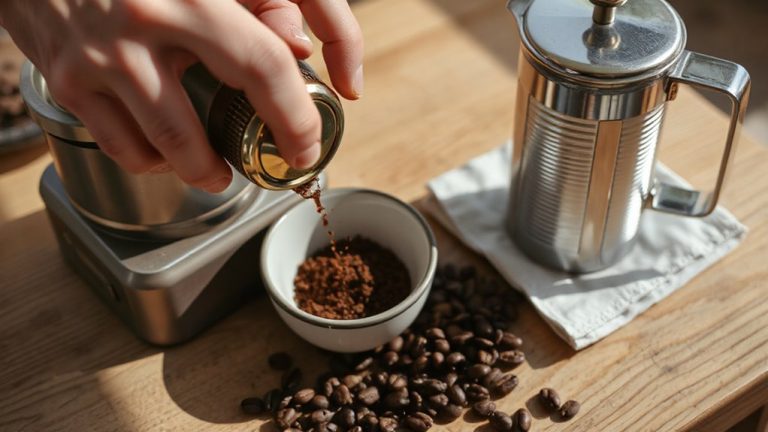
You’ll want a precise grinder like the Baratza Encore to preserve Laurina’s delicate sweetness, since its low caffeine and floral notes fade easily. Use a gooseneck kettle for controlled pour-over brewing-V60 works well. Avoid dark roasts; light to medium lets the tea-like clarity shine. Because Laurina beans are fragile and rare, store them airtight and use within weeks. It’s not just low-caffeine-it’s a specialty product that demands careful handling to deliver on its promise.