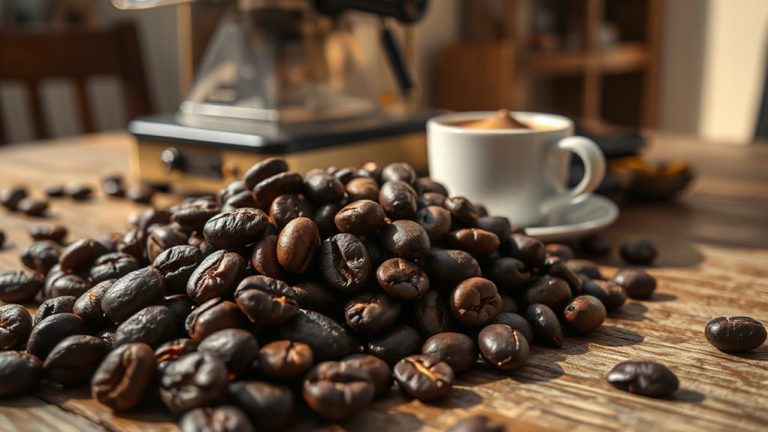
How to Identify and Fix a Grind That’s Too Coarse for a 25-Second Espresso Pull
If your espresso pulls in 25 seconds but tastes weak and sour, your grind is likely too coarse. Water zips through, under-extracting the shot. Look for thin, watery texture, low crema, and fast flow. Fix it by adjusting your grinder finer in small steps-especially if you’re using a blade grinder or an old burr model. Pair the right dose and tamp pressure to avoid channeling. With consistency, you’ll balance extraction and improve flavor every time.
Notable Insights
- A coarse grind causes fast extraction, often under 20 seconds, leading to weak, sour espresso.
- Look for thin, watery crema and a lack of syrupy flow as signs of overly coarse grind.
- Adjust the grinder finer in small increments to slow water flow and improve extraction.
- Ensure consistent dose and even tamping at ~30 pounds to prevent channeling and uneven pulls.
- Calibrate your grinder daily, as bean age, humidity, and temperature affect optimal grind size.
Why a Coarse Grind Causes Weak Espresso at 25 Seconds?
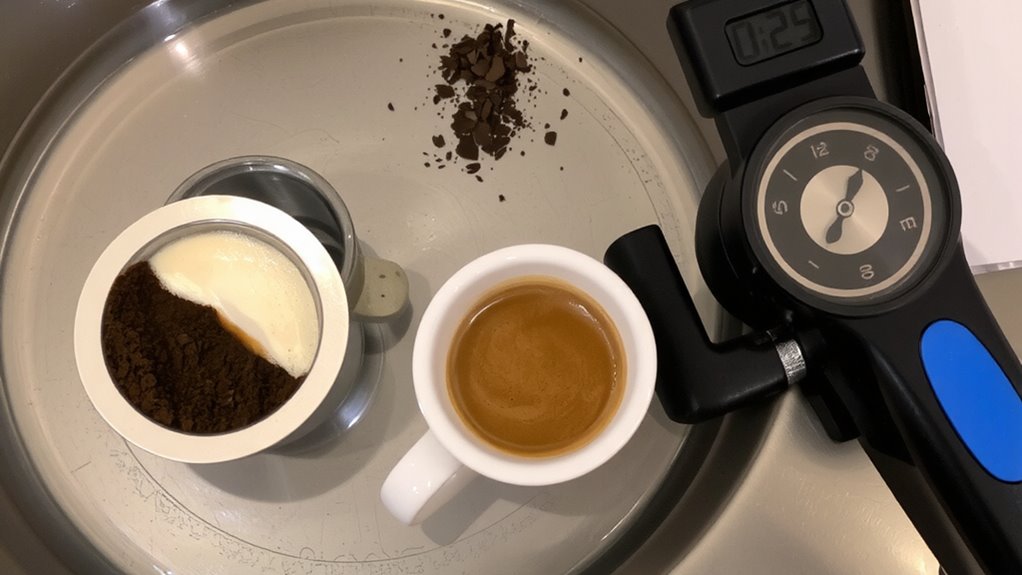
While pulling a shot in about 25 seconds might seem ideal, using a coarse grind at that speed often leads to weak, under-extracted espresso because the water moves too quickly through the loosely packed coffee grounds. Your brew time may look perfect, but the rapid flow doesn’t allow enough contact time to pull out the full range of flavors. That short window with coarse particles means most of the desirable compounds stay trapped in the puck. You end up with tea-like shots showing clear flavor weakness-low sweetness, flat acidity, and little body. Machines like the Breville BES870 or Rancilio Silvia can’t compensate for poor grind suitability. Adjusting your grinder to a finer setting increases surface area, slows water flow, and improves extraction. Don’t chase brew time alone-balance it with taste. A slightly longer pull with better flavor beats a fast, weak one.
How to Identify a Coarse Grind in Your Shot
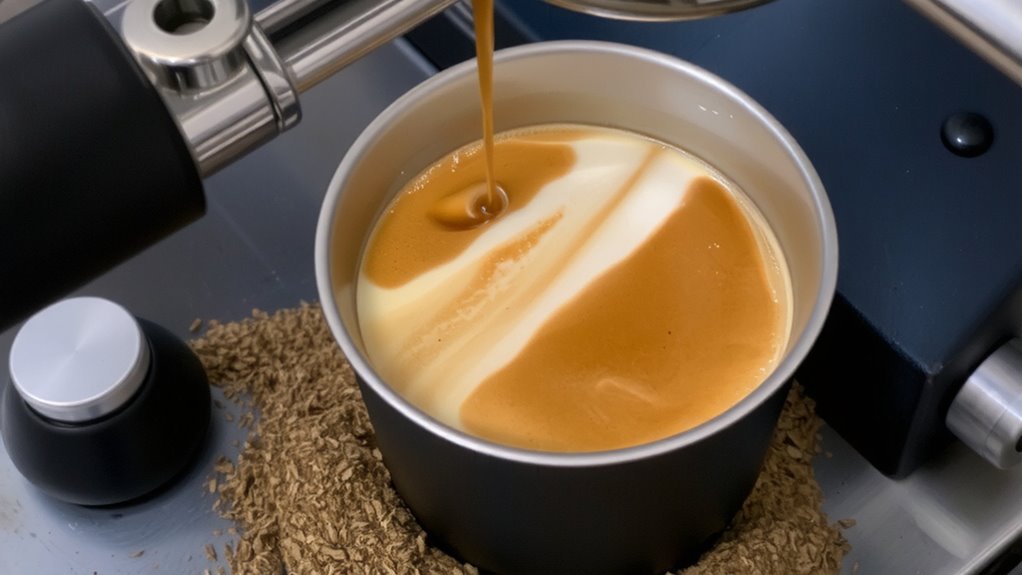
If you’re seeing a coarse grind in your espresso, the first clue usually shows up in the shot’s appearance and timing. Your shot pulls too fast-under 20 seconds-producing weak, sour coffee with thin texture and little crema. A coarse grind lets water pass through too easily, reducing extraction. You’ll notice the stream looks watery, not syrupy, and stops flowing early. These are clear signs your grinder calibration is off. Poor grinder calibration leads directly to inconsistent particle size, worsening the issue. Consistent shot timing around 25 seconds is key for balanced flavor, so timing under that suggests the grind isn’t fine enough. Check your grinder settings and make sure they’re precise and repeatable. Budget grinders often lack the uniformity needed, so upgrading can help. But first, verify the dose and distribution are correct to isolate the grind as the culprit. A reliable espresso grinder under $200 can significantly improve grind consistency and shot quality.
Adjust Your Grinder to a Finer Setting for Better Extraction
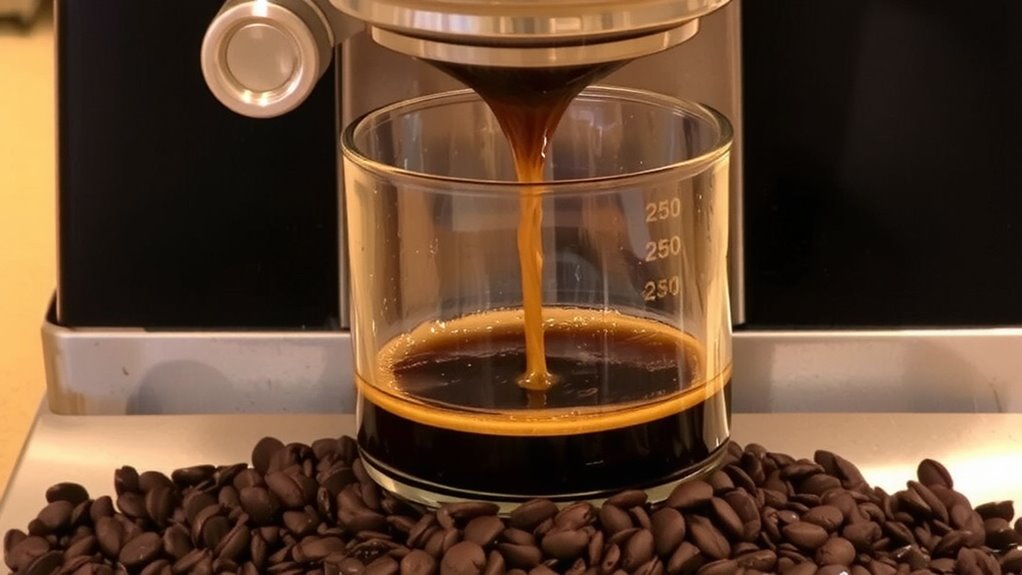
Since a coarse grind causes under-extraction, dialing your grinder finer is the most direct fix for improving espresso quality. You’ll want to adjust in small increments to avoid overshooting-most grinders respond differently, so consistent grinder calibration matters. A finer setting increases surface area, helping water extract more evenly in your 25-second window. Good particle distribution guarantees no large chunks slip through unextracted. Choosing a high-quality burr grinder can significantly enhance flavor clarity and shot consistency. Below are common grinder types and how they handle fineness changes:
| Grinder Type | Calibration Ease | Particle Distribution |
|---|---|---|
| Flat Blade (e.g., EG-1) | High | Even |
| Conical (e.g., Virtuoso+) | Moderate | Balanced |
| Blade (e.g., Krups) | Low | Inconsistent |
Stick to burr grinders for control and repeatable results.
How Dose and Tamp Interact With Grind Size
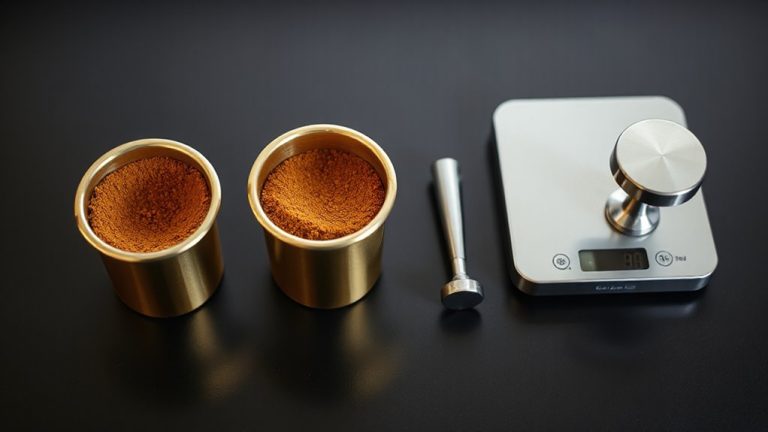
When dialing in your espresso, your grind size doesn’t work alone-dose and tamp pressure directly influence how water flows through the puck, so getting all three in sync is key. If your dose is too low, even a fine grind might pull too fast, while too high a dose can over-restrict flow, especially with a finer grind. Dose consistency guarantees each shot starts from the same baseline, making adjustments predictable. Your tamping pressure must also be consistent; uneven or too-light tamping creates channels, letting water rush through weak spots. Too hard, and you risk compacting the coffee too much, slowing extraction unfairly. A calibrated tamper and a scale help maintain precision. For example, with a 18g dose in a triple basket, aim for level, firm tamping at about 30 pounds of pressure. Tweaking one variable affects the others, so change only one at a time and track results. A high-quality calibrated tamper ensures even pressure distribution and improves shot consistency.
Fixing Common Grind-Related Espresso Problems
Why does your espresso pull too fast or taste flat, even after adjusting the dose and tamp? You’re likely dealing with a grind that’s too coarse. A coarse grind causes brew time instability, making shots unpredictable and weak. It also leads to water channeling issues-water finds paths through loose grounds, bypassing much of the coffee. This under-extraction leaves you with sour, hollow shots. Fix this by adjusting your grinder finer in small increments. Consistency matters: cheaper grinders often produce uneven particles, worsening channeling. If you’re using a blade grinder, upgrade to a burr model-like a Baratza Encore or OxBox IQ-for more uniform grounds. Check your grind each morning, especially if humidity changes. A stable grind size improves flow control and extraction. Don’t chase flavor adjustments until you fix the grind-everything else depends on it.
Maintain Espresso Quality With Daily Grind Calibration
You’ll almost always get better shots if you adjust your grinder every morning. Changes in bean freshness, humidity, and room temperature affect extraction, so a static setting won’t cut it. Freshly roasted beans release CO2, altering how they respond to grinding-typically requiring finer settings in the first few days. As beans age past a week, they demand slight coarsening to maintain balance. Water temperature fluctuations in your machine also impact extraction; even a 1–2°F shift can mimic grind changes. Dial in by pulling test shots and adjusting grind size until you hit 25 seconds for 1.5 ounces. Digital grinders like the Compak K3 or EK43 offer repeatability, but still need daily tweaks. Skipping calibration risks under-extraction or bitterness. Stay consistent by logging each adjustment. It’s not fussy-it’s functional. Daily grind tuning is the cheapest way to guarantee quality with any gear.
On a final note
You’ll know your grind’s too coarse if your espresso pulls in 25 seconds but tastes weak or sour. Adjust by making the grind finer in small steps-especially with blade or low-burrs grinders. Dose and tamp matter, but grind size controls extraction most. Calibrate daily, as coffee freshness and humidity affect results. A consistent, fine grind helps achieve balanced, sweet shots using machines like the Breville Barista Express or Lelit Bianca. Check each shot’s flavor, not just timing.