Why Pacamara Beans Produce Exceptionally Large Coffee Cherries and Unique Cup Notes
You get large cherries from Pacamara beans because they inherit size from the Maragogype parent, a natural Bourbon mutation first bred with Pacas in El Salvador. This cross also gives you structured body, bright citrus notes, and floral complexity, especially when grown above 1,300 meters. Cooler temps and volcanic soil boost sugar and acidity. Roast slow with moderate heat to avoid tipping. Choose light to medium profiles to preserve clarity-and know the best choices for equipment and sourcing start with understanding their origin traits.
Notable Insights
- Pacamara inherits large bean size from the Maragogype parent, a natural Bourbon mutation known for oversized seeds.
- The large bean size directly contributes to bigger coffee cherries due to genetic expression in cell expansion and seed development.
- Grown at high elevations above 1,200 meters, slower cherry ripening enhances sugar accumulation and flavor complexity.
- Its genetic lineage from Bourbon mutations promotes floral, citrus, and sweet cup notes with balanced, heavy body.
- Slow roasting preserves Pacamara’s bright acidity and aromatic profile, unlocking layered flavors from its dense, large beans.
What Makes Pacamara Beans So Unique?
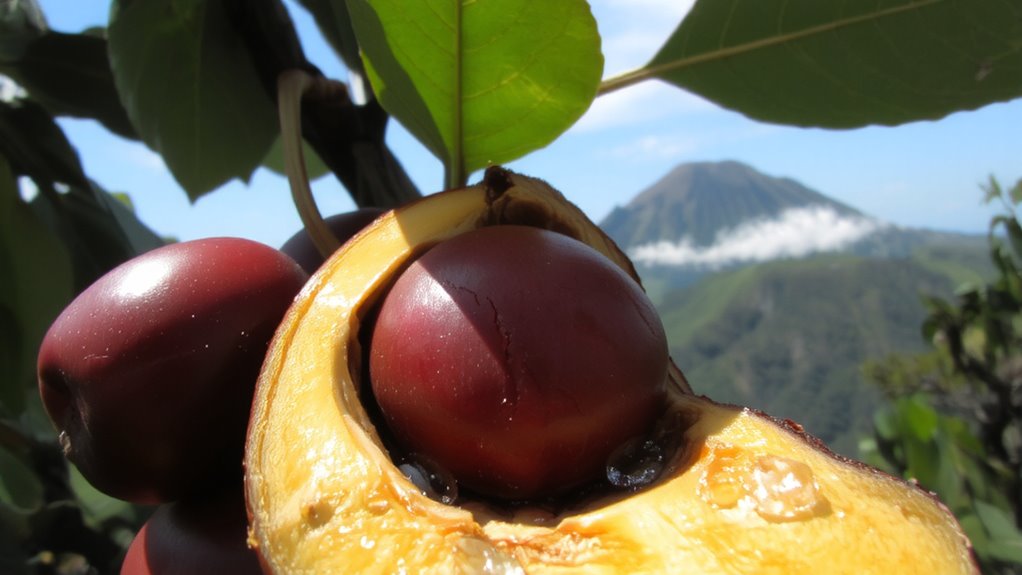
While most coffee beans come from more common varieties like Bourbon or Typica, Pacamara stands out because it’s a deliberate cross between Pacas and Maragogype beans, giving it a distinct genetic edge. You’ll notice its large bean size and elongated shape, which directly contribute to bigger coffee cherries. This genetic diversity isn’t just for show-it enhances flavor complexity and supports climate adaptation, especially in regions facing temperature shifts or erratic rainfall. Farmers in El Salvador and Nicaragua rely on Pacamara’s resilience, though it’s prone to disease without proper shade and soil management. When roasting, expect slower heat absorption due to size, so adjust profiles-try a lower charge temp to avoid tipping. While yields are lower than hybrids like Castillo, Pacamara’s cup quality, with notes of red fruit and chocolate, often justifies the effort for specialty markets.
How Was the Pacamara Coffee Hybrid Created?
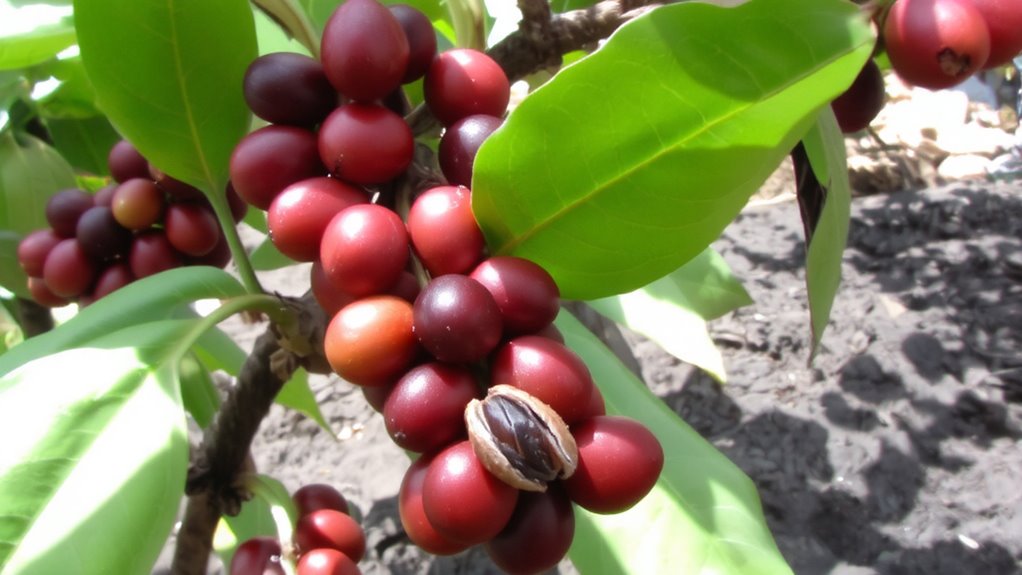
Since the 1950s, researchers in El Salvador have worked to combine the best traits of two distinct Arabica varieties, and that’s how Pacamara came to be. You’re looking at a deliberate cross between Pacas and Maragogype, both naturally occurring mutations of Bourbon. This crossbreeding technique was designed to improve yield and disease resistance while preserving cup quality. The genetic lineage gives Pacamara stability and predictability in performance across farms. Though results vary by altitude and soil, the hybrid generally thrives in well-drained, volcanic terrain above 1,200 meters. Growers choosing Pacamara accept longer maturation times in exchange for higher market value. Unlike faster-producing hybrids like Catimor, Pacamara demands more care and space, but its reputation for complex flavor makes it worth the investment. You’ll need consistent processing to highlight its potential.
Why Are Pacamara Coffee Beans So Big?
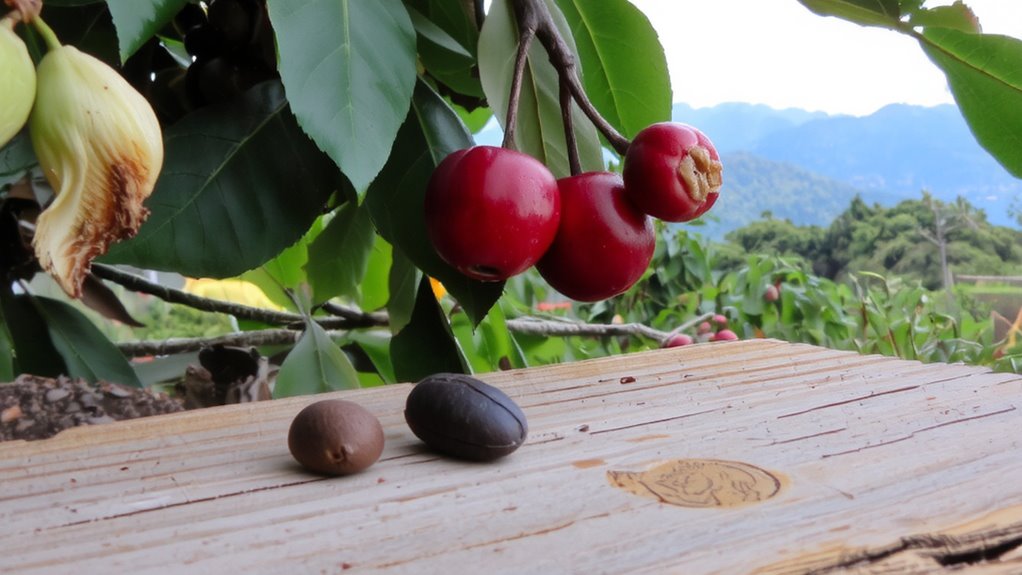
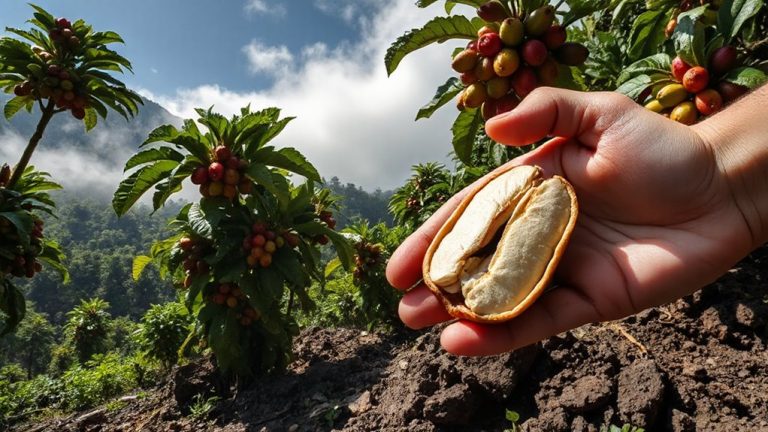
You’ve already seen how Pacamara came from a careful cross between Pacas and Maragogype in El Salvador’s breeding programs. What makes its beans so large comes down to a rare genetic mutation originally spotted in Maragogype, a natural variant of Typica. This mutation drives extreme bean expansion, and since Pacamara inherited it, the beans grow much bigger than average. That size impacts how you handle them in roasting and brewing. Larger beans absorb heat differently, requiring adjustments in roast profiles to avoid underdevelopment. In brewing, their expanded surface area can speed up extraction, so grind size may need fine-tuning. You’ll notice this especially in pour-over or espresso. While the size doesn’t guarantee better flavor, it does demand attention to process. If you’re using standard equipment, check compatibility-some grinders struggle with beans this big.
How Elevation Changes Pacamara’s Flavor?
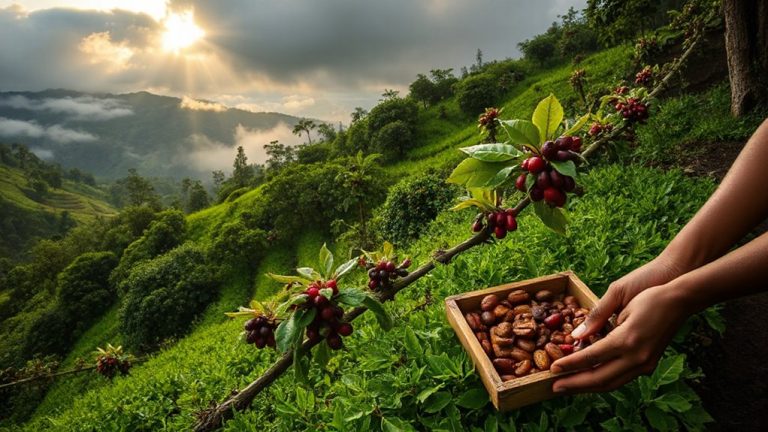
When grown above 1,300 meters, Pacamara beans develop more pronounced acidity and complex sugar development due to cooler temperatures and larger day-night swings. You’ll notice the microclimate impact is essential-subtle shifts in humidity, wind, and sunlight exposure affect how slowly the cherries ripen, directly influencing flavor clarity. Higher elevation sites often have volcanic soil composition, which boosts mineral uptake and supports balanced bean development. These conditions help Pacamara express its potential, but they demand careful farming; thin air and cooler weather slow growth, increasing risk if frost hits. Still, the payoff is consistent in quality when managed right. You’re better off sourcing beans from farms that track elevation and soil data-look for transparency on these factors. Elevation alone doesn’t guarantee superior flavor, but combined with strong microclimate impact and fertile soil composition, it creates ideal conditions for complexity and sweetness in the cup.
What Does Pacamara Coffee Taste Like?
Pacamara coffee stands out for its distinct flavor profile, shaped by both genetics and growing conditions. You’ll often notice citrus brightness right away-a zesty lemon or orange tang that lifts the cup and keeps it lively. That sharpness balances well with a heavy body, giving each sip structure without dullness. You’re also likely to pick up floral notes, especially when the beans are grown at higher elevations; think jasmine or honeysuckle, subtle but clear. These flavors aren’t just from the varietal itself-they’re amplified by careful processing and ripe harvesting. While not all Pacamara lots taste the same, most offer a complex mix of sweet, bright, and aromatic traits. It’s a standout choice if you prefer coffees with layered flavors and a clean finish. Just make sure your brew method highlights clarity-pour-over or vacuum brewing works well.
How Should You Roast Pacamara Beans?
What’s the best way to bring out Pacamara’s full potential in the roast? You’ll want to use slow, controlled roast profiles to manage its large bean size and promote even flavor development. Start with a moderate charge temperature and extend the Maillard phase slightly-this helps build complexity without baking the bean. Avoid rushing first crack; Pacamara beans respond well to a steady approach, especially in drum roasters like the Probatino or Gene Café. Light to medium roasts preserve its signature floral and citrus notes, while slightly darker roasts can emphasize chocolate or nut tones. Watch for stalling, a common issue with dense beans. Adjust heat application carefully to maintain momentum. Your goal is balanced flavor development across the cup, minimizing grassy or underdeveloped notes. With consistent profiles and attention to rate of rise, you’ll highlight what makes Pacamara unique: structure, sweetness, and clarity. Using a coffee roasting temperature controller can greatly improve precision and consistency in achieving these ideal roast profiles.
Where to Buy the Best Pacamara Coffee Beans
You’ve dialed in your roast profile to highlight the balance and complexity Pacamara beans can offer, so now it’s time to make sure you’re starting with quality green coffee. Your best bet? Trustworthy online retailers that specialize in single-origin lots. Many provide detailed buying guides to help you assess freshness, origin, and processing method-key factors in flavor development. Look for farms or co-ops from El Salvador, Honduras, or Guatemala, where Pacamara thrives at high altitudes. For those seeking the freshest options, consider roasters known for rapid shipping and transparent sourcing, as best online coffee roasters prioritize bean quality and roast-to-order practices.
| Retailer | Region Focus |
|---|---|
| Sweet Maria’s | Central America |
| Royal Coffee | Global origins |
| BeanSource | Guatemala |
| Café Imports | Honduras |
| Volcafe | El Salvador |
These online retailers consistently offer traceable, farm-direct Pacamara beans. Check recent crop details and moisture content before buying.
On a final note
You get large cherries and distinct cup notes from Pacamara because it’s a deliberate cross between Pacas and Maragogype-both known for size and clarity. The beans need careful roasting to handle their density, often shining at medium roasts. Grown at high elevations, they develop brighter acidity and floral complexity. For best results, use a precise grinder like the Baratza Encore and monitor roast color closely.