Extending Brew Time to Compensate for Light Roast Under-Extraction
You need to extend brew time with light roasts because the beans are denser, slowing water flow and delaying sugar extraction. This helps balance bright acids and avoid sour, underdeveloped flavors. Aim for 3:30–4:30 minutes in pour-over, 4:00–5:00 in French press, or 25–30 seconds in espresso. Use water near 200–205°F and adjust grind accordingly-too fine causes bitterness, too coarse leads to weakness. Getting it right means cleaner, sweeter coffee with layered flavors worth exploring further.
Notable Insights
- Light roast beans are denser, requiring longer brew time to fully extract sugars and balance acidity.
- Extend pour-over brew time to 4:00–4:30 minutes to improve extraction and reduce sourness.
- For French press, use a 4:00–5:00 minute steep with coarse grind to avoid over-extraction and sediment.
- In espresso, aim for 25–30 second shot time with finer grind and pre-infusion to enhance light roast development.
- Always pair extended brew time with proper grind size and water temperature (200–205°F) for balanced extraction.
Why Light Roasts Need More Brew Time
While light roasts may seem similar to medium or dark at first glance, they actually require more brew time to extract evenly because their denser bean structure slows water penetration. You’re dealing with higher bean density here, meaning water can’t dissolve soluble compounds as quickly. That tight structure resists flow, so without extra time, you’ll end up with sour, underdeveloped flavors. Roast development in light roasts stops earlier, preserving more complex acids and sugars-but they need help to fully emerge. If you brew them like darker roasts, you’ll miss those bright, nuanced notes. Extending contact time compensates for both the physical resistance and shorter roast development. Whether you’re using a pour-over or immersion brewer, don’t rush it. A few extra seconds can mean the difference between a flat cup and one that’s balanced, lively, and true to the bean’s origin character.
How to Adjust Brew Time for Light Roast (By Method)
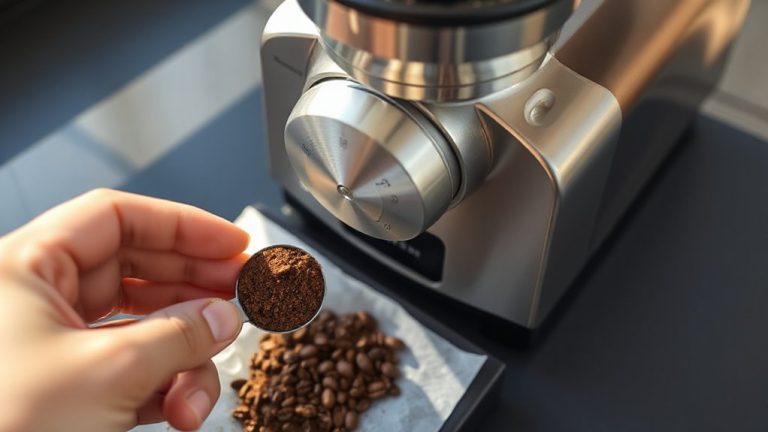
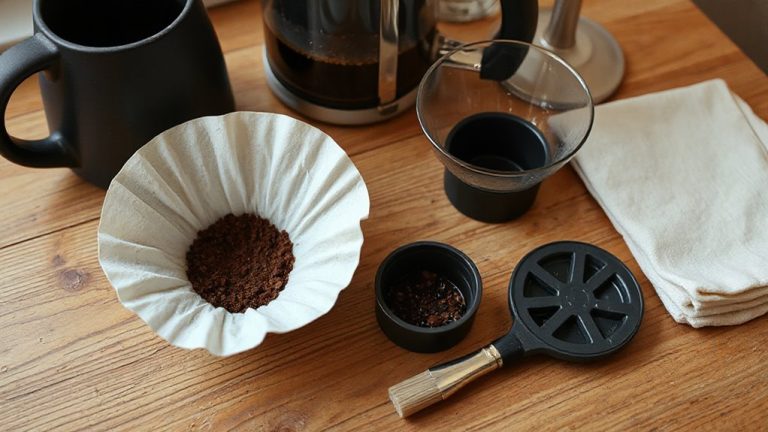
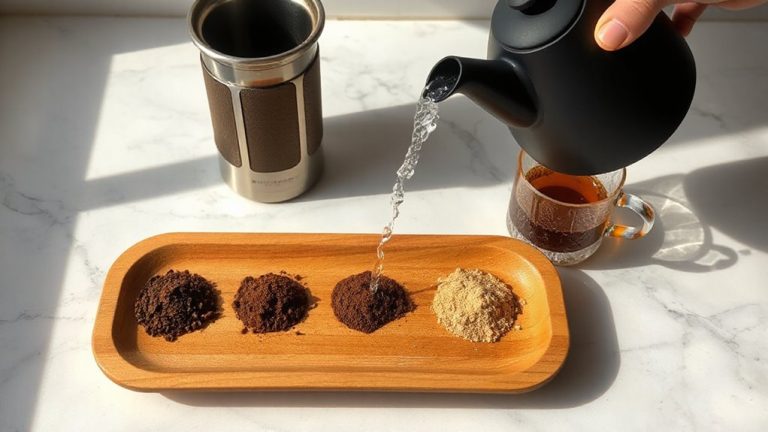
Since light roasts are denser and less developed than darker profiles, you’ll need to tweak your brew time depending on the method to get the best extraction. For pour-over, aim for 3:00–4:00 minutes; extend to 4:30 if under-extracted. Maintain a steady water temperature around 200–205°F and use a consistent grind consistency-medium-fine, like table salt. With a French press, steep for 4:00–5:00 minutes instead of 4:00, and guarantee your grind is coarse but uniform. For espresso, target 25–30 seconds shot time with a finer grind and water temperature near 200°F. If your machine allows it, pre-infusion helps. AeroPress? Try 2:30–3:00 minutes with medium grind and full immersion. Always adjust one variable at a time-start with grind consistency, then tweak brew time. Choosing the right best grinders for filter coffee ensures uniform particle size, which is critical for balanced extraction.
Why Under-Extracted Light Roast Tastes Sour
What makes your light roast taste sour-thin, sharp, almost acidic on the tip of your tongue? It’s likely under-extracted. Light roasts are dense and need more time or higher temperatures to dissolve their sugars and oils fully. When you fall short, early-extracting compounds dominate, bringing forward acidic notes before the sweeter, balanced flavors have a chance to come through. This creates a flavor imbalance-too much brightness, not enough body. You’re not tasting the bean’s full potential, just the harsh, unfinished parts. It’s not a flaw in the bean, but in the brew. A slightly longer draw time, especially in pour-over or espresso, corrects this by increasing total extraction. You’ll notice it fast: less bite, more harmony. It’s not about avoiding acidity altogether-quality roasts thrive on bright tones-but about balance. Sourness means the scale is tipped too far. Fix the timing, and you fix the cup. Using a gooseneck kettle with a best coffee drippers setup improves control and promotes even extraction for light roasts.
How to Tell When Light Roast Is Fully Extracted
You know your light roast is fully extracted when the flavors come through balanced-brightness is present but rounded, not sharp, and the body feels smooth rather than thin or hollow. Flavor balance means no single note dominates; sweetness, acidity, and subtle bitterness are in harmony. You’ll notice clear aroma development: fragrant, complex scents like citrus blossom, stone fruit, or toasted grain emerge fully. If your coffee still smells muted or grassy, it’s likely under-extracted. A well-extracted cup from a light roast brewed on a V60 or Kalita Wave should finish clean, with lingering sweetness, not sourness or hollowness. Avoid relying solely on color or brew time-taste and smell are more accurate. Regularly adjust grind size and water temperature in small increments. Use freshly roasted beans, ideally 7–21 days post-roast, for peak clarity. These cues help you hit extraction without overdoing it.
Mistakes That Ruin Long Brew Times for Light Roast
A common pitfall with long brew times for light roast coffee is over-grinding-going too fine without adjusting other variables. When you grind too fine, water struggles to pass through, leading to clogging or uneven extraction, especially in pour-over cones like the Hario V60. You might think slowing flow helps, but without checking grind consistency, you risk bitter, astringent notes. Your grinder’s burrs must stay clean and aligned-cheap blade grinders create inconsistent particles that sabotage even the best water temperature control. Speaking of which, if your water’s below 195°F, you’ll under-extract regardless of time. Aim for 195–205°F. Extending brew time only works when paired with the right grind size, steady grind consistency, and proper water temperature. Tweaking one without the others leads to disappointment, not balance. For optimal control over both espresso and pour-over brewing, investing in a high-quality burr grinder with precise settings is essential, such as those highlighted in the best grinders roundup featuring models with consistent grind quality.
On a final note
You need longer brew times with light roasts because they’re denser and harder to extract. If it tastes sour, it’s likely under-extracted-extend the time or fine-tune your grind. Use a burr grinder like the Baratza Encore for consistency. Pour-over and AeroPress handle long brews well; espresso needs precise timing. Avoid overly coarse grinds or clogged filters. Watch for weak or bitter notes-adjust in small steps.