French Press Coffee and Serving With Cream: Enhancing Body and Sweetness
Your French press coffee’s full body and natural oils blend smoothly with cream, boosting richness and softening bitterness. Use heavy cream for a velvety mouthfeel or half-and-half for a lighter touch. Cold cream preserves temperature contrast, while warm or frothed cream integrates seamlessly. The fat in dairy binds harsh compounds, enhancing sweetness without hiding chocolate or nutty notes. Whole milk and barista-style plant blends work, but check for stabilizers like gellan gum. Try different methods to find your ideal balance.
Notable Insights
- French press coffee’s bold body and oils create an ideal base for cream, enhancing mouthfeel and sweetness.
- Heavy cream adds richness and smoothness, softening bitterness while highlighting nutty and chocolate notes.
- Cold, fresh cream poured slowly preserves texture and blends well with the coffee’s full body.
- Cream’s fat content binds to bitter compounds, reducing harshness and coating the palate for balanced flavor.
- Pre-warmed mugs and proper brewing with coarse grounds ensure optimal results when serving with cream.
Why French Press Coffee Pairs Perfectly With Cream
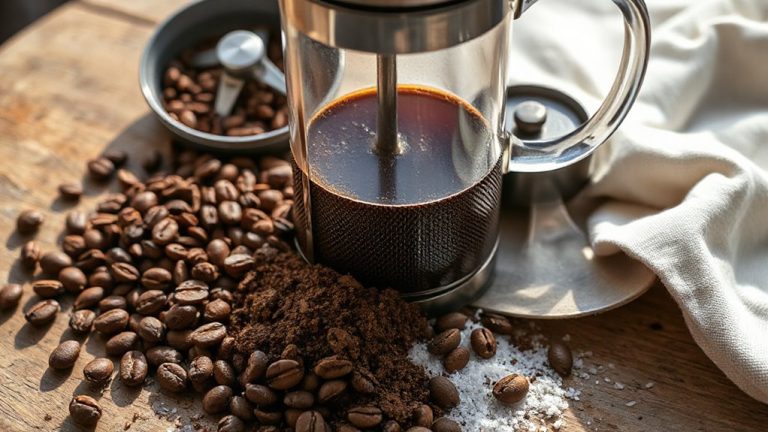
Richness matters when you’re talking about French press coffee, and that’s exactly why cream works so well. The full body and bold extraction of French press brew create a solid base that supports dairy without losing character. When you add cream, the cream texture blends smoothly into the heavy mouthfeel, enhancing the drink’s natural weight without thinning it. Unlike lighter brew methods, French press retains oils that interact with fat in cream, creating a balanced mouthfeel and improved flavor harmony. You’ll notice the cream softens bitterness just enough, letting chocolate or nutty notes come through without masking them. It’s not about sweetness-it’s about balance. Use cold, fresh cream and pour slowly to preserve texture. The result? A richer, more rounded cup that still tastes like coffee, just better. This pairing works best when the brew is strong and freshly pressed. For those avoiding synthetic materials, consider a French press made with no plastic components to preserve the purity of your coffee experience, such as one built with best plastic-free French press construction.
Choose the Best Cream for Your Brew
You’ll want to pick a cream that complements the bold flavor and heavy body of French press coffee without overpowering it. Heavy cream works well-it has a rich mouthfeel and slight sweetness that enhances body. Its high fat content also supports a smooth whipping texture if you’re frothing for a café-style touch. Half-and-half is lighter but may dilute the brew’s intensity. For dairy alternatives, go for barista blends-oat or soy varieties with added oils tend to mix better and resist curdling. Almond or coconut milk can work, but they often lack creaminess and may separate under heat. Check labels: ingredients like gellan gum help stabilize texture. Ultimately, your choice affects both taste and consistency. Test a few to see which balances richness and blendability in your cup.
Brew French Press Coffee for Creamy Results
Smooth texture starts with how you grind and brew. Use a coarse grind to prevent over-extraction and sediment. This keeps your cup clean and smooth-ideal for pairing with cream later. Too fine, and you’ll get bitterness no cream can fix. Always start with fresh beans and water just off the boil, around 200°F. The steep time is critical: 4 minutes is standard, but adjust between 3–5 based on roast and preference. Stir the crust after pouring, then place the lid and let it steep. Press slowly to avoid forcing fines into your cup. For best results, consider using one of the top French press models of 2024 to ensure consistent brewing performance.
| Grind Size | Steep Time | Resulting Texture |
|---|---|---|
| Coarse | 3 minutes | Light, clean |
| Coarse | 4 minutes | Balanced, creamy |
| Coarse | 5 minutes | Bold, heavy |
| Medium | 4 minutes | Slightly muddy |
How Cream Smooths Bitterness and Boosts Flavor
While bitterness in coffee often comes from over-extraction or too-fine grounds, adding cream can help neutralize harsh notes by binding to some of the compounds responsible. You’ll notice immediate bitterness reduction, as the fats in cream coat your palate, softening the sharper edges of dark or over-brewed coffee. This isn’t just masking-it’s a physical interaction that tempers aggressive flavors. At the same time, cream contributes to flavor enhancement by adding a subtle richness that balances acidity and highlights sweetness. Whole milk or heavy cream works best for this effect, while plant-based options like oat or almond milk offer milder results. The texture also rounds out the mouthfeel, making each sip smoother. Using cream isn’t about hiding poor brewing, but improving drinkability when bitterness creeps in. It’s a simple, effective tool for better-tasting coffee straight from your French press.
Best Ways to Serve Cream With French Press Coffee
How should you pour the cream-cold, warm, or frothed? Cold cream preserves freshness and gives a clean contrast to hot coffee, but it can slightly cool your drink. Warm cream blends smoothly and maintains coffee temperature, making it ideal if you prefer consistency in each sip. Frothed cream adds texture and richness, similar to a café-style finish, though it requires a small frother or whisk. Cream temperature matters because it affects mouthfeel and how well the fat integrates with the bold body of French press coffee. When choosing serving vessels, use pre-warmed ceramic mugs-they retain heat better than glass or metal. Wider rims make pouring cream easier and improve aroma release. Avoid thin cups; they lose heat fast, undermining both coffee warmth and cream integration. Match your method to your preference: cold for brightness, warm for balance, frothed for luxury.
On a final note
You get a fuller, sweeter cup when you pair French press coffee with cream. The coffee’s bold body holds up well, and the cream reduces harsh notes without masking flavor. Use heavy cream for richness or half-and-half for balance. Pour it in after brewing, or serve on the side. This simple step improves texture and taste reliably-no special gear needed. It’s a practical upgrade for everyday coffee.