What Makes Mokka Beans Ideal for Traditional Turkish Coffee Preparation
You’ll get the best results with mokka beans because their small size and high density handle the ultra-fine grind Turkish coffee needs without turning to dust. They extract evenly in the cezve, delivering bold, low-acidity flavor with rich mouthfeel. Their compact structure preserves aromatic oils and supports a stable foam. The fine grind stays uniform, reducing clogging and ensuring clarity. You’re set for authentic texture, depth, and a long, smooth finish-just keep going to see how origin and roast fine-tune the outcome.
Notable Insights
- Mokka beans are small and dense, ideal for achieving a uniform, flour-like grind without turning into dust.
- Their high density ensures even extraction and prevents disintegration during prolonged heat in a cezve.
- Originating from Yemen or Ethiopia, Mokka beans have a naturally compact structure suited for Turkish coffee.
- A medium-dark roast enhances deep, chocolatey flavors while preserving complexity and avoiding bitterness.
- Naturally low acidity allows bold, rich notes to dominate, balancing sweetness and bitterness during unfiltered brewing.
Why Mokka Beans Work Best for Turkish Coffee
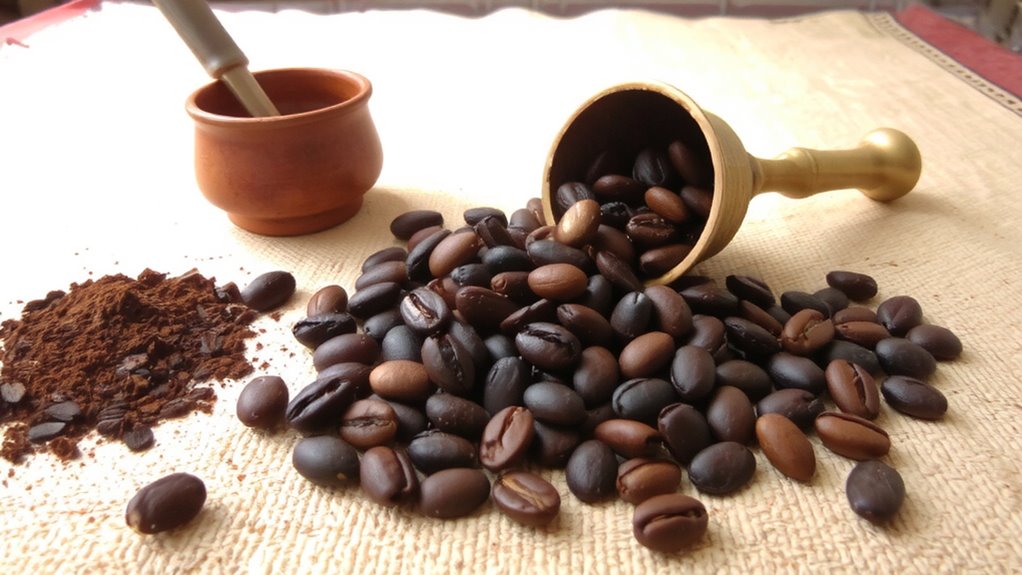
Size matters when it comes to Turkish coffee, and Mokka beans fit the role perfectly. You need small, dense beans that can withstand a very fine grind without turning into dust. Mokka beans, often from Yemen or Ethiopia-their bean origin lends them a naturally compact structure-deliver just that. These regions produce beans with a unique balance of acidity and earthiness, ideal for the intense brewing method. The roast profile is typically medium-dark, bringing out deep, chocolatey notes while preserving enough complexity to avoid bitterness. Unlike larger beans that might burn or lose clarity under prolonged heat, Mokka beans hold up well in a cezve. You’ll get a rich crema and a clean cup, provided you control water temperature and grind consistency. Other beans can work, but without the right origin and roast, the results often lack authenticity. For consistent results at home, using an electric Turkish coffee maker can help maintain precise heat control throughout the brewing process.
Why Small, Dense Beans Improve Brewing

Wait-there’s an error in processing. Small, dense beans like Mokka aren’t just tradition; they’re built for better brewing. Their high bean density means they grind finer without turning to dust, which is key for Turkish coffee’s texture. When you use a fine, consistent grind, water extracts flavor more evenly during the short brewing time. Less density? You’d get uneven extraction and weak flavor. These beans also hold up under prolonged heat in a cezve, resisting scorching. That’s why they deliver a rich, concentrated cup without bitterness. Other beans might break down too fast, but Mokka’s structure keeps things stable. So, when you’re aiming for that authentic foam and body, bean density isn’t just helpful-it’s essential. Short brewing time demands precision, and these beans deliver. Choose them, and you’re working with physics, not against it. A well-designed moka pot can further enhance extraction by maintaining optimal pressure and temperature control.
How Low Acidity Creates Bold Flavor
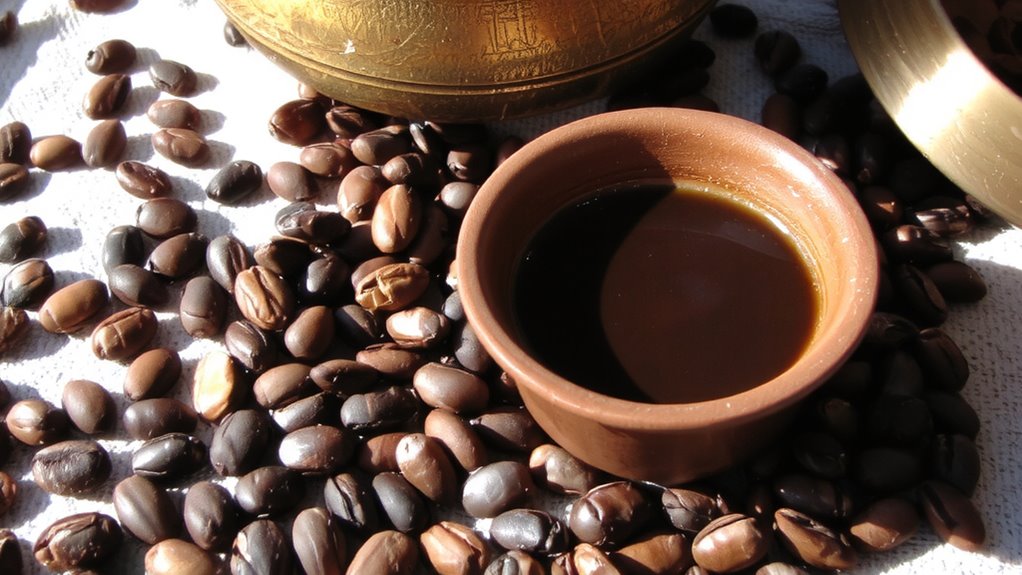
You’ve seen how bean density shapes texture and extraction in Turkish coffee, but there’s another trait that shapes the final cup just as much: acidity. Mokka beans naturally have low acidity, which lets bold, deep notes dominate the taste profile instead of bright, sharp ones. This means more flavor intensity and a richer mouthfeel-perfect for Turkish coffee’s strong, concentrated style. Low acidity also helps balance the sweetness and bitterness expected in a well-prepared cezve brew. For those seeking a smoother experience, exploring the best low-acid coffee options can further enhance your brewing results. Choose low-acid beans like Mokka for a smooth, powerful taste profile that stands up to long simmering without turning sour.
Why Mokka Beans Grind Finer
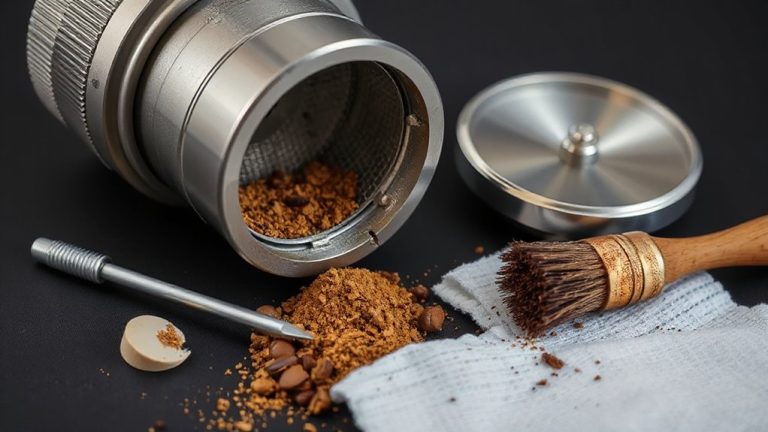
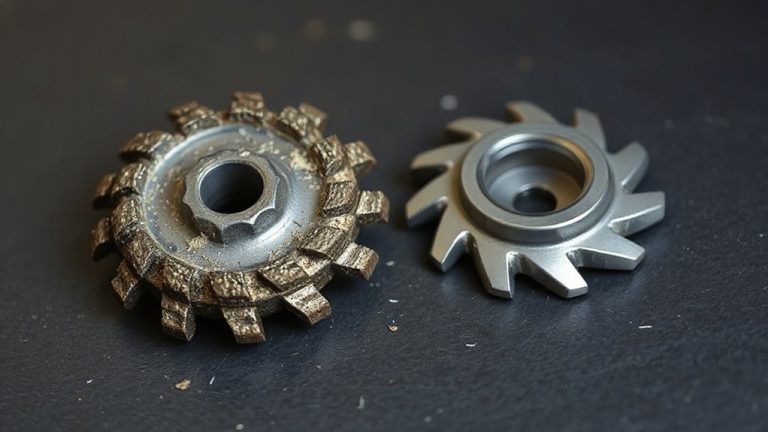
Finer grinds start with the bean. You’ll find Mokka beans naturally lend themselves to a powdery consistency because of their high bean density. This tight structure resists crumbling unevenly, letting grinders produce a consistent, flour-like texture critical for Turkish coffee. Low-density beans often shatter unpredictably, creating boulders and fines that disrupt extraction. Mokka’s roast uniformity also plays a key role-when each bean absorbs heat evenly, they respond identically during grinding. No hot spots or underdeveloped cores mean fewer inconsistencies. Your grinder won’t fight varying textures, reducing clogging and heat buildup. Blades or burrs, both work, but a quality hand grinder like the 1Zpresso J-Max gives better control. Skipping this precision leads to muddy, over-extracted results. So, if you’re aiming for that authentic Turkish cup, start with dense, evenly roasted Mokka beans-they’re built for the finest grind.
What Happens When Mokka Beans Boil Unfiltered
When you brew Turkish coffee, the unfiltered boil is where the magic happens-Mokka beans, already ground to a fine powder, fully mix with water and heat together in a cezve. As the mixture heats, you’ll see thick foam formation rise to the top; this is key, since the foam carries concentrated flavor and indicates proper brewing temperature. Don’t stir-agitating disrupts foam and leads to uneven extraction. When the coffee nears boiling, remove it just before the boil-over; repeating this process once or twice enriches the layer of foam. Once served, the ultra-fine sediment settles at the bottom of the cup. Thanks to the Mokka bean’s fine grind and low brewing agitation, the sediment texture stays compact, forming a clean base instead of a sludge. You’re meant to leave the last sip behind. This method preserves clarity in flavor and consistency across servings.
How Mokka Beans Build Aroma and Long Finish
Though aroma and finish depend on multiple factors, Mokka beans play a defining role due to their dense, oily structure and small bean size, which concentrate volatile compounds during roasting. You’ll notice how this boosts aroma development and flavor longevity in every cup. Because they’re roasted densely and ground ultra-fine, the oils release slowly, extending the sensory experience. You’re not just brewing coffee-you’re crafting a lasting impression.
| Stage | Mokka Beans | Regular Beans |
|---|---|---|
| Grind | Ultra-fine powder | Variable |
| Oil Release | High | Moderate |
| Aroma Intensity | Concentrated | Less intense |
| Finish Duration | Long | Shorter |
| Soluble Extraction | Complete in boiling | Incomplete |
This structure guarantees maximum extraction and rich aftertaste when brewed unfiltered. Choose Mokka for depth, consistency, and enduring sip-through-sip quality in Turkish coffee prep.
On a final note
You’ll get the best Turkish coffee with Mokka beans because their small, dense structure handles boiling without breaking down. They grind ultra-fine, releasing bold flavor and rich aroma. Their low acidity enhances body, not brightness, which suits traditional prep. Since the grounds boil unfiltered, the sediment forms a natural layer, adding texture. For authenticity and consistency, Mokka beans outperform larger, lighter roasts in cezve brewing.