The Impact of Grind Time on Particle Heat and Flavor Degradation
Long grind times heat up your coffee particles, speeding up oxidation and killing delicate aromas, especially with low-quality grinders. Blade models create more heat and uneven grounds, while burr grinders like the Baratza Encore or 1ZPresso Q2 keep temps down and grind more evenly. Light roasts need 15–20 seconds; dark roasts only 10–12. Over-grinding muddies flavor. For better results, use short bursts and clean your grinder often-what you do next makes a bigger difference than you think.
Notable Insights
- Longer grind times increase friction, raising particle temperature and accelerating aroma loss.
- Extended grinding creates inconsistent particles, leading to uneven extraction and off-flavors.
- Heat from prolonged grinding degrades volatile compounds, diminishing coffee’s brightness and complexity.
- Blade grinders generate more heat than burr grinders due to high-speed operation and uneven grinding.
- Light roasts need longer grind times (15–20 sec), but excessive duration overheats particles and muddies flavor.
What Grind Time Does to Coffee Flavor
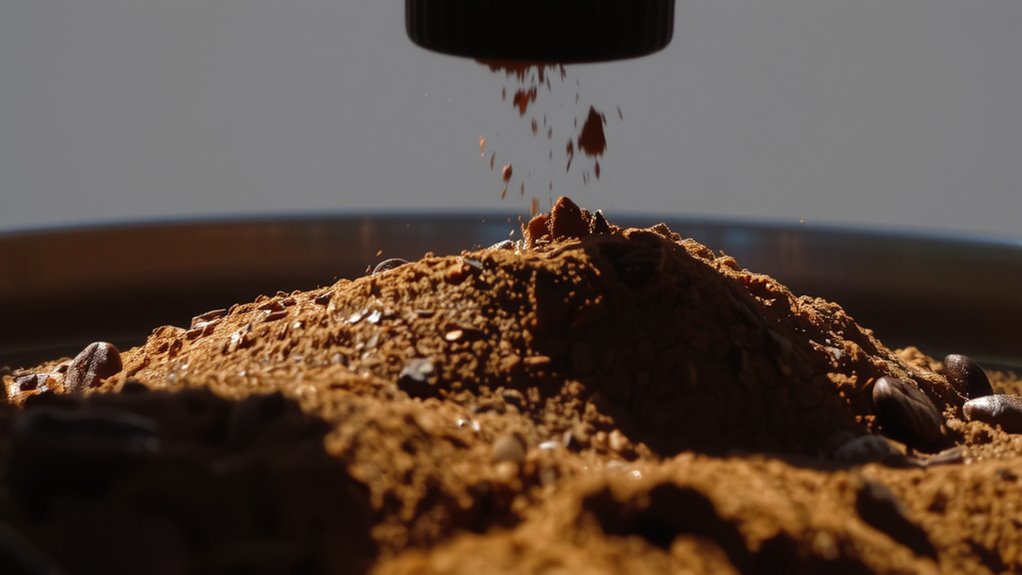
While it might seem like a minor detail, the length of time you spend grinding your coffee beans can have a noticeable effect on flavor. The longer the grind cycle, the more uneven your grind consistency becomes-especially with low-quality grinders. Inconsistent particles lead to uneven extraction, where some bits over-extract (bitter) and others under-extract (sour). You’re also increasing the surface area exposed to air, speeding up particle oxidation. Once ground, coffee stales fast, losing brightness and aroma within minutes. Burr grinders, like the Baratza Encore, give you better control and shorter grind times than blade models, preserving uniformity and freshness. If you grind too long-even a few extra seconds-you risk heat buildup and fines clumping. Keep grind times short and consistent. Your coffee tastes better when it’s fresh, uniform, and minimally oxidized. Precision matters, even in seconds. For best results, choose a grinder that balances speed and consistency, such as those highlighted in our best coffee grinders roundup.
How Heat From Grinding Destroys Aroma
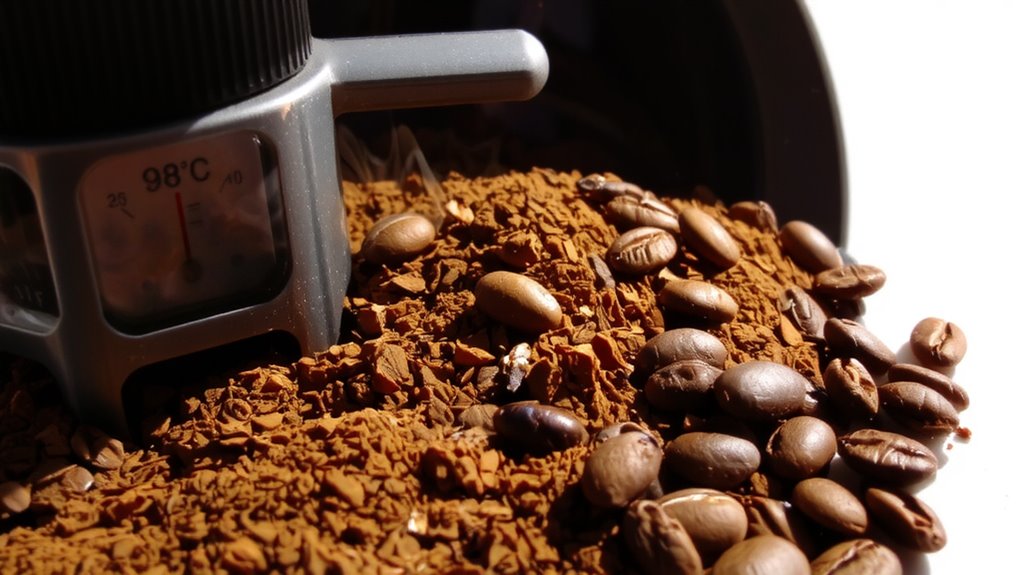
Grinding generates heat, and that warmth starts working against your coffee’s aroma the moment the beans crack. You’re not just breaking particles-you’re triggering volatile breakdown, where delicate aroma compounds begin to degrade. These compounds, responsible for the bright, fresh scents in your coffee, evaporate quickly when exposed to heat. The longer or faster the grind, the more heat builds, speeding up aroma loss. Even a few extra seconds in a hot grinder can dull the final cup. You won’t taste smoke, but you’ll notice it’s missing that lively, complex lift. This is especially true with low-quality grinders that generate uneven particle sizes and excess friction. To preserve aroma, aim for shorter grind times with consistent, cool-running equipment. Pre-measure beans, avoid overheating the burrs, and grind just before brewing. You’ll retain more nuance and get a truer expression of the bean’s origin and roast profile. Choosing one of the best coffee grinders can significantly reduce heat buildup and improve flavor clarity.
Blade vs Burr: Which Generates Less Heat?
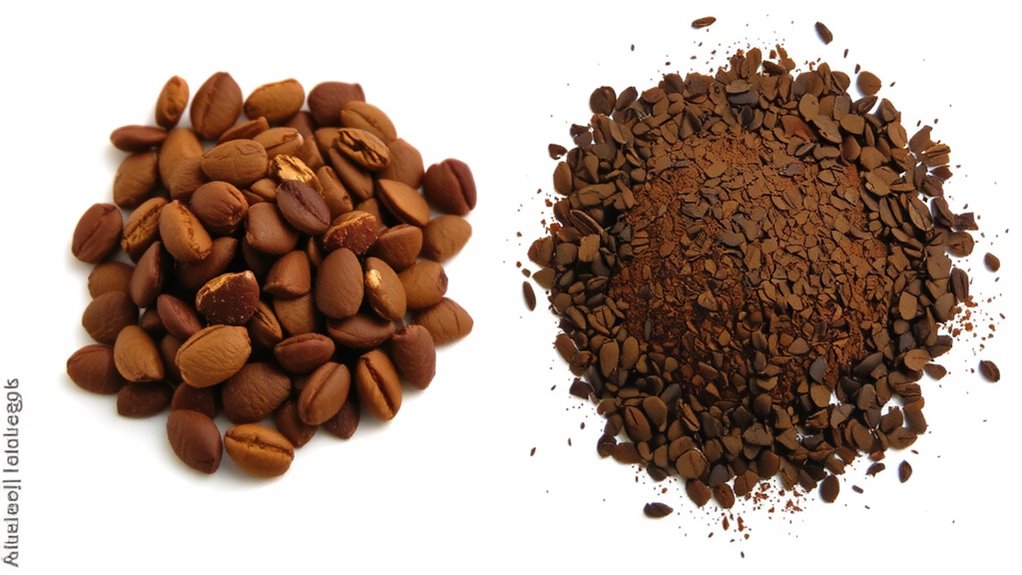
If you’re trying to keep heat in check during grinding, your choice between blade and burr grinders makes a real difference. Blade grinders chop beans quickly, but the high speed increases friction, raising particle temperature fast. While blade efficiency seems useful for speed, it often sacrifices control, creating uneven particles that heat up inconsistently. You’ll notice more fine dust and burred bits, both prone to faster heat absorption. In contrast, burr grinders use sharp, calibrated plates to slice beans with burr consistency, producing uniform particles that generate less overall heat. Lower RPM models, like flat or conical burr grinders (e.g., Baratza Encore or 1ZPresso Q2), minimize friction, preserving delicate aromas. Though pricier, they offer precise, cooler grinds critical for flavor integrity. If heat reduction is your goal, burr grinders outperform blade options every time. Stick with burr consistency for better, cooler results. For pour-over brewing, choosing the right grinder can significantly affect extraction and flavor, making best coffee grinders a key consideration.
Best Grind Times by Roast Level
Since roast level affects bean density and brittleness, your grind time should adjust accordingly to hit the right consistency without overheating the grounds. Light roasts are denser and harder, so they need longer grind times-typically 15–20 seconds in a burr grinder-to achieve an even particle size. If you cut it short, you’ll get boulders and fines, which hurt extraction. Dark roasts are more brittle and fracture easily, so they require less time-around 10–12 seconds. Over-grinding them creates excessive fines and heat, muddying your cup. For consistency, always use a stopwatch and stick to your timed settings once dialed in. Pre-set timers on grinders like the Baratza Encore or Timemore C2 help. Remember, light roasts need more time; dark roasts need less. Adjust in two-second increments and taste the results.
How to Reduce Heat When Grinding Coffee
You’ve dialed in your grind time based on roast level, but heat from the motor and friction can still sneak in and alter your coffee’s flavor. To reduce this, choose a grinder with adjustable grind speed-slower RPMs mean less heat buildup. High-speed blades or cheap burrs generate more warmth, which risks scorching oils and dulling taste. Opt for conical burr grinders like the Baratza Encore or 1ZPresso hand grinders; they run cooler and offer better particle consistency. Uniform particles extract evenly, reducing the need for longer grind times that increase heat exposure. Avoid pulsing excessively-you’ll create friction and static, raising temperature. Keep your grinder clean; old grounds trap heat and disrupt flow. If using an electric model, grind in short bursts to let the motor cool. Ultimately, balancing grind speed and particle consistency protects flavor without overcomplicating your routine.
On a final note
You’re better off using a burr grinder-it gives you consistent particles and less heat than blade grinders. Even short grind times can build up heat, especially with dark roasts, dull blades, or high-speed motors. That heat degrades delicate aromas and shifts flavor. For best results, grind just before brewing, choose a grinder with low heat output like the Baratza Encore, and adjust coarseness to match your roast. Cold beans grind cooler. Keep it quick, clean, and precise.