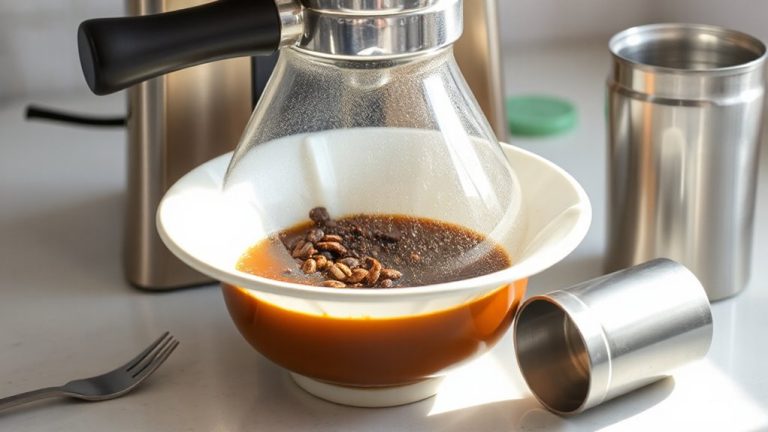
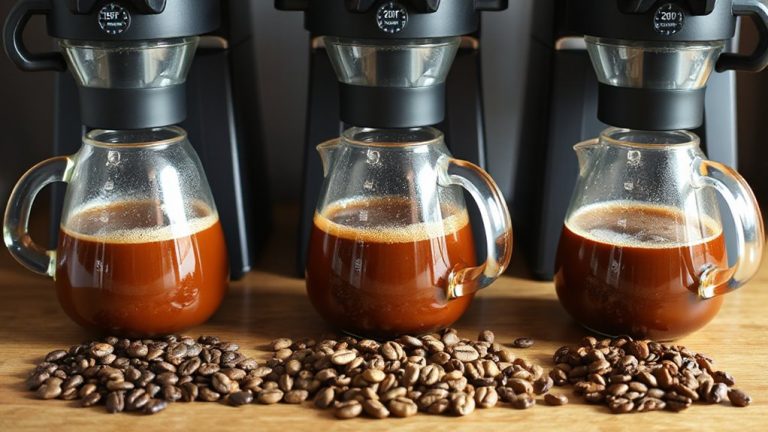
Fine-Tuning AeroPress Recipes Based on Bean Variety and Desired Taste Profiles for Optimal Aroma Development
Use the upside-down AeroPress method with a fine grind and 86°C water for light roasts to highlight floral, citrus notes and preserve delicate aromas. Switch to a right-side-up brew with a coarse grind and 96°C water for dark roasts to reduce bitterness and develop chocolatey depth. Match steep time-60 seconds for brightness, 2–3 minutes for richness-and adjust based on bean origin. Single-origin beans shine with lower heat and longer immersion, while blends stay balanced with standard settings. Tweaking these variables fine-tunes your cup’s character.
Notable Insights
- Match grind size to roast level: finer for light roasts, coarser for dark to optimize extraction and aroma.
- Use lower water temperatures (80–86°C) for light-roast Africans to highlight bright, floral, and fruity notes.
- Choose the upside-down AeroPress method for light roasts to prevent pre-drip and enhance aroma development.
- Extend steep time to 2–3 minutes for medium-dark to dark roasts to amplify chocolate, spice, and depth of aroma.
- Prefer single-origin beans with longer steeps and lower temperatures to preserve distinct regional aroma profiles.
Pick the Right AeroPress Method for Your Taste
How do you like your coffee-bold and intense, or smooth and balanced? Your preference guides the best AeroPress method. If you enjoy richness, try the traditional upside-down method. It reduces pre-drip, giving more control, especially with light roast level beans from high-elevation bean origin regions like Ethiopia or Kenya. These often have delicate acids and floral notes that benefit from delayed plunging. For darker roasts-say, a Sumatran with earthy tones-use the standard right-side-up method. It’s faster and limits over-extraction. Roast level affects solubility: dark roasts extract faster, so shorter brew times help. Consider your bean origin’s inherent traits. Central American beans often shine with full immersion. African beans may reveal more complexity when you extend steep time slightly. Match method to flavor goals. Every variable counts, but method shapes the foundation before grind or stir technique even matter.
Grind Size: Light Roasts vs Dark Roasts
Most light roasts need a finer grind to extract fully, while dark roasts typically do best with a coarser setting. This is because light roasts are denser and require more surface area exposure for proper extraction. Dark roasts are more soluble and can turn bitter if ground too fine. Grind consistency and particle distribution are critical-uneven grinds lead to over- and under-extraction. Use a burr grinder to guarantee uniformity and avoid blade grinders, which create irregular particles. For those exploring alternative brewing methods, the principles of grind size and extraction also apply to slow drip coffee makers.
| Roast Level | Recommended Grind | Why |
|---|---|---|
| Light | Fine | Enhances extraction from dense beans |
| Medium-Light | Medium-Fine | Balanced clarity and body |
| Medium | Medium | Reliable for most profiles |
| Medium-Dark | Medium-Coarse | Reduces bitterness |
| Dark | Coarse | Prevents over-extraction |
Adjust based on taste, but start here.
Brew Hot for Body, Cooler for Brightness
Though temperature can subtly shift your AeroPress brew’s character, it’s worth paying attention to if you want to highlight certain qualities in the cup. If you’re after a fuller body and smoother mouthfeel, use hotter water-around 92–96°C (198–205°F). The higher water temperature boosts extraction balance with denser beans like dark roasts, pulling out more oils and heavier compounds. But if brightness and clarity matter more, especially with light-roast Africans or high-acid beans, drop the water temperature to 80–86°C (176–187°F). Cooler water slows extraction, reducing bitterness and emphasizing lively notes like citrus or berry. It also gives you a cleaner, more delicate cup. You’ll still get good extraction balance-just skewed toward sweetness and acidity. Don’t assume hot is always better; match water temperature to your bean and taste goals. Experiment side by side-you’ll taste the difference. Ideal brewing temperature ensures optimal flavor clarity and balance across all bean types. Perfect Coffee Brewing Temperature
Adjust Time to Shape the Aroma
If you’re looking to fine-tune the aroma of your AeroPress brew, adjusting the steep time is one of the most effective tools at your disposal. Shorter steep times-around 60 to 90 seconds-preserve delicate top notes and bright aromatics, ideal for light roasts with floral or citrus traits. This aroma timing highlights freshness but may shorten flavor duration, leaving a lighter body. For deeper, richer aromas like chocolate or spice, extend steeping to 2–3 minutes. This enhances extraction, boosting complexity and extending flavor duration, especially in medium to dark roasts. Just be careful-too long can lead to bitterness, particularly with fine grinds. Always match aroma timing to your grind size and water temp. If you’re using 185°F water, you might need more time than at 205°F. Experiment in 15-second increments to find your sweet spot. For the most consistent results, use a high-quality hand grinder that ensures uniform particle size.
Fine-Tune for Single-Origin or Blend
A good rule of thumb is to treat single-origin beans and blends as two distinct categories when brewing with the AeroPress, since each brings different characteristics to the cup. Single-origin beans highlight specific traits from their bean origin, offering clean, pronounced notes-like Ethiopian Yirgacheffe’s floral brightness or Sumatran earthiness. These beans often benefit from slightly longer brew times and lower water temps (around 195°F) to preserve their delicate aroma and flavor complexity. Blends, designed for balance, usually contain beans from multiple regions and aim for consistency. They handle higher temperatures and shorter brew times well, making them forgiving and reliable. If you want clarity and traceability, go single-origin; if you prefer roundness and depth, choose a blend. Adjust grind size and steep time accordingly-finer for more intensity with blends, medium-fine for nuance in single-origins.
On a final note
You’ll get the best aroma by matching your AeroPress method to the beans and taste you want. Light roasts shine with finer grinds and shorter, cooler brews to highlight brightness. Dark roasts often work better with coarser grinds, hotter water, and longer steeping for body. Single-origins may need tweaks to bring out unique notes. Test small changes one at a time-adjust grind, temp, or time-and note the results. Consistency and small tweaks lead to better, repeatable coffee.