How to Use a Gooseneck Kettle for Controlled Pour Over Brewing
Use your gooseneck kettle to control water flow and hit the right spots in your coffee bed. Heat water to 195–205°F-let it sit 30 seconds off boil if using a stovetop kettle. Start at the center, spiral out, then back in, keeping pours steady and slow. A Fellow Stagg EKG works great for a V60; go for a Hario Buono with Chemex. Descale weekly with vinegar to avoid clogs. You’ll get cleaner, more balanced coffee every time-and there’s more to fine-tune.
Notable Insights
- Use a gooseneck kettle’s slim spout for precise, controlled pouring to ensure even saturation of coffee grounds.
- Heat water to 195°F–205°F, waiting 30 seconds after boiling if using a stovetop kettle.
- Begin pouring at the center and spiral outward, then reverse inward to prevent channeling.
- Match your kettle to your brewer-use narrow spouts for V60, high-capacity kettles for Chemex.
- Descale weekly with vinegar or a commercial cleaner to maintain spout performance and heating efficiency.
Use a Gooseneck for Better Coffee Control
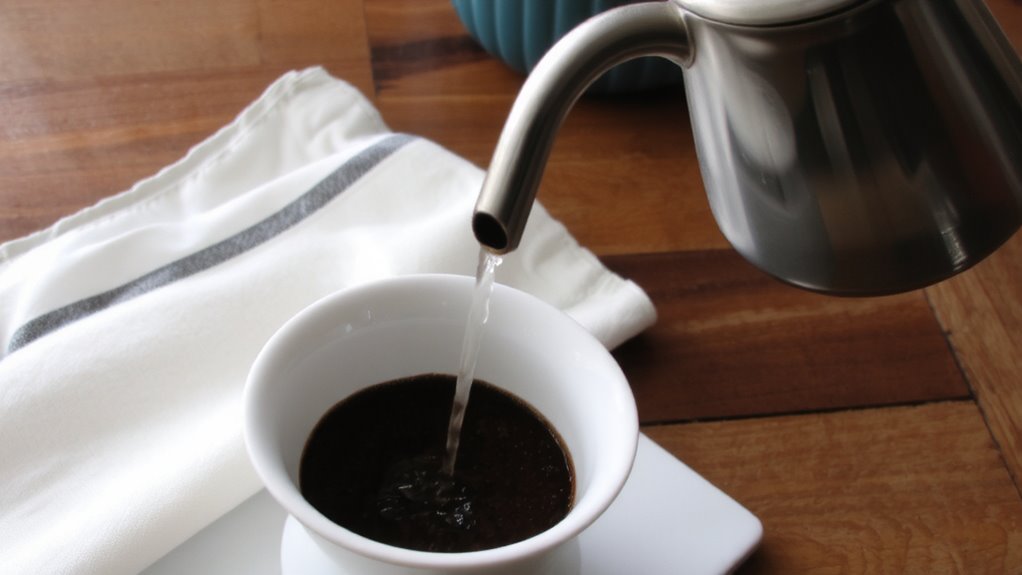
While regular kettles work fine for basic brewing, a gooseneck kettle gives you far more control over the pour, which matters if you’re serious about pour over coffee. The slim, curved spout lets you achieve precise pouring, letting you saturate grounds evenly without over-agitating them. That control supports a consistent flow, which helps extract flavor evenly and avoid bitter or weak spots. Electric models like the Fellow Stagg EKG or Bonavita GV1900TS offer adjustable temperature settings and fast heat-up times, but even basic stovetop versions, such as the Kalita Hand Drip Pot, deliver results if used carefully. Unlike wide-spout kettles, goosenecks minimize splashing and let you move slowly in spiral patterns. You’ll notice better bloom and extraction. It takes practice, but once mastered, the difference in your cup is clear. For anyone aiming to improve their technique, precise pouring and consistent flow aren’t just helpful-they’re essential. A great way to find the right tool for your method is to explore the best gooseneck kettles for precision pouring.
Heat Water Right for Your Gooseneck Pour Over
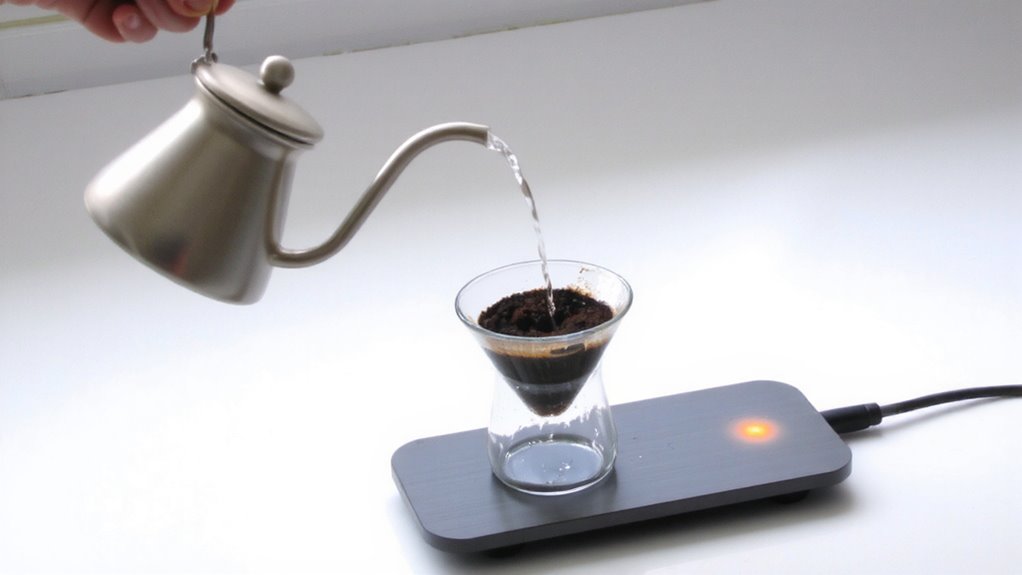
Most specialty coffee pros agree: getting the temperature right makes or breaks your pour over. You should aim for a water temperature between 195°F and 205°F-just off boiling. If you’re using a stove-top gooseneck, wait about 30 seconds after boiling before pouring. An electric gooseneck with temperature control, like the Fellow Stagg or Bonavita models, gives you precise settings and consistent results, which helps stabilize brewing time. Too hot, and you’ll scorch the grounds, causing bitterness; too cool, and extraction will lag, leading to sourness. The ideal water temperature guarantees balanced extraction within a standard 2:30 to 3:30 minute brewing time. Always preheat your gear to avoid heat loss. Getting this step right means better flavor, cup after cup, without relying on guesswork.
Master the Spiral Pour Technique in 60 Seconds
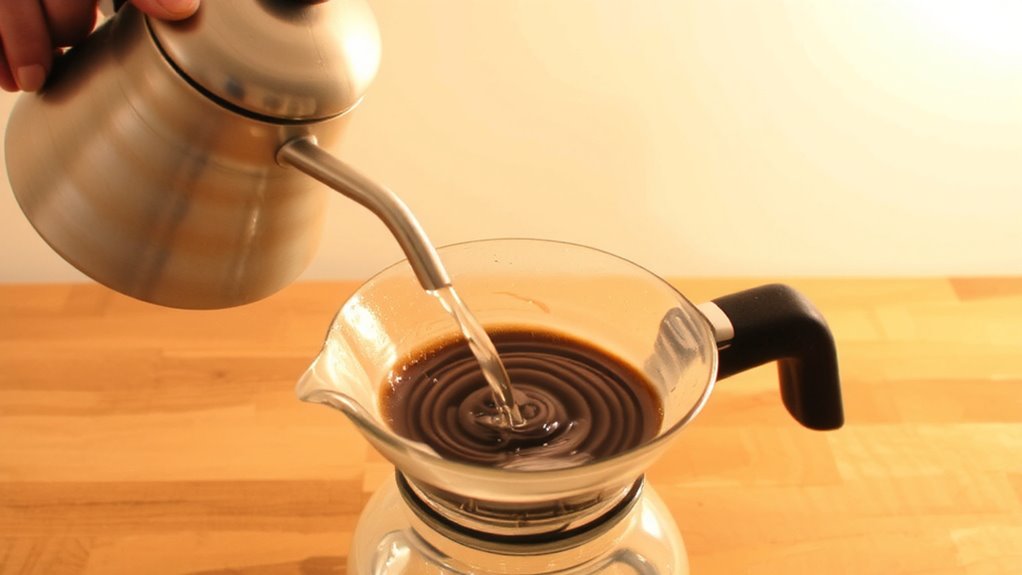
Once you’ve heated your water to the right temperature, focus on your pour-specifically, the spiral technique, which helps extract evenly and avoid channel wind. Start at the center of the bed and slowly spiral outward to the edge, then reverse back in. This motion guarantees even saturation and minimizes disturbance to the grounds. Keep your spiral timing consistent-aim for about 10 to 15 seconds per pour during bloom and main phases. Your gooseneck kettle’s precision makes this possible, letting you control flow rate and placement. Pour consistency is key: too fast causes channeling; too slow chills the bed. Practice helps you match water delivery to the coffee’s absorption rate. Use a steady hand, and don’t rush the spiral. With repetition, you’ll develop muscle memory that supports repeatable results. A smooth, controlled spiral improves extraction, sweetening your cup without extra effort-just attention. For best results, choose a gooseneck kettle with variable temperature control, such as those highlighted in top coffee brewing kettles reviews.
Match Your Kettle to Your Brewer (V60, Chemex, Kalita)
Your pour technique sets the foundation, but pairing the right gooseneck kettle with your brewer fine-tunes the outcome. For a V60, use a narrow spout and lightweight kettle-like the Fello Stagg EKG-for precision and better kettle balance during spiral pours. Chemex brewing needs higher volume and steady flow; go with a larger 1L+ kettle like the Hario V60 Buono, which offers stability and pour control essential for its wide filter. Kalita’s flat bed requires gentler, even saturation, so a medium-spout kettle with counterbalanced design, such as the Fellow Ode, guarantees brew compatibility and reduces wrist strain. Mismatched gear can disrupt flow rate and heat retention. Always match spout shape, capacity, and kettle balance to your brewer’s size and flow needs. Proper brew compatibility leads to consistent extraction-no guesswork, just better coffee. Choosing the right coffee dripper can significantly impact your pour-over results.
Descale Weekly to Keep Your Gooseneck Performing
Regularly descaling your gooseneck kettle keeps it working efficiently and extends its lifespan. Over time, limescale buildup from hard water can clog the spout and reduce heating performance. Mineral deposits accumulate inside the heating element and chamber, especially if you use tap water daily. These deposits slow down boiling and can cause uneven heat, affecting your pour over’s consistency. To prevent this, descale once a week using a mix of white vinegar and water or a commercial descaling solution like Durgol. Fill the kettle halfway, let it soak for 15–30 minutes, then scrub gently with a soft brush. Rinse thoroughly and boil two cycles of clean water to remove residue. Using filtered water helps reduce mineral deposits between cleanings. Consistent maintenance keeps your kettle’s flow steady and accurate-critical for precise pour overs.
On a final note
You now know how to use a gooseneck kettle for better pour over control. Heat water to 195–205°F, use the spiral pour for even extraction, and match your kettle to your brewer-like a Hario for V60 or a larger kettle for Chemex. Descale weekly to prevent mineral buildup. A gooseneck gives precision most kettles can’t. Skip it if you only use drip machines, but for pour over, it’s worth the investment.