The Importance of Burr Sharpness in Achieving Uniform Grind Particles
Dull burrs crush beans instead of slicing them, giving you inconsistent grinds with both fines and chunks. That messes up extraction-some parts turn bitter, others taste sour. Even if you nail your brew time and temperature, uneven particles throw everything off. Sharp burrs, like those in a Baratza Encore or Mahlkönig EK43, deliver uniform grounds for balanced flavor. After 500–1,000 grams of coffee, check your burrs-or you might miss what your beans can really do.
Notable Insights
- Sharp burrs slice coffee beans cleanly, ensuring uniform particle size for consistent extraction.
- Dull burrs crush beans, creating fines and boulders that lead to uneven extraction.
- Uniform grinds allow even water flow, maximizing flavor clarity and balance in the cup.
- Worn burrs produce inconsistent particles, causing sourness from under-extraction and bitterness from over-extraction.
- Regular burr maintenance or replacement preserves grind quality and optimal brewing performance.
What Happens When Coffee Grinder Burrs Go Dull
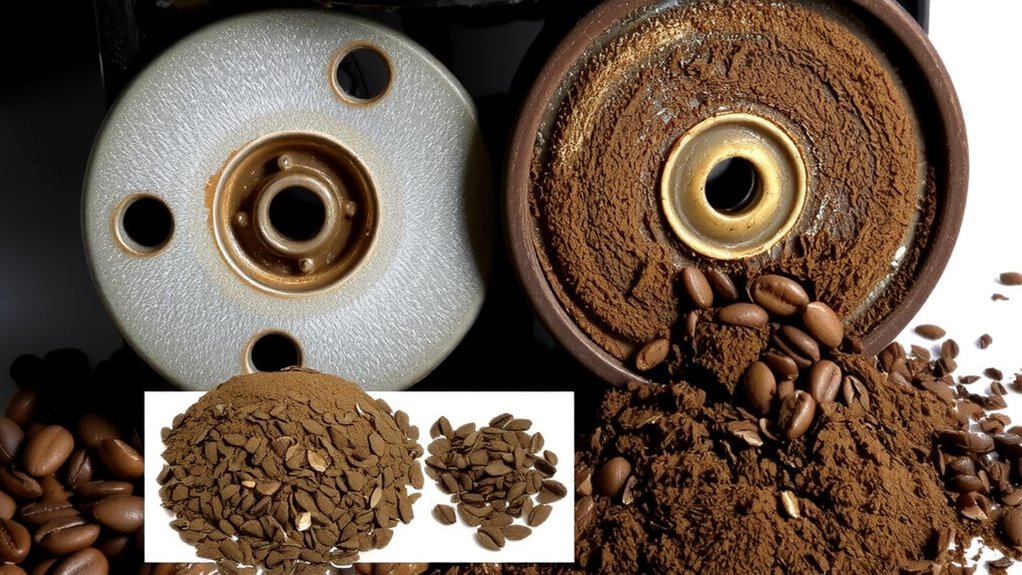
While your grinder might still spin smoothly, dull burrs gradually compromise your coffee by producing an inconsistent particle size. You’ll start noticing visible burr wear patterns-uneven grooves or flattened ridges-especially if you’ve been grinding daily for over a year. These worn surfaces can’t slice beans cleanly, causing some particles to be fine as flour while others remain chunky. That’s grind consistency loss, and it undermines every brew. Even high-end grinders like the Baratza Encore or Mahlkönig EK43 suffer this fate over time. You won’t see sudden failure; it’s a slow decline. Steel burrs last longer than ceramic, but both degrade. If your shots pull unevenly or your pour-over tastes off without changing your recipe, it’s likely time to inspect or replace the burrs. Maintain performance-check wear regularly. For guidance on selecting a reliable machine, consider checking the Best Coffee & Espresso Grinders list to find models known for durability and consistent performance.
How Dull Burrs Ruin Coffee Extraction
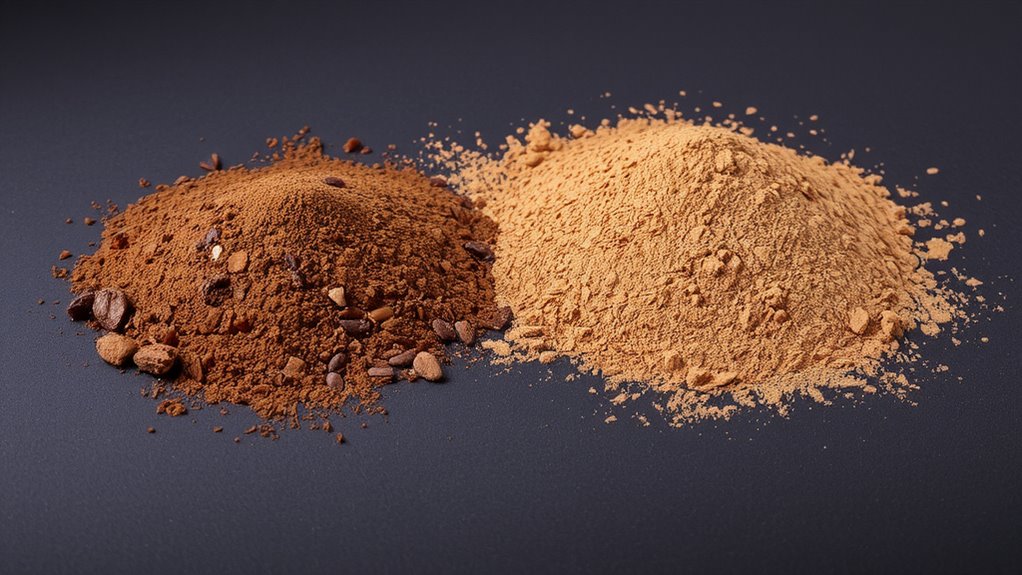
Dull burrs mess with extraction by creating an uneven grind, and that throws off everything from flavor to strength. You get grind inconsistency-some particles too fine, others too coarse-so water flows unevenly through the bed. The fines over-extract, turning bitter, while the coarse bits under-extract, leaving flavor behind. This imbalance causes flavor degradation, stripping brightness and clarity from your cup. Even with perfect brew time or water temp, dull burrs undermine control. Compare that to sharp burrs on a flat or conical grinder like the Baratza Encore or Fellow Ode-those deliver uniform particles, making extraction predictable. You want even extraction for balanced notes, not a muddy or sour mess. Replacing or resharpening worn burrs isn’t just maintenance-it’s essential for taste accuracy. Don’t overlook this when troubleshooting poor results. A high-quality coffee grinder for espresso ensures consistent particle size critical for optimal extraction in both espresso and pour-over brewing methods.
Your Coffee Tastes Off? Here’s Why (Signs of Dull Burrs)
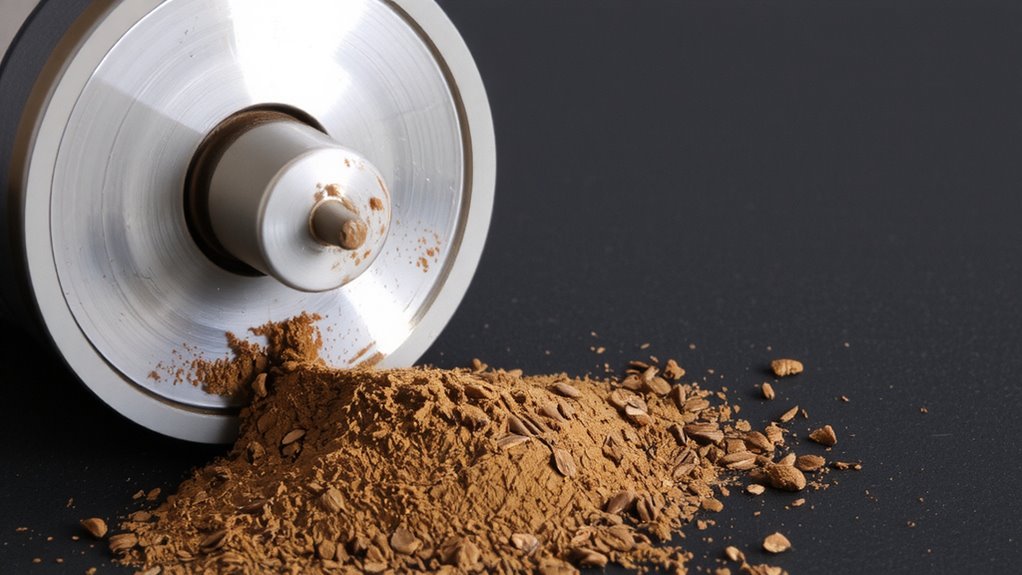
What if your morning brew suddenly tastes flat, harsh, or just “off”? Chances are, your burrs might be dull. Dull burrs crush rather than cut coffee beans, leading to an uneven grind. This inconsistency causes uneven extraction, which directly impacts taste. You might notice sour notes because under-extracted fines pass through too quickly, while over-extracted particles make other parts bitter. The result? A flavor imbalance that no brew time or water temperature can fix. Your coffee lacks sweetness, clarity, and balance. If you’re using a blade grinder or an old burr grinder, this problem worsens over time. Even mid-range burr grinders like the Baratza Encore need burr replacements after about 500–1000 grams of coffee. Upgrading to a grinder with hardened steel or ceramic burrs helps maintain sharpness longer. Check your grind quality-if it’s bumpy or looks like powder mixed with chunks, it’s time to act. Investing in one of the best espresso grinders under $500 can offer superior burr quality and consistency without breaking the bank.
Why Sharp Burrs Make Better Coffee
Slice through your beans cleanly, and you’ll immediately notice the difference in your cup-sharp burrs don’t smash or tear, they cut. This clean cut preserves bean integrity, leading to more even extraction and better flavor. Dull burrs create fines and boulders, ruining grind consistency and making your coffee taste uneven. Sharp burrs, when properly aligned, maintain precise burr alignment, ensuring each particle is nearly the same size. That uniformity lets water flow evenly through the coffee bed, extracting flavors uniformly. Without sharpness and alignment, you’ll struggle no matter how good your technique. It’s not just about freshness-your grinder’s condition directly impacts the quality in your mug. You don’t need a $500 grinder to get great results, but you do need sharp, well-maintained burrs. Prioritize upkeep, and you’ll taste the improvement every morning.
When to Clean, Resharpen, or Replace Your Burrs
How do you know when your grinder needs more than just a wipe-down? If your grind consistency has gone downhill-producing too many fines or boulders-it’s time to check your burrs. Coffee that extracts unevenly or tastes off isn’t always your fault; dull or dirty burrs are often the cause. Start by cleaning them-use a brush or food-safe grinder cleaner to remove old oils and residue. If that doesn’t help, inspect the burr alignment; misaligned burrs create uneven particle sizes no matter how sharp they are. For flat burrs, you might be able to resharpen them professionally, but it’s often a short-term fix. With conical burrs, replacement is usually more cost-effective. Most manufacturers recommend replacing burrs after 500–1,000 hours of use. When performance drops and cleaning doesn’t restore grind consistency, it’s time to replace.
On a final note
If your coffee tastes flat or uneven, dull burrs might be the issue. Over time, they create inconsistent grounds, hurting extraction and flavor. Sharp burrs give even particles, improving brew quality. Clean them monthly, and consider resharpening after 500–1,000 hours or replacing if performance drops. For consistent results, especially with espresso, regular burr maintenance is essential. Check manufacturer guidelines-some burrs last longer than others. It’s a small effort for better coffee.